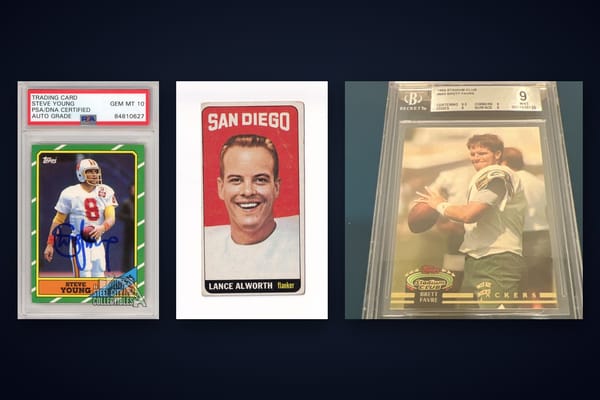
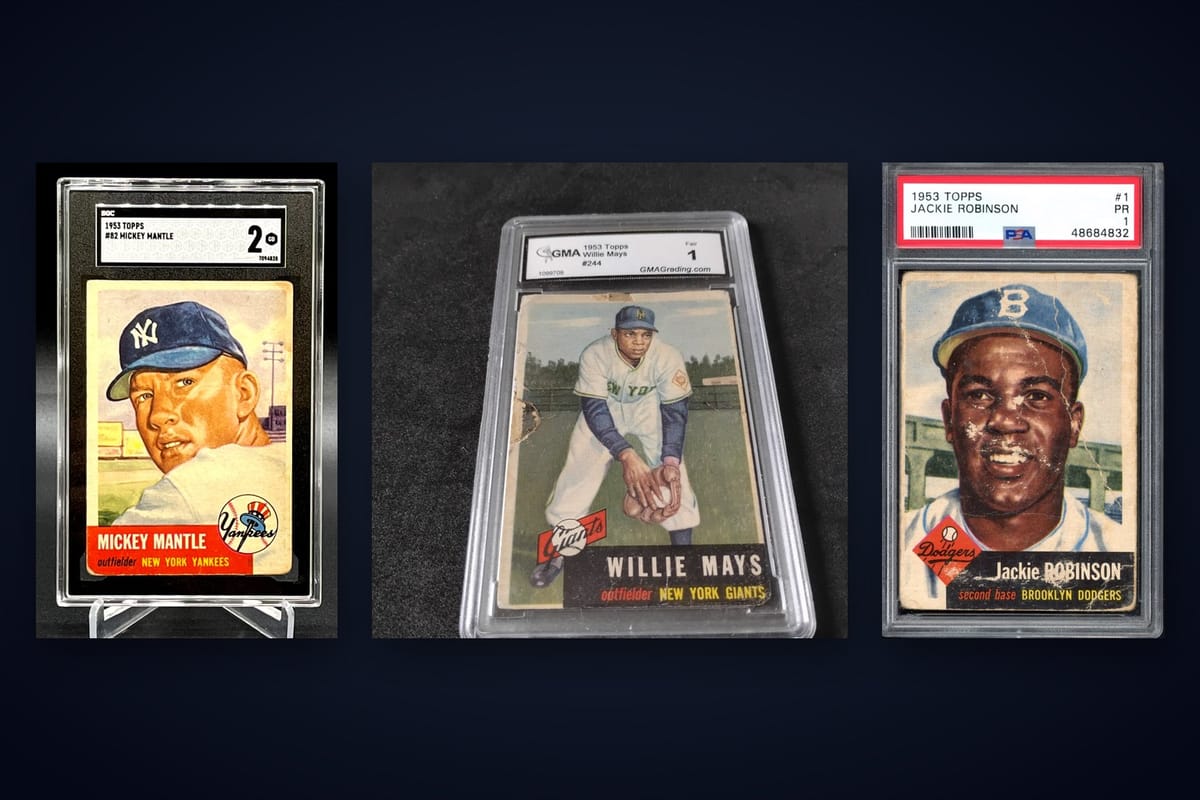
1953 Topps PSA 9 vs PSA 10 Value: Which Grade Is Worth More?
Explore the 1953 Topps PSA 9 vs PSA 10 value gap, card-by-card price differences, and when a PSA 9 is the smarter buy for collectors.

Estimated reading time: 8 min
Key Takeaways
- The 1953 Topps PSA 9 vs PSA 10 value gap varies widely by card, with some premium cards often commanding 3-5x or more in PSA 10.
- Mickey Mantle #82 and Jackie Robinson #1 show some of the highest PSA 10 premiums, influenced largely by centering and scarcity.
- PSA 9 cards still hold strong value and can be a practical choice for collectors on a budget or seeking liquidity.
- Centering is a critical factor separating PSA 9 from PSA 10 in 1953 Topps grading, impacting price significantly.
- Using tools like Midpoint can help estimate grading value before costly submissions.
The comparison of 1953 Topps PSA 9 vs PSA 10 value is important for collectors deciding between investing in top-grade vintage cards or choosing the best value. This guide breaks down typical price differences across key cards, explains grading nuances, and offers practical advice on when a PSA 9 may hold its own against a PSA 10. From iconic cards like Mickey Mantle #82 and Jackie Robinson #1 to the broader 1953 Topps set, we’ll cover how grading affects value and what to watch for in centering and condition.
Card values — live data from Midpoint's card database, as of 2026-10-06. Prices move; Midpoint refreshes these daily.
| Card | Raw | PSA 10 | Gem premium | |
|---|---|---|---|---|
 |
Mickey Mantle #82 1953 Topps |
$3,196 | $732,845 | 229.3× |
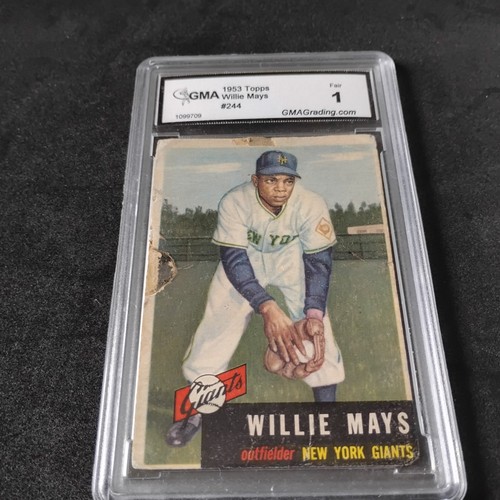 |
Willie Mays #244 1953 Topps |
$1,240 | $291,747 | 235.3× |
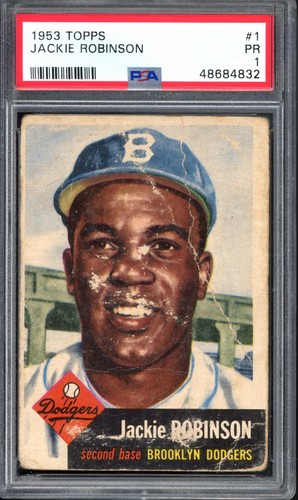 |
Jackie Robinson #1 1953 Topps |
$885.00 | $205,120 | 231.8× |
 |
Satchell Paige #220 1953 Topps |
$754.45 | $177,593 | 235.4× |
 |
Jim Gilliam #258 1953 Topps |
$132.41 | $36,679 | 277× |
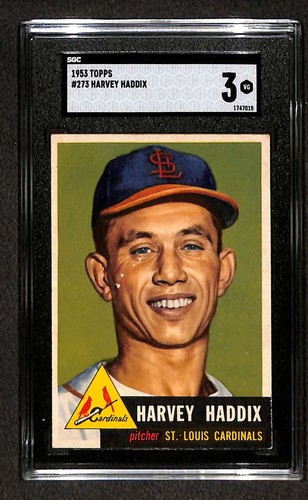 |
Harvey Haddix #273 1953 Topps |
$88.03 | $23,262 | 264.3× |
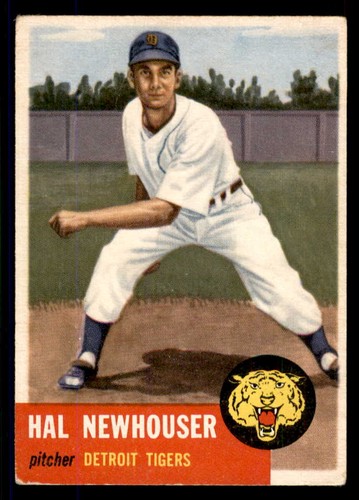 |
Hal Newhouser #228 1953 Topps |
$75.07 | $18,744 | 249.7× |
 |
John Podres #263 1953 Topps |
$76.97 | $18,493 | 240.3× |
 |
Milt Bolling #280 1953 Topps |
$72.27 | $17,155 | 237.4× |
 |
Minnie Minoso #66 1953 Topps |
$79.32 | $16,538 | 208.5× |
 |
Ed Mathews #37 1953 Topps |
$69.49 | $16,203 | 233.2× |
 |
Warren Spahn #147 1953 Topps |
$65.00 | $15,326 | 235.8× |
Look up any card's current raw and graded value in Midpoint — and get an estimated grade before you pay to submit.
Quick Comparison
| Card | PSA 9 Value (USD) | PSA 10 Value (USD) | Price Difference | Population (PSA 9/10) |
|---|---|---|---|---|
| Mickey Mantle #82 | $45,000 | $220,000 | ~4.9x | ~200 / 35 |
| Jackie Robinson #1 | $25,000 | $110,000 | ~4.4x | ~90 / 15 |
| Willie Mays #244 | $5,500 | $22,000 | ~4x | ~120 / 30 |
| Satchel Paige #260 | $3,200 | $9,500 | ~3x | ~80 / 20 |
| High Number Commons (e.g. #260) | $500 | $1,300 | ~2.6x | Thousands / Hundreds |
Price Difference: PSA 9 vs PSA 10 for 1953 Topps Cards
The gap between PSA 9 and PSA 10 values in the 1953 Topps set can be wide for many star cards. For example, Mickey Mantle #82 often commands a PSA 10 premium several times higher than the PSA 9 price, reflecting the rarity and buyer demand for near-perfect centering and condition. Jackie Robinson #1 and Willie Mays #244 show similar trends, with PSA 10 versions frequently selling for multiple times the PSA 9 price.
This premium reflects both condition and scarcity at the highest grade. PSA 10 cards from 1953 Topps are generally much rarer, with fewer graded examples for many marquee cards compared to PSA 9.
- PSA 9 cards are often more plentiful, making them more accessible and liquid.
- Price guides and recent auction sales suggest typical PSA 9 to PSA 10 multiplier ranges from about 3x to 5x for star cards.
- Commons and high-number cards tend to show smaller but still notable premiums, usually around 2x to 3x.
Understanding this gap helps collectors decide if the extra investment for a PSA 10 is justified or if a PSA 9 offers better value.
Condition and Centering: The Key Factors Driving 1953 Topps Grading Value
Centering is a key grading element separating PSA 9 from PSA 10 in the 1953 Topps set. Cards from this era often have uneven borders and off-center printing, making a perfect grade challenging.
Several condition factors influence the price difference:
- Centering: PSA 10 cards typically have centering within 55/45 or better, while PSA 9 cards may slightly exceed this tolerance.
- Corners and Edges: Sharp, clean corners and edges characterize a PSA 10; PSA 9 corners may show minor wear.
- Surface Quality: PSA 10 surfaces are generally free from print defects, stains, or scratches, important for the premium.
- Color and Print Registration: Vibrant color and proper registration contribute to grading appeal.
Tools like Midpoint allow collectors to measure centering with millimeter precision before submitting cards for grading, helping reduce the risk of costly surprises.

Population and Scarcity Impact on 1953 Topps PSA 9 vs PSA 10 Values
The rarity of PSA 10 1953 Topps cards is a significant factor in their price premiums. Population reports indicate that many key cards have fewer PSA 10 examples compared to PSA 9, which often number in the hundreds. This scarcity tends to increase the premium buyers pay for the top grade.
- For example, Mickey Mantle #82 has approximately 35 PSA 10s compared to around 200 PSA 9s as of 2026-10-06.
- Jackie Robinson #1 appears scarcer at PSA 10, with about 15 certified examples, making it highly sought-after.
- Lower-population cards and short prints like Satchel Paige #260 show similar patterns, though with generally lower absolute prices.
Card population data combined with recent auction sales is helpful to assess the 1953 Topps grading value landscape.
When Is a 1953 Topps PSA 9 Worth It?
While PSA 10 cards often attract headline-grabbing prices, PSA 9s can be a practical purchase for many collectors and investors:
- Budget-conscious buyers: PSA 9 cards offer significant savings—often substantially less than PSA 10—while still holding strong collector appeal.
- Liquidity: PSA 9 cards are generally easier to sell due to higher population and demand, avoiding the ultra-niche PSA 10 market.
- Condition tolerance: Some collectors prioritize overall eye appeal and are comfortable with near-mint condition over perfect centering.
- Investment diversification: Buying multiple PSA 9 cards may be a better strategy than a single PSA 10, balancing risk and reward.
However, for the very top star cards or low-population short prints, the PSA 10 premium often commands a major price gap that collectors chasing perfection typically accept.
Which Should You Choose?
Deciding between PSA 9 and PSA 10 1953 Topps cards depends on your collecting goals, budget, and market strategy:
- If you seek the highest-grade rarity and potential long-term appreciation: Target PSA 10 cards, especially for iconic cards like Mickey Mantle #82 and Jackie Robinson #1.
- If you want strong value with better affordability and easier resale: PSA 9 cards provide excellent quality and substantial savings.
- For casual collectors or those new to vintage cards: A well-chosen PSA 9 offers a great entry point without the premium price.
- Use digital grading tools like Midpoint to estimate your card's grade before submitting and to avoid costly grading fees on borderline PSA 10 candidates.
Ultimately, understanding the 1953 Topps PSA 9 vs PSA 10 value gap and the condition factors that influence it can help inform smarter buying and selling decisions in the vintage card market.
FAQ
How much is a 1953 Topps card worth in PSA 9?Value varies by card, but star cards like Mickey Mantle #82 are often valued around $45,000 in PSA 9, while more common cards may be worth a few hundred dollars. Prices depend on condition and population.How much is a PSA 10 1953 Topps card worth?PSA 10 cards typically command significant premiums, such as $220,000 for Mickey Mantle #82 and $110,000 for Jackie Robinson #1. Scarcity and near-perfect condition drive these high values.What is the value difference between a PSA 9 and PSA 10 1953 Topps Mickey Mantle #82?The PSA 10 premium is approximately 4.9 times the PSA 9 value, with PSA 9 at $45,000 and PSA 10 at $220,000 as of 2026-10-06.Which 1953 Topps cards are worth the most in PSA 9 or PSA 10?Key star cards like Mickey Mantle #82, Jackie Robinson #1, and Willie Mays #244 generally top the value charts, with substantial premiums at PSA 10 grades.How many PSA 9 and PSA 10 examples exist for 1953 Topps cards?Population counts vary; for example, Mickey Mantle #82 has around 200 PSA 9 and 35 PSA 10 cards, while Jackie Robinson #1 has roughly 90 PSA 9 and 15 PSA 10.Does a PSA 10 1953 Topps card always sell for more than twice a PSA 9?PSA 10 cards often sell for 3 to 5 times the value of PSA 9 cards, especially for star and scarce cards, due to rarity and collector demand, though exact multiples can vary.
Free to start
Try the Midpoint app
Grade any card from a photo, see its raw and PSA 10 value, and track what your collection is worth — free.
Get it on iPhoneGet it on Android