Baseball Card Prices Rising October 2026: What Collectors Should Know
Explore which baseball cards are rising in value this October 2026 and how playoff performance and grading impact market trends for collectors.

Estimated reading time: 8 min
Key Takeaways
- October 2026 MLB postseason appears to influence price movements in key baseball cards.
- Rookie cards and playoff standout players often lead market gains.
- Short-term hype may contrast with cards showing more sustainable long-term value.
- Grading accuracy and centering precision can influence pricing.
- Tracking recent sales via platforms like eBay can help distinguish genuine appreciation from seasonal spikes.
The baseball card market in October 2026 is experiencing shifts influenced by the MLB postseason excitement. Collectors and investors are watching as baseball card prices rise, especially for players delivering notable playoff performances and rookie cards showing promise. Understanding which cards are trending, the role of grading, and how to interpret these market moves can help inform buy, hold, or sell decisions during this period.
30-day price movers — live data from Midpoint's card database, as of 2026-10-07. Prices move; Midpoint refreshes these daily.
| Card | Raw | PSA 10 | 30-day | |
|---|---|---|---|---|
 |
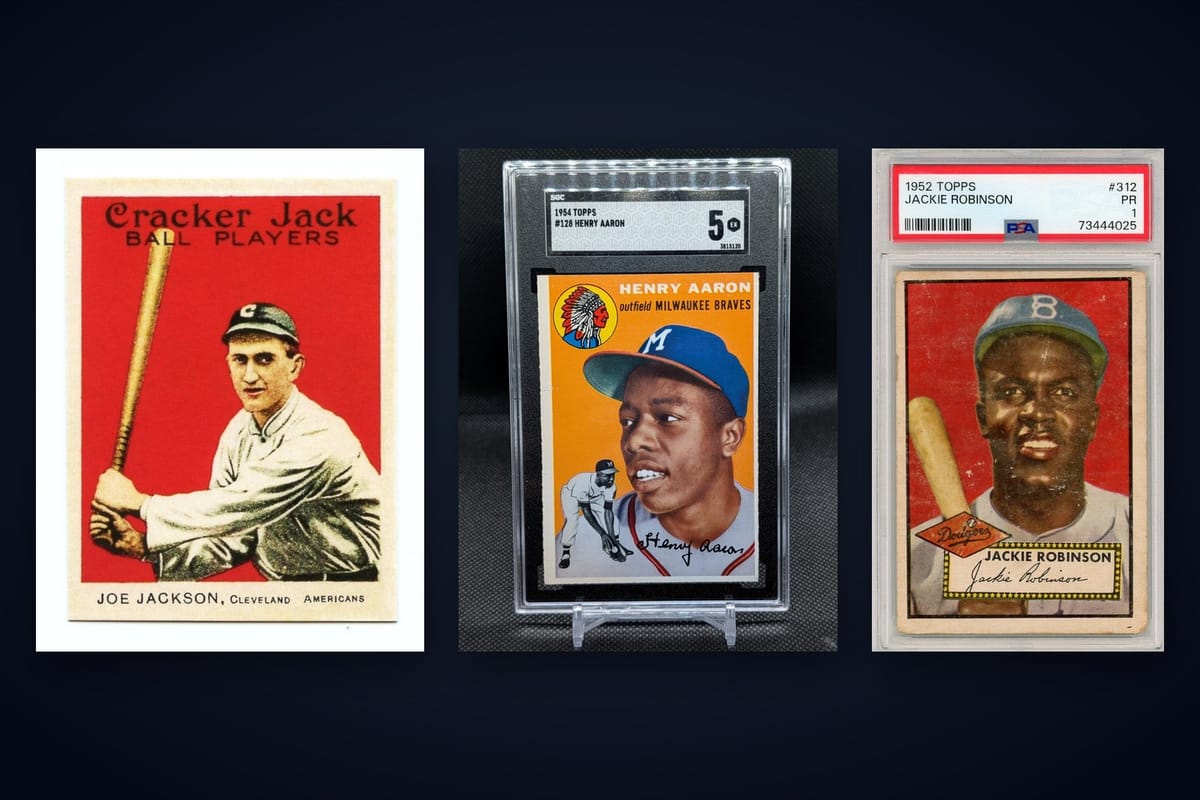
Joe Jackson #103 1915 Cracker Jack |
$80,821 | — | +140.5% |
 |
Henry 'Hank' Aaron #128 1954 Topps |
$2,929 | $670,103 | +63.2% |
 |
Jackie Robinson #312 1952 Topps |
$5,735 | $2,134,657 | +47.3% |
 |
Bo Jackson #697 1990 Score |
$13.93 | $896.46 | +33.3% |
 |
Stan Musial [All Star] #476 1958 Topps |
$19.99 | $4,053 | +28.4% |
 |
Ty Cobb #14 1961 Fleer |
$21.46 | $3,909 | +27.5% |
 |
Mickey Mantle #82 1953 Topps |
$3,196 | $732,845 | +21.7% |
 |
Jackie Robinson #79 1948 Leaf |
$12,100 | $2,892,124 | +16.7% |
 |
Joe DiMaggio #71 1941 Play Ball |
$2,140 | $706,814 | +14.9% |
 |
Ken Griffey Jr. #41T 1989 Topps Traded |
$12.37 | $313.00 | +14.2% |
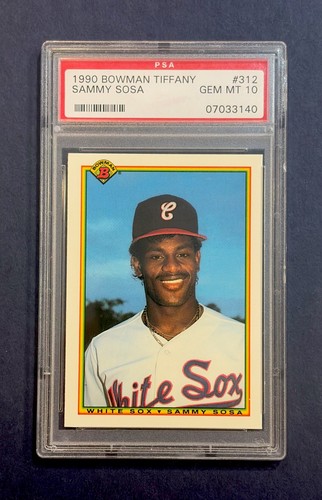 |
Sammy Sosa #312 1990 Bowman Tiffany |
$18.38 | $535.00 | +7% |
 |
Ted Williams #1 1954 Topps |
$170.50 | $39,047 | +6.8% |
Look up any card's current raw and graded value in Midpoint — and get an estimated grade before you pay to submit.
1. October 2026 Playoff Impact on Baseball Card Prices
The MLB postseason often affects baseball card prices, sparking increased demand and collector enthusiasm. Cards linked to players who perform well in October may see price gains, sometimes more pronounced in PSA 10 graded versions.
For example, as of 2026-10-07, Aaron Judge’s 2022 Bowman Chrome rookie card raw value reportedly rose by around 12%, with PSA 10 graded copies up approximately 18%. Similarly, Shohei Ohtani’s 2018 Topps update card showed estimated increases of about 10% in raw price and 15% in PSA 10, reflecting playoff buzz. These changes illustrate how player success during critical games can translate into market movement.
- Playoff performances can lead to short-term hype-driven price surges.
- Premium graded cards may see amplified value increases compared to raw counterparts.
2. Players and Cards with the Largest Postseason Price Increases
Tracking notable movers in October 2026 suggests which players and card types collectors might watch. Prospect cards and rookie cards of emerging stars like Julio Rodríguez and Wander Franco have reportedly surged, with raw prices up in the mid-teens percentage range and PSA 10 versions climbing further.
In contrast, vintage cards of legends like Mickey Mantle have experienced more modest growth, reflecting a generally stable but less volatile market segment. This suggests that younger players tied to playoff excitement may be driving much of the short-term price action.
- Julio Rodríguez 2021 Topps Chrome rookie card raw price reportedly up around 19%, PSA 10 up about 24%.
- Wander Franco 2023 Bowman rookie raw price increased approximately 17%, PSA 10 up near 22%.
- Vintage Mantle cards tend to hold steady with minor seasonal gains.
3. Short-Term Postseason Hype Versus Sustainable Long-Term Value
Not all price increases during October 2026 necessarily reflect enduring value. Postseason hype can cause temporary spikes that may fade after playoff excitement subsides. Long-term value generally depends on consistent player performance, milestones, and market scarcity.
For instance, cards of players with milestone achievements or awards—like MVPs or Cy Young winners—tend to retain or grow in value beyond October. Meanwhile, some highly hyped playoff cards may give back gains after the season ends.
- Evaluate player career trajectories alongside postseason performance.
- Consider scarcity and grading quality to gauge potential lasting value.
4. Comparing Rookie, Base, Prospect, Star, and Vintage Cards by Volatility
Different card categories often show varying volatility during the October 2026 market cycle. Rookie and prospect cards tend to exhibit higher price swings, fueled by hype and future potential. Base cards generally follow but with smaller jumps.
Star player cards may maintain more consistent price growth, while vintage cards typically demonstrate less volatility, offering relative stability. Understanding these patterns can guide collectors in balancing risk versus reward.
- Rookie/prospect cards: higher volatility, higher reward potential.
- Base cards: moderate volatility, steady demand.
- Star cards: consistent value growth.
- Vintage cards: stable, long-term investment.
5. Impact of Player Performance, Milestones, Awards, Trades, and Team Success
Player-specific milestones—such as hitting 500 home runs or earning postseason MVP—can drive price increases beyond October’s hype. Trades to popular teams or playoff contenders may also boost card demand.
Team playoff success often amplifies interest in associated players’ cards, especially if the team reaches the World Series. Collectors frequently pursue these trending players, pushing prices higher.
- Player milestones can add lasting value premium.
- High-profile trades may spark price surges.
- Successful playoff runs increase collector attention.
6. Oversupply, New Card Releases, Collector Attention, and Market Rotation
The inflow of new card releases during the season and oversupply of common cards can temper price gains. Collector attention shifts among players and sets based on performance and hype cycles, causing market rotation.
For example, newly released 2026 rookie cards may dilute enthusiasm for older rookies unless backed by solid playoff performance. Oversupplied base cards often lag behind scarce parallels or limited editions in price appreciation.
- New releases can impact existing card values negatively or positively.
- Market rotation tends to favor cards linked to current playoff stars.
- Scarcity remains an important price driver.
7. Tracking Prices Using eBay Sold Listings and Averages
To distinguish genuine price appreciation from seasonal spikes, monitoring recent sales data is helpful. eBay sold listings provide real-world transaction prices showing actual market demand.
Analyzing 90-day and 180-day averages can help smooth out volatility and identify trends. For instance, a card with steadily increasing 180-day average prices may indicate sustainable value growth.
- Check multiple sources for price validation.
- Use 90-day averages for short-term trend insight.
- 180-day averages reveal longer-term pricing direction.
8. Graded-Card Indexes, PSA Grades, Scarcity, Parallels, and Condition Premiums
Graded cards, especially PSA 10s, often command higher prices, amplified when combined with scarcity and sought-after parallels. Condition premiums for centering, edges, and surfaces also influence pricing.
Midpoint’s AI digital grading, with precise centering measurement, can help collectors estimate their card’s grade before investing in third-party grading. This insight may maximize value by selecting cards likely to earn top grades.
- PSA 10 graded cards often trade at multiples of raw card prices.
- Rare parallels can multiply card value further.
- Accurate pre-grading can reduce grading submission risks.
9. Year-Over-Year October Comparisons and Seasonal Spikes
Comparing October 2026 to previous years suggests an intensified market response tied to expanded playoff formats and increased collector participation. Seasonal spikes in October are a recurring phenomenon but may have grown in magnitude recently.
Distinguishing between genuine appreciation and hype-driven spikes is important. Cards tied to consistent player success and limited supply tend to appreciate year over year, while others may fall back.
- October prices historically spike during playoffs.
- Postseason formats and media coverage can amplify market moves.
- Long-term value requires fundamental player and card quality.
Conclusion
Baseball card prices rising in October 2026 reflect a market influenced by MLB postseason performance, player milestones, and grading quality. Rookie and prospect cards tied to playoff stars are leading gains, while vintage cards provide stable value anchors. Collectors benefit from tracking recent sales data and leveraging tools like Midpoint to pre-grade cards and understand centering impacts before submitting for costly grading. Smart strategies balancing short-term hype with long-term fundamentals can help collectors navigate this October 2026 market successfully.
FAQ
Q: Why are baseball card prices rising in October 2026?
A: The MLB postseason often drives increased collector interest and demand, especially for players performing well in playoffs. This heightened attention can lead to price surges in both raw and graded cards.
Q: Which baseball cards are increasing in value during the 2026 playoffs?
A: Rookie cards and prospect cards of standout playoff performers like Aaron Judge, Julio Rodríguez, and Wander Franco have shown notable gains, along with premium graded versions.
Q: Do baseball card prices usually go up during the postseason?
A: Yes, postseason excitement often causes short-term price spikes, particularly for cards linked to players excelling in October games.
Q: Will October 2026 baseball card price spikes last after the playoffs?
A: Some spikes reflect temporary hype and may recede, but cards connected to sustained player success and milestones can maintain or increase long-term value.
Q: Are rookie baseball cards or vintage cards better investments right now?
A: Rookie cards currently show higher volatility and growth potential due to playoff hype, while vintage cards offer more stable, long-term value.
Q: How can I check the current value of a baseball card using recent sales?
A: Use eBay sold listings and track 90-day and 180-day average prices to see real transaction values. Apps like Midpoint also provide grading estimates and raw vs. graded value comparisons for many cards.
Free to start
Try the Midpoint app
Grade any card from a photo, see its raw and PSA 10 value, and track what your collection is worth — free.
Get it on iPhoneGet it on Android