1940 Play Ball Baseball Cards Value: Complete Price & Grading Guide
Explore the 1940 Play Ball baseball cards value guide with key cards, grading impact, rarity, and pricing for raw and PSA-graded examples.

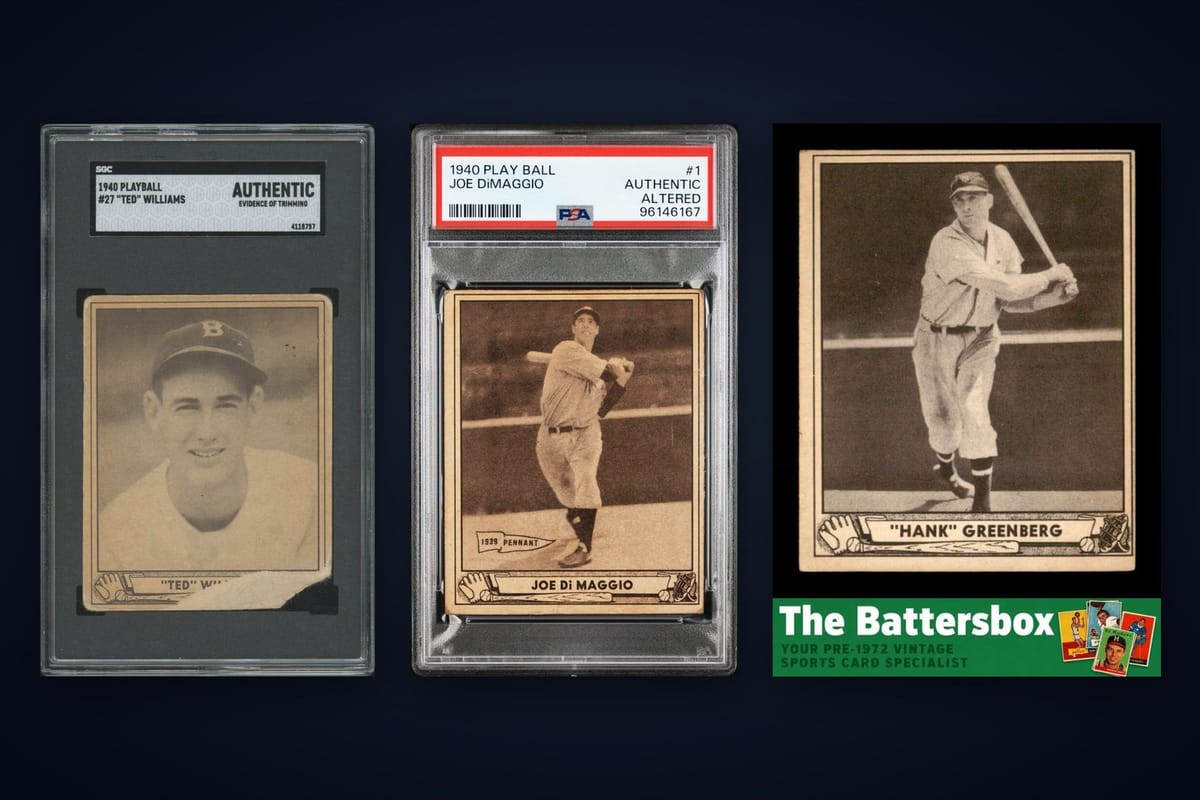
Estimated reading time: 13 min
Key Takeaways
- The 1940 Play Ball set is a cornerstone in vintage baseball card collecting, with key Hall of Famers contributing significantly to its value.
- Card condition and grading can greatly affect value, with PSA 10 examples often commanding significant premiums.
- Joe DiMaggio #1 and Ted Williams #27 are among the most valuable cards, especially in high grades.
- Scarcity of high-grade cards and high-number cards influence pricing and collectibility.
- Using tools like Midpoint can help pre-grade cards and gauge centering before costly submissions.
Card values — live data from Midpoint's card database, as of 2026-09-04. Prices move; Midpoint refreshes these daily.
| Card | Raw | PSA 10 | Gem premium | |
|---|---|---|---|---|
 |
Ted Williams #27 1940 Play Ball |
$849.50 | $287,269 | 338.2× |
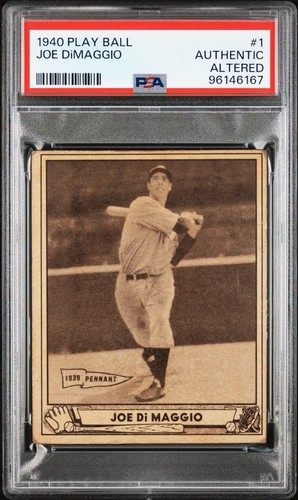 |
Joe DiMaggio #1 1940 Play Ball |
$796.50 | $269,201 | 338× |
 |
Hank Greenberg #40 1940 Play Ball |
$168.20 | $77,003 | 457.8× |
 |
Jimmie Foxx #133 1940 Play Ball |
$224.00 | $75,742 | 338.1× |
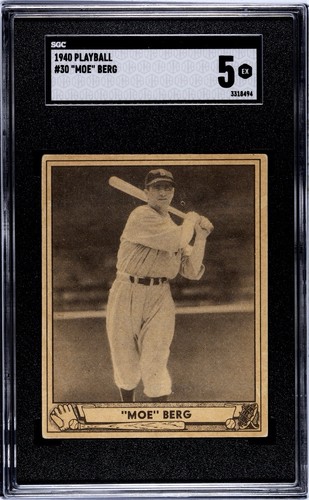 |
Moe Berg #30 1940 Play Ball |
$231.75 | $73,449 | 316.9× |
 |
Christy Mathewson #175 1940 Play Ball |
$213.89 | $72,321 | 338.1× |
 |
Mel Ott #88 1940 Play Ball |
$153.16 | $52,887 | 345.3× |
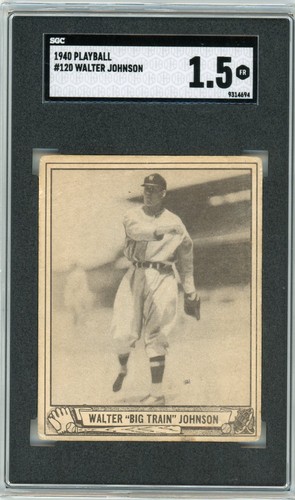 |
Walter Johnson #120 1940 Play Ball |
$187.26 | $50,245 | 268.3× |
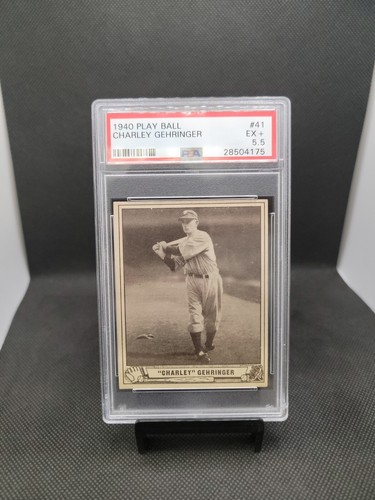 |
Charley Gehringer #41 1940 Play Ball |
$104.50 | $35,358 | 338.4× |
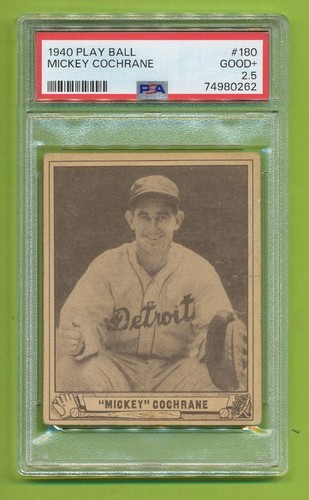 |
Mickey Cochrane #180 1940 Play Ball |
$86.24 | $30,452 | 353.1× |
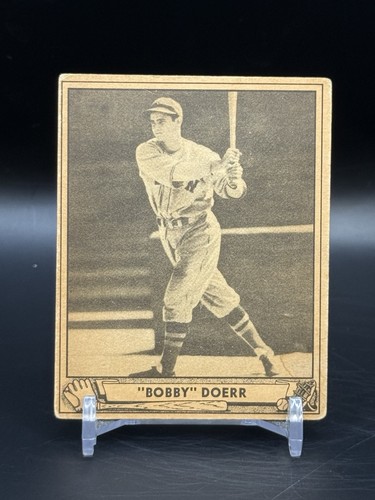 |
Bobby Doerr #38 1940 Play Ball |
$100.15 | $30,104 | 300.6× |
 |
Tony Lazzeri #238 1940 Play Ball |
$79.92 | $27,047 | 338.4× |
Look up any card's current raw and graded value in Midpoint — and get an estimated grade before you pay to submit.
Table of Contents
- Section 1: Overview and Significance of the 1940 Play Ball Set
- Section 2: Comprehensive 1940 Play Ball Price Guide by Player and Card Number
- Section 3: How Card Condition and Grading Impact Values
- Section 4: High-End Key Cards Driving Value in the Set
- Section 5: Set Break-Up vs. Complete Set and Near-Complete Lot Valuation
- Section 6: Rarity, Scarcity, and Grading Population Insights
- Section 7: Using Midpoint to Pre-Grade and Track Your 1940 Play Ball Collection
Conclusion
FAQ
Section 1: Overview and Significance of the 1940 Play Ball Set
The 1940 Play Ball baseball card set holds an iconic place in vintage card collecting. Released by the Play Ball brand, this set features a broad array of players including some of baseball’s most legendary Hall of Famers. Its history, combined with scarcity especially in high-grade forms, makes the 1940 Play Ball baseball cards value a focal point for collectors and investors alike.
Historical Context and Collectibility
The set issued in 1940 came during a notable era of baseball card production. It captures stars like Joe DiMaggio, Ted Williams, and Shoeless Joe Jackson, whose cards have become prized collectibles. Its production coincided with a time when card manufacturing was less standardized, resulting in wide condition variations and grading challenges.
Why the Set Matters to Collectors
The 1940 Play Ball set stands out due to its blend of iconic players and relative scarcity of high-grade cards. Many cards were produced but fewer survive in premium condition, which makes them a valuable target for grading and investment. Collectors often seek both raw and PSA-graded versions, with graded examples significantly influencing market prices.
Typical Set Composition
- 232 cards total, numbered from 1 to 232 (including high-number cards).
- Features a mix of commons, stars, and Hall of Famers.
- Printing and centering quality at the time cause significant variance in condition and grading potential.
| Card Number | Player | Remark |
|---|---|---|
| 1 | Joe DiMaggio | Among the most valuable cards in the set |
| 27 | Ted Williams | Key Hall of Famer card |
| 225 | Joe Jackson | Scarce and highly sought-after |
Section 2: Comprehensive 1940 Play Ball Price Guide by Player and Card Number
Understanding the 1940 Play Ball price guide requires dissecting values by player and card number, factoring in condition and grading. Certain cards command premium prices due to star power, scarcity, and condition.
Key Cards and Their Raw vs Graded Values
- Joe DiMaggio #1: Raw examples in good condition can start around a few thousand dollars, while PSA 10 graded copies have been known to command very high prices.
- Ted Williams #27: Raw cards typically range from several hundred to a few thousand dollars, with PSA 10 copies often valued significantly higher.
- Joe Jackson #225: Due to scarcity, raw cards can fetch over $1,000, while high-grade PSA 10s have sold for substantial amounts.
- Other commons and lower-tier stars usually range from $10 to $200 raw, with high-grade PSA 9/10 examples reaching higher values.
Price Guide Insights for Collectors
Prices vary widely based on condition and grading. For example, a PSA 10 card often sells for multiples of a raw card in average condition. This premium reflects the rarity of perfect centering, sharp corners, and clean surfaces. The Midpoint app provides an accurate lookup tool to compare raw and graded values for over 250,000 cards including this set.
How to Use This Price Guide
- Identify your card by number and player.
- Assess condition realistically or use AI tools for grading estimates.
- Compare raw and graded value ranges to decide if submitting for grading is worthwhile.
Section 3: How Card Condition and Grading Impact Values
Condition and professional grading have a significant effect on 1940 Play Ball baseball cards value. Cards graded PSA 10, BGS 9.5, or CGC 10 often achieve notable price premiums compared to raw or lower-grade counterparts.
Condition Factors: Centering, Corners, Edges, Surface
Collectors and graders evaluate:
- Centering: Cards with centering within approximately 55/45 to 60/40 ratios generally fetch higher grades.
- Corners: Sharp, clean corners are critical.
- Edges: Minimal chipping or fraying elevates value.
- Surface: Lack of stains, creases, or print defects is essential.
Grading Companies and Their Impact
- PSA: A leading grading company; PSA 10 examples of key cards like Joe DiMaggio #1 can sell for very high prices.
- BGS: Known for subgrades; a BGS 9.5 or 10 brings strong value.
- CGC: Increasingly popular in vintage sports cards with comparable grading tiers.
- TAG: Less common but recognized for rigorous grading standards.
Gem-Mint Premiums and Grading Value Gaps
The jump from high-grade raw (e.g., raw cards with excellent centering but minor flaws) to PSA 10 graded cards can increase value by several times depending on the card. For example, a raw Joe DiMaggio #1 in excellent condition may be valued in the low thousands, while its PSA 10 counterpart has sold for substantially higher amounts. This premium underscores the importance of precise pre-grading assessments using tools like Midpoint’s AI grading and centering measurement technology to estimate grade before submitting.
Section 4: High-End Key Cards Driving Value in the Set
The most valuable 1940 Play Ball cards center around Hall of Famers and scarce high-number cards. Understanding these key cards is crucial for collectors aiming to maximize investment or focus their collection.
Joe DiMaggio #1: The Crown Jewel
This card is the set’s flagship and among the highest value cards. Recent market data indicates:
- Raw cards in good condition: several thousand dollars range
- PSA 10 cards: can command very high prices
Its value is driven by DiMaggio’s enduring legacy and rarity in top grades.
Ted Williams #27: The Splendid Splinter
Williams’ card is another key focal point:
- Raw cards range from several hundred to a few thousand dollars depending on condition.
- PSA 10 examples can reach significantly higher values.
Condition and centering are pivotal in unlocking this value.
Joe Jackson #225 and Other Hall of Famers
Jackson’s card is less common and highly collectible, with:
- Raw values starting near $1,000.
- PSA 10 graded cards selling for substantial amounts.
Other Hall of Famers in the set also command premium prices, though generally below these marquee cards.
Section 5: Set Break-Up vs. Complete Set and Near-Complete Lot Valuation
Collectors often debate whether to assemble a complete 1940 Play Ball set or focus on individual key cards. Both have distinct value dynamics that affect pricing.
Complete Set Values
Complete sets in high-grade condition are scarce and command strong premiums. Recent sales suggest complete sets typically sell for tens of thousands of dollars depending on overall condition, which may be less than the sum of all key cards graded PSA 10 individually.
Set Break-Up and Individual Card Value
Breaking up the set allows sellers to capitalize on high-value cards like Joe DiMaggio #1 and Ted Williams #27, which individually can exceed the complete set price. Commons and lower-tier cards sell for modest amounts but add up when sold in lots.
Near-Complete Lots
Near-complete lots with 90%+ cards often attract buyers looking to complete sets at a discount versus buying singles. Pricing usually reflects a discount off the sum of raw individual card prices.
Section 6: Rarity, Scarcity, and Grading Population Insights
Rarity and scarcity significantly influence the 1940 Play Ball baseball cards value. Cards with low population counts at high grades are especially prized.
High-Number Cards Scarcity
Cards numbered above 200 exhibit more scarcity, often due to limited print runs or survival rates. For example, Joe Jackson #225’s rarity boosts its value significantly compared to many lower-number commons.
Low Population Graded Cards
PSA, BGS, and CGC population reports show relatively few PSA 10 copies of key cards exist, driving premiums. For instance:
- Joe DiMaggio #1 PSA 10: very limited known population.
- Ted Williams #27 PSA 10: similarly low population enhances scarcity.
Impact of Grading on Scarcity Perception
Grading not only authenticates but also stratifies value. Cards that score gem-mint grades are rarer than raw cards with similar eye appeal. This rarity in the highest tier fuels the market’s willingness to pay premium prices. For collectors, understanding these dynamics is key when deciding to submit cards for grading.
Section 7: Using Midpoint to Pre-Grade and Track Your 1940 Play Ball Collection
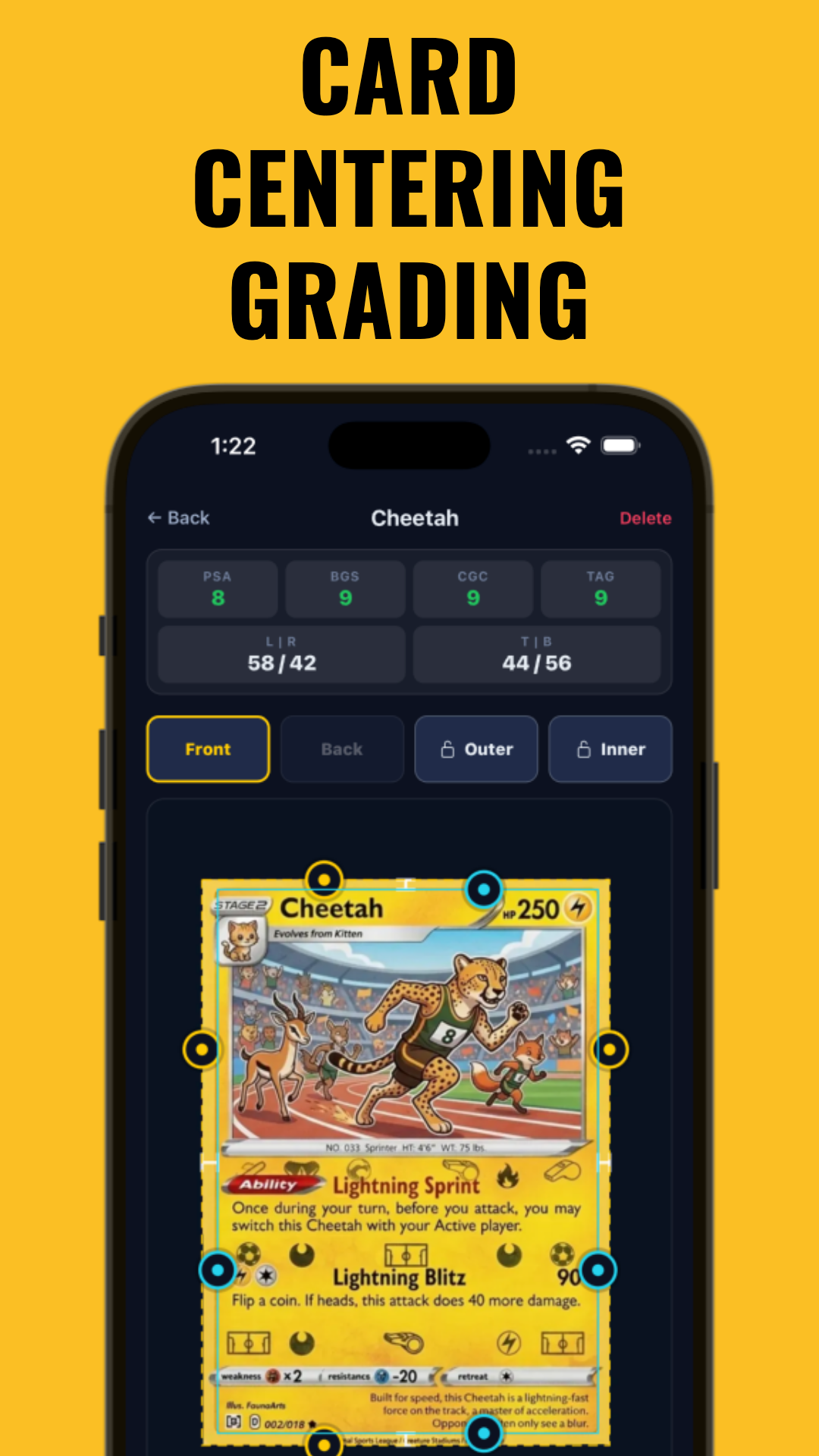
Before investing $30+ to submit a card for professional grading, accurately assessing its expected grade is critical. The Midpoint app offers collectors an all-in-one solution to estimate PSA, BGS, CGC, and TAG grades with AI-powered centering, corners, edges, and surface analysis.
AI Digital Grading and Centering Measurement
Midpoint measures card centering down to the millimeter, providing precise grading estimates. This allows collectors to determine if a raw 1940 Play Ball card is worth grading or if imperfections reduce its potential grade.
Card Lookup and Value Comparison
With access to over 250,000 cards, including the entire 1940 Play Ball set, Midpoint lets users compare raw and graded values instantly. This helps collectors decide whether to hold, sell, or submit for grading.
Portfolio Tracking and Collection Management
Midpoint also offers portfolio tracking, enabling collectors to monitor their 1940 Play Ball collection’s value over time and make informed decisions based on market trends.
For more on how to pre-grade effectively, see our detailed guide How to Pre-Grade Your Card: A Step-by-Step Guide.
Conclusion
The 1940 Play Ball baseball cards value hinges on a complex interplay of player significance, card condition, grading, and rarity. Key cards like Joe DiMaggio #1 and Ted Williams #27 dominate the market, especially in high grades where prices can be very high. Understanding individual card values, grading impacts, and rarity factors equips collectors to make informed buying, selling, and grading decisions. Tools like Midpoint empower collectors to assess centering and condition with AI precision before committing to costly grading submissions.
Whether you’re aiming to build a complete set, invest in high-grade key cards, or simply understand your current collection’s worth, leveraging accurate data and grading insights is essential. Explore the Midpoint app today to get your best digital grading estimates and take control of your vintage card collection’s value.
FAQ
Q: How much is a 1940 Play Ball baseball card worth?
A: Values vary widely by card and condition. Commons typically range from $10 to $200 raw, while key cards like Joe DiMaggio #1 can command very high prices when graded PSA 10. Use grading and price guides to estimate accurate value.
Q: What is the value of a 1940 Play Ball Joe DiMaggio card?
A: Raw Joe DiMaggio #1 cards generally sell from a few thousand dollars based on condition. PSA 10 graded copies have been known to command very high prices.
Q: How much is a 1940 Play Ball Ted Williams card worth?
A: Raw Ted Williams #27 cards range between several hundred and a few thousand dollars. PSA 10 graded cards can reach significantly higher values.
Q: Are 1940 Play Ball cards valuable in poor condition?
A: Cards in poor condition have significantly reduced value, often under $50 for commons. High-grade examples command the vast majority of market value, so grading is usually worthwhile if condition is good.
Q: What is the most valuable card in the 1940 Play Ball set?
A: Joe DiMaggio #1 is generally considered the most valuable card, especially in high-grade condition where it can command very high prices.
Q: How much is a complete 1940 Play Ball set worth?
A: Complete sets in high-grade condition typically sell for tens of thousands of dollars, which may be less than the sum of top graded key cards individually.
Free to start
Try the Midpoint app
Grade any card from a photo, see its raw and PSA 10 value, and track what your collection is worth — free.
Get it on iPhoneGet it on Android