
1958 Topps Hockey Cards Value: Ultimate Guide to Grading and Pricing
Discover the 1958 Topps hockey cards value, grading tips, star cards, and price guide to maximize your collection’s worth before grading submissions.

Estimated reading time: 12 min
Key Takeaways
- The 1958 Topps hockey set contains 66 cards featuring four U.S.-based NHL teams and bilingual card backs.
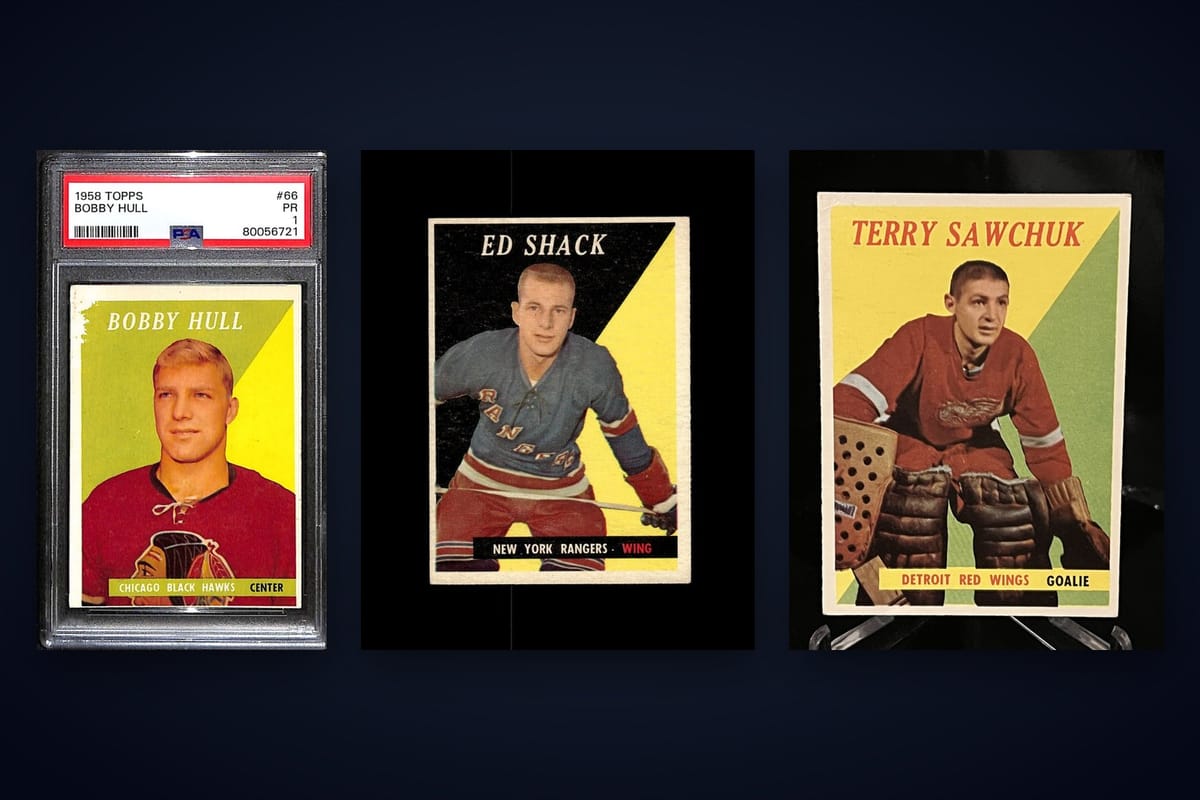
- Bobby Hull’s rookie card (#66) is among the most valuable, with PSA 10 copies reported to reach six-figure prices.
- Card condition and centering significantly impact 1958 Topps hockey cards value, with professional grading often commanding premiums over raw prices.
- Other stars like Gordie Howe (#8) and Terry Sawchuk command notable prices, especially in top PSA grades, including rare name misspellings.
- Using AI tools like Midpoint for digital grading and centering analysis can help collectors evaluate which 1958 Topps cards may be worth grading.
Card values — live data from Midpoint's card database, as of 2026-09-04. Prices move; Midpoint refreshes these daily.
| Card | Raw | PSA 10 | Gem premium | |
|---|---|---|---|---|
 |
Bobby Hull #66 1958 Topps |
$537.06 | $106,605 | 198.5× |
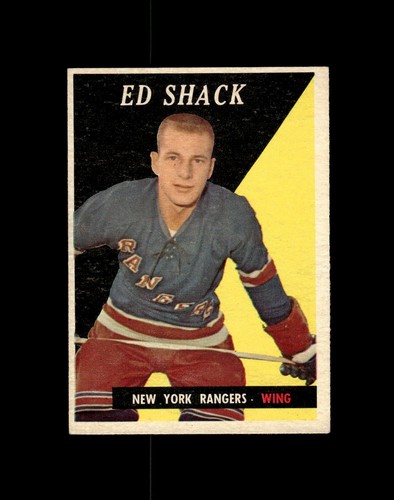 |
Eddie Shack #30 1958 Topps |
$89.99 | $18,119 | 201.4× |
 |
Terry Sawchuk #2 1958 Topps |
$45.48 | $9,559 | 210.2× |
 |
Johnny Bucyk #40 1958 Topps |
$43.34 | $8,735 | 201.6× |
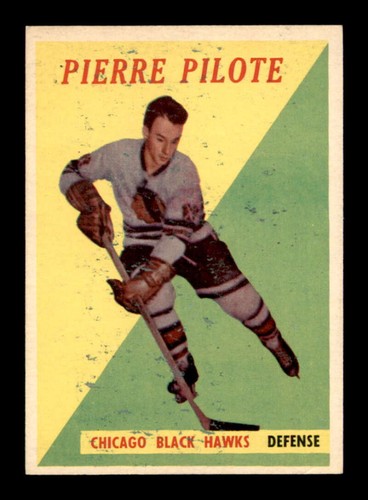 |
Pierre Pilote #36 1958 Topps |
$24.78 | $5,000 | 201.8× |
 |
Gump Worsley #39 1958 Topps |
$22.03 | $4,464 | 202.6× |
 |
Red Kelly #61 1958 Topps |
$20.45 | $4,132 | 202.1× |
 |
Ted Lindsay #63 1958 Topps |
$20.03 | $4,084 | 203.9× |
 |
Norm Ullman #65 1958 Topps |
$20.66 | $4,035 | 195.3× |
 |
Charlie Burns #43 1958 Topps |
$19.95 | $4,033 | 202.2× |
 |
Alex Delvecchio #52 1958 Topps |
$18.69 | $3,820 | 204.4× |
 |
Don Simmons #44 1958 Topps |
$17.14 | $3,430 | 200.1× |
Look up any card's current raw and graded value in Midpoint — and get an estimated grade before you pay to submit.
Table of Contents
- Section 1: Overview of the 1958 Topps Hockey Card Set
- Section 2: Complete 1958 Topps Hockey Card Checklist and Notable Variations
- Section 3: Deep Dive into Bobby Hull Rookie Card Value and Grading
- Section 4: Gordie Howe Card Variations and Market Pricing
- Section 5: Value Analysis of Commons and Star Cards by Condition
- Section 6: How Grading, Centering, and Defects Affect 1958 Topps Hockey Card Value
- Section 7: Using Midpoint App to Assess and Track 1958 Topps Card Values
- Conclusion
- FAQ
Section 1: Overview of the 1958 Topps Hockey Card Set
Historical Context and Set Composition
The 1958 Topps hockey card set is a notable vintage hockey collecting set, consisting of 66 cards that spotlight key players from the NHL’s U.S.-based teams during the late 1950s. This was Topps’ first hockey card set, released in the 1958-59 season, marking an expansion beyond baseball and football into hockey collectibles.
The set includes cards for four NHL teams based in the United States at that time: the Boston Bruins, Chicago Blackhawks, Detroit Red Wings, and New York Rangers. Each card features player portraits with bilingual French-English backs, reflecting hockey’s Canadian roots and growing U.S. popularity.
Significance in Today’s Market
Today, the 1958 Topps hockey cards value reflects their scarcity and historical interest. Collectors prize this set not only for its classic design but also for housing rookie cards of notable players such as Bobby Hull and key stars like Gordie Howe. The introduction of professional grading has further stratified card values based on condition and centering.
Understanding the set’s makeup and historical context is helpful for collectors deciding which cards to grade or hold, especially given grading premiums observed in marketplace data.

Why the 1958 Set Stands Out
- First Topps hockey card set with a full U.S. NHL team representation
- Features rookie cards of hockey legends
- French-English bilingual backs add unique appeal
- Limited run makes high-grade specimens relatively rare and sought after
Section 2: Complete 1958 Topps Hockey Card Checklist and Notable Variations
Full Checklist Overview
The 1958 Topps hockey set checklist comprises 66 cards numbered #1 through #66. It includes prominent players such as:
- Bobby Hull (#66) – Rookie card
- Gordie Howe (#8) – Star card with name variation
- Terry Sawchuk (#9) – Hall of Fame goaltender
- Other key NHL stars from the Bruins, Blackhawks, Red Wings, and Rangers
Knowing the exact card numbers and player names is useful for collectors to identify which cards may carry higher value and grading potential.
Notable Variations and Errors
One of the most recognized variations in the set is the misspelled "Gordy Howe" card (#8), where "Gordie" is incorrectly spelled on the front. This error adds collectible interest and can affect value depending on condition and grading.
Additionally, rookie cards and cards with exceptional centering or surface condition can command premiums. Variations in card backs and print quality due to the bilingual format also influence collector interest.
Why Variations Matter
- Misprints like "Gordy" Howe create rarity and desirability
- Rookie cards are often among the most valuable subset
- Subtle print or centering differences impact grading outcomes
Section 3: Deep Dive into Bobby Hull Rookie Card Value and Grading
Bobby Hull #66 Rookie Card Overview
Bobby Hull’s #66 rookie card is widely regarded as the centerpiece of the 1958 Topps hockey set. As one of hockey’s all-time greats, Hull’s rookie card is highly sought-after, both raw and graded. Its value is often considered a benchmark for the entire set.
Raw vs PSA Graded Value
Reported market data as of 2026-09-04 indicates that raw Bobby Hull rookie cards in Excellent condition typically sell in the low thousands. Once graded by PSA or other reputable services, the value can increase substantially:
- Mid-grade PSA 5-8 cards may sell for several thousands to tens of thousands of dollars
- High-grade PSA 9 copies have been reported in the tens of thousands to over $100,000 range
- PSA 10 Gem Mint specimens have been known to reach six-figure prices
This premium underscores the importance of grading for high-value cards, particularly rookie cards like Hull’s.
Grading Considerations and Submission Tips
Before submitting the Bobby Hull rookie card for grading, collectors should carefully assess centering, corners, edges, and surface condition. Even minor flaws can affect the grade and impact value. Using a tool like Midpoint can help measure centering precisely and provide AI-generated grade estimates across PSA, BGS, CGC, and TAG.
Key Takeaways for Hull Card Collectors
- Professional grading can maximize value for top-condition cards
- Digital pre-grading tools help gauge grading potential before submission
- Preserving card condition is critical to maintain high grade eligibility
Section 4: Gordie Howe Card Variations and Market Pricing
Gordie Howe #8 Card Overview
Gordie Howe’s #8 card is another important card in the 1958 Topps set. Howe’s legendary NHL career makes his cards highly collectible. The set includes two notable versions: the standard "Gordie" spelling and the rarer misspelled "Gordy" variation.
Value Differences by Variation and Grade
Based on available market information:
- Standard Gordie Howe #8 raw cards in Excellent condition generally range from low hundreds of dollars
- PSA graded cards can see significant uplift, with mid to high grades reaching several thousands of dollars
- The "Gordy" misspelling variation often commands a premium, particularly in high-grade PSA 9-10 condition, with prices reported in the several thousands range
Because of the spelling error’s relative rarity, collectors often seek out this variation, especially when well-centered and graded.
Collecting Tips for Gordie Howe Cards
- Verify the spelling on the card front to identify the variation
- Focus on centering and surface condition to enhance grading outcomes
- Consider grading "Gordy" Howe cards even if raw prices seem modest
Section 5: Value Analysis of Commons and Star Cards by Condition
Commons Versus Star Cards
The 1958 Topps set includes many commons alongside star player cards. While commons generally have lower raw and graded values, some can still command respectable prices if in high-grade condition.
Star cards beyond Hull and Howe, such as Terry Sawchuk (#9), also show solid market interest, especially when graded PSA 8 or above.
Price Guide Highlights by Grade
Based on recent sales and price guide data:
- Commons in Excellent raw condition typically range from low double digits to around $50
- Star cards in Excellent raw condition can fetch low to mid hundreds
- PSA 7-8 graded commons may rise to low hundreds
- PSA 9-10 graded star cards often exceed $1,000, sometimes more for key players
Grading Worthiness of Commons
Not all commons are worth grading due to submission costs and grading premiums. However, if a common card is exceptionally well-centered, with pristine corners and surface, it may be profitable. Using AI-driven tools like Midpoint enables accurate pre-grading assessment to avoid unnecessary expenses.
Section 6: How Grading, Centering, and Defects Affect 1958 Topps Hockey Card Value
Grading Impact on Value
Professional grading companies (PSA, BGS, CGC, TAG) assign grades based on centering, edges, corners, and surface condition. The difference between a PSA 6 and PSA 9 can represent a multiple-fold increase in value for 1958 Topps hockey cards.
Centering: The Most Critical Factor
Centering describes how evenly the card’s image is placed within its borders. The 1958 Topps cards often display centering variances that affect grades. Cards centered within approximately 55/45 to 60/40 ratios typically receive higher grades. Even millimeter-level off-centering can downgrade a card from PSA 9 to PSA 7 or lower.
Midpoint’s precise centering calculator and AI analysis provide collectors with pre-submission centering scores, helping reduce grading risk and expense. Learn more at Card Centering Tool: Accurate Card Grading Estimates.
Common Defects and Their Consequences
- Corners: Rounded or damaged corners lower grades.
- Edges: Chipping or fraying impacts value.
- Surface: Creases, stains, or print defects reduce grade significantly.
- Gum Stains: Particularly on older cards, affect surface grades.
- Alterations: Any modifications or cleaning can void grading authenticity.
Section 7: Using Midpoint App to Assess and Track 1958 Topps Card Values
AI Digital Grading and Centering Measurement
Midpoint is an all-in-one collector app that leverages AI to estimate trading card grades similar to PSA, BGS, CGC, and TAG before submission. For 1958 Topps hockey cards, Midpoint analyzes centering down to millimeters and evaluates corners, edges, and surface conditions to generate an estimated grade.
This capability lets collectors decide which cards are worth sending for professional grading, potentially saving time and money. The app covers over 250,000 cards, including hockey, and provides raw versus graded market value comparisons.
Portfolio Tracking and Market Value Insights
Collectors can track their 1958 Topps hockey card portfolios over time, monitoring value fluctuations based on grading trends, auction results, and marketplace data. This feature is useful to both casual and serious collectors aiming to maximize their investment returns.
How Midpoint Supports 1958 Topps Collectors
- Instant PSA 10 value estimates help identify premium cards
- Detailed centering analysis reduces grading risk
- Supports decisions on grading submissions for rookie and star cards
- Integrated price guide for up-to-date 1958 Topps hockey card values
Get started with Midpoint for free on iOS and Android to confidently manage your 1958 Topps collection.
Conclusion
The 1958 Topps hockey cards value landscape is influenced by legendary rookie cards, notable variations, and professional grading quality. Bobby Hull’s rookie card remains the set’s most valuable card, with PSA 10 examples reported at six-figure prices. Gordie Howe’s cards, especially the "Gordy" misspelling variant, also carry notable premiums.
Commons and other star cards have respectable values that increase with top grades. However, submission costs and grading risks necessitate careful pre-grading evaluation.
Leveraging digital grading tools like Midpoint can help collectors measure centering and condition, estimate PSA 10 values, and make informed grading decisions. This can reduce financial risk and help preserve the integrity of valuable 1958 Topps hockey cards.
For collectors seeking to protect and grow their vintage card investments, understanding grading nuances and market values is important. Use the insights and tools discussed here to navigate the 1958 Topps hockey market with greater confidence.
FAQ
Q: How much is a 1958 Topps Bobby Hull rookie card worth?
A: As of 2026-09-04, raw cards in Excellent condition typically sell for around $1,200–$2,000, while PSA 10 graded copies have been reported to exceed $150,000.
Q: What is the most valuable 1958 Topps hockey card?
A: The Bobby Hull #66 rookie card is generally considered the most valuable in the set, especially in PSA 9-10 grades.
Q: How much is a 1958 Topps Gordie Howe card worth?
A: Raw Gordie Howe #8 cards typically range from $200 to $500; PSA 9-10 graded cards can reach several thousands, especially the "Gordy" misspelling variation.
Q: What is the value of a 1958 Topps hockey card in PSA 9 or PSA 10?
A: PSA 9-10 graded cards, particularly rookies and stars, can sell for multiple times the raw value. For example, Bobby Hull PSA 10 cards have been reported to surpass $150,000.
Q: How many cards are in the 1958-59 Topps hockey set?
A: The complete set consists of 66 cards featuring four U.S.-based NHL teams with bilingual French-English backs.
Q: Are 1958 Topps hockey cards worth anything?
A: Yes, especially key rookie and star cards, which can command high values depending on condition and grading.
Free to start
Try the Midpoint app
Grade any card from a photo, see its raw and PSA 10 value, and track what your collection is worth — free.
Get it on iPhoneGet it on Android


