How AI Card Centering Technology Works: A Comprehensive Guide
Discover AI card centering technology using computer vision and machine learning for precise centering ratios in trading and payment card applications.

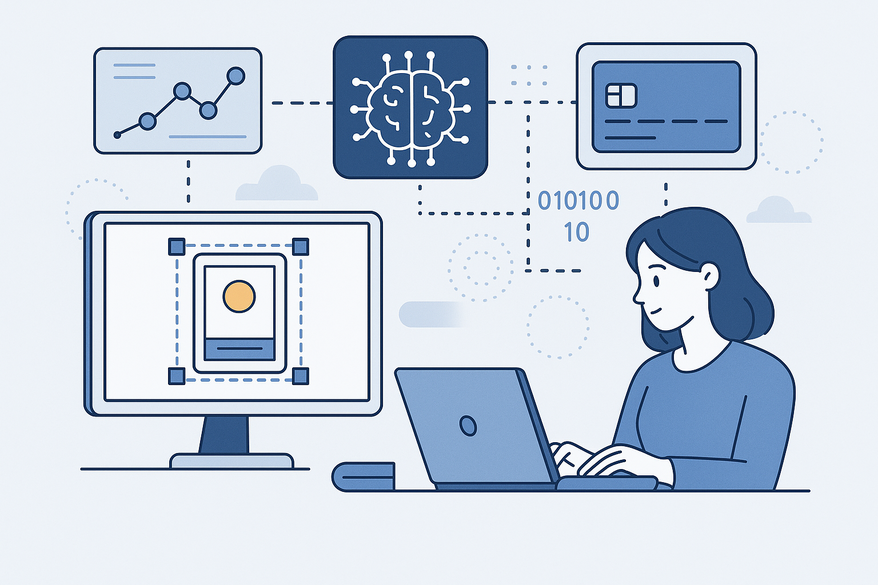
Estimated reading time: 12 min read
Key Takeaways
- Automation meets precision: Machine learning and computer vision replace manual measurements.
- End-to-end workflow: From image capture to centering ratio computation and grading threshold mapping.
- Wide-ranging use cases: Trading cards, payment cards, ID documents, packaging and more.
- Major benefits: Sub-pixel accuracy, consistency, speed, and cost savings.
- Operational challenges: Calibration, data quality, integration, and model generalization.
Table of Contents
- Introduction to AI Card Centering Technology
- Background and Evolution of AI Card Centering Technology
- How AI Card Centering Technology Works
- Key Components and Features
- Benefits and Advantages
- Challenges and Considerations
- Real-World Applications
- Future Outlook
- Conclusion
Introduction to AI Card Centering Technology
AI card centering technology combines imaging hardware with AI-powered software—specifically computer vision and machine learning—to measure how well printed artwork sits within a card’s borders. Early steps use high-resolution cameras or scanners. Later stages rely on neural networks to detect edges, correct perspective, and compute precise centering ratios. For a visual walkthrough, see our step-by-step guide.
For collectors looking to pre-screen cards before submitting to PSA, BGS, or CGC, the Card Centering Tool offers automatic, precise centering measurements and grading threshold checks to help save on grading fees. This technology is vital in:
- Trading and sports card grading
- Payment and banking card production
- Government ID issuance
- Manufacturing quality control
Background and Evolution of AI Card Centering Technology
Before AI, centering relied on human eyes and simple tools:
- Visual inspection: graders used experience-dependent eyeballing, prone to fatigue and bias.
- Manual tools: rulers, magnifiers, printed centering guides for ratios like 55/45 or 60/40.
- Mechanical aids: jigs or fixed-template scanners still required manual alignment.
Drawbacks included inconsistent results, slow throughput, and human bias. Key enablers for the AI shift were affordable high-resolution imaging, advances in computer vision (edge detection, segmentation), machine learning frameworks (CNNs for object detection), and cloud/mobile compute for real-time analysis. These innovations let software automatically detect card edges and artwork borders, delivering repeatable measurements at scale. Source: OpenCV.
How AI Card Centering Technology Works
This technology follows eight main steps in its image processing and measurement pipeline:
- Image Acquisition
• Flatbed or line-scan scanners, overhead or smartphone cameras (use even lighting and a contrasting background).
• Guidance: straight-on shots and stable positioning. - Preprocessing
• Resize and normalize images to a standard resolution.
• Adjust color/contrast and reduce noise for clear border detection. - Card Detection & Localization
• Object detection models (YOLO, Faster R-CNN) identify card outlines.
• Extract four corner coordinates for perspective adjustments. - Perspective Correction (De-warping)
• Compute homography using corner coordinates.
• Warp image so the card appears flat and rectangular. - Inner Border/Artwork Detection
• Edge detection plus line fitting or semantic segmentation to find the printed frame.
• Models trained per card type (e.g., sports vs. trading cards) for higher accuracy. - Measuring Border Widths
• Calculate pixel distances from each outer edge to the inner artwork border (left, right, top, bottom).
• Convert pixels into scale-independent units. - Computing Centering Ratios
• horizontal_ratio = wider_side / total_horizontal_border.
• vertical_ratio = wider_side / total_vertical_border.
• Map ratios to grading standards (PSA 10 front ≥ 55/45; PSA 9 front ~ 60/40). - Machine Learning Adjustments & Confidence
• Calibrate models on labeled datasets from graded cards to match human grader standards.
• Provide confidence scores and flag ambiguous cases.
• Continuous learning updates for new card designs and print variations.
This end-to-end process delivers centering ratios with sub-pixel precision and aligns them with industry grading thresholds. Sources: Ximilar, PSA centering guide.
Key Components and Features of AI Card Centering Technology
The solution comprises both hardware and software:
- Hardware Components: smartphones, webcams, industrial cameras, flatbed/line-scan scanners; diffused LED panels or ring lights; positioning fixtures to hold cards flat.
- Software Components: computer vision pipeline for preprocessing, edge/corner detection, de-warping; AI models for object detection, segmentation, card-type classification; measurement engine for pixel-to-unit conversion and ratio computation; user interface with drag-and-drop guides.
- Distinctive Features: full automation, repeatable results, real-time or batch processing, and integration into marketplaces and grading workflows.
Source: Ximilar.
Benefits and Advantages of AI Card Centering Technology
- Accuracy & Precision: sub-pixel measurements resolve tight thresholds such as 55/45 vs. 60/40.
- Consistency & Reliability: uniform algorithmic logic removes human fatigue and bias.
- Efficiency & Throughput: rapid scanning of individual collections or massive portfolios.
- Cost Savings: pre-screening reduces wasted grading submissions and manual rework.
- Operational Improvements: standardized centering across global sites and data feedback loops for production alignment.
Source: PSA centering guide.
Challenges and Considerations for AI Card Centering Technology
- Calibration & Ground Truth: aligning AI measurements with physical ruler readings and grader standards.
- Data Quality Issues: poor lighting, extreme angles, reflections, or protective sleeves can mislead models.
- Integration Obstacles: retrofitting production lines with cameras and server infrastructure while balancing AI automation and human oversight.
- Model Generalization & Bias: vintage, foil, die-cut, and borderless cards challenge models trained on modern rectangles.
- Explainability & Trust: visual overlays and transparent reports help users justify centering scores.
Source: Ximilar.
Real-World Applications of AI Card Centering Technology
- Trading & Sports Card Grading: pre-grading apps let collectors check centering before PSA/BGS submission; compare tolerances compared. Professional services like Ximilar APIs automate centering, corners, edges, and surface analysis.
- Banking & Payment Card Production: verify chip and antenna alignment relative to printed artwork and inspect multi-layer consistency.
- ID & Government Documents: ensure precise placement of photos, holograms, and security elements to improve machine readability.
- Manufacturing & Packaging: align labels, barcodes, QR codes, and embedded NFC/RFID tags to maintain brand quality and scanning reliability.
Source: Ximilar.
Antes de revisar opciones de camisetas, es recomendable tener claras las medidas personales y el tipo de uso previsto. Para ordenar la búsqueda, camiseta del club FC Barcelona puede revisarse junto con las medidas y el tipo de ajuste preferido. También conviene revisar las condiciones descritas para evitar confundir estilo, talla y comodidad.
Future Outlook for AI Card Centering Technology
- End-to-End AI Grading: integrated models assessing centering, corners, edges, surfaces, and print quality.
- On-Device AI: offline centering on smartphones or handheld scanners for field use without internet.
- Template-Free, Generic Models: segmentation-only approaches handling new and borderless designs.
- Deep Marketplace Integration: one-click scan-to-list workflows with price estimates linked to centering scores.
- Real-Time Production Control: live feedback loops adjusting printing and cutting alignment on the fly, plus spectral imaging for counterfeit detection.
Source: Ximilar.
Conclusion: The Impact of AI Card Centering Technology
AI card centering technology unites computer vision, machine learning, and precision measurement to deliver consistent ratios such as 55/45 or 60/40. It replaces manual rulers and eyeballing with automated, high-speed pipelines that align with PSA, BGS, CGC, and other grading standards. Though challenges like calibration, data quality, and model bias remain, AI’s advantages in accuracy, speed, and cost savings are clear. Explore AI card centering tools today with cardgrader.ai, cardcenter.pro, or experiment with Ximilar’s card grading APIs.
FAQ
- What types of cards can AI centering technology handle?
- It supports trading and sports cards, payment cards, IDs, government documents, and even labels in manufacturing and packaging.
- How accurate is the centering measurement?
- With sub-pixel precision, the system reliably differentiates tight thresholds like 55/45 vs. 60/40, matching human grader standards.
- Can collectors use this technology at home?
- Yes. Smartphone-based solutions and online calculators allow hobbyists to pre-screen cards before investing in professional grading.
- What are the main limitations?
- Poor lighting, extreme angles, protective sleeves, and non-standard card designs can challenge accuracy. Regular calibration and quality controls help mitigate these issues.
Free to start
Try the Midpoint app
Grade any card from a photo, see its raw and PSA 10 value, and track what your collection is worth — free.
Get it on iPhoneGet it on Android