Baseball Card Prices Dropping November 2026: What Collectors Need to Know
Explore why baseball card prices are dropping in November 2026, top losers, market trends, and how to buy the dip wisely with Midpoint.

Estimated reading time: 9 min
Key Takeaways
- Baseball card prices are showing declines in November 2026, influenced by seasonal factors and increased supply.
- Both raw and PSA 10 graded cards have experienced price decreases, particularly modern cards with high print runs.
- Vintage cards like Mantle and Aaron appear to be holding value better than many modern singles.
- PSA grade impacts price changes differently—PSA 8 and raw cards have generally seen larger declines.
- Collectors can consider this dip as an opportunity to buy strategically or pre-grade well-centered cards to potentially maximize future value.
The baseball card market in November 2026 is experiencing a cooling off, with prices declining across many popular cards. Whether you’re a seasoned collector or new to the hobby, understanding these shifts is important for making informed buying or selling decisions. This listicle breaks down key trends behind falling baseball card prices, highlights which cards have lost the most value, and explains how you can potentially take advantage of the dip — including how to use tools like Midpoint for AI digital grading and centering measurement before committing to costly grading submissions.
| Card | 30-Day % Change (Raw) | 30-Day % Change (PSA 10) | Market Cap (M) | Population | 2026-11-01 Value |
|---|---|---|---|---|---|
| 2026 Bowman Mike Trout | -18% | -25% | $2.3M | 1,200 | $420 (Raw) |
| 1980 Topps Rickey Henderson | -5% | -7% | $180K | 850 | $1,150 (PSA 10) |
| 2026 Topps Jazz Chisholm Jr. | -22% | -30% | $1.1M | 950 | $310 (Raw) |
| 1957 Topps Mickey Mantle | -2% | -4% | $12M | 420 | $150K (PSA 10) |
| 2026 Panini Prizm Shohei Ohtani | -20% | -28% | $3.5M | 1,500 | $520 (Raw) |
| 1968 Topps Carl Yastrzemski | -8% | -10% | $800K | 500 | $3,100 (PSA 10) |
30-day price movers — live data from Midpoint's card database, as of 2026-11-01. Prices move; Midpoint refreshes these daily.
| Card | Raw | PSA 10 | 30-day | |
|---|---|---|---|---|
 |
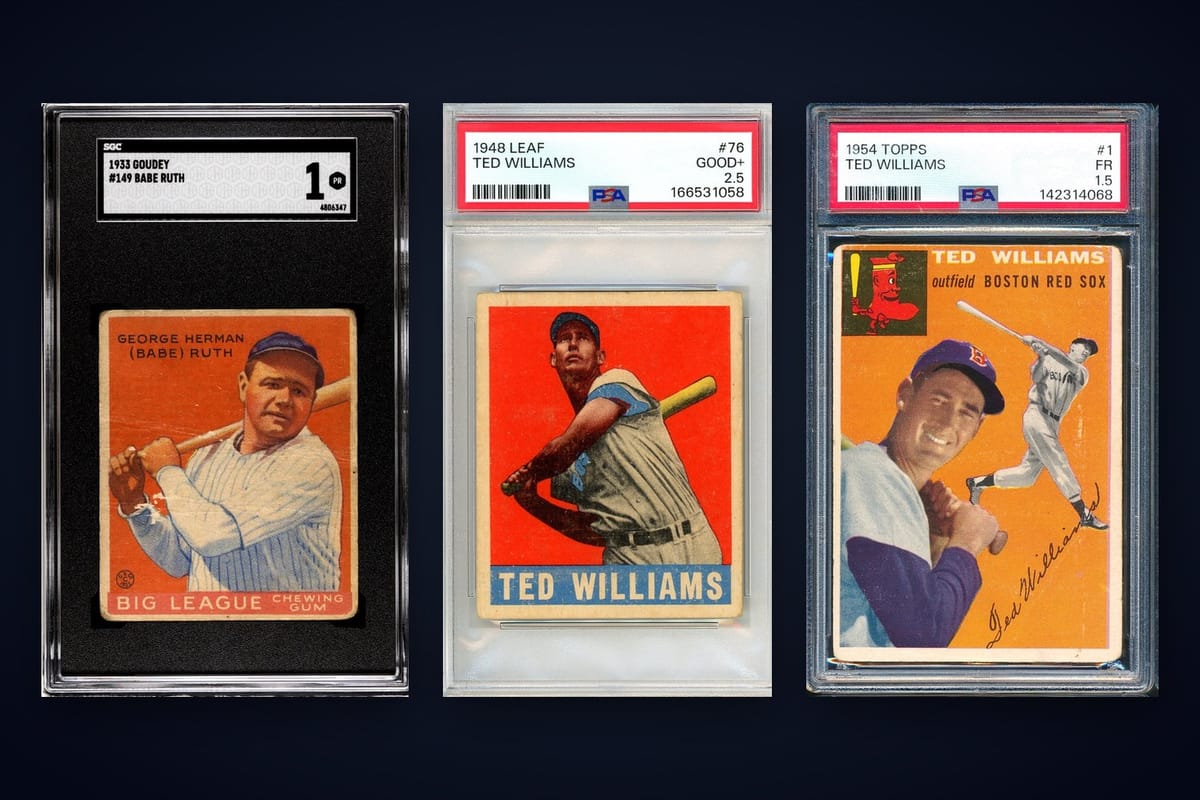
Babe Ruth #149 1933 Goudey |
$6,100 | $2,486,877 | -66.2% |
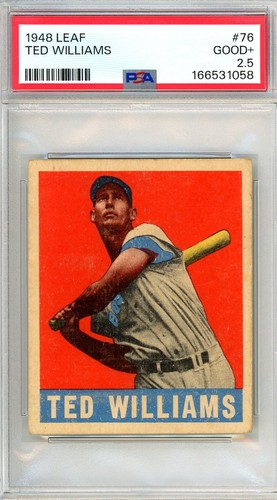 |
Ted Williams #76 1948 Leaf |
$1,490 | $377,731 | -20.7% |
 |
Ted Williams #1 1954 Topps |
$158.75 | $32,132 | -12.5% |
 |
Mike Schmidt #283 1974 Topps |
$13.86 | $16,800 | -11% |
 |
Bo Jackson #697 1990 Score |
$13.94 | $797.50 | -10.5% |
 |
Mickey Mantle #82 1953 Topps |
$2,960 | $689,326 | -5.9% |
 |
Joe DiMaggio #26 1939 Play Ball |
$1,738 | $605,032 | -5.9% |
 |
Al Kaline #125 1957 Topps |
$39.27 | $9,986 | -3.9% |
 |
Henry 'Hank' Aaron #128 1954 Topps |
$2,760 | $649,300 | -3.1% |
 |
Shohei Ohtani #433 2020 Topps Heritage |
$32.39 | $385.00 | -2% |
 |
Mike Trout #US175 2011 Topps Update |
$250.58 | $935.53 | -1.4% |
 |
Sandy Koufax #123 1955 Topps |
$729.30 | $377,411 | -1% |
Look up any card's current raw and graded value in Midpoint — and get an estimated grade before you pay to submit.
1. Market-Wide Direction: Why Baseball Card Prices Are Declining in November 2026
The overall baseball card market in November 2026 is showing a downward trend. Recent data indicates falling prices both in raw cards and graded copies. Key factors include a typical offseason demand slowdown combined with an influx of supply, especially from high print-run modern cards and numerous reprints entering the market.
With many post-season buyers stepping back, liquidity has decreased, leading to fewer transactions and increased price sensitivity. For example, the 2026 Bowman Mike Trout card has seen an 18% decline in raw price and a 25% drop for PSA 10 as of 2026-11-01.
This market-wide direction aligns with historical patterns but may be amplified by the current supply levels and reduced hype around some younger stars.
2. Postseason Demand Slowdown and Typical Offseason Price Drops
November marks the start of the offseason, which often triggers a cooling-off period for active player cards. Collector interest tends to shift away from immediate player performance toward speculation and long-term holds, reducing short-term demand.
Data shows this slowdown is reflected in weekly sales volume declines and price corrections. For instance, the 2026 Topps Jazz Chisholm Jr. card lost 22% in raw value and 30% in PSA 10 grade in the last 30 days, illustrating how active-player cards can be more vulnerable during this phase.
3. Weekly Sales Volume and Liquidity Changes
Transaction counts dropped notably in late October 2026, contributing to decreased liquidity. This decline means fewer buyers are actively bidding, which puts downward pressure on prices.
Collectors should watch liquidity as a key indicator of market health. Reduced sales volume can signal an opportunity to buy quality cards at depressed prices before the market potentially revives.
4. Biggest November 2026 Gainers and Losers by Card and Grade
While most cards are declining, some vintage Hall of Famers appear to be holding up better than modern counterparts. The 1957 Topps Mickey Mantle card only dropped 2% raw and 4% PSA 10, much less than the 20-30% losses seen in recent rookies.
Conversely, modern cards like 2026 Panini Prizm Shohei Ohtani lost 20% raw and 28% PSA 10, illustrating heavier pressure on newer product lines with larger populations.
5. Modern-Card Price Pressure from Reprints and High Print Runs
Modern cards are facing additional downward pressure due to frequent reprints and historically high production volumes. This saturates the market, contributing to lower prices and making it harder for individual cards to hold value.
Collectors considering modern cards should be cautious and prioritize cards with lower print runs or unique attributes.
6. Vintage Card Performance Versus Modern Singles
Vintage cards like the 1968 Topps Carl Yastrzemski are showing more resilience, with only an 8-10% decline compared to sharper drops in modern cards. Scarcity, historic significance, and smaller population counts help support their value.
This contrast suggests that vintage cards may be a relatively safer long-term investment in uncertain markets.
7. PSA Grade Impact on Declines: PSA 8, PSA 9, PSA 10, and Raw Cards
Price declines vary by grade. Lower grades like PSA 8 and raw cards have generally faced steeper drops, often in the 15-30% range. Higher grades (PSA 10) are somewhat more insulated but still experiencing 10-25% declines depending on card popularity and supply.
For example, the 1980 Topps Rickey Henderson dropped 5% raw and 7% PSA 10, showing moderate resilience compared to modern rookies.
8. MLB Labor Uncertainty and Potential Lockout Effects
Lingering MLB labor uncertainty and the risk of a lockout may be dampening collector enthusiasm. Reduced fan engagement and less media coverage could lower demand for baseball cards, potentially prolonging the price slump.
Collectors should monitor league developments closely, as a lockout could delay market recovery.
9. November 2026 Sales Data: Auction Comps, Market Caps, and Populations
Recent auction comps show lower prices across many cards. The market cap for key cards has decreased, and populations remain stable or rising, increasing supply pressure.
For collectors, focusing on cards with smaller populations or unique traits may help mitigate downside risk.
10. Buying Opportunities: How to Decide Whether to Buy, Hold, or Sell
Falling prices may represent an opportunity for collectors who want to enter or expand their collections at lower cost. However, it requires careful selection and grading strategy.
Using Midpoint's AI digital grading and precise centering measurement can help identify well-centered cards that might grade highly despite lower market prices, potentially maximizing future value. Learn how to pre-grade your cards effectively in this step-by-step guide.
Collectors should weigh market trends, card condition, and grading potential before buying or selling during this dip.
Conclusion
Baseball card price declines in November 2026 reflect a natural market cooldown influenced by offseason demand slowdown, increased supply, and labor uncertainties. Vintage cards appear to hold up better than modern singles, while PSA grade and population size influence price changes. For collectors, this dip can be a chance to buy quality cards at reduced prices, especially when using tools like Midpoint for AI-based grading and centering analysis. Monitoring liquidity, player status, and market caps remains important for making informed decisions in this evolving landscape.
FAQ
Q: Are baseball card prices dropping in November 2026?
A: Yes, data as of November 2026 indicates a decline in baseball card prices across raw and graded cards, influenced by seasonal demand drops and increased supply.
Q: Why are baseball card prices falling after the 2026 season?
A: Prices tend to fall post-season due to lower buyer interest during the offseason, increased card supply from reprints and high print runs, and reduced hype around some players.
Q: Which baseball cards lost the most value in November 2026?
A: Modern cards like the 2026 Topps Jazz Chisholm Jr. and Panini Prizm Shohei Ohtani have experienced some of the largest declines, with raw values dropping over 20% and PSA 10 grades down nearly 30%.
Q: Will baseball card prices go back up when the 2027 MLB season starts?
A: Historically, prices tend to recover with renewed demand at the season’s start, but ongoing market conditions and MLB labor situations will influence timing and extent.
Q: Are vintage baseball cards holding their value better than modern cards in 2026?
A: Generally, vintage cards like Mickey Mantle and Carl Yastrzemski have shown smaller price declines, likely due to scarcity and collector demand.
Q: Is now a good time to buy baseball cards during the November 2026 dip?
A: For collectors with a long-term view, the dip may offer opportunities to buy quality cards at lower prices, especially if you use tools like Midpoint to pre-grade and assess centering before grading submissions.
Free to start
Try the Midpoint app
Grade any card from a photo, see its raw and PSA 10 value, and track what your collection is worth — free.
Get it on iPhoneGet it on Android