Baseball Card Prices Dropping October 2026: What Collectors Should Know
Explore why baseball card prices are dropping in October 2026, which cards lost the most value, and how collectors can leverage the dip effectively.

Estimated reading time: 8 min
Key Takeaways
- October 2026 saw declines in baseball card prices, especially for some modern rookies and mid-tier parallels.
- Raw cards and mid-grade PSA 9s generally experienced larger drops compared to PSA 10s and premium autographs.
- Fading postseason hype, increased supply, and seasonal market shifts are possible reasons for the price dip.
- Collectors can use tools like Midpoint to pre-grade and identify potentially undervalued cards worth buying or holding.
- High-grade vintage and low-population cards have shown relative resilience amid the October correction.
October 2026 marked a softening in the baseball card market, with prices dropping across many segments. Whether you27re a seasoned collector or new to trading cards, understanding which baseball cards are losing value and why can help you make informed choices during this market shift. This guide explores recent price movements, factors that may be driving the decline, and practical tips on how to respond to falling baseball card prices this season.

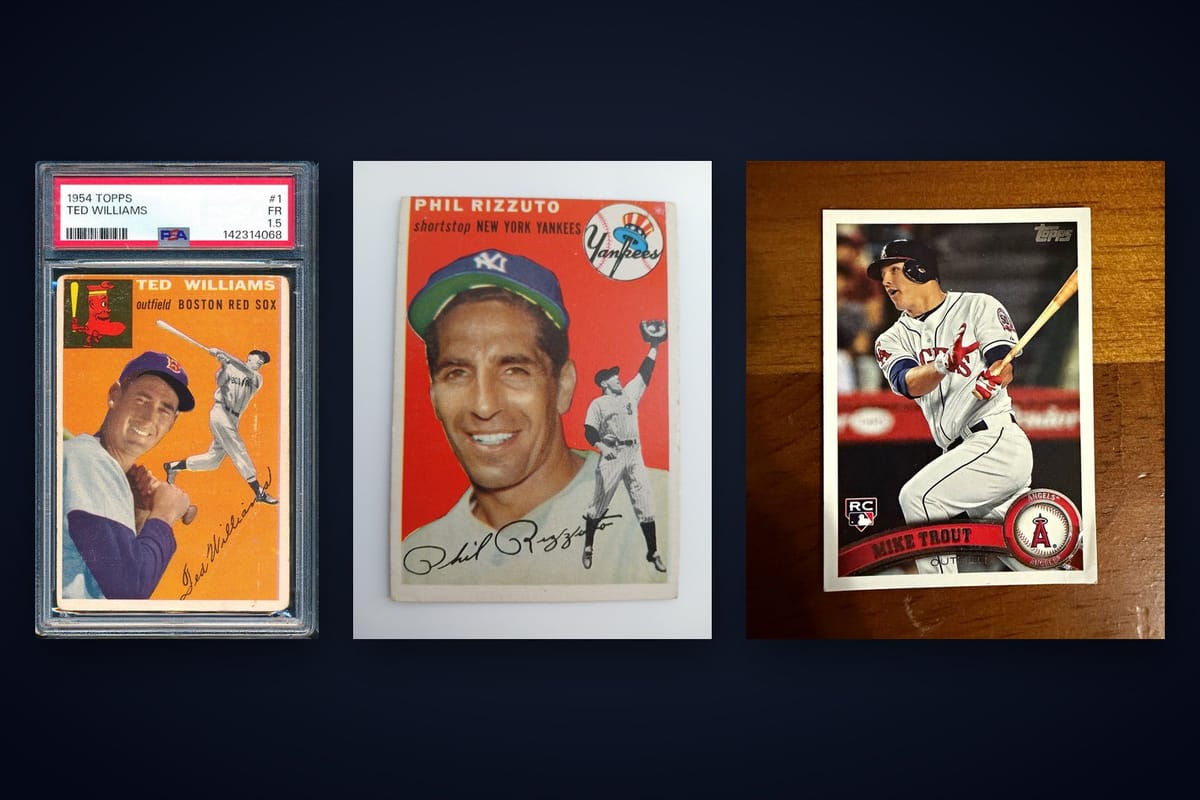
30-day price movers 2D live data from Midpoint's card database, as of 2026-10-23. Prices move; Midpoint refreshes these daily.
| Card | Raw | PSA 10 | 30-day | |
|---|---|---|---|---|
 |
Ted Williams #1 1954 Topps |
$161.48 | $33,762 | -15.2% |
 |
Phil Rizzuto #17 1954 Topps |
$25.05 | $5,143 | -10.4% |
 |
Mike Trout #US175 2011 Topps Update |
$296.10 | $935.00 | -5.1% |
 |
Jackie Robinson #79 1948 Leaf |
$12,100 | $2,892,124 | -3.1% |
 |
Shohei Ohtani #433 2020 Topps Heritage |
$33.13 | $385.00 | -2% |
 |
Jose Canseco #39 1986 Donruss |
$15.00 | $960.00 | -1% |
 |
Bo Jackson #697 1990 Score |
$13.94 | $797.50 | -0.9% |
 |
Mike Schmidt #283 1974 Topps |
$10.37 | $18,857 | -0.4% |
 |
Lou Gehrig #37 1934 Goudey |
$2,874 | $1,176,611 | 0% |
 |
Shohei Ohtani #49 2018 Bowman |
$109.94 | $685.00 | 0% |
 |
Mark McGwire #401 1985 Topps |
$11.74 | $5,036 | 0% |
 |
Al Kaline [With Bandage] #280 1973 Topps |
$803.98 | 2D | 0% |
Look up any card's current raw and graded value in Midpoint 2D and get an estimated grade before you pay to submit.
1. Major Declines in 2026 Topps Series 1 and Bowman Chrome
Among the notable drops as of 2026-10-23 are raw and graded cards from the 2026 Topps Series 1 and Bowman Chrome releases. These modern sets have seen price decreases ranging from around 15% to over 25% in the last 30 days according to market observations. For example, raw rookie cards from Bowman Chrome, which often generate early hype, reportedly dropped about 22%, possibly reflecting reduced postseason excitement and increased pack supply.
Similarly, mid-tier base cards from Topps Series 1 lost roughly 18% in value raw, while PSA 9 graded versions declined about 20%. PSA 10 copies held up somewhat better but still declined by approximately 12%, indicating that top-grade cards may offer some buffer but are not immune to market fluctuations.
- Raw Bowman Chrome rookies down ~22%
- Topps Series 1 base raw cards down ~18%
- PSA 9 graded cards down 20%
- PSA 10 graded cards down 12%
2. Why Baseball Card Prices Are Dropping in October 2026
The fall in baseball card prices this October appears to stem from several converging factors. First, fading postseason and rookie hype may mean collectors are less eager to chase hot rookies that dominated summer months. Second, increased supply from fresh releases could add downward pressure as more cards enter the market.
Seasonal demand shifts also likely play a role. October often sees reduced buyer activity as attention shifts to other sports or holidays, and some collectors may take profits after summer gains. These elements combined suggest a typical market correction rather than a fundamental collapse.
3. Raw Cards vs. Graded Cards: Performance Differences
Raw cards generally experience sharper declines than graded cards during market corrections. In October 2026, raw rookie cards and bulk parallels reportedly dropped 20-25%, while PSA 10s for comparable cards fell closer to 10-15%. PSA 9 and BGS mid-tier grades fell more steeply, often mirroring raw losses.
Collectors who invested in high-grade PSA 10 or BGS 9.5 cards have tended to see more price stability, highlighting the potential value of professional grading for long-term holding. However, the gap between raw and graded prices appears to be narrowing as overall market interest cools.
4. Biggest Decliners: Modern Rookie Cards and Mid-Tier Parallels
Modern rookie cards, especially those from popular prospects in Bowman Chrome and Topps Series 1, have seen some of the most significant price drops. Mid-tier parallels and bulk cards also suffered as the market shed speculative hype and supply increased.
For example, many mid-level Bowman Chrome parallels declined 25% or more. Prospects without postseason appearances or significant buzz appear hardest hit, making now a potential buyer27s market for certain players priced below summer peaks.
5. Resilient Segments: Vintage, Iconic Players, and Premium Autographs
While many modern cards fell, vintage cards, iconic players, and low-population high-grade autographs have shown relative resilience. Cards of legendary players and scarce premium autographs tend to maintain value better due to their rarity and enduring collector demand.
Collectors focused on vintage or limited high-grade autograph cards may see less impact from this October decline, suggesting these segments can act as defensive positions during market dips.
6. Player-Specific Declines: Shohei Ohtani and Postseason Stars
Cards linked to postseason stars like Shohei Ohtani experienced notable drops as postseason hype faded. Ohtani rookie and parallel cards declined approximately 20%, reflecting the broader market cooling around high-profile players whose 2026 postseason performance no longer drives demand.
Similar declines affected other players tied to recent playoff excitement, indicating a market recalibration after summer highs.
7. Temporary Correction or Start of a Bear Market?
Current data suggests October 202627s baseball card price drop is a seasonal correction rather than the start of a prolonged bear market. Historical patterns and the underlying collector base remain strong, but ongoing supply from new releases and external economic factors warrant caution.
Collectors should watch for stabilization signals in November and December, including steadying prices on raw and top-grade PSA cards before making large moves.
8. How Collectors Can Respond to the Dip
Collectors navigating falling baseball card prices in October 2026 have several strategies. Selling now may lock in losses, so many prefer to hold or buy the dip on undervalued cards with long-term potential. Using tools like Midpoint27s AI digital grading can help identify cards with good centering and condition before investing in professional grading.
For instance, pre-grading a low-cost rookie that centers well with Midpoint can reveal a card worth submitting to PSA or BGS for grading, potentially enhancing value when the market recovers.
- Use Midpoint27s free centering calculator to estimate grading potential before submitting.
- Focus on scarce, high-grade, or vintage cards for more stability.
- Monitor eBay sold listings and auction results regularly.
- Consider timing sales for seasonal demand peaks.
9. Verifying Current Values: Tools and Resources
Accurate price verification during market shifts is crucial. Collectors should use eBay sold listings, recent auction results, population reports, and card-price tracking apps to get a clear picture of real market values.
Midpoint offers a comprehensive card lookup feature with raw versus graded values for over 250,000 cards, enabling portfolio tracking and informed decisions. This all-in-one app helps collectors stay informed during volatile market periods.
Conclusion
The baseball card market in October 2026 is experiencing a price correction, with raw modern rookies and mid-tier parallels dropping the most. Meanwhile, high-grade, vintage, and scarce autographs remain relatively stable. Understanding the reasons behind falling baseball card prices and leveraging tools like Midpoint for grading estimates and portfolio tracking can help collectors make informed buying, selling, and holding decisions during this dip. Whether you27re looking to buy undervalued cards or protect your collection27s value, staying informed and using precise grading tools is key in this evolving market.
FAQ
Q: Why are baseball card prices dropping in October 2026?
A: Prices are falling due to fading postseason and rookie hype, increased supply from new releases, seasonal demand shifts, and some collectors taking profits after summer gains.
Q: Which baseball cards are losing the most value in October 2026?
A: Modern rookie cards, especially raw and mid-tier parallels from sets like 2026 Topps Series 1 and Bowman Chrome, are seeing some of the largest declines, often between 20-25%.
Q: Are baseball card prices expected to keep falling after October 2026?
A: Current trends suggest this is a seasonal correction rather than a prolonged bear market, with prices possibly stabilizing in the coming months.
Q: Should I sell my baseball cards now or wait for prices to recover?
A: It depends on your collection and goals, but many collectors are advised to hold or buy the dip on undervalued cards with strong long-term potential.
Q: Are PSA 10 baseball cards holding their value better than raw cards?
A: PSA 10 graded cards typically experience smaller declines during market corrections compared to raw or mid-grade cards.
Q: Is October 2026 a good time to buy baseball cards?
A: October 2026 may offer buying opportunities, especially for quality cards priced below summer highs. Tools like Midpoint and market insights on baseball card prices dropping can help identify undervalued cards with good grading potential.
Free to start
Try the Midpoint app
Grade any card from a photo, see its raw and PSA 10 value, and track what your collection is worth 2D free.
Get it on iPhoneGet it on Android