Last Minute Card Centering Fix: Emergency Repair Tips for Grading Day
Learn how a last minute card centering fix can optimize your card's presentation for grading day, improving chances of success with rapid diagnostic steps.

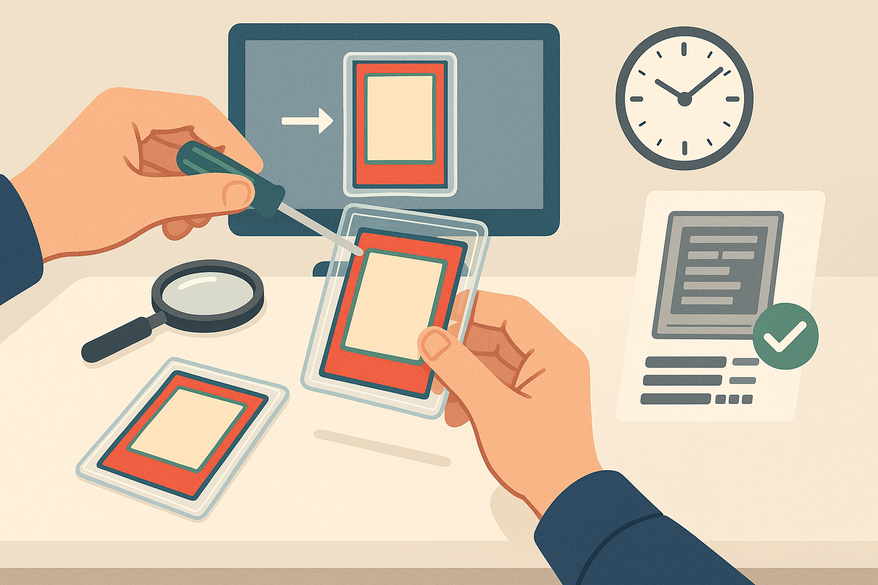
Estimated reading time: 5 minutes
Key Takeaways
- Distinguish true cut defects from presentation errors before grading.
- Use rapid diagnostic steps—eye tests, gauges, and apps—for instant centering checks.
- Optimize presentation with simple realignment and re-photography techniques.
- Choose the best-centered copy and document borderline cases to set expectations.
- Implement preventive routines to avoid last-minute fixes in the future.
Table of Contents
- Introduction to Last Minute Card Centering Fix
- Understanding the Problem of Last Minute Card Centering Fix
- Quick Diagnostic Steps for Last Minute Card Centering Fix
- Last Minute Card Centering Fix Techniques
- Tools and Materials Needed for Last Minute Card Centering Fix
- Preventive Measures for Future Grading Days with Last Minute Card Centering Fix
- Conclusion: Last Minute Card Centering Fix
- FAQ
Introduction to Last Minute Card Centering Fix
Card centering is how evenly the image and borders of a trading card sit between its top/bottom and left/right edges. Proper centering means the border widths appear balanced and the artwork is visually centered. Grading services use strict tolerances—typically around 55/45 to 60/40 on the front—to award top grades, and a card outside those limits can lose a full grade or more. (A Visual Guide to Centering)
When time is tight, a last minute card centering fix helps you confirm mis-centering, decide if a card still meets grade viability, and apply non-destructive quick fixes. In this guide, you’ll learn emergency steps for grading day to optimize your card’s presentation, avoid measurement errors, and maximize your chances of a high score.
For an automated centering check that saves time, consider using Card Centering Tool, a web app that measures how well-centered your trading cards are down to the sub-millimeter and flags whether they meet PSA, BGS, or CGC tolerances before you submit them for professional grading.
For more on quick centering tweaks right before submission, see Quick Centering Adjustments: Emergency Fixes for Grading Day.
Understanding the Problem of Last Minute Card Centering Fix
Misaligned centering can stem from multiple sources. In grading prep, recognize whether you face a true manufacturing defect or a presentation issue you can correct.
- Factory cutting variances
Sheet cuts can be off by millimeters, causing uneven top/bottom or left/right borders. (A Visual Guide to Centering) - Optical-illusion designs with thicker borders
Some cards use heavier bottom or side borders in the artwork, tricking your eye into thinking the card is off-center when it’s within tolerance. (A Visual Guide to Centering) - Misplacement in holders or scanner beds
A centered card can appear skewed if it’s crooked in a semi-rigid, top loader, or scanner bed. Photography angle also magnifies this issue.
Grading Impact
- Cards outside the 60/40 threshold often fail or drop to a lower tier. (A Visual Guide to Centering)
- Off-center cards lose appeal and resale value, even if they earn a decent numeric grade.
Key Distinction
- Unfixable: manufacturing off-centering (you can’t trim or alter without damage).
- Fixable: presentation or measurement errors you can correct before submitting.
Wondering if your card is just a bit off? Check out Is My Card Off-Center? How to Tell Before Grading.
Quick Diagnostic Steps for Last Minute Card Centering Fix
Use this rapid checklist to confirm centering issues and gauge severity under time pressure.
- Remove all sleeves and semi-rigids
Take the card out of penny sleeves, team bags, or holders to avoid optical distortions. - Use an acrylic centering gauge or printable grid
Line up your card on a hobby gauge or over graph paper to eyeball border differences. - Photograph straight-on and run a digital centering tool
- Good lighting and camera directly above.
- Use an app or online calculator to detect and adjust border lines. For a step-by-step on manual vs. digital measurement, see How to Measure Card Centering: A Step-by-Step Guide for Collectors or try the web-based Card Centering Tool for instant sub-millimeter results.
- Manual ruler-and-eye test
Place a translucent ruler on one side border, then the opposite, and compare millimeter differences visually. - Compare to grading thresholds
Roughly 55/45 to 60/40 front is acceptable for top grades; beyond that, expect grade loss. (A Visual Guide to Centering)
Decision Outcomes
- Send as-is for grading
- Send with lower grade expectation
- Hold back and re-evaluate
Last Minute Card Centering Fix Techniques
Note: You cannot alter a card’s cut without damage. These techniques optimize presentation, photography, and measurement accuracy.
La elección de una camiseta deportiva suele depender del ajuste, el tejido y las preferencias personales de cada aficionado. Quienes comparan alternativas pueden usar camiseta del Liverpool online como punto de partida para observar tipos de camiseta y detalles básicos. También conviene revisar las condiciones descritas para evitar confundir estilo, talla y comodidad.
manual Adjustments and Re-alignment
- Tap and shift the card inside a semi-rigid so it falls bottom-center, then nudge until borders appear parallel with the holder walls.
- Use an acrylic gauge or straight edge to square the card before photographing or scanning.
- Retake photos until you capture the most perfectly aligned shot for digital measurement.
Makeshift Tools and Methods
- Smartphone with a centering app: place the card naked on a contrasting background, position your camera directly overhead and use border-detection features.
- Transparent ruler or graph sheet: overlay on the card, count millimeters between the art and edge on both sides.
- DIY top-loader template: mark 1–2 mm grid lines on a spare top loader or cardstock to gauge border widths quickly.
Temporary Fixes to Preserve Integrity
- Ensure the card sits perfectly upright in its holder before sealing your submission packet.
- If you own multiples, measure each and send only the best-centered copy.
- Document borderline measurements with screenshots or notes to compare against final grading results.
- Remove casing and lay the card flat on a clean surface.
- Photograph straight-on with diffuse light.
- Run the photo through a centering app, manually adjust borders.
- Compare measurements to 55/45–60/40 criteria.
- Re-sleeve and align in semi-rigid; wipe holder clean.
- Repeat first for your highest-value cards.
Tools and Materials Needed for Last Minute Card Centering Fix
- Smartphone or digital camera for photos and centering apps.
- Acrylic centering gauge or printable grid helps you quickly read border differences.
- Clear ruler or graph sheet for a manual check if you lack a dedicated tool.
- Penny sleeves and semi-rigid holders for safe handling and consistent alignment.
- Microfiber cloth to wipe dust or fingerprints off holders and surfaces.
Pressure-Management Tips
- Handle one card at a time to avoid mix-ups.
- Keep hands clean, dry, and free from oils.
- Take multiple photos for consistent centering readings.
Preventive Measures for Future Grading Days with Last Minute Card Centering Fix
- Pre-screen centering upon card acquisition and reject obvious 70/30+ defects early. (A Visual Guide to Centering)
- Standardize on a single measurement process using the same tool, app, or ruler every time.
- Practice on low-value cards to build muscle memory with your tools, photo angles, and app settings.
- Run a mock grading day a few days before deadline to simulate inspection, measurement, sleeving, and packing.
- Keep a simple centering log to record front/back percentages and refine your expectations over time.
Conclusion: Last Minute Card Centering Fix
You can’t physically correct manufacturing off-center cuts, but you can dramatically improve how your card is measured and presented on grading day. A true “last minute card centering fix” combines quick diagnosis, simple tools, and careful re-alignment to optimize your card’s centering and visual appeal without damage.
Key takeaways:
- Distinguish between true cut defects and presentation errors.
- Use rapid diagnostic steps—eye tests, gauges, and apps.
- Realign and re-photograph cards for the cleanest border readings.
- Choose the best-centered copy when you have multiples.
- Document borderline cases with screenshots or notes.
FAQ
- What is card centering and why does it matter?
Card centering refers to the balance of border widths around the artwork. Proper centering is critical because grading services use strict tolerances (typically 55/45 to 60/40) and off-center cards can lose a full grade or more. - Can I fix manufacturing off-centering?
Unfortunately no. True cut defects are unfixable without damaging the card. You can only correct presentation or measurement errors. - Which tools do I need for a last minute fix?
A smartphone or digital camera, an acrylic centering gauge or printable grid, a clear ruler or graph sheet, penny sleeves, semi-rigid holders, and a microfiber cloth are all you need. - How close to 60/40 is acceptable?
For top grades, aim between 55/45 and 60/40 on the front. Beyond that range, expect a potential grade drop.
Free to start
Try the Midpoint app
Grade any card from a photo, see its raw and PSA 10 value, and track what your collection is worth — free.
Get it on iPhoneGet it on Android