
Pokemon Card Prices Rising October 2026: Top Trends & Insights
Explore why pokemon card prices rising october 2026 matter for collectors. See top cards, grading tips, and market insights to buy, sell, or hold smartly.

Estimated reading time: 8 min
Key Takeaways
- October 2026 shows broad growth in Pokémon card prices, led by vintage Charizard and 30th Anniversary sets.
- Raw vs graded price gaps, especially PSA 10 premiums, appear to influence collector behavior.
- Sealed product values rise alongside singles but liquidity varies by product type.
- Some cards decline due to reprints and oversupply despite overall market strength.
- Using AI grading apps like Midpoint can help buyers estimate card condition and value before investing.
The Pokémon card market in October 2026 is experiencing a notable rise in values, with many trending Pokémon cards gaining ground across raw and graded conditions. Whether you're a collector, investor, or casual fan, understanding which Pokémon cards are going up in value and why can guide smart buying, selling, and grading decisions. This listicle breaks down the biggest movers, market drivers, and practical tips to navigate the evolving landscape.
30-day price movers — live data from Midpoint's card database, as of 2026-10-10. Prices move; Midpoint refreshes these daily.
| Card | Raw | PSA 10 | 30-day | |
|---|---|---|---|---|
 |
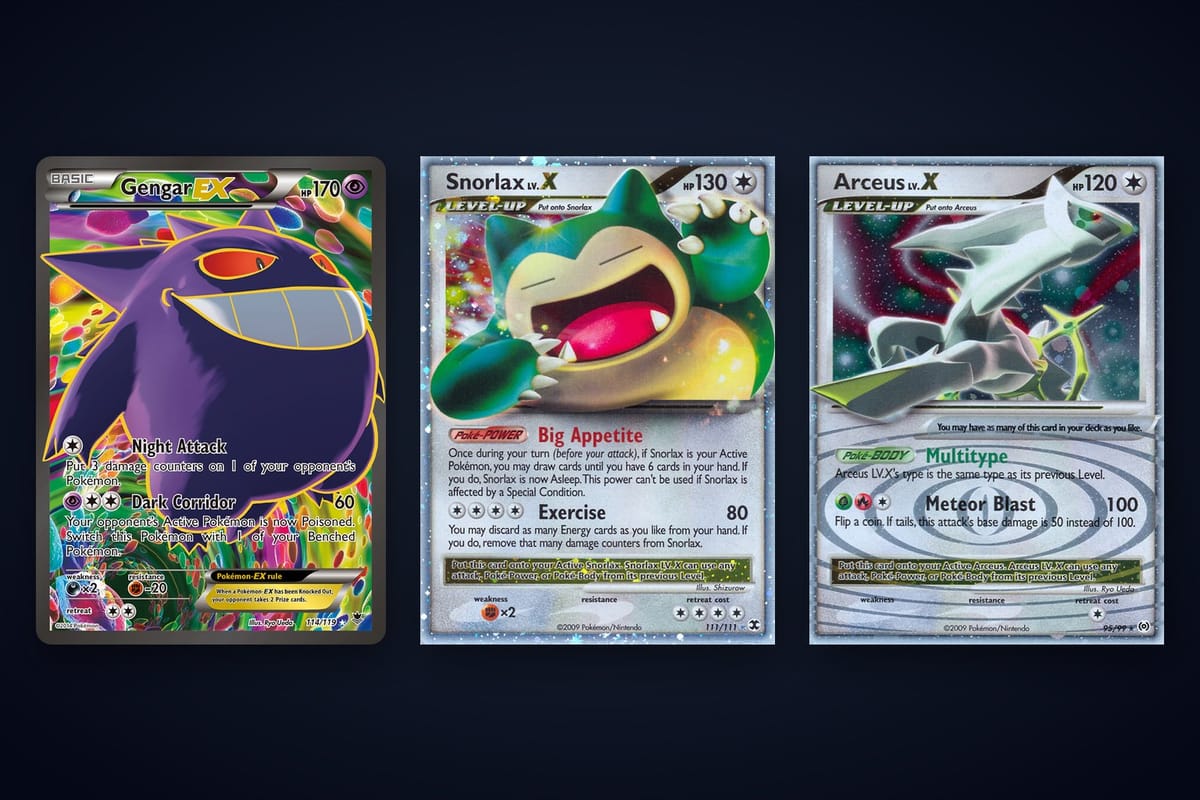
Gengar-EX #114/119 Phantom Forces (2014) |
$765.03 | $80,041 | +11496.5% |
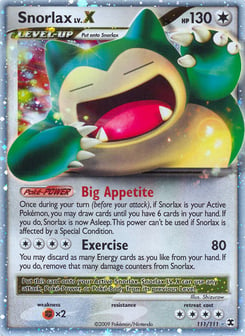 |
Snorlax LV.X #111/111 Rising Rivals (2009) |
$797.47 | $224,254 | +10473% |
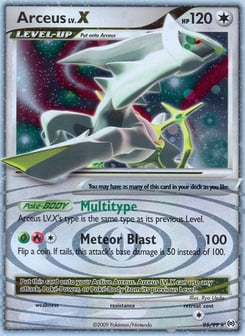 |
Arceus LV.X #95/99 Arceus (2009) |
$184.99 | $152,863 | +4573.9% |
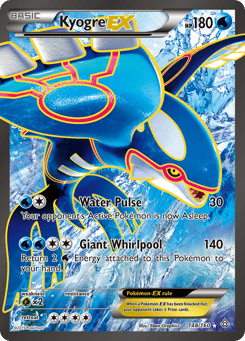 |
Kyogre-EX #148/160 Primal Clash (2015) |
$174.82 | $84,000 | +3647% |
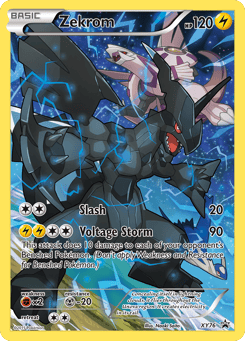 |
Zekrom #XY76 XY Black Star Promos (2013) |
$116.45 | $52,800 | +2918.9% |
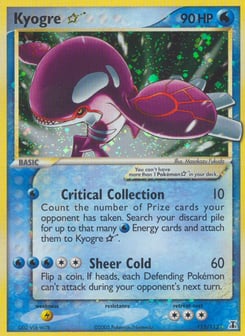 |
Kyogre ☆ #112/113 Delta Species (2005) |
$2,101 | $156,000 | +2840.9% |
 |
Mewtwo δ #24/110 Holon Phantoms (2006) |
$287.50 | $29,076 | +1832.4% |
 |
Chansey ex #96/109 Ruby & Sapphire (2003) |
$90.62 | $28,195 | +1470.3% |
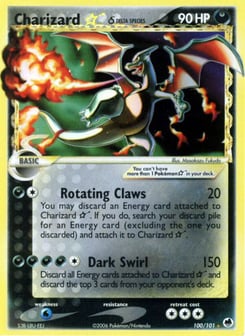 |
Charizard ☆ δ #100/101 Dragon Frontiers (2006) |
$1,000 | $345,417 | +1216.9% |
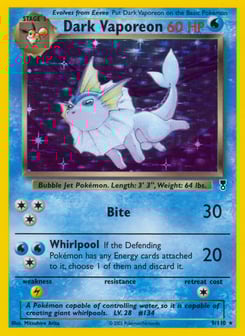 |
Dark Vaporeon #9/110 Legendary Collection (2002) |
$136.99 | $66,000 | +1131.5% |
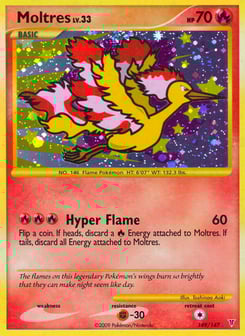 |
Moltres #149/147 Supreme Victors (2009) |
$352.24 | $34,705 | +1130.8% |
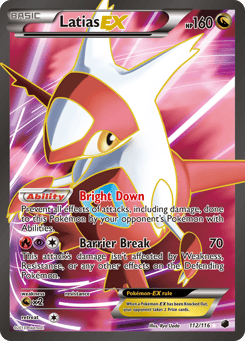 |
Latias-EX #112/116 Plasma Freeze (2013) |
$243.05 | $36,000 | +1094.9% |
Look up any card's current raw and graded value in Midpoint — and get an estimated grade before you pay to submit.
1. Vintage Charizard Leads October 2026 Price Surge
Classic Base Set Charizard cards continue to be highly sought after with significant price appreciation reported. As of 2026-10-10, a raw Base Set Charizard in near-mint condition is estimated around $3,200, while a PSA 10 graded example can fetch upwards of $18,000. This premium reflects strong collector demand and relative scarcity of top-grade copies.
Notably, the appeal of vintage cards is fueled by nostalgia and limited supply. Many collectors are turning to Midpoint’s AI digital grading to assess centering and surface quality before submitting high-value cards for grading services, helping to better understand investment risks.
- Base Set Charizard PSA 10 population remains relatively low, supporting price growth.
- Raw prices also trend upward but with less volatility than graded.
- Grading premiums tend to be more pronounced for well-centered cards.
2. Rising Demand for Latias & Latios-GX Cards
Among modern cards, Latias & Latios-GX from recent expansions have seen price increases. Raw copies are averaging around $75-90, while PSA 10 versions have reached approximately $350+ as of early October.
This surge is attributed to renewed interest from competitive play and collector enthusiasm around these fan-favorite legendary Pokémon. The scarcity of pristine condition cards may contribute to premiums, especially with higher-grade examples verified through centering analysis tools like Midpoint.
- Recent tournament results appear to boost demand for playable GX cards.
- Collectors prize centered cards, making AI grading a useful step.
- Prices reflect a blend of gameplay utility and collectible value.
3. 30th Anniversary Sets Spark Collector Interest
The 30th Anniversary Pokémon products—including sealed Pikachu boxes, special booster packs, and promotional cards—have generated strong buying interest. Sealed Pikachu boxes are holding steady around $1,200, with limited-edition promo cards reportedly climbing 20-30% over the past month.
Collectors view these as milestone pieces that combine nostalgia and exclusivity. Since sealed product offers different liquidity compared to singles, prices can be less volatile but still benefit from scarcity and hype. Market watchers advise monitoring sales closely for possible post-release price corrections.
- Sealed Pikachu boxes often outperform individual cards in long-term value.
- Promos from the anniversary sets are limited and sought after.
- Tracking sealed vs singles value helps balance collection strategy.
4. Vintage Base Set & Jungle Cards Maintain Demand
Besides Charizard, vintage Base Set and Jungle cards show steady demand due to their scarcity and nostalgic appeal. Cards like Venusaur, Blastoise, and Jolteon have seen modest gains in raw prices, with PSA 10 grades commanding higher multiples.
The vintage market’s strength is supported by collectors prioritizing condition and centering for grading. Using tools such as Midpoint to measure centering down to the millimeter may reduce grading risks and help protect investment returns.
- Base Set Jungle cards remain key vintage staples for collectors.
- Condition and centering heavily impact grade and value.
- AI grading estimates can help prepare cards for PSA, BGS, or CGC submissions.
5. PSA 10 Premiums Widen with Grading Population Effects
PSA 10 graded cards command significant premiums over raw equivalents, especially for low-population cards. For instance, the PSA 10 Latias & Latios-GX sells for nearly 4x raw value, while vintage Charizard PSA 10 can be 5-6x raw price.
Grading population reports indicate scarcity of top grades, which may push prices higher. This dynamic encourages collectors to pre-grade their cards using AI tools to estimate their chances of achieving a PSA 10 before investing in costly submissions.
- PSA 10 grade scarcity tends to drive up prices disproportionately.
- Population data can guide expectations for grading outcomes.
- AI digital grading apps like Midpoint assist in pre-assessment.
6. Some Cards Decline Despite Overall Market Growth
Not all cards are rising. Certain recent sets and reprints with high pull rates are seeing price declines due to oversupply and cooling launch hype. For example, some modern bulk cards have dropped 10-15% in value even as vintage and anniversary sets surge.
Collectors should be cautious with newly released products and rely on market indicators and recent sales to avoid buying into declining segments. Midpoint’s market tracking tools can help verify current prices and trends.
- High-supply reprints dilute market value for some cards.
- Post-launch corrections are common after initial hype fades.
- Monitoring recent sales data is critical for informed decisions.
7. How to Verify Pokémon Card Prices Accurately
Accurate price verification requires analyzing recent sales, market indexes, card condition, language, and edition. Raw cards differ widely in value from graded versions, and condition nuances like centering and surface quality can drastically affect prices.
Using dedicated apps like Midpoint allows collectors to quickly look up raw vs graded values for over 250,000 cards, with AI-powered centering and surface grading estimates. This helps avoid overpaying and identifies cards worth grading.
- Check recent completed sales rather than listing prices.
- Compare raw and PSA/BGS/CGC prices for the exact card variant.
- Use AI centering tools to estimate grading outcomes before submission.
8. October 2026 Buying and Selling Risks to Consider
While Pokémon card prices rising in October 2026 reflect a strong market, volatility remains a risk. Post-release price corrections, grading population shifts, and supply changes can impact values. Collectors should diversify, avoid speculation on hyped cards, and time sales strategically.
AI grading and portfolio tracking apps like Midpoint provide real-time insights to manage risk by monitoring card values over time and assessing condition before costly grading submissions.
- Market volatility can lead to sudden price shifts.
- Grading submissions carry cost and timing risks.
- Portfolio tracking helps optimize buy/sell timing and risk management.
Conclusion
In October 2026, Pokémon card prices rising reflect a dynamic market driven by vintage demand, 30th Anniversary hype, and grading premiums. Top-performing cards like Base Set Charizard and Latias & Latios-GX showcase the blend of nostalgia and modern collecting trends. Meanwhile, AI-powered grading tools such as Midpoint empower collectors to make informed decisions by providing centering measurements and grade estimates before committing to expensive submissions. Staying informed about market shifts, verifying prices via recent sales, and balancing sealed vs singles exposure can help collectors and investors navigate this evolving landscape.
FAQ
Q: Why are Pokémon card prices going up in October 2026?
A: Prices are rising due to increased collector interest fueled by the 30th Anniversary celebrations, scarcity of vintage high-grade cards, grading premiums (especially PSA 10), and renewed Pokémon enthusiasm across communities.
Q: Which Pokémon cards are increasing the most in price right now?
A: Vintage Base Set Charizard, Latias & Latios-GX, and 30th Anniversary sealed Pikachu boxes are among the top gainers as of October 2026.
Q: Is the 30th Anniversary Pokémon set making card prices rise?
A: Yes, the 30th Anniversary products have sparked strong demand, especially sealed Pikachu boxes and limited promos, contributing to overall market growth.
Q: Are vintage Pokémon cards or modern cards better investments in October 2026?
A: Vintage cards generally offer more stability and higher premiums, but select modern cards like Latias & Latios-GX with competitive play relevance also show gains. Diversifying between both can balance risk and reward.
Q: Should I buy Pokémon cards now or wait for prices to drop?
A: Timing depends on individual risk tolerance. The market is strong but volatile. Using grading estimate tools like Midpoint to assess card condition can help identify worthwhile buys and avoid overpaying.
Q: Why are some Pokémon cards falling in price while the overall market is rising?
A: Declines often happen with cards from high-supply reprints, bulk modern releases, or those losing hype after launch, despite the broader market's upward trend.
Free to start
Try the Midpoint app
Grade any card from a photo, see its raw and PSA 10 value, and track what your collection is worth — free.
Get it on iPhoneGet it on Android


