Best 1941 Baseball Cards: Top Picks, Values & Grading Tips
Discover the best 1941 baseball cards, their values raw vs PSA 10, rookie highlights, and tips for grading with Midpoint’s AI tools.

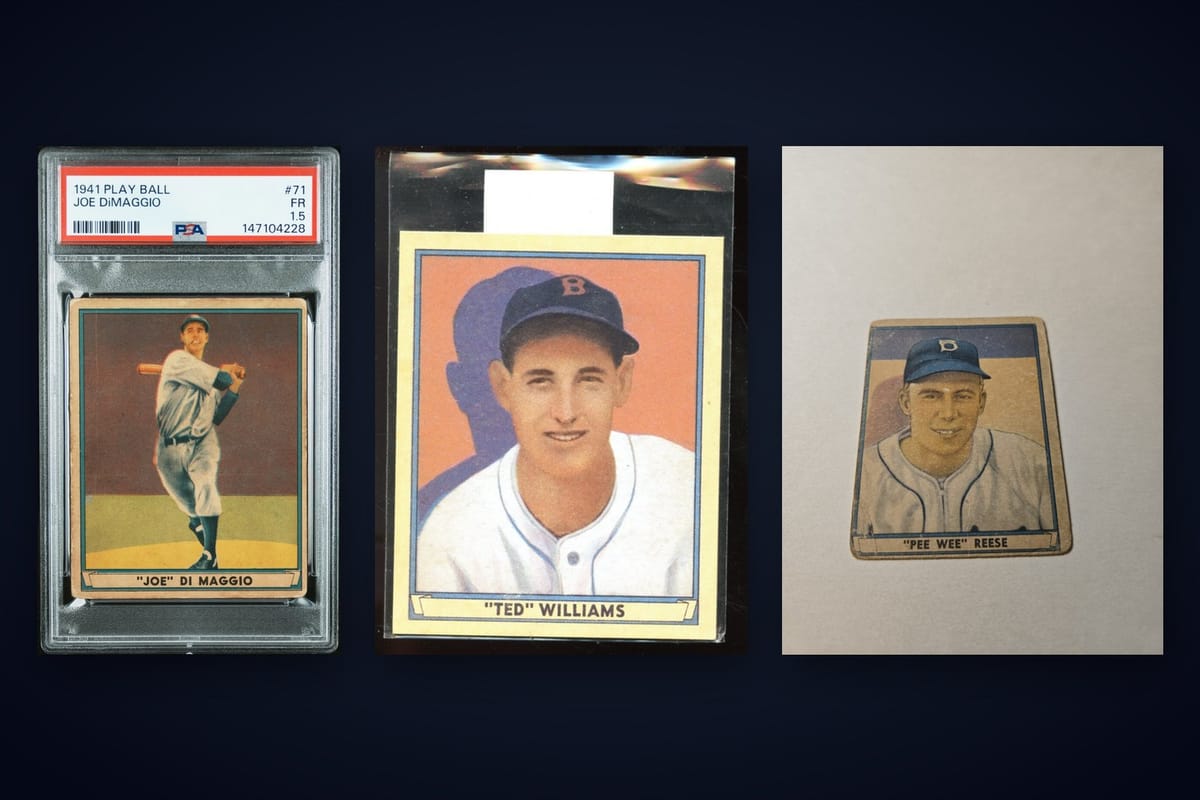
Estimated reading time: 9 min
Key Takeaways
- 1941 Play Ball is widely regarded as the most visually acclaimed 1941 set with standout cards like Ted Williams and Joe DiMaggio.
- Rookie cards from 1941 can hold significant value, especially in high PSA grades.
- Raw card values often differ greatly from graded PSA 10 prices, highlighting the gem premium.
- Using Midpoint’s AI grading and centering tools can help collectors estimate value before costly grading submissions.
- Understanding set population, scarcity, and condition sensitivity is important for making informed buying and selling decisions.
The year 1941 remains one of the most fascinating for baseball card collectors, offering a blend of iconic stars, rookie gems, and beautifully designed sets. If you’re wondering which are the best 1941 baseball cards—whether to invest, sell, or just appreciate—this guide dives deep into the top cards, value ranges by grade, rookie highlights, and expert tips on grading and centering measurement with tools like Midpoint. From the well-regarded 1941 Play Ball set to valuable rookie cards, here’s everything collectors need to know about the most valuable 1941 baseball cards today.
Card values — live data from Midpoint's card database, as of 2026-08-23. Prices move; Midpoint refreshes these daily.
| Card | Raw | PSA 10 | Gem premium | |
|---|---|---|---|---|
 |
Joe DiMaggio #71 1941 Play Ball |
$1,867 | $614,918 | 329.3× |
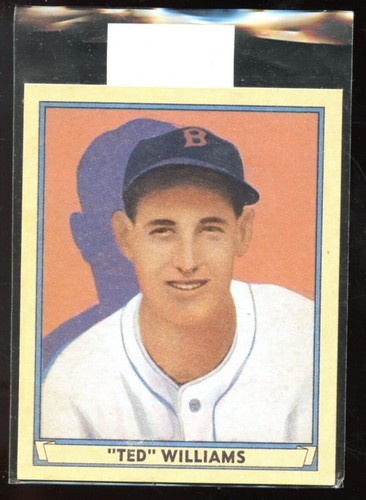 |
Ted Williams #14 1941 Play Ball |
$1,019 | $341,843 | 335.5× |
 |
Pee Wee Reese #54 1941 Play Ball |
$435.50 | $143,354 | 329.2× |
 |
Jimmie Foxx #13 1941 Play Ball |
$395.96 | $130,400 | 329.3× |
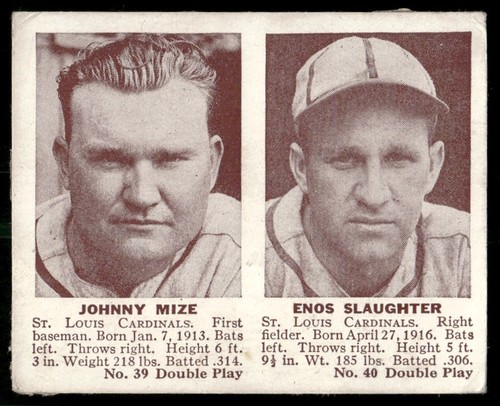 |
Johnny Mize, Enos Slaughter 1941 Double Play |
$152.25 | $50,001 | 328.4× |
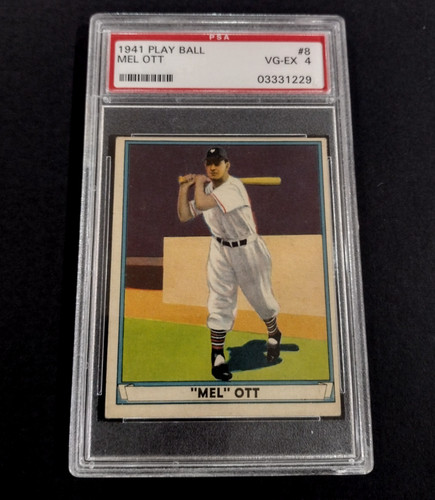 |
Mel Ott #8 1941 Play Ball |
$127.50 | $40,480 | 317.5× |
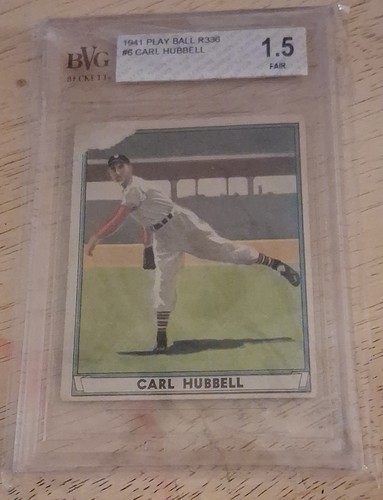 |
Carl Hubbell #6 1941 Play Ball |
$102.86 | $33,795 | 328.6× |
 |
Joe Krakauskas, Bob Feller 1941 Double Play |
$85.36 | $29,070 | 340.6× |
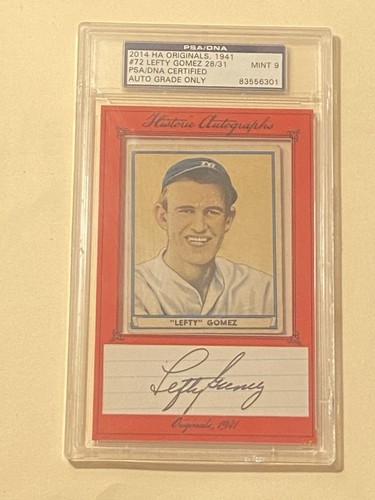 |
Lefty Gomez #72 1941 Play Ball |
$85.00 | $26,282 | 309.2× |
 |
Bobby Doerr #64 1941 Play Ball |
$75.00 | $25,373 | 338.3× |
 |
Bill Dickey #70 1941 Play Ball |
$74.49 | $24,572 | 329.9× |
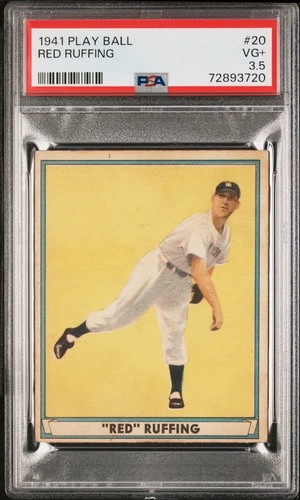 |
Red Ruffing #20 1941 Play Ball |
$57.13 | $20,654 | 361.5× |
Look up any card's current raw and graded value in Midpoint — and get an estimated grade before you pay to submit.
1. 1941 Play Ball Set Overview and Why It’s the Best 1941 Baseball Card Set
Among the three major 1941 baseball card issues—Play Ball, Goudey, and Double Play—the 1941 Play Ball set is widely regarded as one of the best-looking and most desirable. It features 72 cards printed in a clean, yellow-bordered style with vibrant color photos rather than drawings, giving it a modern appeal for its era.
Collectors prize the set for its sharp photography and the inclusion of many Hall of Famers and rookies. The card size is standard, measuring 2-5/8 x 3-3/4 inches, which fits nicely into modern holders and display cases. The clean design and strong player selection contribute to its ongoing demand.
- 72 cards total in the complete set
- High-quality color photos on yellow borders
- Features key stars like Ted Williams, Joe DiMaggio, and Stan Musial
Compared to 1941 Goudey’s hand-drawn style and the smaller 36-card 1941 Double Play set, Play Ball’s photographic approach has generally aged well and attracted considerable collector interest over time.
2. Most Valuable 1941 Baseball Cards: Ted Williams and Joe DiMaggio Lead
When discussing the top 1941 baseball cards with notable value, the Ted Williams #1 and Joe DiMaggio #72 cards from the Play Ball set are often highlighted. These cards tend to have strong raw and PSA 10 values due to the players’ superstardom and relative scarcity of high-grade examples.
As of mid-2026, a 1941 Play Ball Ted Williams card graded PSA 10 has been known to command prices in the range of approximately $25,000, while a Joe DiMaggio PSA 10 can reach around $18,000. Raw versions in excellent condition typically sell for several hundred dollars, reflecting the significant gem premium on top grades.
- Ted Williams #1 Play Ball: PSA 10 approx. $25,000; raw $700+
- Joe DiMaggio #72 Play Ball: PSA 10 approx. $18,000; raw $350+
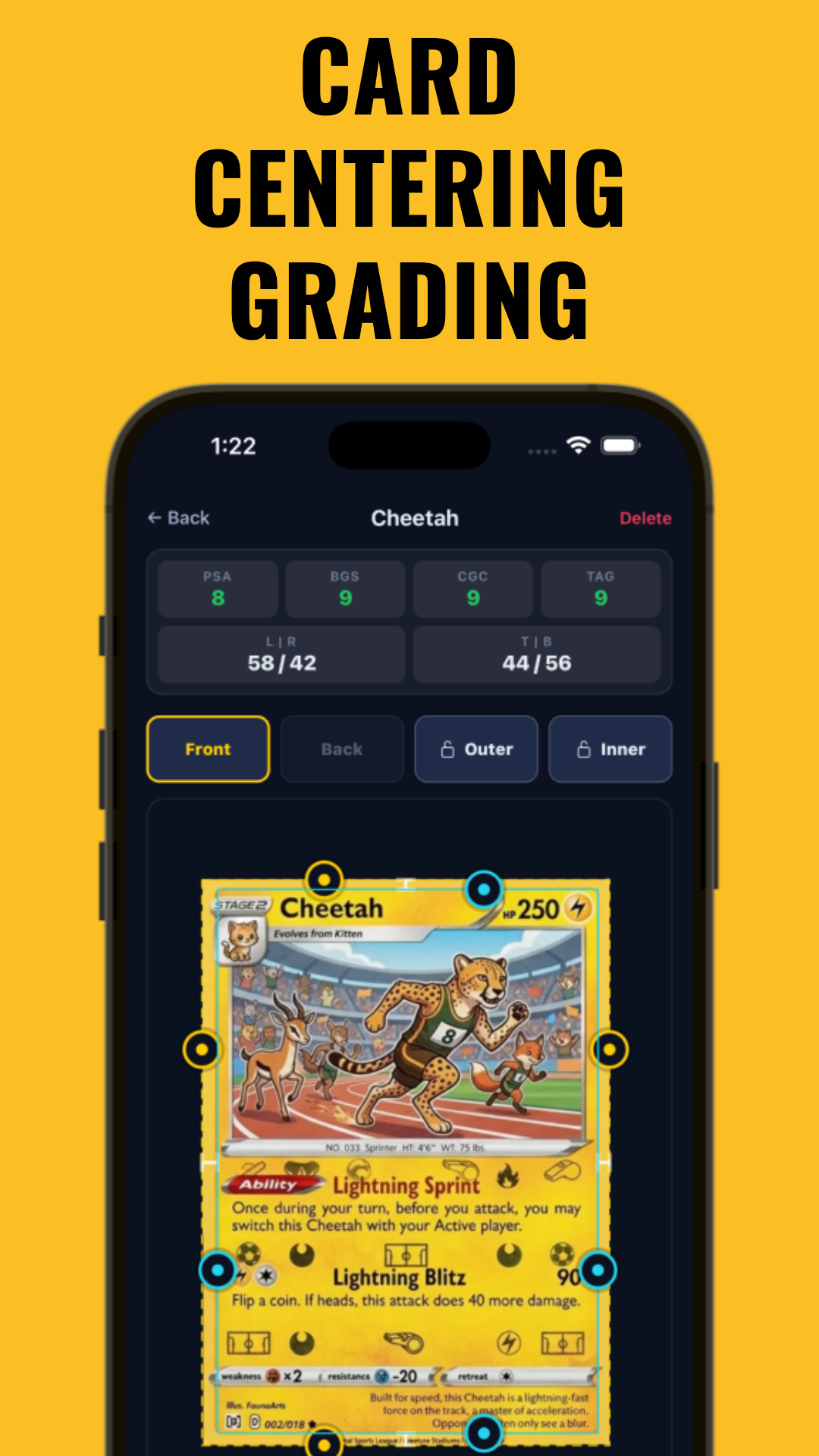
These values illustrate the importance of pre-grading and centering measurement before investing in expensive submissions, a process made easier by Midpoint’s AI grading tool.
3. 1941 Baseball Rookie Cards: Key Highlights and Value Drivers
The 1941 Play Ball set includes notable rookie cards such as Stan Musial #37 and Johnny Mize #9. These rookies have a dedicated collector following, especially in top grades.
Stan Musial PSA 10 cards have been valued at approximately $8,000, while Johnny Mize PSA 10 cards have been known to fetch around $5,000. Both rookies see a significant price drop in lower grades, emphasizing the grade sensitivity of these cards.
- Stan Musial #37: PSA 10 approx. $8,000
- Johnny Mize #9: PSA 10 approx. $5,000
Rookie card collectors should consider these cards for investment, especially if raw copies show strong centering and minimal surface wear.
4. Price Guide and Value Ranges by Grade for 1941 Baseball Cards
Understanding value ranges is essential for both buyers and sellers. Most 1941 baseball cards show a sharp premium in the PSA 10 tier compared to raw or lower grades. This “gem premium” can be many times higher on key cards.
For example, a 1941 Play Ball Ted Williams card might sell raw for several hundred dollars but jump to tens of thousands in PSA 10. Lesser-known cards in the set tend to have lower price spreads but still benefit from top-grade scarcity.
- Raw condition prices vary widely from $50 to $1,000 depending on player and condition
- PSA 10 prices show significant growth for star players
- Mid-grade PSA 7–8 cards offer a more affordable middle ground
Collectors should weigh grading cost vs. potential value uplift—tools like Midpoint help estimate grades and centering before costly submissions.
5. How 1941 Play Ball Compares with 1941 Goudey and Double Play Sets
The 1941 Goudey set includes 48 cards with hand-drawn artwork and a more limited star lineup. While Goudey cards have historical significance, their values generally tend to trail Play Ball, especially in top grades.
The smaller 36-card 1941 Double Play set was issued as a promotional giveaway with gum and is scarcer but less visually appealing. Its cards tend to trade at lower prices except for a few stars.
- Play Ball: 72 cards, photographic images, highest demand
- Goudey: 48 cards, hand-drawn, moderate demand
- Double Play: 36 cards, promotional, lower demand but collectible
Overall, Play Ball’s aesthetics and player selection contribute to its status as the most sought-after 1941 set for many modern collectors.
6. Population, Scarcity, and Condition Sensitivity of 1941 Play Ball Cards
Many 1941 Play Ball cards survive in lower grades, but very few reach PSA 10. Population reports indicate only a limited number of Ted Williams and Joe DiMaggio cards graded that high, contributing to scarcity and price.
Condition sensitivity is high—centering, surface quality, and corners must all be near perfect to achieve top grades. Slight off-centering or surface flaws can cause a 1–2 grade drop, impacting value significantly.
- PSA 10 population under 10 for key stars
- Sharp centering and clean surfaces essential for top grades
- Midpoint’s centering calculator and AI analysis tools enable collectors to pre-grade confidently
Before spending $30+ on grading, use Midpoint’s Free Centering Calculator and AI grading estimates for more informed investment decisions.
7. Buying, Selling, and Collecting Advice for 1941 Baseball Cards
When buying, seek raw cards with strong centering and minimal surface flaws to maximize grading potential. Selling graded PSA 9 or 10 cards typically yields the best returns but requires upfront grading costs.
Collectors should track their portfolio values over time using apps like Midpoint to monitor market trends and card condition impact. Proper storage is critical—refer to our Ultimate Collector’s Guide for preservation tips.
- Pre-grade cards with AI tools before grading submission
- Store cards in acid-free sleeves and top loaders
- Sell high-grade PSA 9+ for maximum value
Patience and research are key—understanding population reports and grading nuances helps avoid costly mistakes.
Conclusion
The best 1941 baseball cards come primarily from the Play Ball set, featuring iconic stars like Ted Williams, Joe DiMaggio, and rookie legends such as Stan Musial. Whether you own raw copies or graded PSA 10 examples, understanding value ranges, population scarcity, and grading nuances is essential. Using modern digital tools like Midpoint’s AI grading and centering analysis can save collectors time and money by providing instant, reliable grade estimates before costly submissions. For anyone serious about collecting or investing in 1941 baseball cards, combining expert knowledge with smart technology is a recommended strategy.
FAQ
Q: What are the most valuable 1941 baseball cards?
A: The most valuable 1941 cards are generally from the Play Ball set, especially Ted Williams #1 and Joe DiMaggio #72 in PSA 10 grades, with values reported around $25,000 and $18,000 respectively as of mid-2026.
Q: Why is 1941 Play Ball considered the best 1941 baseball card set?
A: It is considered one of the best due to its photographic color images, larger 72-card set size, inclusion of many Hall of Famers, and superior aesthetics compared to 1941 Goudey and Double Play.
Q: How many cards are in the 1941 Play Ball set?
A: The set contains 72 cards, featuring stars, rookies, and a mix of key players from that era.
Q: What is the value of a 1941 Ted Williams Play Ball card?
A: A PSA 10 Ted Williams card can fetch around $25,000, while raw cards in excellent condition may sell for several hundred dollars as of mid-2026.
Q: Which Hall of Famers are in 1941 Play Ball?
A: Notable Hall of Famers include Ted Williams, Joe DiMaggio, Stan Musial, and Johnny Mize among others.
Q: How do 1941 Play Ball cards compare to 1941 Goudey cards?
A: Play Ball cards are generally more valuable and visually appealing with photographic images, whereas Goudey cards have hand-drawn artwork and a smaller set size, resulting in lower overall demand.
Free to start
Try the Midpoint app
Grade any card from a photo, see its raw and PSA 10 value, and track what your collection is worth — free.
Get it on iPhoneGet it on Android