
How to Store Valuable Cards: The Ultimate Collector's Guide
Learn how to store valuable cards, prevent damage, track your collection, and maximize long-term value. Expert tips for collectors using Midpoint.

Estimated reading time: 9 min
Key Takeaways
- Always sleeve valuable cards and use rigid holders for extra protection.
- Store cards upright in acid-free, archival-safe containers in a cool, dry, dark place.
- Use a card collection app like Midpoint to track, value, and organize your collection.
- Double-sleeve premium or foil cards and avoid risky storage locations.
- Catalog your collection and check conditions regularly for insurance and investment purposes.
Learning how to store valuable cards is important for any trading card collector, whether you're into Pokémon, sports cards, Magic: The Gathering, or any other collectible. Proper storage helps protect your cards from physical and environmental damage, and preserves card condition for grading, resale, or personal enjoyment. In this guide, we’ll cover step-by-step best practices for card storage, portfolio organization, and long-term value tracking—including how modern tools like the Midpoint app can help you manage your collection.
Step 1: Sleeve Every Valuable Card
The first and most crucial line of defense for any card is the penny sleeve. These thin, soft plastic sleeves protect against fingerprints, minor scratches, and dust. It is generally recommended to use penny sleeves for every card worth more than a few dollars, or any card you care to keep in excellent condition.
- Choose sleeves labeled "acid-free," "PVC-free," or "archival-safe" to avoid long-term chemical damage.
- Insert cards slowly, using gentle pressure along the sleeve edges to avoid corner dings.
- Never force a card into a too-tight sleeve; the fit should be snug but not stressful on the card.
For foils, holographics, or high-gloss finish cards, sleeves are especially important—oils from your skin can affect these surfaces.
Step 2: Add Rigid Protection for High-Value Cards
After sleeving, protect your rarities further with a rigid holder. The three main options are:
- Toploaders: Hard plastic cases that help prevent bending and edge damage. Slide the sleeved card in, not just the raw card.
- Semi-rigids: Flexible but sturdy; often preferred by grading companies for submissions.
- Magnetic holders: Premium, sealed, and suitable for display or ultra-high-value singles.
For cards that could be graded or insured, double-protection is recommended: penny sleeve first, then into a semi-rigid or toploader. For tips on pre-grading your cards before submitting, see How to Pre-Grade Your Card: A Step-by-Step Guide.
Step 3: Double-Sleeve for Extra Security
Double-sleeving is considered a best practice for premium cards, foils, or those at risk of curling. Here’s how to do it:
- First, use a "perfect fit" inner sleeve (snug, with a top opening).
- Next, place the card (in its inner sleeve) into a regular penny sleeve or a side-loading sleeve.
- Finally, insert the double-sleeved card into a rigid holder for maximum protection.
This method is especially popular with competitive Magic or Pokémon players who shuffle their decks frequently, but it’s also useful for collectors who want to minimize any risk to top-tier cards.
Step 4: Choose the Right Long-Term Storage Container
The container you use can make a significant difference in your collection’s safety. Consider these options:
- Binders: Use D-ring binders with archival-safe, side-loading pages. Never overfill, and avoid storing high-value singles here long-term.
- Card storage boxes: Acid-free cardboard or rigid plastic boxes are generally recommended. Sort cards upright (not stacked) to help prevent warping.
- Rigid card boxes: For slabbed (graded) or encased cards, use boxes designed for PSA/BGS/CGC slabs.
Label each container clearly and consider using dividers or inventory lists to keep everything organized and easy to find.
Step 5: Store Cards Upright and in a Safe Environment
How you physically position and where you keep your collection matters:
- Upright/vertical storage: Store cards standing up, not in flat stacks. This helps prevent warping and pressure damage.
- Environment: Keep cards in a cool, dry, dark, and stable room. Many collectors aim for a temperature of 65–72°F (18–22°C) and humidity of 40–55%.
- Avoid: Direct sunlight, attics, basements, garages, and vehicles—all places prone to heat, moisture, or temperature swings.
Use silica gel packs to absorb excess moisture, and check your storage area periodically for leaks or signs of pests.
Step 6: Use Archival-Safe Materials Only
Not all plastics and papers are created equal. Over years, acidic materials or PVC can leach chemicals, causing yellowing or stickiness. Always use:
- Archival-safe sleeves, pages, and boxes
- Materials labeled "acid-free" and "PVC-free"
- Quality brands trusted in the hobby
This is especially important for long-term storage or if you plan to submit cards for grading, as any residue or surface change can lower your card’s grade and value. For more on how centering and condition impact insurance or grading, see Card Grade Impact on Insurance Value: The Ultimate Guide.
Step 7: Track, Catalog, and Organize Your Collection
Serious collectors often treat their cards like a portfolio: tracking condition, value, and grade potential over time. Here’s how to organize and manage your collection efficiently:
- Catalog cards: Maintain a digital inventory with card name, set, condition, and storage location.
- Portfolio tracking: Use a card collection app like Midpoint to monitor your collection’s value, get instant grade estimates, and track when to sell or submit cards for grading.
- Labels and checklists: Label boxes and binders, and use condition checklists for periodic reviews.
- Insurance documentation: Keep digital and physical records, with photos and estimated values, to support insurance claims if needed.
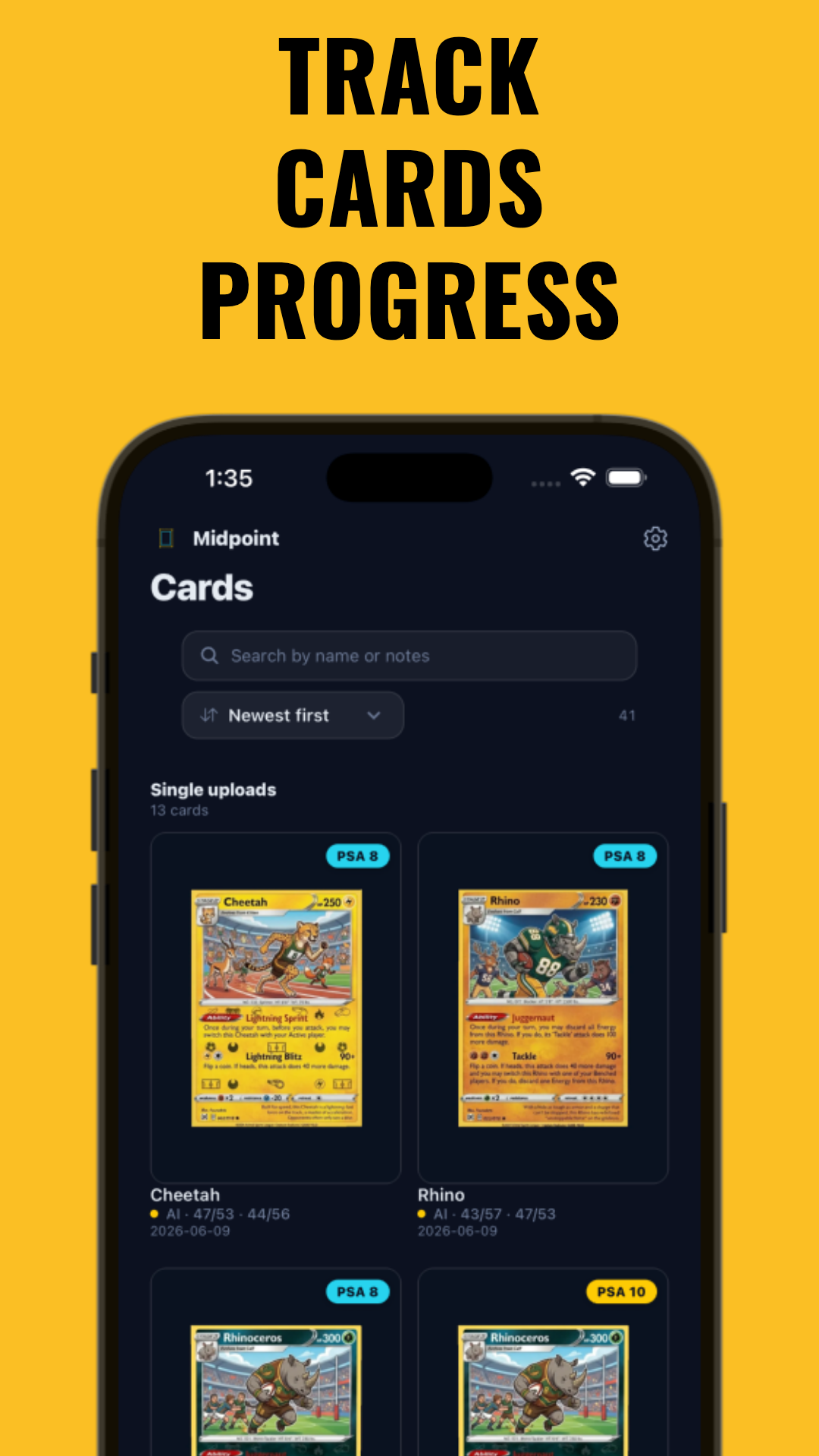
Midpoint’s card portfolio tracker and AI digital grading tools can help you catalog, value, and protect your collection, whether you’re holding for the long term or planning your next big sale.
Step 8: Protect Against Common Hazards
The most common threats to card value are pressure, bending, scratching, fingerprints, moisture, and spills. Mitigate risk by:
- Never eating or drinking near your cards.
- Washing hands before handling.
- Transporting cards in rigid cases or padded containers.
- Reviewing storage conditions seasonally.
Remember, a single accident can significantly reduce a card's value—consistent care is important over time.
Step 9: Plan for Insurance and Investment Decisions
If your collection is worth more than a few thousand dollars, consider insuring it. Insurers may require:
- Inventory lists with condition and value estimates
- Photos or scans as proof of ownership
- Periodic updates as you buy, sell, or grade cards
Maintaining organized, up-to-date records using a card portfolio tracker like Midpoint can help streamline claims and protect your investment. For more information on the risks and rewards of treating cards as an investment, read How Centering Impacts Card Value: A Detailed Guide.
Tips & Common Mistakes
- Don’t stack cards flat: It can cause warping and pressure marks.
- Skip cheap sleeves: Inferior plastics can stick or degrade.
- Don’t store cards in garages or attics: These areas are prone to heat and humidity swings.
- Update your catalog: Forgetting to update your inventory can lead to lost cards or inaccurate insurance coverage.
- Review conditions regularly: Small issues can become big problems if left unchecked.
Conclusion
Knowing how to store valuable cards—using sleeves, rigid holders, upright containers, and safe environments—will help keep your collection safe, organized, and ready for grading, sale, or display. Treating your cards like a portfolio by tracking value and condition is just as important as physical protection. With apps like Midpoint, you can combine digital cataloguing, AI grading estimates, and portfolio tracking to help maximize both enjoyment and long-term value. Protect your passion—and your investment—by making smart storage and management choices from day one.
FAQ
- What is the best way to store expensive trading cards long term?
Double-sleeving (perfect fit plus penny sleeve), followed by a rigid holder (toploader or semi-rigid), is commonly recommended. Store upright in an acid-free storage box in a cool, dry, dark environment. Catalog your collection for insurance and value tracking. - Should valuable cards be stored in a binder or a top loader?
For maximum protection, use a toploader or semi-rigid holder for high-value singles. Binders are suitable for bulk or lower-value cards, but avoid overfilling and always use archival-safe pages. - Do I need to double-sleeve my cards before putting them in a top loader?
Double-sleeving is recommended for foils, premium, or high-value cards to add extra protection against scratches and moisture before inserting into a rigid holder. - How do I keep trading cards from warping or curling?
Store cards vertically (upright), keep them in a climate-controlled environment (humidity 40–55%), and use rigid holders for at-risk cards. Avoid heat, moisture, and direct sunlight. - What temperature and humidity are best for storing valuable cards?
Many collectors aim for a temperature of 65–72°F (18–22°C) with humidity between 40–55%. Avoid extreme temperature swings and always store cards in a stable, climate-controlled room. - Is it safe to store cards in the attic, basement, or garage?
These locations often have high humidity, temperature swings, and risk of leaks or pests. Store your collection in a main living area or dedicated, climate-controlled room.
Free to start
Try the Midpoint app
Grade any card from a photo, see its raw and PSA 10 value, and track what your collection is worth — free.
Get it on iPhoneGet it on Android


