Best 1960 Hockey Cards: Value, Rookies & Grading Insights
Discover the best 1960 hockey cards worth money, top rookie cards, PSA 10 values, and grading tips for collectors and investors.

Estimated reading time: 8 min
Key Takeaways
- The best 1960 hockey cards combine rarity, player prominence, and condition for top value.
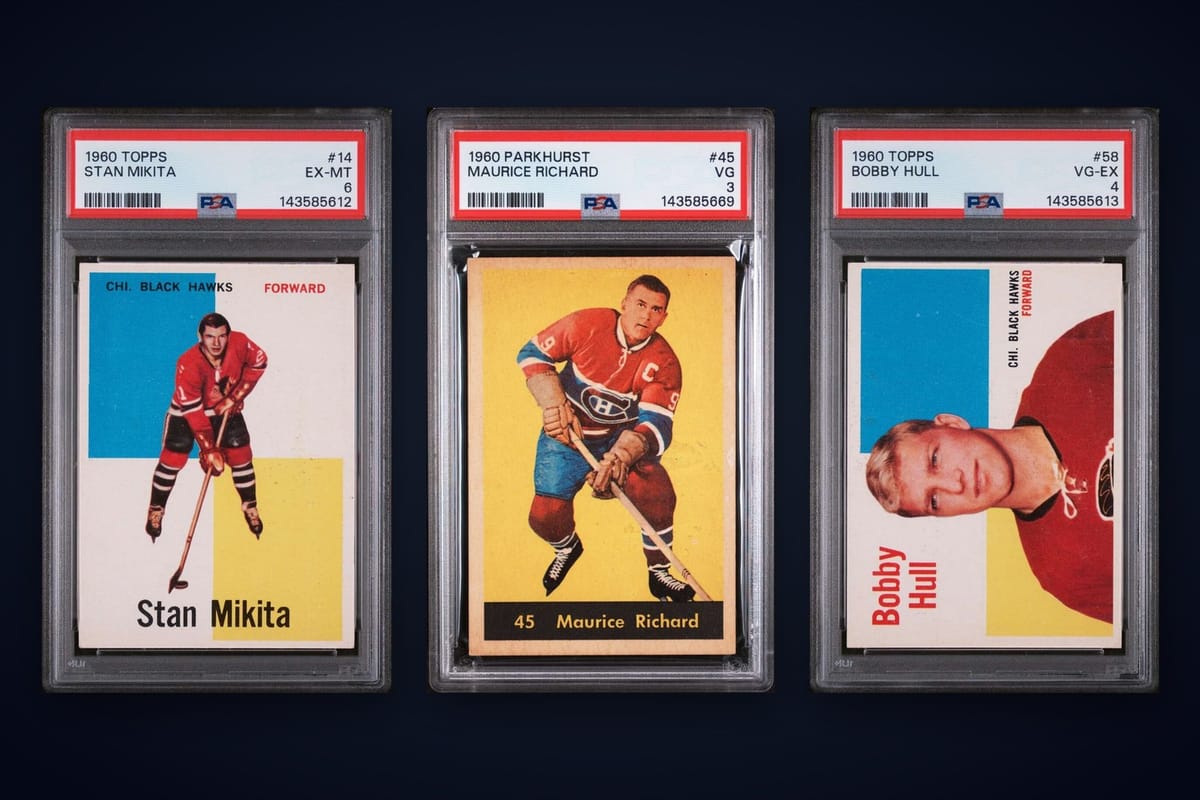
- Stan Mikita’s 1960 Topps rookie card is among the most sought-after rookies from that year.
- PSA 10 graded 1960 cards often command premium prices, sometimes multiples above raw values.
- Centering and surface condition are critical grading factors that significantly impact card value.
- Use tools like Midpoint to estimate card grades before submission to grading companies.
The 1960 hockey card sets remain a treasured vintage collection niche with several standout cards commanding high prices, especially in top condition. This comprehensive guide reveals notable 1960 hockey cards worth money, key rookie cards, and grading considerations to help collectors and investors make informed decisions. Whether you own raw cards or are considering grading, understanding the market, condition factors, and key players from the 1960 Topps hockey set is essential.
Card values — live data from Midpoint's card database, as of 2026-09-04. Prices move; Midpoint refreshes these daily.
| Card | Raw | PSA 10 | Gem premium | |
|---|---|---|---|---|
 |
Stan Mikita #14 1960 Topps |
$198.37 | $28,851 | 145.4× |
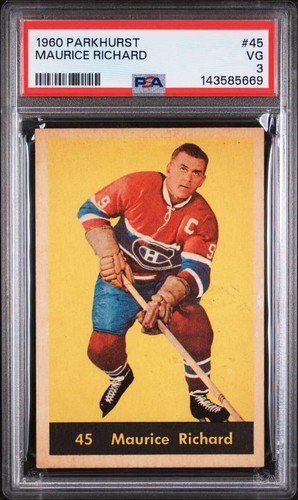 |
Maurice Richard #45 1960 Parkhurst |
$135.28 | $25,168 | 186× |
 |
Bobby Hull #58 1960 Topps |
$111.69 | $22,646 | 202.8× |
 |
Gordie Howe #20 1960 Parkhurst |
$86.62 | $16,269 | 187.8× |
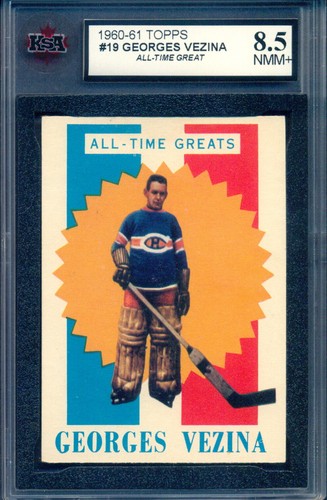 |
Georges Vezina #19 1960 Topps |
$66.00 | $12,414 | 188.1× |
 |
Jacques Plante #53 1960 Parkhurst |
$55.00 | $10,519 | 191.3× |
 |
Jean Beliveau #49 1960 Parkhurst |
$40.25 | $7,579 | 188.3× |
 |
Terry Sawchuk #31 1960 Parkhurst |
$35.99 | $6,779 | 188.4× |
 |
Tim Horton #1 1960 Parkhurst |
$35.90 | $6,762 | 188.4× |
 |
Eddie Shore #20 1960 Topps |
$34.99 | $6,594 | 188.5× |
 |
Gump Worsley #36 1960 Topps |
$33.48 | $6,441 | 192.4× |
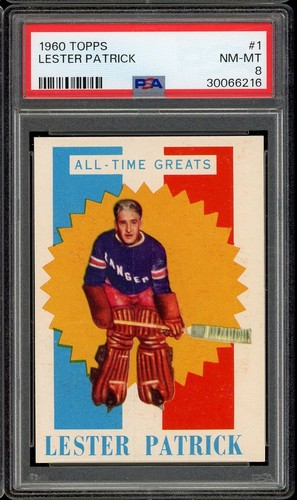 |
Lester Patrick #1 1960 Topps |
$31.00 | $5,846 | 188.6× |
Look up any card's current raw and graded value in Midpoint — and get an estimated grade before you pay to submit.
1. Stan Mikita 1960 Topps Rookie Card
Stan Mikita’s rookie card from the 1960 Topps hockey set is often considered a highlight of 1960 hockey cards. As one of the greatest players in NHL history, Mikita’s 1960 rookie card frequently fetches some of the highest prices among cards from that year. As of 2026-09-04, a raw Mikita rookie typically sells for several hundred dollars, while a PSA 10 example can command prices in the five-figure range.
This card’s value is influenced by Mikita’s Hall of Fame career and the relative scarcity of high-grade examples. The 1960 Topps set was produced in lower quantities compared to later sets, making pristine condition cards less common.
- Look for sharp corners, strong surface gloss, and precise centering.
- Centering is particularly important—off-center Mikita rookies can see a notable drop in value.
- Use AI grading apps like Midpoint to pre-assess centering and surface condition before submitting for PSA or BGS grading.
2. Gordie Howe 1960 Topps Cards
Gordie Howe, known as “Mr. Hockey,” features prominently in the 1960 Topps set. While not a rookie card, his cards from this year remain collectible and can be valuable. High-grade Howe cards may fetch thousands of dollars, especially PSA 10 examples that showcase strong centering and clean surfaces.
Collectors prize these cards for both Howe’s legendary status and the vintage aesthetics of the 1960 set. Howe cards in raw condition typically sell for several hundred dollars but can increase significantly once graded PSA 10.
3. 1960 Topps Rookie Cards Beyond Mikita
Besides Mikita, the 1960 Topps set includes other notable rookie cards such as Ed Westfall and Ken Schinkel. These rookies are generally less valuable but still sought after by vintage hockey collectors. Their raw cards typically sell for $20–$100 depending on condition.
Grading can boost prices, but the premium gap between raw and PSA 10 is generally less dramatic than Mikita’s. Still, investing in grading for top-condition examples can be worthwhile for these secondary rookies.
4. Bobby Hull 1960 Topps Cards
Bobby Hull’s 1960 Topps cards remain a cornerstone of vintage hockey collections. Hull was a dominant scorer and a Hall of Famer, making his cards desirable. Raw Hull cards often sell in the $100–$500 range depending on condition, while PSA 10 copies can reach several thousand dollars.
Hull’s cards may show some print imperfections on lower-grade versions, so condition grading and centering checks are important.
5. Jean Béliveau 1960 Topps Cards
Jean Béliveau, another hockey legend, features in the 1960 Topps set with cards that are collectible, especially in top condition. Béliveau’s raw cards generally sell between $100 and $400, while PSA 10 examples can command prices in the low thousands.
Collectors often focus on centering and surface gloss as key factors for Béliveau cards, making pre-grading assessment helpful.
6. Understanding the 1960 Topps Hockey Set
The 1960 Topps hockey set consists of 132 cards, including key rookies and star players from the era. Cards are numbered 1 to 132 and feature a clean, classic design that appeals to vintage collectors.
Key cards include Stan Mikita (#40), Gordie Howe (#100), Bobby Hull (#46), and Jean Béliveau (#55). The set’s relatively low print run combined with aging and handling makes high-grade examples less common and more valuable.
7. The Value Gap: Raw vs. PSA 10 Cards
The premium for PSA 10 graded 1960 hockey cards can be significant due to the scarcity of cards in pristine condition after 60+ years. For example, a raw Stan Mikita rookie might sell for several hundred dollars, while a PSA 10 can command prices in the five-figure range — representing a substantial premium.
Similar gaps exist for other stars: Bobby Hull PSA 10 cards can be multiple times more valuable than raw copies in average condition. This premium highlights why grading can be a worthwhile investment for top-condition cards.
8. Key Grading Factors: Centering, Corners, Surface, Edges
Grading companies like PSA, BGS, and CGC evaluate cards based on four main criteria: centering, corners, edges, and surface. Among these, centering often has a significant impact on value, especially for vintage sets like 1960 Topps.
For example, a Stan Mikita rookie with perfect corners but off-center borders may receive a lower grade, which can affect its market value. Surface condition, including print defects, creases, and stains, also plays an important role.
- Centering tolerance for PSA 10 is typically within 55/45 to 60/40.
- Corners must be sharp with minimal wear.
- Surfaces should be clean, free of scratches or stains.
- Edges need to be intact without chipping or fraying.
9. Using AI Tools Like Midpoint to Pre-Grade 1960 Hockey Cards
Before paying costly grading fees, collectors can use AI-powered apps like Midpoint to estimate their card’s condition. Midpoint analyzes centering down to the millimeter, evaluates corners, edges, and surface quality, and provides instant PSA, BGS, CGC, and TAG grade estimates.
This pre-grading insight helps collectors decide which cards are worth submitting, potentially saving money and maximizing returns. Midpoint’s database covers over 250,000 cards including the entire 1960 Topps hockey set.

10. Identifying Authentic 1960 Topps Hockey Cards
Collectors should be cautious of trimmed, altered, or counterfeit 1960 hockey cards. Authentic cards have specific print textures, gloss, and cardstock weight consistent with the era.
Key tips for identification include:
- Check card borders for trimming signs like uneven edges.
- Use magnification to examine print dots and color saturation.
- Compare card back fonts and alignment to known authentic examples.
- Use grading services or expert forums for verification if in doubt.
11. Where to Buy, Sell, and Research 1960 Hockey Cards
Top places for buying and selling 1960 hockey cards include major auction houses, eBay, and specialized vintage card shops. Research tools like price guides, auction records, and checklists are essential for tracking market values.
Midpoint’s app offers comprehensive lookup features showing raw vs graded prices for specific cards, making it a useful resource for collectors researching 1960 hockey cards worth money.
12. Is Grading Worth It for 1960 Hockey Cards?
Given the premium for PSA 10 and other top grades, grading can be worth the investment for high-condition 1960 hockey cards. Cards with excellent centering, sharp corners, and clean surfaces often see value increases post-grading.
However, cards with significant wear or centering flaws may not benefit financially from grading. Using pre-grading tools like Midpoint to assess condition helps avoid costly grading fees on lower-value cards.
Conclusion
The best 1960 hockey cards continue to be prized by collectors and investors alike, with Stan Mikita’s rookie card often leading the pack in value and demand. Understanding the key players, rookie cards, and grading factors from the 1960 Topps hockey set is important for maximizing your collection’s worth.
Using modern AI tools such as Midpoint for pre-grading analysis helps you confidently navigate the grading process, ensuring you submit only your best cards and avoid unnecessary costs. Whether you’re a seasoned collector or new to vintage hockey cards, focusing on condition and authenticity will generally drive the most rewarding outcomes.
FAQ
Q: What are the most valuable 1960s hockey cards?
A: The most valuable 1960s hockey cards include Stan Mikita’s 1960 Topps rookie card, Gordie Howe cards, Bobby Hull, and Jean Béliveau cards, especially in PSA 10 condition.
Q: What is the most valuable 1960–61 Topps hockey card?
A: Stan Mikita’s 1960 Topps rookie card is generally considered among the most valuable cards from the 1960–61 Topps hockey set.
Q: How much is a 1960 Topps hockey card worth?
A: Value depends on the player and condition; raw cards typically range from $20 to several hundred dollars, while PSA 10 graded cards can be worth thousands or more.
Q: Who is the rookie card in the 1960–61 Topps hockey set?
A: Stan Mikita’s card (#40) is the key rookie card in the 1960–61 Topps hockey set, with other rookies like Ed Westfall also included.
Q: How do you identify and grade 1960s hockey cards?
A: Grading evaluates centering, corners, edges, and surface. Using AI tools like Midpoint can help pre-grade cards by measuring centering and estimating condition before submission.
Q: Are 1960s hockey cards a good investment?
A: High-grade cards of Hall of Famers and rare rookies can hold value well. Graded PSA 10 copies often command significant premiums, making them potentially good long-term investments when properly authenticated and preserved.
Free to start
Try the Midpoint app
Grade any card from a photo, see its raw and PSA 10 value, and track what your collection is worth — free.
Get it on iPhoneGet it on Android