The Ultimate Guide to Card Preservation Before Grading
Learn best practices for card preservation before grading to protect your investment. Discover techniques to prevent flaws and ensure top grading results.

Estimated reading time: 10 minutes
Key Takeaways
- Protect every edge and corner with archival-quality sleeves and semi-rigid holders.
- Control your environment: Keep temperature, humidity, and light within ideal ranges.
- Handle with care: Wash hands, use gloves, and work over soft surfaces.
- Ship securely using multiple layers of protection and track/insure your package.
- Avoid common pitfalls like PVC sleeves, extreme conditions, and harsh cleaning.
Table of Contents
- Understanding Grading and Its Impact
- Best Practices for Card Preservation
- Environmental Factors to Consider
- Handling, Transport, and Packaging Tips
- Common Mistakes to Avoid
- Expert Recommendations and Resources
- Conclusion
Understanding Grading and Its Impact
Card grading is a third-party authentication process by PSA, BGS, or SGC that assigns a numerical score (1–10) based on four condition factors:
- Corners: Sharpness and roundness.
- Edges: Chips, whitening, and fraying.
- Centering: How balanced the artwork is (How to Measure Card Centering).
- Surface: Scratches, stains, gloss, and print lines.
Even minor flaws like smudges or micro-scratches can drop a grade by a point or more. High grades—especially Gem Mint 10—often command multiples of raw card prices, so meticulous preservation directly protects your investment.
Best Practices for Card Preservation
Archival-Quality Sleeves and Holders
- Use PVC-free penny sleeves for a smooth inner layer.
- Choose semi-rigid holders (Card Savers) preferred by most grading services.
- Match holder size to your card (standard, thick, or hobby) to avoid shifting or pressure marks.
Proper Handling Techniques
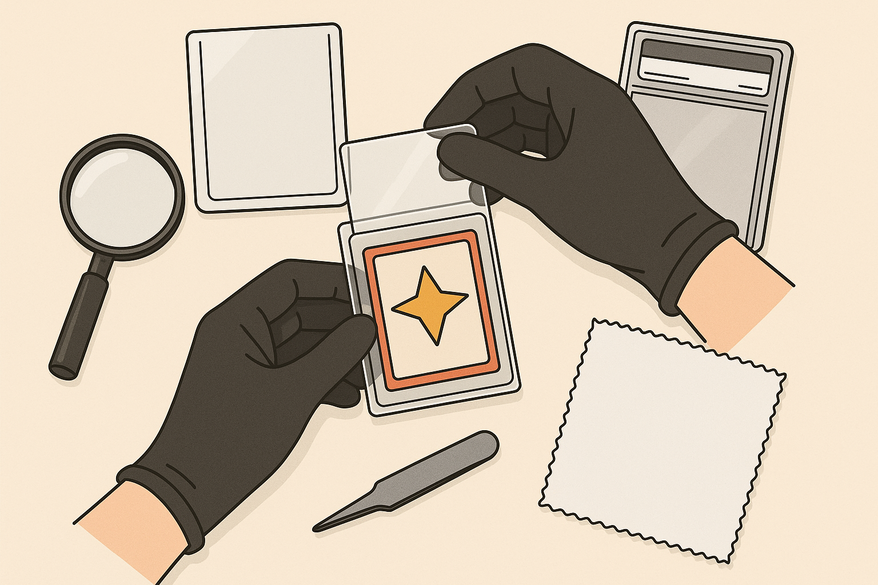
- Wash and dry hands thoroughly or wear nitrile/cotton gloves.
- Hold cards by edges only and work on a soft, clean surface.
- Gently dust with a microfiber cloth—never use chemicals or abrasive wipes.
Recommended Storage Solutions
- Store cards in acid-free, archival boxes or binder pages.
- Use properly sized pockets so corners and edges stay fully protected.
- Avoid loose stacking to prevent friction and wear.
Environmental Factors to Consider
Temperature Control
- Keep cards cool and stable; avoid radiators, attics, or direct sunlight.
Humidity Management
- Maintain 30–50% relative humidity to prevent warping or mold.
- Use climate-controlled rooms, dehumidifiers, and silica gel packs.
Light Exposure
- Store in dark containers; use UV-protective cases and low-UV LED lighting for displays.
Handling, Transport, and Packaging Tips
In-Storage Handling
- Keep cards sleeved and in holders at all times.
- Limit removals; each handling risks scratches or drops.
Shipment Preparation
- Sequence: Card → penny sleeve → semi-rigid holder.
- Surround with cardboard spacers; secure around spacers—never tape holders directly.
- Wrap in bubble wrap, then pack in a rigid box inside a padded mailer.
- Include your submission form in a separate sleeve inside the box.
- Ship via tracked, insured courier; avoid extreme weather transit windows.
Before sealing, consider a final centering check with the Card Centering Tool web app for sub-millimeter precision and Gem Mint tolerance verification.
Common Mistakes to Avoid
Correct these pitfalls before they cost you points:
- PVC or low-quality sleeves that yellow or stick.
- Overstuffed binders or boxes flattening corners.
- Extreme heat, humidity, or sunlight causing warping or fading.
- Bare-handed contact leaving fingerprints.
- Harsh cleaning methods causing micro-abrasions.
- Weak packaging leading to creased or bent cards.
Expert Recommendations and Resources
Top experts agree:
- Sleeve cards immediately upon acquisition.
- Use archival-grade, PVC-free materials exclusively.
- Store in cool, dry, and low-light environments.
- Follow each grading service’s specific packaging guidelines.
Further Reading:
- PSA, BGS, SGC Submission Guides: PSA, BGS, SGC Submission Guides
- Archival Supplies Vendors: Archival Supplies Vendors
- Step-by-Step Video on Grading Prep: Grading Preparation Video
- Why Grading Matters: In-Depth Grading Importance
Conclusion
Implementing archival sleeves, careful handling, controlled environments, and secure shipping forms an ongoing risk-management routine that preserves both condition and value. Card preservation before grading isn’t a one-off task; it’s a habit every collector should cultivate. For tips on avoiding wasted fees, see How to Avoid Wasted Submission Fees Through Improved Centering.
FAQ
-
Q: How do I choose the right holder?
A: Always match your card’s thickness and dimensions. Semi-rigid holders like Card Savers provide a snug fit and clear view, reducing movement and pressure marks.
-
Q: What’s the ideal humidity for storage?
A: Aim for 30–50% relative humidity. Use a hygrometer to monitor and silica gel packs or small dehumidifiers to maintain stability.
-
Q: Can I fix a slightly warped card?
A: Mild warping may improve when stored flat in a stable environment. Severe warps are often irreversible, so prevention is key.
-
Q: What packaging steps ensure safe shipment?
A: Sleeve the card, add spacers, wrap in bubble wrap, and use a rigid box inside a padded mailer. Always track and insure your shipment.
Free to start
Try the Midpoint app
Grade any card from a photo, see its raw and PSA 10 value, and track what your collection is worth — free.
Get it on iPhoneGet it on Android