
Diamond and Pearl Pokémon Cards Value: Top 10 Must-Knows
Discover the diamond and pearl Pokémon cards value guide including top valuable cards, grading tips, and market insights for the platinum era.

Estimated reading time: 12 min
Key Takeaways
- Diamond and Pearl Pokémon cards value depends on rarity, condition, and grade, especially PSA 9 and PSA 10.
- LV.X era cards and holo rares are among the more valuable cards, with notable chase cards like Garchomp LV.X and Dialga.
- Boosters, boxes, and tins from this Platinum era also hold collector interest beyond singles.
- Using tools like Midpoint can help you digitally assess centering and condition before submitting cards for professional grading.
- Understanding print runs, card variants, and condition factors like centering is important to evaluate card worth.
The Diamond and Pearl era (2007-2010) remains a notable chapter in Pokémon card collecting, often called the Platinum era. Whether you’re a seasoned collector or new to the hobby, understanding diamond and pearl Pokémon cards value can help in making informed decisions and building a collection. This guide breaks down some of the valuable cards, grading nuances, and market trends influencing this era’s worth today. Plus, we’ll share how apps like Midpoint help collectors digitally grade cards to save money and time.
Card values — live data from Midpoint's card database, as of 2026-08-10. Prices move; Midpoint refreshes these daily.
| Card | Raw | PSA 10 | Gem premium | |
|---|---|---|---|---|
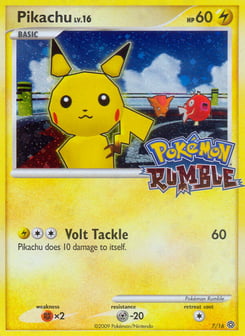 |
Pikachu #7/16 Pokémon Rumble (2009) |
$750.00 | $51,925 | 69.2× |
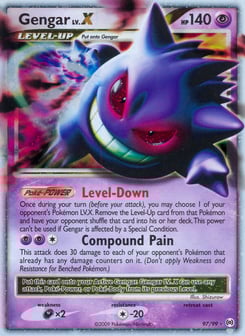 |
Gengar LV.X #97/99 Arceus (2009) |
$448.95 | $38,641 | 86.1× |
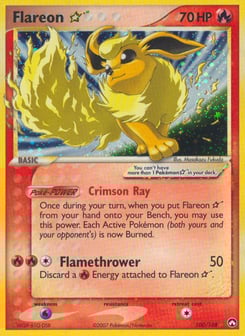 |
Flareon ☆ #100/108 Power Keepers (2007) |
$750.00 | $36,017 | 48× |
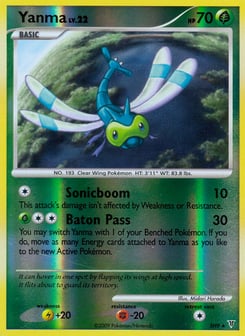 |
Yanma #SH9 Supreme Victors (2009) |
$67.63 | $30,000 | 443.6× |
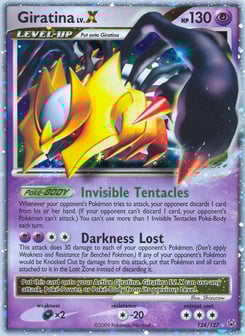 |
Giratina LV.X #124/127 Platinum (2009) |
$159.26 | $29,890 | 187.7× |
 |
Umbreon #86/90 HS—Undaunted (2010) |
$537.41 | $26,277 | 48.9× |
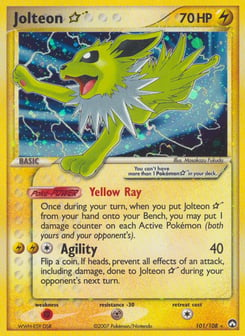 |
Jolteon ☆ #101/108 Power Keepers (2007) |
$449.00 | $26,037 | 58× |
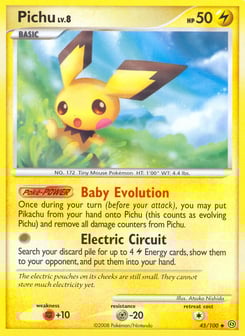 |
Pichu #45/100 Stormfront (2008) |
$32.11 | $25,000 | 778.6× |
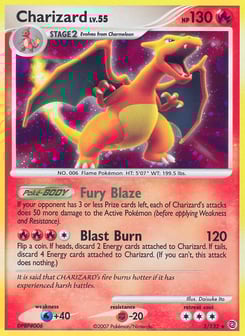 |
Charizard #3/132 Secret Wonders (2007) |
$165.00 | $22,750 | 137.9× |
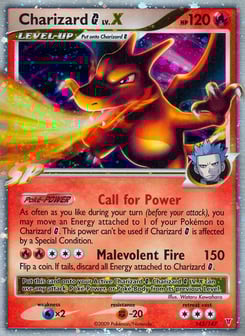 |
Charizard G LV.X #143/147 Supreme Victors (2009) |
$450.72 | $22,570 | 50.1× |
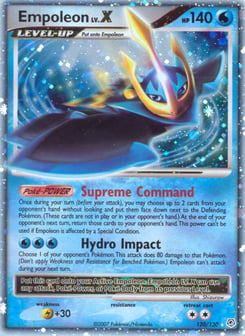 |
Empoleon LV.X #120/130 Diamond & Pearl (2007) |
$71.59 | $21,466 | 299.8× |
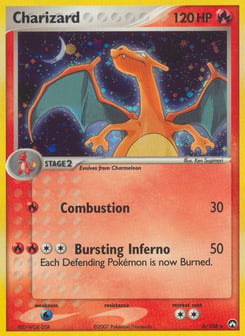 |
Charizard #6/108 Power Keepers (2007) |
$300.00 | $20,635 | 68.8× |
Look up any card's current raw and graded value in Midpoint — and get an estimated grade before you pay to submit.
1. Diamond and Pearl Base Set Overview
Released in 2007, the Diamond and Pearl base set introduced 130 cards featuring Pokémon from the Sinnoh region. This set included a combination of common, uncommon, rare, holographic, and reverse holographic cards that contributed to the era’s collectible appeal.
Known for its distinct art style and the introduction of LV.X cards, the set’s identity centers on showcasing Pokémon like Dialga, Palkia, and the starter trio—Turtwig, Chimchar, and Piplup. The base set’s print run compared to earlier sets contributes to its market demand.
- Set release: 2007
- Total cards: 130
- Key features: LV.X cards, holographic rares, reverse holos
- Popular themes: Sinnoh starters, Legendary Pokémon

2. How to Check Diamond and Pearl Pokémon Cards Value
Valuing Diamond and Pearl cards depends on factors including card number, rarity, and condition. Each card has a unique number within the set, which collectors use to identify and track value.
Using platforms like Midpoint, you can look up cards by name or number to compare raw market prices versus graded sale data. This dual view helps gauge value ranges before committing to grading or sale.
- Search by card number or name for pricing
- Compare raw vs graded values for market context
- Factor in rarity symbols: star (rare), star H (holo rare), star R (reverse holo)
3. Most Valuable Diamond and Pearl Cards
Notable cards from this era include LV.X chase cards such as Garchomp LV.X and Dialga LV.X, which often command higher prices due to their scarcity and popularity. Among holographic cards, Dialga, Palkia, and Lucario are sought after.
As of 2026-08-10, a PSA 10 Dialga LV.X can be worth significantly more than ungraded versions, sometimes exceeding several hundred dollars. Gengar holo cards also hold value due to their fan appeal.
- Garchomp LV.X
- Dialga LV.X and holo rares
- Palkia holo rares
- Lucario holo rares
- Starter Pokémon holos (Turtwig, Chimchar, Piplup)
4. Price Ranges: Ungraded vs Graded Cards (PSA 9, PSA 10)
Grading can impact the value of Diamond and Pearl cards. PSA 10 graded cards often command prices multiple times higher than their ungraded counterparts depending on card rarity and condition. PSA 9 cards typically provide a premium over raw cards.
For example, an ungraded Dialga holo may sell for around $50-$70, whereas a PSA 10 can be worth several times more. Similarly, LV.X cards tend to benefit from top grades due to their limited print runs.
- Ungraded cards: accessible to most collectors but variable condition
- PSA 9: near-mint condition with minor flaws, higher value
- PSA 10: gem mint, top-tier value and collector demand
5. Condition Factors Affecting Diamond and Pearl Pokémon Cards Value
Condition is important in determining card value. Factors include centering, corners, edges, and surface quality. Near mint and light play cards retain stronger value, while heavily played cards typically see discounts.
Centering is especially important for this era’s cards, as uneven borders can reduce grade. Midpoint’s AI-powered centering and surface grading tools can help measure these factors before submitting cards for professional grading, potentially saving collectors money and guesswork.
- Near mint: minimal wear, sharp corners, good centering
- Light play: slight edge wear or minor surface marks
- Heavily played: visible creases, scratches, or corner damage
- Centering: off-center cards can lose points on grade
6. Set-Level Metrics: Average Card and Total Set Value
The average card value in the Diamond and Pearl base set generally ranges around $5-$15 raw, with certain holo and LV.X cards elevating the overall market average. Completing the full set, especially in PSA 9 or 10 condition, can be worth significantly more given the scarcity of high-grade cards.
Collectors often target key chase cards first, then fill in commons and uncommons to build toward full set value appreciation.
- Average raw card value: approximately $5-$15
- Complete high-grade set: potentially worth thousands
- Key chase cards drive total set worth
7. High-Value Non-Single Items: Booster Packs, Boxes, and Tins
Beyond singles, booster packs and boxes from the Diamond and Pearl era carry collector value. Sealed booster boxes can command prices over $1,000 depending on condition and market demand.
Blister packs and tins featuring exclusive promo cards or unique packaging are also prized. These sealed items provide potential for uncovering rare holo or LV.X cards and may appreciate over time.
- Sealed booster boxes: often over $1,000 (2026-08-10)
- Booster packs: $15-$50 depending on condition
- Promo tins: collectible for exclusive cards
8. Comparing Market Prices Across Trackers and Marketplaces
Prices for Diamond and Pearl cards vary by platform. Marketplaces like eBay, TCGPlayer, and StockX provide real-time sales data, while price trackers and apps like Midpoint aggregate and analyze trends for informed buying and selling.
Tracking multiple sources allows collectors to identify fair market value and spot pricing differences to maximize returns.
- Use Midpoint for AI-based digital grading and value lookup
- Cross-reference eBay completed sales for transaction data
- Monitor TCGPlayer for listing prices and market depth
9. Notable Cards Beyond Top Chase Rares
While LV.X and holo rares often dominate value, other cards like Gengar, Dialga, Palkia, and Lucario maintain collector interest. Starter Pokémon such as Turtwig, Chimchar, and Piplup reverse holos also have niche appeal.
These cards can serve as affordable entry points or complementary pieces to a full set or themed collection.
- Gengar holo cards
- Dialga and Palkia holo rares
- Lucario holo rares
- Starters’ reverse holo variants
10. Identifying Diamond and Pearl Card Variants
Knowing whether a card is base rare, holo rare, reverse holo, or a premium variant like LV.X is important for valuation. The rarity symbol (star, star H, star R) near the card number indicates rarity type.
LV.X cards have distinct artwork and a "LV.X" label on the card, often featuring boosted stats or abilities. Reverse holo cards have a holographic foil on the card background instead of the Pokémon image.
- Base rare: star symbol, non-holographic
- Holo rare: star H, Pokémon image is holographic
- Reverse holo: star, background is holographic
- LV.X cards: marked with "LV.X", special art and effects
Conclusion
The diamond and pearl Pokémon cards value landscape combines nostalgia, rarity, and condition-driven pricing to create ongoing collector interest. LV.X era cards, holo rares, and sealed booster boxes stand out as some of the more valuable assets. Leveraging digital tools like Midpoint helps collectors pre-grade and evaluate cards, supporting informed investment and preservation strategies. Whether hunting for a prized Dialga LV.X or a complete high-grade set, understanding these fundamentals can help maximize success in the Platinum era market.
FAQ
Q: What are the most valuable Diamond & Pearl Pokémon cards?
A: Some of the more valuable cards include LV.X chase cards like Garchomp LV.X and Dialga LV.X, holo rares of Dialga, Palkia, Lucario, and starter Pokémon in PSA 9 or 10 condition.
Q: How much is a Diamond & Pearl booster box worth?
A: As of 2026-08-10, sealed Diamond and Pearl booster boxes often sell for over $1,000 depending on condition and market demand.
Q: Are Diamond & Pearl LV.X cards valuable?
A: Yes, LV.X cards are among the higher-value cards from the era due to their limited print runs and collector demand, especially when graded PSA 9 or 10.
Q: How do graded Diamond & Pearl cards compare to ungraded ones?
A: Graded cards, particularly PSA 9 and PSA 10, generally command prices multiple times higher than raw ungraded cards, reflecting verified condition and authenticity.
Q: How can I tell if my Diamond & Pearl card is worth money?
A: Check rarity symbols, card number, and condition. Use tools like Midpoint’s card lookup and digital grading to estimate value before investing in professional grading.
Q: What is the average value of a Diamond & Pearl Pokémon card?
The average raw Diamond and Pearl card value typically ranges between $5 and $15, with holo rares and LV.X cards often exceeding this average.
Free to start
Try the Midpoint app
Grade any card from a photo, see its raw and PSA 10 value, and track what your collection is worth — free.
Get it on iPhoneGet it on Android


