11 Best Baseball Sets to Grade: Where PSA 10 Premiums Soar
Discover the best baseball sets to grade for maximum PSA 10 premiums. Explore vintage and modern sets, iconic rookies, and what makes a set worth grading.

Estimated reading time: 11 min
Key Takeaways
- The best baseball sets to grade can offer significant PSA 10 premiums—sometimes over 50x the raw card price in certain cases.
- Vintage, modern, and reprint sets all have notable cards, but condition sensitivity and centering are key drivers.
- Iconic rookie cards and stars often fuel grading demand, so set selection can matter for profit and collecting.
- Tools like Midpoint can help you pre-grade cards and measure centering to maximize your grading ROI.
Wondering which are the best baseball sets to grade for maximum value and investment upside? Whether you collect for profit or passion, understanding which sets deliver the highest PSA 10 premiums, why certain years and brands thrive, and how to pick your best grading candidates is crucial. This guide breaks down 11 notable sets—vintage, modern, and everything in between—using real, up-to-date card value data from Midpoint’s live database. Read on to see which sets may be worth your grading dollars, and how to spot cards with PSA 10 gem potential!

Raw vs PSA 10 value (biggest grading premium) — live data from Midpoint's card database, as of 2026-08-20. Prices move; Midpoint refreshes these daily.
| Card | Raw | PSA 10 | Gem premium | |
|---|---|---|---|---|
 |
Mickey Mantle #82 1991 Topps Archives 1953 |
$3.45 | $153.32 | 59.3× |
 |
Nolan Ryan #712 1970 Topps |
$280.00 | $35,915 | 59× |
 |
Nolan Ryan #100 1986 Topps |
$1.99 | $4,126 | 54.7× |
 |
Tony Gwynn #482 1983 Topps |
$15.85 | $6,858 | 54.7× |
 |
Nolan Ryan #60 1985 Donruss |
$2.50 | $822.71 | 52.1× |
 |
Mark McGwire #401 1985 Topps |
$11.58 | $5,000 | 51.9× |
 |
Barry Bonds #497 2001 Topps |
$2.29 | $9,847 | 50.6× |
 |
Willie Mays #218 1952 Bowman |
$1,031 | $270,456 | 49× |
 |
George Brett #60 1992 Pinnacle |
$1.12 | $304.94 | 46.9× |
 |
Don Mattingly #8 1984 Topps |
$17.02 | $2,010 | 46.8× |
 |
Jim Bunning #144 1960 Leaf |
$49.99 | $10,774 | 46.6× |
 |
Michael Jordan #19 1994 Upper Deck |
$12.00 | $2,749 | 45.5× |
Look up any card's current raw and graded value in Midpoint — and get an estimated grade before you pay to submit.
1. 1991 Topps Archives 1953
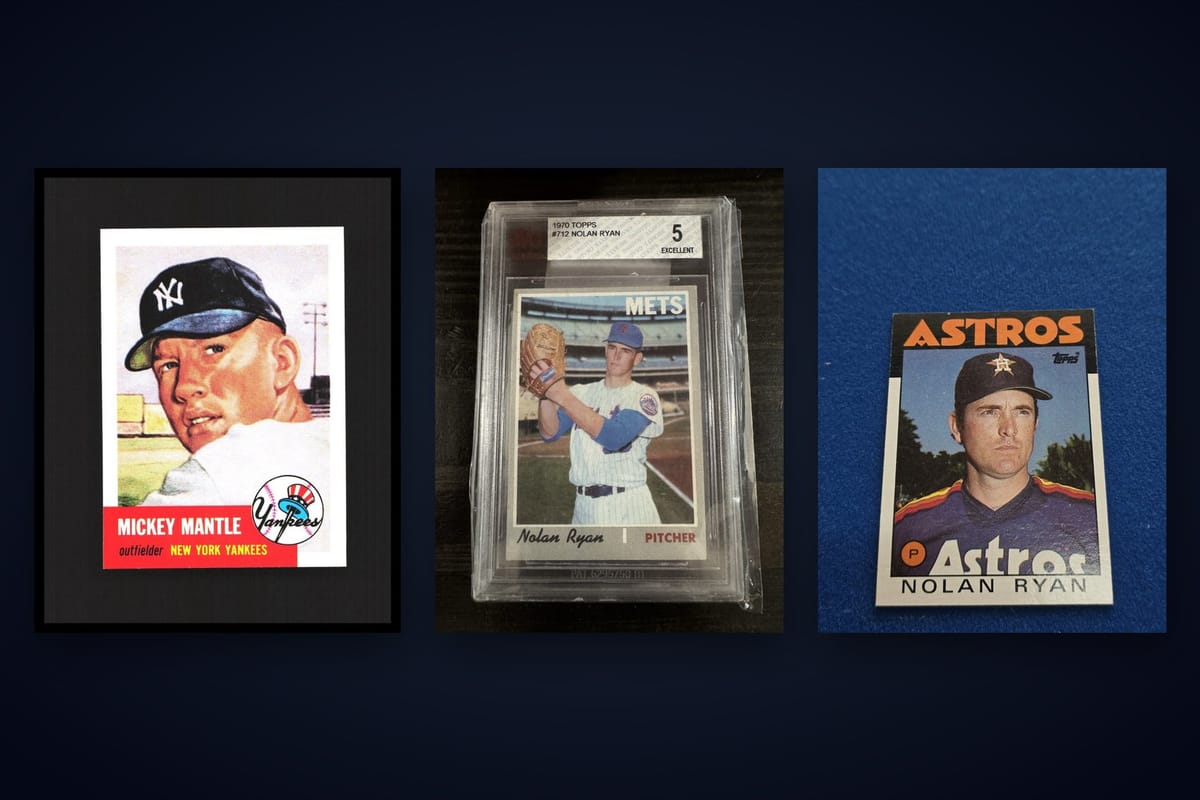
One of the most notable grading opportunities isn’t a true vintage set but a vintage reprint: the 1991 Topps Archives 1953. This set recreates the classic 1953 Topps design, with modern print runs but challenging centering and print quality. Collectors appreciate it for nostalgia and the pursuit of high grades.
The standout here is the Mickey Mantle #82 card, which has recently sold raw for around $3.45 and has reached $153.32 in PSA 10—a reported 59.3x gem premium as of this month. This makes it a potentially profitable card to submit for grading, especially if you can spot a true gem candidate.
- Beware of off-centering and chipping—use a digital centering tool like Midpoint before sending in.
- Nostalgia factor keeps demand up, despite being a reprint.
- Low raw prices can mean lower risk, higher potential reward.
2. 1970 Topps
Vintage sets are classics for a reason, but the 1970 Topps stands out for its condition challenges and potential upside. The set’s gray borders make wear and centering issues common, so finding high-grade examples is tough—driving PSA 10 values higher.
The headline is Nolan Ryan #712: raw $280.00, PSA 10 $35,915—a reported 59x premium. This makes it one of the highest PSA 10 premiums in all of baseball cards. Even if you’re not chasing Ryan, the set is loaded with stars and Hall of Famers.
- Condition sensitivity makes this set appealing for grading—if you can find centered, sharp copies.
- Iconic design and loaded checklist attract both set builders and single-card flippers.
- Check for print defects and centering before submitting—see How Centering Impacts Card Value for help.
3. 1986 Topps
The black-bordered 1986 Topps set is known for showing every nick and print flaw, making high grades rare and valuable. It’s an example of a modern classic where grading can significantly increase a card's value.
The key card is Nolan Ryan #100: raw $1.99, PSA 10 $4,126—a reported 54.7x gem premium as of this month. Other stars and rookies benefit too, but Ryan is the icon here.
- Black borders are notoriously unforgiving; inspect edges and corners closely.
- Affordable raw singles make it a lower-cost grading play, with significant upside for top condition.
- Use bulk grading submissions to maximize value if you find a stack of well-centered cards.
4. 1983 Topps
One of the most popular 1980s sets for both collectors and investors, 1983 Topps boasts a legendary rookie crop and strong PSA 10 premiums. Its classic two-photo design is beloved, but off-centering can be a challenge.
The notable card: Tony Gwynn #482. Raw, it’s $15.85, but a PSA 10 has reached $6,858—a reported 54.7x premium. Gwynn’s rookie is always in demand, but Sandberg and Boggs rookies from the same set also reward grading.
- Check for print dots and edge roughness, common on this set.
- Gem mint examples are scarce, so pre-grade with digital tools.
- Completing the set in high grade is a popular challenge among 1980s collectors.
5. 1985 Donruss
Donruss often flies under the radar, but the 1985 set offers notable grading upside—especially on star veterans and rookies. The black borders (like 1986 Topps) make flaws stand out, but the design is timeless.
Nolan Ryan #60 is the standout: raw $2.50, PSA 10 $822.71—a reported 52.1x premium. Mark McGwire’s rookie is in the 1985 Topps set (see below), but Donruss is a sleeper pick for investors.
- Surface scratches are common; examine closely under strong light.
- Sharp corners and centering are musts for a grading submission.
- Affordable set-building and strong star power attract multiple collector types.
6. 1985 Topps
Another 1980s giant, 1985 Topps is best known for the Mark McGwire #401 Olympic rookie. Raw, it’s $11.58; in PSA 10, $5,000—a reported 51.9x premium. McGwire’s chase card keeps the set relevant for both flippers and set builders.
- Watch for print snow and off-centering; the white borders are generally forgiving, but the set is known for left-right shift.
- Great for bulk grading if you can source packs or boxes in good shape.
- Other rookies (Clemens, Puckett) add to the set’s grading appeal.
7. 2001 Topps
Modern sets can offer significant grading premiums, especially for key milestone cards. The Barry Bonds #497 from 2001 Topps—his single-season HR record card—has sold raw for around $2.29, but has reached $9,847 in PSA 10, a reported 50.6x premium.
- Modern print runs are high, but PSA 10s are still rare due to centering and handling out of packs.
- Bonds’ historic season drives demand for this card in top grade.
- Surface scratches and factory lines are common issues—use a magnifier and digital grading tool for inspection.
8. 1952 Bowman
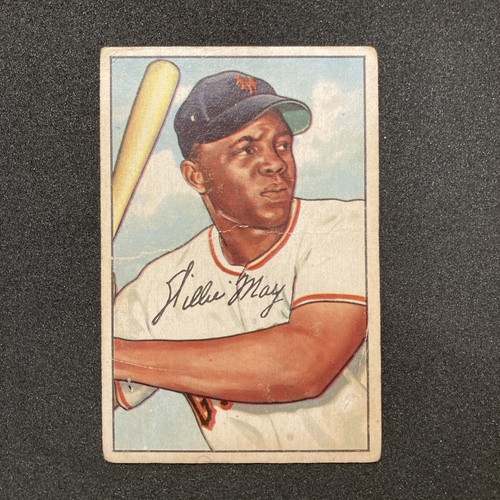
If you’re after vintage prestige, look no further. The 1952 Bowman set is an all-time classic—small in size, huge in value. The Willie Mays #218 leads the way: raw $1,031, but PSA 10 has reached $270,456—a reported 49x gem premium.
- Finding clean, centered copies from this era is a major challenge; most surviving cards have wear or miscuts.
- Set builders prize complete runs of vintage Bowman, but even single stars can justify grading fees.
- Population reports for PSA 10s are extremely low, driving up premiums for the best of the best.
9. 1992 Pinnacle
Ultra-modern sets are rarely grading goldmines, but 1992 Pinnacle stands out for its condition challenges and the popularity of stars like George Brett. The George Brett #60 has a modest raw value ($1.12) but a strong PSA 10 premium ($304.94, or a reported 46.9x).
- Glossy surfaces are prone to scratching; handle with gloves and inspect carefully.
- Low raw cost means minimal downside if you’re selective about which cards to grade.
- Modern photography and player selection keep this set interesting for 1990s collectors.
10. 1984 Topps
Another 1980s staple, 1984 Topps delivers a classic design and one of the era’s top rookie cards: Don Mattingly #8. Raw $17.02, PSA 10 $2,010—a reported 46.8x premium.
- Centering is a common problem, and print quality varies from pack to pack.
- Mattingly cards drive most of the grading demand, but the set is also a favorite for complete graded builds.
- Check for print dots and rough cuts along the edges.
11. 1960 Leaf
Rare and condition-sensitive, 1960 Leaf is a high-risk, high-reward set for graders. The Jim Bunning #144 card is a standout: raw $49.99, PSA 10 $10,774—a reported 46.6x premium.
- Short print runs and fragile paper make high grades rare.
- Look for centering, crisp corners, and minimal print defects—anything less will struggle to reach PSA 10.
- Vintage set builders chase high-grade examples, driving up demand and resale prices.
Conclusion
When it comes to the best baseball sets to grade, it’s important to find the right mix of condition sensitivity, collector demand, and iconic cards. Sets with big PSA 10 premiums (the "gem premium") can reward careful pre-grading and centering inspection—especially if you use tools like Midpoint to measure before submitting. Whether you’re chasing vintage legends like Willie Mays, modern icons like Barry Bonds, or nostalgic 1980s rookies, focus on cards with low raw prices and high PSA 10 values for potential ROI.
Curious about how centering and print quality impact your card’s grade and value? See Card Centering Tool: Accurate Card Grading Estimates and How to Pre-Grade Your Card: A Step-by-Step Guide to improve your odds of gem success.
FAQ
Q: What are the best baseball card sets to grade for profit?
A: Sets like 1970 Topps, 1986 Topps, 1983 Topps, and vintage issues like 1952 Bowman are known for high PSA 10 premiums. Cards such as Nolan Ryan (1970 Topps, 1986 Topps) and Tony Gwynn (1983 Topps) have reported over 50x gem premiums, making them notable choices for grading profit.
Q: Which baseball sets have the highest PSA 10 rates or most graded cards?
A: Modern sets like 1986 Topps and 1983 Topps have high submission volumes, but vintage sets like 1952 Bowman have some of the highest PSA 10 premiums due to rarity. Sets with notorious centering or print issues (e.g., 1986 Topps, 1970 Topps) tend to have lower PSA 10 rates, which can boost value for true gems.
Q: What vintage baseball sets are easiest to find in high grade?
A: Most vintage sets are difficult to find in high grade, but later issues like 1991 Topps Archives 1953 and 1983 Topps have better survivability. True vintage (1950s–1960s) like 1952 Bowman or 1960 Leaf are very scarce in PSA 10 and require extreme selectivity.
Q: Is it better to grade complete baseball sets or individual rookie cards?
A: Grading individual rookie cards or stars typically offers a better ROI, thanks to higher demand and gem premiums. Complete set grading appeals to master collectors but is much harder and costlier to achieve in high grade.
Q: Which Bowman and Topps Chrome sets are worth grading?
A: While this list focuses on base flagship sets, many Bowman and Topps Chrome issues—especially those with key rookie autographs and color parallels—can reward grading. Look for low-pop, well-centered stars for best results.
Q: How do I know if a baseball card is worth grading before sending it in?
A: Check centering, surface, corners, and edges closely. Compare raw vs PSA 10 prices (using Midpoint’s lookup) and use a tool like Midpoint’s digital centering grader to pre-screen your cards before paying for a submission.
Free to start
Try the Midpoint app
Grade any card from a photo, see its raw and PSA 10 value, and track what your collection is worth — free.
Get it on iPhoneGet it on Android