Revised Edition MTG Cards Value: A Complete Pricing & Grading Guide
Explore the ultimate Revised Edition MTG cards value guide, learn top cards worth grading, PSA 10 prices, and tips to maximize your collection's worth.

Estimated reading time: 15 min
Key Takeaways
- The Revised Edition MTG set is a cornerstone of Magic: The Gathering collecting with significant card value variations influenced by rarity, condition, and grading.
- Top valuable Revised Edition cards include the original dual lands, Wheel of Fortune, Mana Vault, Sol Ring, and other iconic staples that hold both collector and competitive appeal.
- Card condition and professional grading (PSA, BGS, CGC, TAG) can significantly influence Revised Edition card prices, often increasing raw values substantially.
- Understanding how to identify Revised cards and analyze market trends is vital for collectors and sellers to make informed decisions.
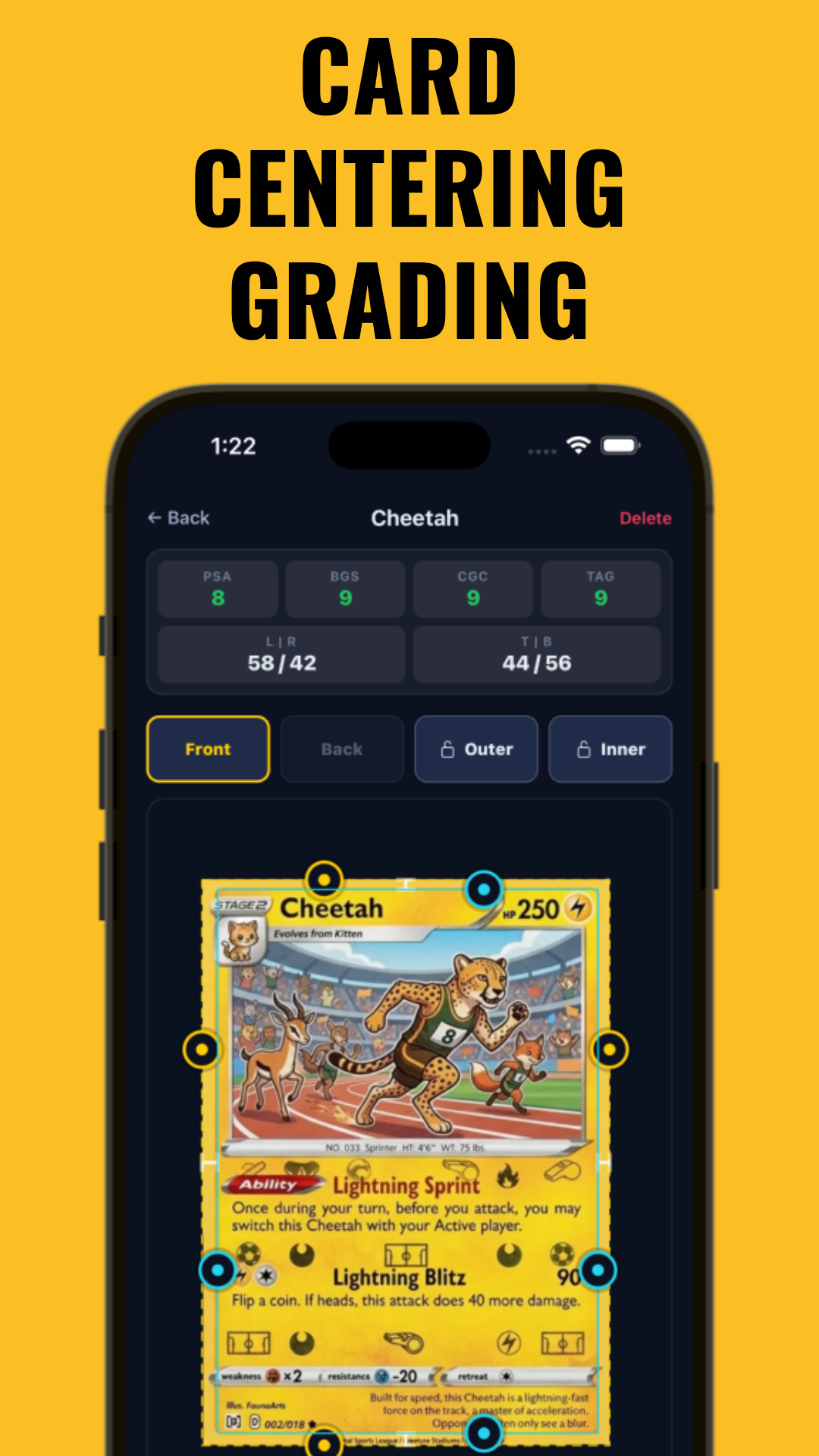
- Using tools like Midpoint helps estimate card centering and grading potential, enabling smarter submissions and potentially maximizing card value before costly grading.
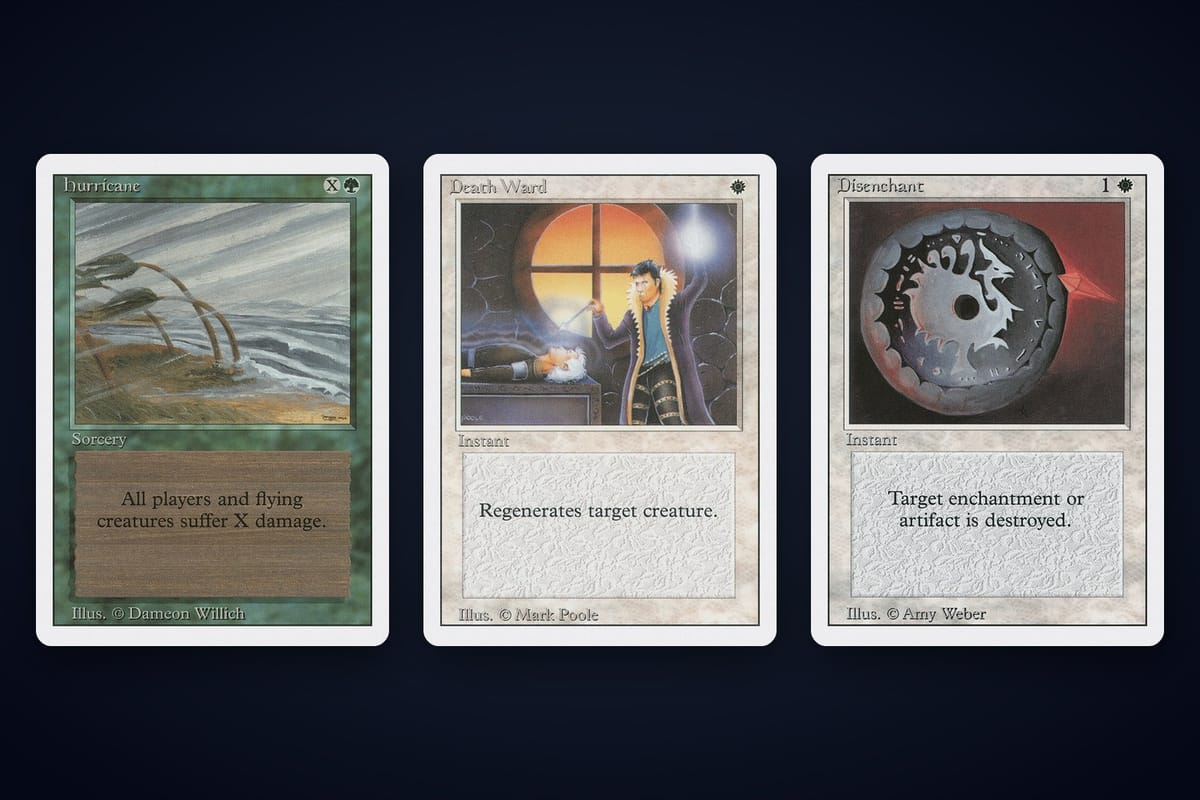
Card values — live data from Midpoint's card database, as of 2026-08-09. Prices move; Midpoint refreshes these daily.
| Card | Raw | PSA 10 | Gem premium | |
|---|---|---|---|---|
 |
Hurricane #202 Revised Edition (1994) |
$1.21 | — | — |
 |
Death Ward #16 Revised Edition (1994) |
$0.18 | — | — |
 |
Disenchant #17 Revised Edition (1994) |
$0.31 | — | — |
 |
Eye for an Eye #18 Revised Edition (1994) |
$1.13 | — | — |
 |
Farmstead #19 Revised Edition (1994) |
$0.80 | — | — |
 |
Green Ward #20 Revised Edition (1994) |
$0.22 | — | — |
 |
Guardian Angel #21 Revised Edition (1994) |
$0.17 | — | — |
 |
Healing Salve #22 Revised Edition (1994) |
$0.13 | — | — |
 |
Holy Armor #23 Revised Edition (1994) |
$0.18 | — | — |
 |
Holy Strength #24 Revised Edition (1994) |
$0.15 | — | — |
 |
Island Sanctuary #25 Revised Edition (1994) |
$4.05 | — | — |
 |
Karma #26 Revised Edition (1994) |
$0.35 | — | — |
Look up any card's current raw and graded value in Midpoint — and get an estimated grade before you pay to submit.
Table of Contents
- Section 1: Revised Edition Set Basics and Identification
- Section 2: Most Valuable Revised Edition Cards and Market Values
- Section 3: Card Condition, Grading, and Their Impact on Value
- Section 4: Reserved List Status and Its Effect on Revised Dual Lands
- Section 5: Pricing Strategies: Raw Cards, Graded Cards, and Sealed Products
- Section 6: Selling and Valuation Tips for Revised Edition Cards
Section 1: Revised Edition Set Basics and Identification
Understanding the Revised Edition Identity
The Revised Edition of Magic: The Gathering, released in April 1994, is the game's third core set and marked a pivotal milestone in the game’s evolution. It followed the Alpha, Beta, and Unlimited sets, which were the initial print runs and established the early card pool. Revised consolidated many of these cards into a more accessible and standardized set, reprinting staples and making the game more approachable for new players while retaining collector interest.
The Revised Edition contains 306 cards, including a unique checklist card numbered 306, which was designed to help collectors track their collection and identify missing cards within the set. The set features a balanced distribution of card rarities: 99 commons, 95 uncommons, and 110 rares. These numbers reflect Wizards of the Coast's intent to provide a broad variety of cards for players and collectors alike.
Recognizing Revised Edition cards is essential for accurate valuation and collecting. Revised cards are distinguished primarily by their white borders, which differentiate them from the earlier Alpha and Beta editions that have black borders. While Unlimited shares the white border, Revised cards differ in card text and formatting, helping collectors separate them from later print runs. The Revised Edition utilizes the classic Magic card frame but does not include expansion symbols, which were introduced in Fourth Edition onward. Additionally, Revised cards use older wording styles that differ slightly from subsequent editions.
How to Identify a Revised Edition Card
- White border: The most visually obvious identifier; Revised cards have a clean white border, contrasting with Alpha and Beta's black borders.
- Card text differences: Revised cards use older terminology, such as "Creature" instead of the earlier "Summon" on the type line. Spells and abilities may also have slightly different wording that collectors can recognize.
- Absence of set expansion symbol: Unlike Fourth Edition and later sets, Revised Edition cards lack an expansion symbol on the right side of the card's type line.
- Card numbering and checklist: The Revised Edition includes a checklist card numbered 306, which is unique to this edition and acts as a reference for collectors.
- Font and layout nuances: The Revised Edition uses a slightly different font weight and spacing in the text box compared to Unlimited and later editions, which experts use for identification.
Checklist of Revised Edition Card Rarities and Release
The Revised Edition's card count is broken down as follows:
- 99 commons: These include staple cards used for everyday play and are more plentiful in print.
- 95 uncommons: Cards with moderate rarity that add strategic depth and variety.
- 110 rares: The most sought-after cards, including dual lands, powerful artifacts, and iconic spells.
- 1 checklist card (number 306): Serves as a collector's aid to track set completion.
The distribution affects collector demand and pricing, with rares generally commanding higher premiums. The Revised Edition replaced the Beta and Unlimited editions in circulation, making it a foundational set for players and collectors who focus on early Magic history.
Section 2: Most Valuable Revised Edition Cards and Market Values
Top Ten Most Valuable Revised Edition Cards
Several cards in the Revised Edition stand out due to their scarcity, playability, and collector appeal. Based on Midpoint’s pricing data as of August 2026, the top valuable cards include:
- Original Dual Lands: These nine lands (Underground Sea, Tundra, Volcanic Island, Bayou, Plateau, Taiga, Scrubland, Badlands) are essential for many competitive decks and are on the Reserved List, making them highly valuable. (Note: Tropical Island is from a different set and not part of Revised Edition.)
- Wheel of Fortune: A powerful sorcery that forces all players to discard and draw new hands, prized for both play and rarity.
- Mana Vault: A fast mana artifact that accelerates gameplay and remains a staple in Vintage and Commander decks.
- Sol Ring: The most played artifact in Magic history due to its efficiency, making it highly collectible.
- Fastbond: A controversial land card that allows extra land drops; rare in Revised and popular in casual and Vintage formats.
- Demonic Tutor: A classic card tutor that fetches any card from the deck, valuable for its utility.
- Copy Artifact: A versatile artifact that can replicate other artifacts, sought after in artifact-focused decks.
- Strip Mine: Helps control the battlefield by destroying lands, desirable in Vintage and Legacy.
Example Market Values (As of 2026-08-09)
Here are approximate current values for some key Revised Edition cards, highlighting differences between raw and graded copies:
- Underground Sea: Raw Near Mint copies typically sell for around $450, while PSA 10 graded copies can command prices in the thousands, reflecting a significant premium.
- Wheel of Fortune: Raw Near Mint around $350; PSA 10 copies can be valued substantially higher, showcasing rarity and demand.
- Mana Vault: Raw Near Mint around $300; PSA 10 graded copies also command a premium.
- Sol Ring: Raw Near Mint around $250; PSA 10 copies are valued higher.
- Demonic Tutor: Raw Near Mint around $200; PSA 10 copies fetch higher prices.
- Fastbond: Raw Near Mint around $150; PSA 10 graded copies can reach significantly higher prices due to scarcity.
- Copy Artifact: Raw Near Mint around $100; PSA 10 copies can be worth several times more.
Why These Cards Are Worth Grading
The notable price difference between raw and graded copies, especially at PSA 10 or equivalent, often justifies investing in professional grading for these high-demand cards. Graded cards provide assurance of authenticity and condition, which is important for collectors and investors. For example, a PSA 10 Underground Sea can command a price multiple times that of a raw Near Mint copy.
However, grading submissions carry costs (ranging from $20 to $100+ per card depending on service and turnaround), so collectors need to be selective. Tools like Midpoint’s AI-powered grading estimation provide measurements of card centering, edge wear, and surface condition to help pre-qualify cards before submission. This can reduce the risk of paying for grading on cards unlikely to receive top grades and help optimize returns.
Section 3: Card Condition, Grading, and Their Impact on Value
Understanding Condition Grades
Condition grading is a key factor in determining the value of Revised Edition cards. Cards in better condition generally command higher prices. The general condition grades used in the Magic community are:
- Near Mint (NM): Cards show virtually no wear, have sharp edges and corners, original gloss, and excellent centering. They appear almost perfect to the naked eye.
- Lightly Played (LP): Minor imperfections such as slight edge nicks or small surface scratches that do not significantly detract from appearance.
- Moderately Played (MP): Visible wear including edge whitening, corner rounding, or surface scuffing. Cards remain playable but are less desirable to collectors.
- Heavily Played (HP): Significant damage such as creases, stains, or heavy whitening. These cards are generally only of interest for casual play.
- Damaged: Cards with severe wear or damage, often considered uncollectible. These carry minimal to no market value.
Collectors typically focus on Near Mint and Mint grades, especially for valuable Revised Edition cards, since these hold the highest resale value and appeal.
Grading Companies and PSA 10 Value
Professional grading services—most notably PSA (Professional Sports Authenticator), Beckett Grading Services (BGS), Certified Guaranty Company (CGC), and recently TAG—are trusted authorities in card grading. Each service evaluates cards on centering, surface, edges, and corners and assigns a numerical grade, with 10 being Gem Mint, the highest.
A Revised Edition PSA 10 is rare and valued at a premium. For example, PSA 10 copies of Revised dual lands or Wheel of Fortune are highly sought after by collectors and investors alike. Grading also authenticates cards, which is important given the prevalence of counterfeit or altered cards in high-value sets.
How Grading Impacts Revised Edition Cards Value
To illustrate, consider the Revised Underground Sea. A raw Near Mint copy might sell for around $450, but a PSA 10 copy can fetch prices significantly higher—demonstrating a notable price increase. Similar value multipliers apply to other rare Revised cards, particularly those on the Reserved List.
However, grading is not guaranteed to increase value if a card is in less than excellent condition. The grading process is expensive and takes time (from weeks to months depending on service level), so collectors must be strategic. Utilizing Midpoint’s digital pre-grade estimation tool allows users to analyze card centering, edges, and surface condition with AI precision before submitting. This approach can reduce grading costs on lower-quality cards and helps ensure investment in grading is focused on cards with the highest potential returns.
Section 4: Reserved List Status and Its Effect on Revised Dual Lands
What Is the Reserved List?
The Reserved List is a policy instituted by Wizards of the Coast in 1996 to protect certain cards from reprints, preserving their scarcity and collector value. Cards on the Reserved List will not be reprinted in a manner that affects their original printings’ value, except in very limited promotional cases.
Revised Edition dual lands are all included on the Reserved List. This means these cards have a finite supply and cannot be reprinted in regular Magic sets, significantly limiting their availability in the market.
How Reserved List Drives Demand and Value
The Reserved List status of Revised Edition dual lands creates a natural scarcity, which in turn drives demand from collectors and players seeking these powerful lands for Legacy, Vintage, and Commander formats. The supply constraint helps maintain prices and often contributes to appreciation over time, making these cards considered solid investments by many.
For example, the Revised Underground Sea’s value is partly sustained by this scarcity. Its dual functionality and Reserved List protection mean that even with increasing player demand, supply cannot increase, which can lead to higher prices.
Collector and Player Perspectives
- Collectors: The Reserved List status makes these cards highly desirable as long-term investments. Collectors seek PSA 9 and 10 graded copies to add rarity and condition premiums.
- Players: Competitive players require dual lands for deck construction in older formats. Demand is consistent, particularly for cards like Underground Sea and Tundra, which are staples in Legacy and Vintage.
This dual demand from collectors and players helps Revised Edition dual lands maintain strong market values both in raw and graded conditions.
Section 5: Pricing Strategies: Raw Cards, Graded Cards, and Sealed Products
Individual Card Value vs. Complete Set Value
While individual Revised Edition cards, especially dual lands and iconic rares, are highly valuable, complete sets of Revised Edition also attract a niche market. Collectors may seek a near-mint full set for display or investment purposes.
As of August 2026, a complete near-mint Revised Edition set typically ranges from approximately $7,000 to $10,000, depending on the condition of the cards and whether the set includes graded high-value cards. Complete sets with graded dual lands can command even higher prices due to the premium those cards bring.
Complete sets offer convenience to buyers but generally sell at a lower per-card price compared to individual high-value singles, reflecting the difficulty in sourcing all cards in top condition.
Value of Sealed Revised Edition Booster Packs and Boxes
Sealed products from Revised Edition—especially booster boxes—are rare and highly prized by collectors and investors. Due to their limited print runs and age, sealed boxes can command prices well into the tens of thousands of dollars as of 2026. Individual sealed booster packs vary widely in price, typically ranging from several hundred to over a thousand dollars depending on market demand and chance of pulling high-value cards.
The premium for sealed products comes from the possibility of pulling rare or valuable cards, combined with nostalgia and the rarity of unopened packs in the secondary market. Sealed booster packs and boxes are often viewed as long-term investments, with prices appreciating as availability dwindles.
Marketplace Variations and Price Trends
Prices for Revised Edition cards fluctuate across marketplaces such as eBay, TCGPlayer, and specialized auction houses. Auction results can sometimes drive prices higher due to competitive bidding, while fixed-price marketplaces offer more stable pricing.
Recent completed sales and market averages provide a realistic indication of current values. Collectors and sellers should monitor these trends closely, especially since market demand can shift with changes in Magic’s competitive formats or collector interest.
Midpoint’s card lookup and price tracking features aggregate data from multiple sources, providing a comprehensive overview of pricing trends. This helps collectors decide when to buy or sell to maximize value.
Section 6: Selling and Valuation Tips for Revised Edition Cards
Authentication and Grading Considerations
Before selling valuable Revised Edition cards, authentication and professional grading can increase buyer confidence and often result in higher sale prices. Graded cards reduce disputes about condition and authenticity.
Midpoint’s AI-driven digital grading estimate allows sellers to preview how cards might score with PSA, BGS, CGC, or TAG grading services. This tool analyzes centering, edges, corners, and surface condition with high accuracy, informing sellers which cards are worth the grading investment.
Should You Sell Individually or as a Collection?
- Individual high-value cards: Selling valuable cards like dual lands and iconic rares individually—especially if graded—usually fetches the highest prices, as buyers pay premiums for specific cards in prime condition.
- Complete sets or bulk: Selling entire sets or large collections appeals to buyers seeking convenience or entry into collecting but often yields lower per-card returns.
Buyer Fees, Shipping, and Marketplaces
Sellers should factor in platform fees (typically 5-15%), payment processing fees, and shipping costs when pricing cards. Transparent descriptions of card condition, grading status, and clear photos help establish trust and reduce return requests.
Popular platforms include eBay and TCGPlayer for broad exposure, while specialized auction houses or private sales may yield better prices for premium cards due to specialized buyers.
For more in-depth advice on grading, storage, and maximizing value, consult our guides like How to Pre-Grade Your Card and How to Store Valuable Cards.
Conclusion
The Revised Edition MTG cards value reflects a complex interplay between card rarity, condition, grading, and Reserved List status. Collectors and players prize the original dual lands, Wheel of Fortune, Mana Vault, Sol Ring, and other iconic cards for their playability and investment potential. PSA 10 graded copies often command substantial premiums—frequently several times raw prices—highlighting the importance of grading for maximizing value.
Modern tools like Midpoint offer collectors essential capabilities to measure card centering and estimate grading before committing to costly submissions. This technology can reduce risk, streamline grading decisions, and optimize investment outcomes.
Understanding the Revised Edition’s identity, market trends, and grading nuances equips collectors and sellers with the knowledge to navigate this historic set’s valuation confidently, whether acquiring, grading, or selling.
FAQ
Q: What Revised Edition MTG cards are worth the most?
A: The most valuable Revised Edition cards include the original dual lands (such as Underground Sea, Tundra, Volcanic Island, Bayou, Plateau, Taiga, Scrubland, and Badlands), Wheel of Fortune, Mana Vault, Sol Ring, Fastbond, Demonic Tutor, and Copy Artifact. These cards have strong demand from both collectors and competitive players, contributing to their high market valuations.
Q: How much is a Revised Underground Sea worth?
A: As of August 2026, a raw Near Mint Revised Underground Sea is valued around $450, while a PSA 10 graded copy can command prices significantly higher due to its rarity, Reserved List status, and demand in competitive formats.
Q: Are Revised dual lands on the Reserved List?
A: Yes, all Revised Edition dual lands are included on the Reserved List. This policy prevents their reprinting in regular sets, preserving their scarcity and helping maintain their high market value.
Q: How much is a complete Revised Edition set worth?
A: Complete Revised Edition sets in Near Mint condition typically range between approximately $7,000 and $10,000 depending on card condition, completeness, and market trends as of 2026.
Q: Are Revised Edition booster packs and boxes worth more sealed?
A: Yes, sealed Revised Edition booster packs and especially boxes are rare and highly valuable, often commanding prices well above the sum of individual cards inside due to scarcity and collectible appeal.
Q: How can I tell if my Magic card is from Revised Edition?
A: Revised Edition cards feature a white border, lack an expansion symbol, and use older wording styles. The presence of the checklist card (number 306) is also a unique identifier. These features distinguish Revised cards from Alpha and Beta (which have black borders) and later editions.
Free to start
Try the Midpoint app
Grade any card from a photo, see its raw and PSA 10 value, and track what your collection is worth — free.
Get it on iPhoneGet it on Android