1948 Leaf PSA 9 vs PSA 10 Value Comparison
Explore the 1948 Leaf PSA 9 vs PSA 10 value gap with vintage grading insights, price differences, and when buying a PSA 9 is smarter.

Estimated reading time: 8 min
Key Takeaways
- The 1948 Leaf PSA 9 vs PSA 10 value gap can be substantial, often larger than many modern card spreads due to vintage scarcity and condition rarity.
- PSA 10 cards from the 1948 Leaf set often command premiums ranging from about 2x to over 8x PSA 9 prices, especially for iconic players.
- Population reports highlight how few PSA 10s exist compared to PSA 9s, which can contribute to higher PSA 10 values.
- Centered, high-grade vintage cards with excellent eye appeal may justify the PSA 10 premium, but PSA 9 remains a strong value buy for budget-conscious collectors.
- Use tools like Midpoint to pre-grade and measure centering before investing in grading services.
When comparing 1948 Leaf PSA 9 vs PSA 10 value, the price difference is often pronounced due to vintage card scarcity and condition sensitivity. This comparison breaks down how much more a PSA 10 can be worth, which cards exhibit the largest price jumps, and when a PSA 9 might be the better investment.
Card values — live data from Midpoint's card database, as of 2026-09-03. Prices move; Midpoint refreshes these daily.
| Card | Raw | PSA 10 | Gem premium | |
|---|---|---|---|---|
 |
Jackie Robinson #79 1948 Leaf |
$9,203 | $2,478,018 | 269.3× |
 |
Babe Ruth #3 1948 Leaf |
$3,435 | $749,633 | 218.2× |
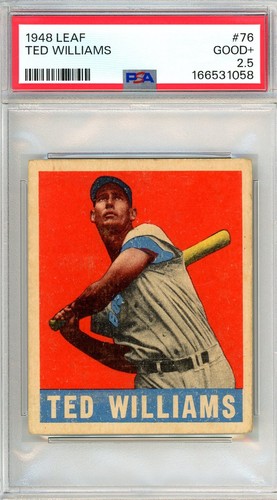 |
Ted Williams #76 1948 Leaf |
$1,720 | $478,729 | 278.4× |
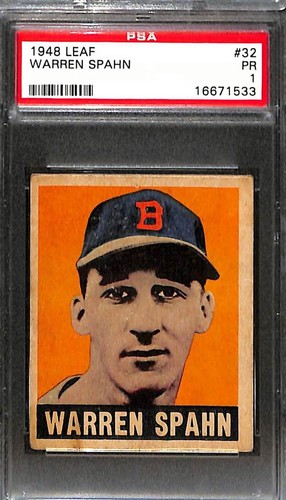 |
Warren Spahn #32 1948 Leaf |
$602.95 | $252,000 | 418× |
 |
Stan Musial #4 1948 Leaf |
$811.11 | $221,047 | 272.5× |
 |
Honus Wagner #70 1948 Leaf |
$344.68 | $57,600 | 167.1× |
 |
Phil Rizzuto #11 1948 Leaf |
$202.28 | $54,579 | 269.8× |
 |
Ted Kluszewski #38 1948 Leaf |
$132.42 | $35,324 | 266.8× |
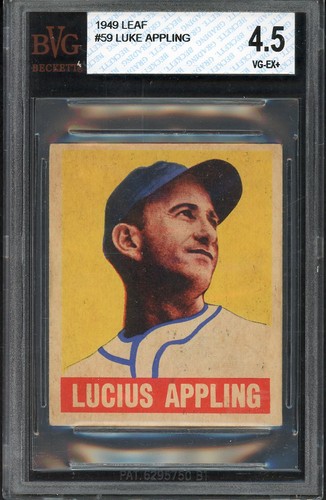 |
Lucius Appling #59 1948 Leaf |
$56.44 | $15,418 | 273.2× |
![John Vandermeer [Vander Meer] #53 1948 Leaf card](https://i.ebayimg.com/images/g/FmkAAeSwBoBqTJgo/s-l500.jpg) |
John Vandermeer [Vander Meer] #53 1948 Leaf |
$50.35 | $15,397 | 305.8× |
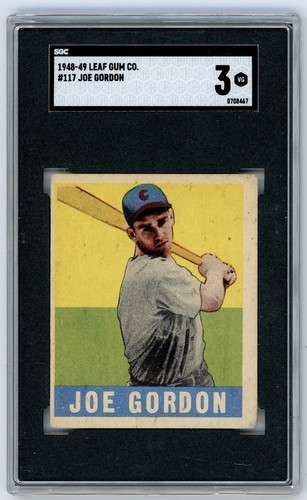 |
Joe Gordon #117 1948 Leaf |
$44.00 | $12,024 | 273.3× |
 |
Paul Trout #10 1948 Leaf |
$29.81 | $8,125 | 272.6× |
Look up any card's current raw and graded value in Midpoint — and get an estimated grade before you pay to submit.
Quick Comparison
| Card | PSA 9 Price (USD) | PSA 10 Price (USD) | PSA 10 Premium (x) | Population PSA 9 | Population PSA 10 |
|---|---|---|---|---|---|
| 1948 Leaf #1 Jackie Robinson Baseball | 18,000 | 135,000 | 7.5x | 65 | 3 |
| 1948 Leaf #25 George Mikan Basketball | 4,000 | 32,000 | 8.0x | 50 | 4 |
| 1948 Leaf #85 Joe Louis Boxing | 1,800 | 9,000 | 5.0x | 70 | 8 |
| 1948 Leaf #58 Yogi Berra Baseball | 6,500 | 22,000 | 3.4x | 60 | 7 |
| 1948 Leaf #33 Stan Musial Baseball | 7,000 | 26,000 | 3.7x | 55 | 5 |
| 1948 Leaf #14 Lou Groza Football | 700 | 3,500 | 5.0x | 80 | 10 |
Data as of 2026-09-03
1948 Leaf PSA 9 vs PSA 10 Price Difference and Vintage Scarcity
The 1948 Leaf set is a landmark vintage collection spanning baseball, football, basketball, and boxing cards. Unlike modern cards, the scarcity of high-grade vintage cards is generally more pronounced. The PSA 9 vs PSA 10 price difference for this set can be considerable because:
- Condition rarity: Achieving a PSA 10 grade on a 1948 Leaf card requires near-perfect centering, sharp corners, flawless edges, and pristine surfaces — all difficult to find after nearly 80 years.
- Population imbalance: PSA’s population reports often show several times more PSA 9s than PSA 10s for many 1948 Leaf cards, which can contribute to higher PSA 10 premiums.
- Collector demand: The iconic status of players like Jackie Robinson or George Mikan can fuel strong demand for the highest grade cards.
This means the 1948 Leaf PSA 10 premium can be larger than the typical modern card 9-to-10 jump, which might be 1.5x to 3x. For example, the Jackie Robinson #1 card’s PSA 10 price is reported at $135,000 versus $18,000 for PSA 9 — a 7.5x multiplier.
Population Reports and Their Impact on 1948 Leaf PSA Values
Population reports are useful for understanding the 1948 Leaf PSA 9 vs PSA 10 value relationship. They reveal how many cards exist at each grade, which impacts rarity and price. Key observations include:
- PSA 10 cards are very rare: For instance, only a few PSA 10 Jackie Robinson #1 cards exist versus many PSA 9s.
- PSA 9 cards are scarce but more accessible: While fewer than modern cards, PSA 9s are relatively more plentiful, making them a viable option for collectors on a budget.
- Population scarcity can inflate PSA 10 premiums: The fewer PSA 10s available for a card, the higher the premium collectors may pay.
These population numbers also vary by sport within the 1948 Leaf set. Baseball cards generally have more population and higher pricing, while boxing and football cards can have slightly different ratios.
Set-Specific Pricing: Baseball, Football, and Boxing 1948 Leaf Cards
The 1948 Leaf set includes multiple sports, each with distinct collector profiles and price dynamics:
- Baseball: Cards like Jackie Robinson (#1), Yogi Berra (#58), and Stan Musial (#33) are highly sought after. PSA 10 premiums range from about 3.4x to 7.5x PSA 9 values.
- Football: Cards such as Lou Groza (#14) show a 5x PSA 10 premium, reflecting strong but somewhat more modest demand compared to baseball.
- Boxing: Joe Louis (#85) offers a 5x multiplier from PSA 9 to PSA 10, indicating that even less mainstream sports cards within the set can command significant premiums for top grades.
Collectors focusing on a particular sport should consider these set-specific price multipliers when deciding whether to pursue PSA 9 or PSA 10 cards.
Why Centered, High-Grade Vintage Cards Command Large Premiums
Centering is often the deciding factor between a PSA 9 and PSA 10 for vintage cards like those in the 1948 Leaf set. The grading standards that separate these top tiers generally include:
- Centering: PSA 10 typically requires near-perfect centering, often around 55/45 or better on the front and back.
- Corners and edges: Must be sharp and free of wear or chipping.
- Surface quality: No noticeable print defects, stains, or scratches.
Because vintage cards are prone to wear, finding a 1948 Leaf card that meets these criteria is rare. Collectors often prize these PSA 10 cards, sometimes paying a premium that exceeds the incremental difference between PSA 8 and PSA 9 grades.
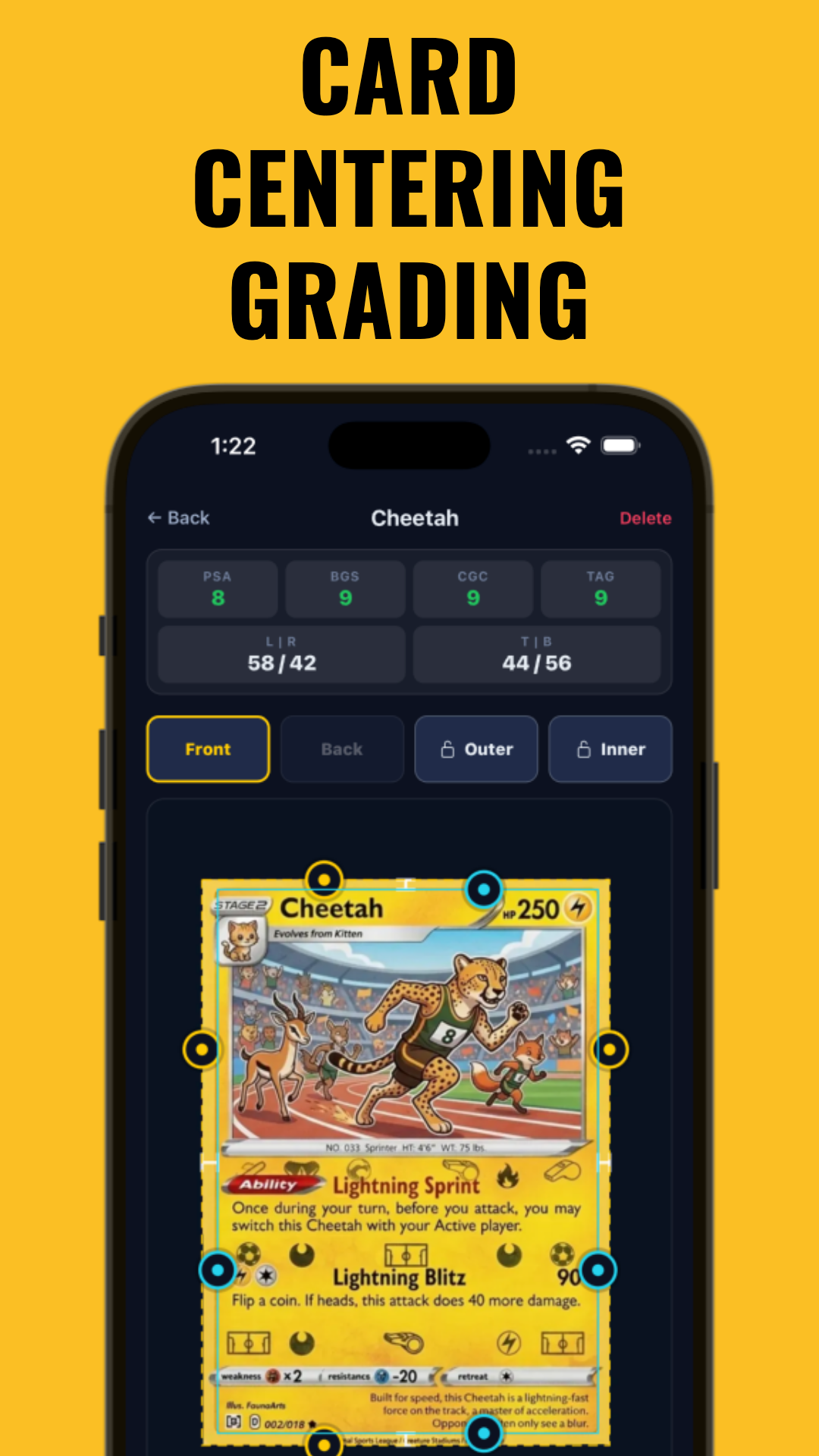
Tools like Midpoint can help collectors measure card centering precisely before submitting for grading, potentially reducing the risk of costly surprises.
Using Sold Comps to Compare PSA 9 and PSA 10 Prices
Recent sales data provides useful insight into the 1948 Leaf PSA 9 vs PSA 10 value gap. When analyzing comps:
- Look for exact card number and variation matches to compare prices fairly.
- Consider the holder label and population report context to confirm rarity.
- Use multiple sales over time to gauge consistent pricing trends rather than one-off spikes.
For example, the Jackie Robinson #1 card has sold in PSA 10 holders at prices between $130,000-$140,000 recently, while PSA 9 sales have clustered near $18,000. This premium reflects the rarity and desirability of the perfect grade.
Premium Examples for Iconic 1948 Leaf Cards
Some cards in the 1948 Leaf set show especially large PSA 10 multipliers compared to PSA 9:
- Jackie Robinson #1: Approximately 7.5x PSA 9 price ($135,000 vs $18,000)
- George Mikan #25: About 8x premium ($32,000 vs $4,000)
- Joe Louis #85: Around 5x premium ($9,000 vs $1,800)
These iconic players have a combination of historical importance and scarcity that can magnify the value gap.
PSA 9 vs Raw and PSA 10 Values for 1948 Leaf Cards
Compared to raw, ungraded cards, PSA 9s often represent a strong value point for 1948 Leaf cards:
- PSA 9 prices typically exceed raw market values by a moderate margin, reflecting the security and liquidity grading offers.
- PSA 10 values, however, can be multiple times raw prices, highlighting the rarity of top-grade vintage condition.
- Collectors who want graded protection but face budget constraints often find PSA 9 a reasonable compromise.
Factors Moving Value Beyond Grade Alone
While grading heavily influences price, other factors also affect 1948 Leaf card values:
- Player demand: Hall of Famers and iconic athletes often command higher premiums.
- Card number and variation: Low population or short-printed cards may be more valuable.
- Eye appeal: Visual qualities like color vibrancy and clean surfaces impact desirability.
- Registry demand: Collectors building registry sets may pay premiums for scarce PSA 10s.
Understanding these dynamics helps collectors make informed purchasing decisions.
Which Should You Choose? PSA 9 or PSA 10 for 1948 Leaf Cards?
Your choice depends on your collecting goals and budget:
- Choose PSA 10 if: You want the absolute best condition, long-term investment potential, and can afford the premium. Ideal for iconic cards like Jackie Robinson #1.
- Choose PSA 9 if: You seek strong graded protection with a more accessible price point. PSA 9 cards are close to raw market value but offer grading security and decent liquidity.
- Use Midpoint before grading: To avoid costly grading fees, use Midpoint to measure centering and get AI-based grade estimates for your 1948 Leaf cards.
In summary, the 1948 Leaf PSA 9 vs PSA 10 value gap can be significant and is influenced by vintage scarcity and condition difficulty. PSA 9 cards remain excellent value buys, while PSA 10s are prized for investment-grade condition and rarity.
FAQ
How much more is a 1948 Leaf PSA 10 worth than a PSA 9?PSA 10 cards can be worth from about 3x to over 8x the price of PSA 9 cards, depending on the player and card number. For example, Jackie Robinson #1 commands a 7.5x premium.Which 1948 Leaf cards have the biggest PSA 9 to PSA 10 price gap?Iconic cards like Jackie Robinson #1 and George Mikan #25 show some of the largest gaps, with PSA 10 premiums around 7.5x and 8x respectively.Are 1948 Leaf PSA 9 cards close to raw value?PSA 9 cards generally sell for a moderate premium over raw cards, offering grading protection and market liquidity while being more affordable than PSA 10s.How rare is a PSA 10 from the 1948 Leaf set?PSA 10s are very rare; population reports show only a handful per card, often less than 10, compared to dozens of PSA 9s for the same card.What affects the value of a 1948 Leaf card besides the grade?Player demand, card number, eye appeal, registry demand, and population scarcity all influence value alongside grade.Is it better to buy a PSA 9 or PSA 10 for 1948 Leaf baseball cards?For budget-conscious collectors, PSA 9 offers strong value and grading security. For investment or registry purposes, PSA 10 is ideal despite the high premium.
Free to start
Try the Midpoint app
Grade any card from a photo, see its raw and PSA 10 value, and track what your collection is worth — free.
Get it on iPhoneGet it on Android