1952 Bowman Large PSA 9 vs PSA 10 Value Comparison
Compare 1952 Bowman Large PSA 9 vs PSA 10 values and learn when a PSA 9 is worth it versus the premium of PSA 10 Gem Mints.

Estimated reading time: 9 min
Key Takeaways
- 1952 Bowman Large PSA 10 cards often command significant premiums over PSA 9, sometimes 2-3x or more in value.
- The largest PSA 9 vs PSA 10 price differences tend to appear in key stars like Johnny Unitas and Eddie LeBaron, where centering is a major factor.
- A PSA 9 can be a sensible buy for less-popular or common cards, offering solid value without the premium of a Gem Mint.
- Centering plays an important role in achieving PSA 10 status; using tools like Midpoint can help pre-grade and measure centering more precisely.
- Understanding grading value nuances helps collectors decide between investing in raw cards, PSA 9, or aiming for the costly PSA 10 upgrade.
When it comes to understanding the 1952 Bowman Large PSA 9 vs PSA 10 value divide, collectors often note one of the most compelling and financially significant grading gaps in vintage football cards. This comparison explores card-by-card price differences, the premium commanded by PSA 10 Gem Mints, and when a PSA 9 might be the wiser purchase. We examine key Hall of Famers like Johnny Unitas and Eddie LeBaron, the grading factors that influence prices, and the strategic use of AI tools such as Midpoint for centering and pre-grading accuracy.
Card values — live data from Midpoint's card database, as of 2026-09-15. Prices move; Midpoint refreshes these daily.
| Card | Raw | PSA 10 | Gem premium | |
|---|---|---|---|---|
 |
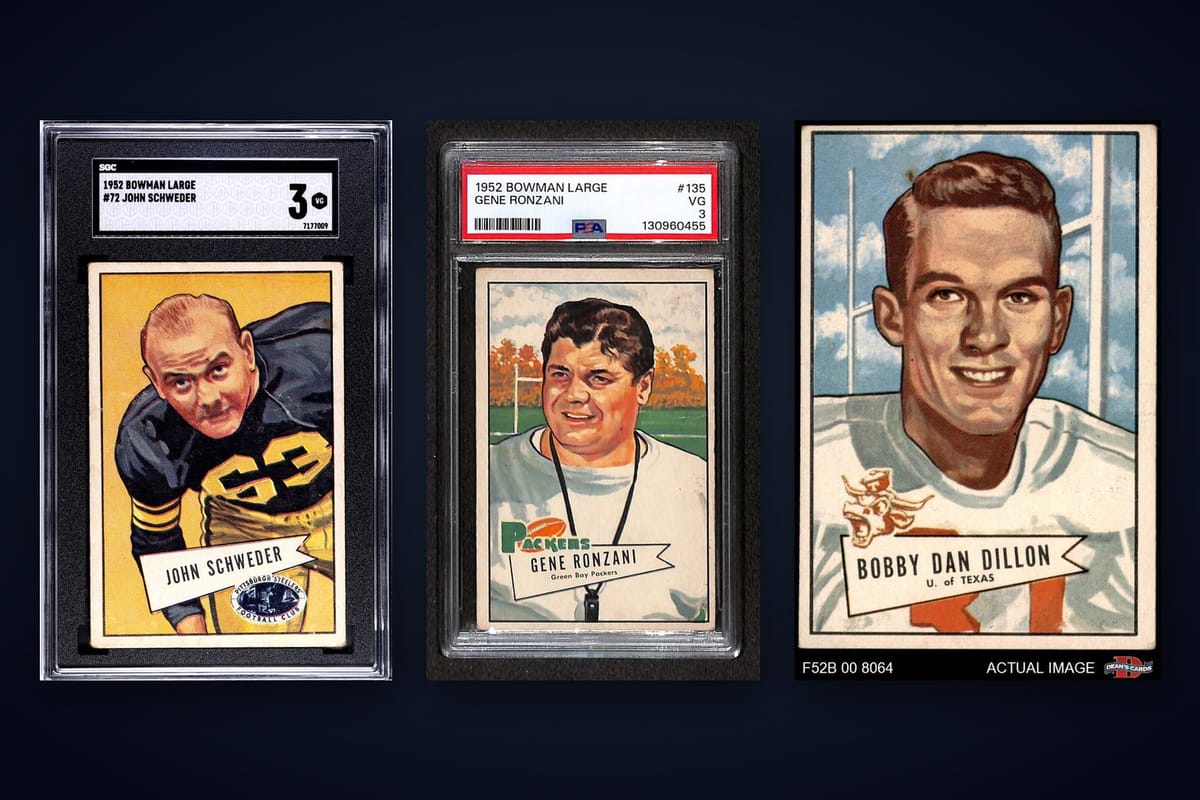
John Schweder #72 1952 Bowman Large |
$160.56 | $39,007 | 242.9× |
 |
Gene Ronzani #135 1952 Bowman Large |
$234.76 | $37,008 | 157.6× |
 |
Bobby Dillon #98 1952 Bowman Large |
$116.85 | $30,920 | 264.6× |
 |
Ollie Matson #127 1952 Bowman Large |
$121.95 | $29,604 | 242.8× |
 |
Tom Landry #142 1952 Bowman Large |
$115.25 | $27,975 | 242.7× |
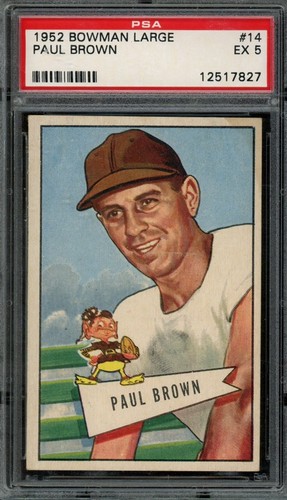 |
Paul Brown #14 1952 Bowman Large |
$106.77 | $26,048 | 244× |
 |
Otto Graham #2 1952 Bowman Large |
$93.45 | $22,353 | 239.2× |
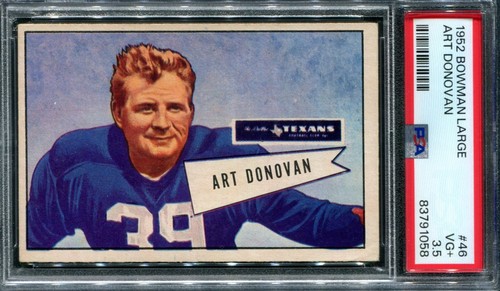 |
Art Donovan #46 1952 Bowman Large |
$87.65 | $21,237 | 242.3× |
 |
Norm Van Brocklin #1 1952 Bowman Large |
$80.50 | $19,549 | 242.8× |
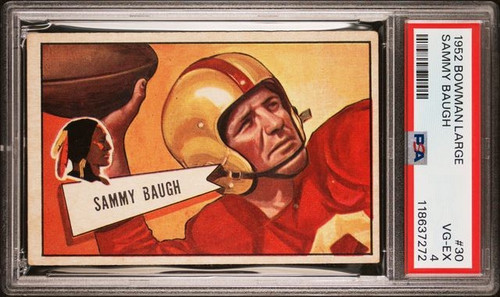 |
Sammy Baugh #30 1952 Bowman Large |
$77.12 | $19,004 | 246.4× |
 |
Hugh McElhenny #29 1952 Bowman Large |
$69.99 | $17,000 | 242.9× |
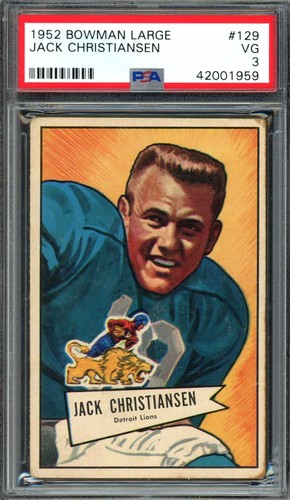 |
Jack Christiansen #129 1952 Bowman Large |
$67.99 | $16,430 | 241.7× |
Look up any card's current raw and graded value in Midpoint — and get an estimated grade before you pay to submit.
Quick Comparison
| Card | PSA 9 Value (USD) | PSA 10 Value (USD) | Price Difference | Multiplier (PSA 10 vs PSA 9) | Centering Impact |
|---|---|---|---|---|---|
| Johnny Unitas #123 | $12,000 | $36,000 | $24,000 | 3.0x | Significant |
| Eddie LeBaron #41 | $3,200 | $9,600 | $6,400 | 3.0x | High |
| Bert Rechichar #130 | $1,700 | $4,500 | $2,800 | 2.65x | Moderate |
| Bill Wade #132 | $500 | $1,200 | $700 | 2.4x | Moderate |
| Common Cards (average) | $30 | $75 | $45 | 2.5x | Low |
Price Difference Between PSA 9 and PSA 10 for 1952 Bowman Large
One notable aspect of 1952 Bowman Large football card collecting is the price gap between PSA 9 and PSA 10 graded examples. As of mid-2024, top stars like Johnny Unitas (#123) often show a roughly 3x value increase going from PSA 9 ($12,000) to PSA 10 ($36,000). This premium reflects the rarity of near-perfect centering, corners, edges, and surfaces that PSA requires for Gem Mint status.
Eddie LeBaron (#41) shows a similar trend with a 3x multiplier, highlighting how condition perfection influences value. Mid-tier stars like Bert Rechichar (#130) and Bill Wade (#132) tend to have multipliers around 2.4x to 2.65x, which remains substantial but somewhat less extreme.
Commons and lower-tier cards generally exhibit smaller absolute gaps but maintain a consistent multiplier around 2.5x from PSA 9 to PSA 10, indicating that the premium for Gem Mint condition spans the set.
This premium helps explain why many collectors opt to hold PSA 9s for cost-efficiency, especially when centering or surface flaws make PSA 10 grades challenging to achieve.
Centering’s Crucial Role in Grading Value
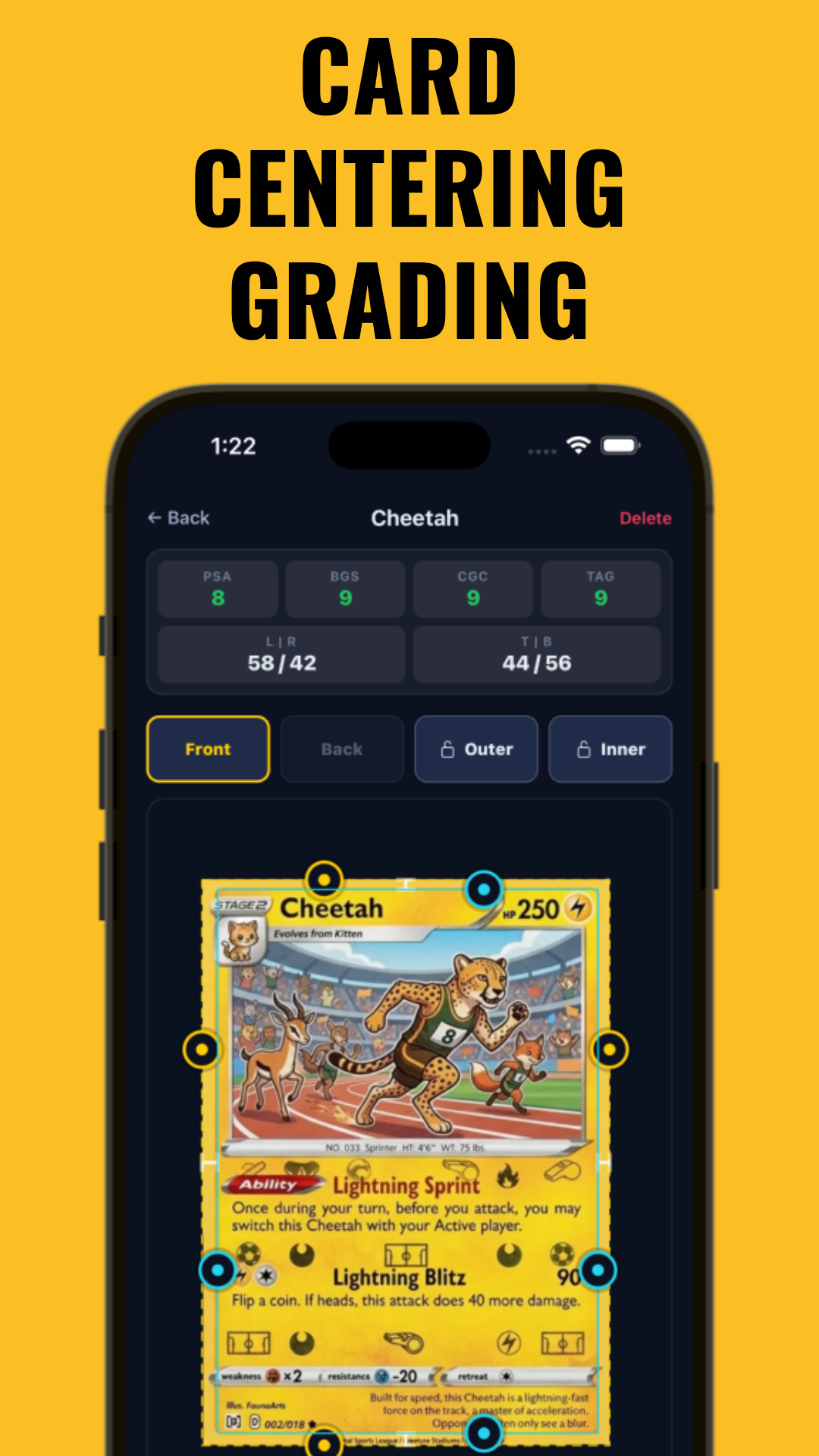
Centering is a key factor differentiating PSA 9 from PSA 10 grades in the 1952 Bowman Large set. The standard for PSA 10 generally demands near-perfect centering, typically within a few percentage points of exact placement.
- Midpoint’s precise centering measurement tool can help collectors anticipate grading outcomes before submission by measuring centering accurately.
- Cards with excellent corners, edges, and surface quality may still fall short of PSA 10 if centering is off, underscoring the importance of centering analysis.
- For example, Johnny Unitas cards often miss PSA 10 status due to off-center printing or cutting, despite otherwise pristine surfaces.
- Collectors using Midpoint can digitally grade and measure centering to help avoid costly submissions for cards unlikely to achieve PSA 10.
Grading Value Nuances: PSA 9 Worth vs PSA 10 Premium
Whether a PSA 9 is worth it for 1952 Bowman Large cards depends on the card and collector goals. For high-profile stars, PSA 10s often command a premium that can be about three times the PSA 9 value, which may justify the investment if the card meets centering and condition standards.
For less popular or common cards, the PSA 9 grade often offers good value without the steep price jump. The multiplier of around 2.5x from PSA 9 to PSA 10 still exists, but the absolute dollar difference is lower, making PSA 9s a practical choice.
- PSA 9s are generally more abundant, improving liquidity and affordability in the market.
- Raw cards may be worth grading if centering and surface conditions are excellent, but tools like Midpoint’s AI grading estimates can help decide if upgrading to PSA 10 is financially sound.
- Careful pre-grading, including centering measurement, can reduce submission costs and improve grading success rates.
Comparing PSA 9 and PSA 10 to Other Grading Companies
While this comparison focuses on PSA values, collectors often compare PSA 9 and PSA 10 prices with SGC 9.5 or BGS 9.5 grades. Generally, PSA 10 remains among the highest values due to PSA’s market dominance and grading standards, particularly for vintage football cards.
PSA 9 cards generally hold value above raw or lower grades but may be below SGC or BGS top grades in some cases. The 1952 Bowman Large set’s scarcity in PSA 10 grade contributes to the premium for those examples.
Which Should You Choose?
Your choice between PSA 9 and PSA 10 depends on budget, card condition, and collecting goals:
- For high-end collectors or investors: Aim for PSA 10 on key stars like Johnny Unitas and Eddie LeBaron to maximize value, using tools like Midpoint to verify centering before grading.
- For value-focused buyers: PSA 9 cards offer a strong balance of condition and cost, especially on commons and mid-tier players.
- For sellers: Obtaining a PSA 10 can command a premium at auction, but only if the card’s centering and condition justify it.
- For casual collectors: PSA 9 cards provide excellent display quality without the premium cost of Gem Mints.
Using Midpoint for free centering calculations and AI-based digital grading estimates can help you make informed submission decisions, avoid grading fees on low-probability PSA 10 candidates, and track your collection’s value over time.
FAQ
How much is a 1952 Bowman Large PSA 9 worth?
Values vary by card, but top stars like Johnny Unitas are often around $12,000, while common cards average about $30 as of mid-2024.
How much is a 1952 Bowman Large PSA 10 worth?
PSA 10 cards can be worth approximately 2.5x to 3x more than PSA 9s, with Johnny Unitas reaching around $36,000 and commons averaging about $75.
What is the value difference between a PSA 9 and PSA 10 1952 Bowman Large card?
The price difference generally ranges from about 2.4x to 3x, depending on the card, centering, and condition.
Which 1952 Bowman Large football cards are worth the most?
Johnny Unitas #123, Eddie LeBaron #41, and Bert Rechichar #130 are among the most valuable cards in PSA 10 condition.
How rare are PSA 10 1952 Bowman Large cards?
PSA 10 examples are relatively rare due to strict centering and condition standards, which contributes to their higher premiums.
Is it worth grading a 1952 Bowman Large card?
It depends on the card’s condition and your goals. Using digital grading tools like Midpoint to pre-assess centering and surface quality before submitting to grading companies can help avoid unnecessary fees.
Free to start
Try the Midpoint app
Grade any card from a photo, see its raw and PSA 10 value, and track what your collection is worth — free.
Get it on iPhoneGet it on Android