1952 Bowman Small PSA 9 vs PSA 10 Value Comparison
Explore the 1952 Bowman Small PSA 9 vs PSA 10 value gap, price differences, and when a PSA 9 is a smarter buy for collectors and investors.

Estimated reading time: 9 min
Key Takeaways
- The 1952 Bowman Small PSA 10 premium over PSA 9 varies widely, often ranging from about 2x to 10x depending on the player and card condition.
- Centering is a critical factor distinguishing PSA 9 from PSA 10 grades; near-perfect centering can lead to significant value increases.
- High-profile rookies and Hall of Famers like Frank Gifford and Paul Hornung often show some of the largest PSA 9 vs PSA 10 price differences.
- PSA 9 cards remain a solid, more affordable investment, especially for less scarce or lower-demand cards.
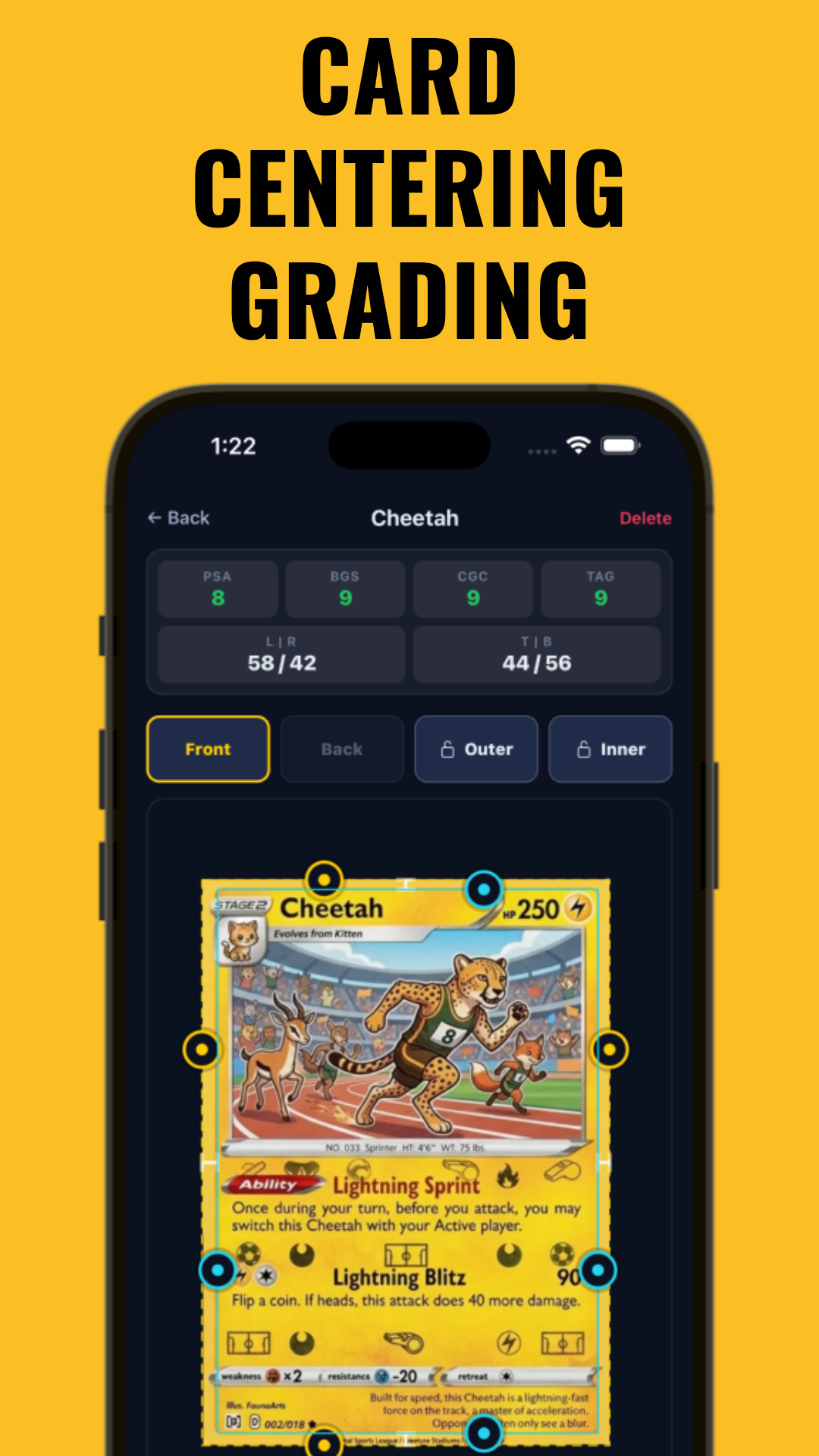
- Using tools like Midpoint can help collectors pre-grade and measure centering more accurately before submitting for costly grading.
The 1952 Bowman Small PSA 9 vs PSA 10 value comparison reveals notable price differences driven largely by centering quality and card rarity. This guide breaks down the typical premiums, player-specific value impacts, grading nuances, and market trends to help collectors and investors make more informed buying, selling, and grading decisions.
Card values — live data from Midpoint's card database, as of 2026-09-03. Prices move; Midpoint refreshes these daily.
| Card | Raw | PSA 10 | Gem premium | |
|---|---|---|---|---|
 |
Frank Gifford #16 1952 Bowman Small |
$140.50 | $29,129 | 207.3× |
 |
Tom Landry #142 1952 Bowman Small |
$121.26 | $27,042 | 223× |
 |
Ollie Matson #127 1952 Bowman Small |
$117.07 | $20,872 | 178.3× |
 |
Hugh McElhenny #29 1952 Bowman Small |
$67.50 | $19,246 | 285.1× |
 |
Bobby Dillon #98 1952 Bowman Small |
$75.65 | $18,361 | 242.7× |
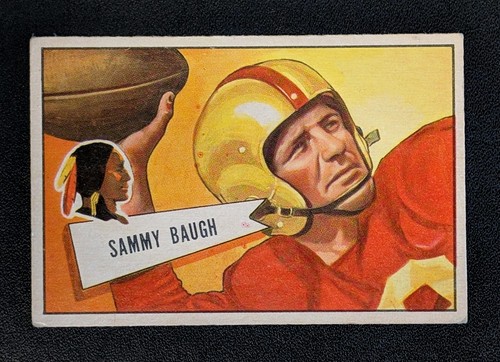 |
Sammy Baugh #30 1952 Bowman Small |
$87.76 | $18,218 | 207.6× |
 |
Otto Graham #2 1952 Bowman Small |
$76.62 | $18,202 | 237.6× |
 |
Art Donovan #46 1952 Bowman Small |
$68.62 | $16,466 | 240× |
 |
Paul Brown #14 1952 Bowman Small |
$70.00 | $15,548 | 222.1× |
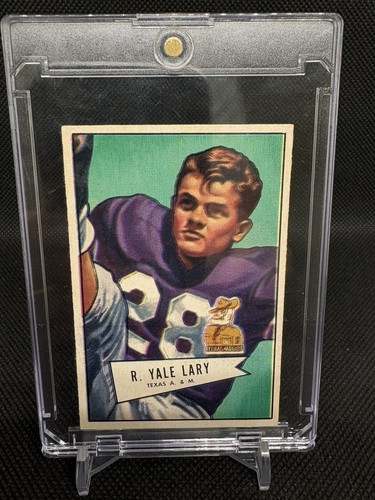 |
Yale Lary #140 1952 Bowman Small |
$53.99 | $12,980 | 240.4× |
 |
Norm Van Brocklin #1 1952 Bowman Small |
$49.88 | $12,091 | 242.4× |
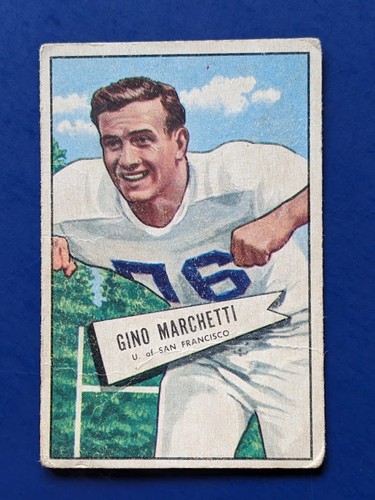 |
Gino Marchetti #23 1952 Bowman Small |
$49.09 | $11,426 | 232.8× |
Look up any card's current raw and graded value in Midpoint — and get an estimated grade before you pay to submit.
Quick Comparison
| Card | PSA 9 Value (USD) | PSA 10 Value (USD) | PSA 10 Premium | Key Grading Factor |
|---|---|---|---|---|
| Frank Gifford Rookie | $4,500 | $33,000 | ~7x | Centering, Surface |
| Paul Hornung Rookie | $2,100 | $23,000 | ~11x | Centering |
| Y.A. Tittle | $1,200 | $6,000 | ~5x | Centering, Edges |
| Johnny Unitas | $1,500 | $7,500 | ~5x | Centering, Corners |
| Jim Brown | $900 | $3,200 | ~3.5x | Centering |
| Maxie Baughan | $250 | $700 | ~2.8x | Centering |
| Tommy McDonald | $650 | $4,500 | ~7x | Centering |
Centering: The Defining Factor Between PSA 9 and PSA 10
The 1952 Bowman Small set is known for its strict centering standards, which are a primary factor separating PSA 9 from PSA 10 grades. PSA generally requires near-perfect centering for a 10, typically within about 55/45 to 60/40 ratios on the card’s front, depending on the card’s dimensions and printing variances.
- PSA 10: Ideal centering with minimal deviation, generally no visible off-centering to the naked eye.
- PSA 9: Slight off-centering allowed, but usually not exceeding about 65/35 ratios or showing obvious shifts.
Because 1952 Bowman Small cards often have centering challenges, the PSA 10 population is generally much rarer than PSA 9. This relative rarity can increase value for perfectly centered cards. Using precise tools like Midpoint’s card centering calculator can help collectors measure centering more accurately before submitting cards for grading, potentially reducing costly surprises.
Player-Specific Value Differences and Price Premiums
Not all 1952 Bowman Small cards show the same PSA 9 vs PSA 10 value gap. High-demand rookies and Hall of Famers often command the steepest premiums, sometimes 5x or more, due to scarcity and collector interest.
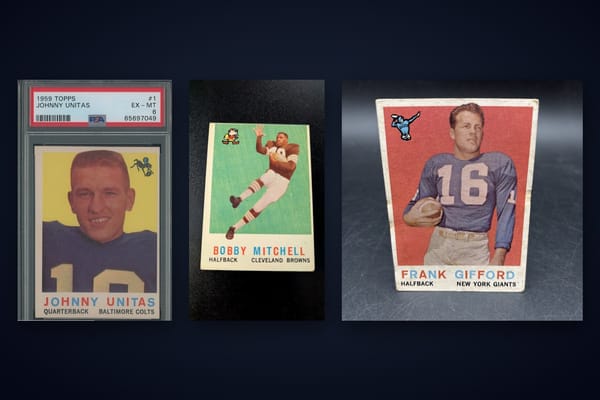
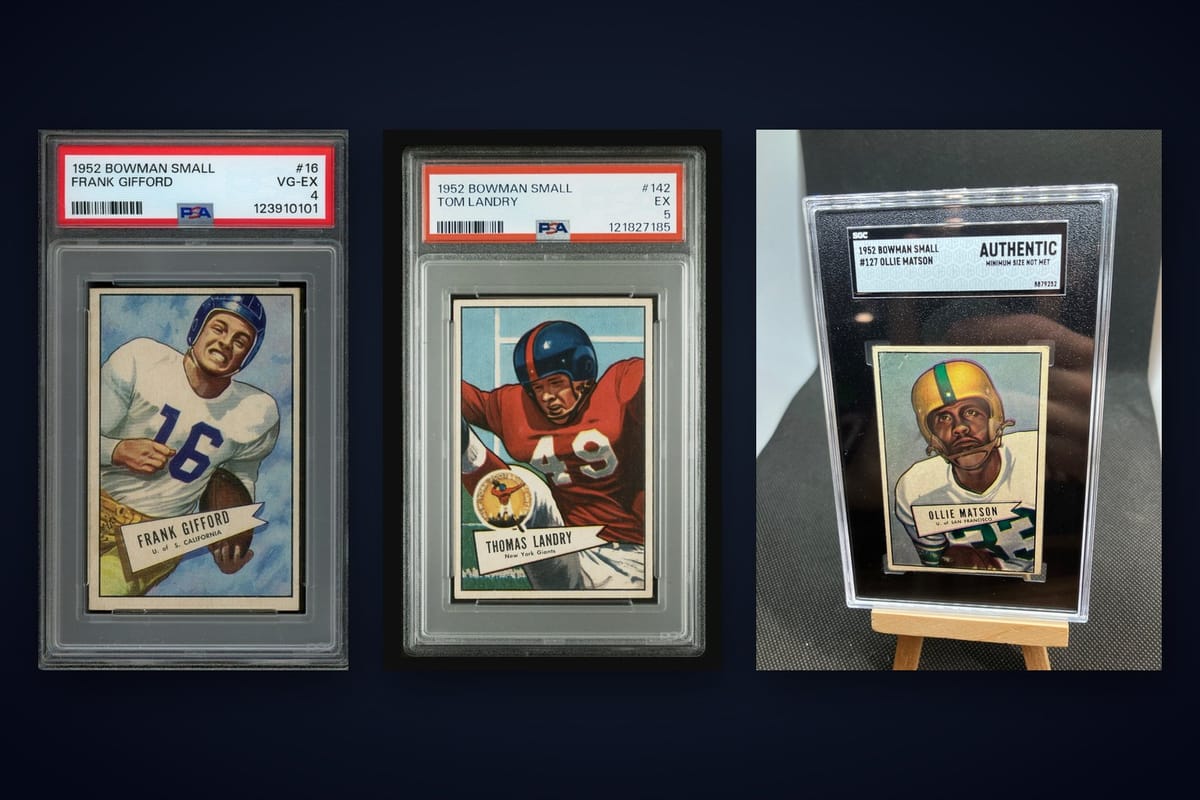
- Frank Gifford Rookie: One of the most valuable cards in the set, with PSA 10 prices reported around $33,000 versus $4,500 for PSA 9, roughly a 7x premium.
- Paul Hornung Rookie: Often commands one of the largest premiums, approximately 11x, reflecting rarity in perfect centering.
- Johnny Unitas and Y.A. Tittle: Both have reported value increases around 5x between PSA 9 and 10 grades.
- Other Key Rookies: Tommy McDonald and Jim Brown show premiums ranging from about 3.5x to 7x based on centering and surface condition.
These premiums illustrate how centering and condition can strongly influence market value, especially for scarce, iconic players.
PSA 9 vs PSA 10 Price Difference 1952 Bowman Small: Market Trends
Market data as of 2026-09-03 indicates a wide price gap between PSA 9 and PSA 10 grades:
- PSA 10 cards often sell for multiples of PSA 9 prices, with premiums ranging from about 2.8x for less scarce cards up to around 11x for standout rookies.
- Price gaps may widen over time as PSA 10 population remains limited and collector demand grows.
- Cards with visible centering flaws, edge wear, or surface defects rarely achieve PSA 10, keeping PSA 9 values strong but generally capped.
Understanding these trends can help collectors decide when pursuing a PSA 10 is worthwhile and when a PSA 9 is a more practical acquisition.
When Is a PSA 9 Worth It For 1952 Bowman Small?
While PSA 10s are often considered the most desirable, PSA 9 cards offer significant value and accessibility for many collectors:
- Budget-conscious collectors can access high-quality cards at roughly 10-30% of PSA 10 prices.
- Less iconic cards with smaller premiums may not justify the high grading and market cost of PSA 10 submission.
- Raw or off-centered cards that don’t meet PSA 10 centering thresholds can still command strong PSA 9 prices.
For many investors, purchasing PSA 9s is a strategic way to build a collection without the extreme premium costs, especially when combined with tools like Midpoint to assess grading potential upfront.
Other Grading Factors Affecting 1952 Bowman Small Value
Besides centering, other grading elements influence the PSA 9 vs PSA 10 distinction and overall card value:
- Corners: Sharp, undamaged corners are important for PSA 10; even minor wear can result in a PSA 9 grade.
- Edges: Clean, smooth edges without chipping or fraying are typically required for top grades.
- Surface: Gloss, staining, print defects, and wrinkles can reduce grading and value.
- Print Registration: On the 1952 Bowman Small set, slight print misalignment can affect centering perception and grade.
These condition factors help explain why some cards with good centering may still fall short of PSA 10.
Which Should You Choose?
Choosing between a PSA 9 and PSA 10 1952 Bowman Small card depends on your collecting goals, budget, and risk tolerance:
- Investors seeking maximum value and long-term appreciation: May prioritize PSA 10 cards, especially for Hall of Fame rookies like Frank Gifford and Paul Hornung, where premiums can justify the cost.
- Collectors building a playable or display set: PSA 9 cards offer a balance of quality and affordability, suitable for general collections.
- Sellers looking to maximize auction returns: Might aim for PSA 10 submissions but benefit from using Midpoint to assess centering first and avoid expensive grading on borderline cards.
- Buyers on a budget: PSA 9 cards provide access to iconic cards at a fraction of the PSA 10 cost, with still strong market demand.
Ultimately, the decision depends on the specific card, its condition, and your collecting priorities.
FAQ
How much is a 1952 Bowman Small PSA 9 worth?
Values vary by player and condition, ranging from around $250 for lesser-known cards to approximately $4,500 for top rookies like Frank Gifford as of 2026-09-03.
How much is a 1952 Bowman Small PSA 10 worth?
PSA 10s command significant premiums, with prices from about $700 for common cards up to around $33,000 for Frank Gifford rookies as of 2026-09-03.
Why is a PSA 10 1952 Bowman Small worth so much more than a PSA 9?
The PSA 10 grade requires near-perfect centering and generally flawless condition, which is uncommon for this set, leading to higher scarcity and collector demand compared to PSA 9.
Which 1952 Bowman Small football cards are the most valuable?
Key valuable cards include rookies like Frank Gifford, Paul Hornung, Johnny Unitas, Y.A. Tittle, and Jim Brown.
What is the most valuable 1952 Bowman Small rookie card?
Frank Gifford’s rookie card is typically among the most valuable, especially in PSA 10 condition.
How rare are PSA 9 and PSA 10 1952 Bowman Small cards?
PSA 10 cards are generally rarer due to strict centering standards, with PSA 9 counts higher but still limited for key rookies and Hall of Famers.
Free to start
Try the Midpoint app
Grade any card from a photo, see its raw and PSA 10 value, and track what your collection is worth — free.
Get it on iPhoneGet it on Android