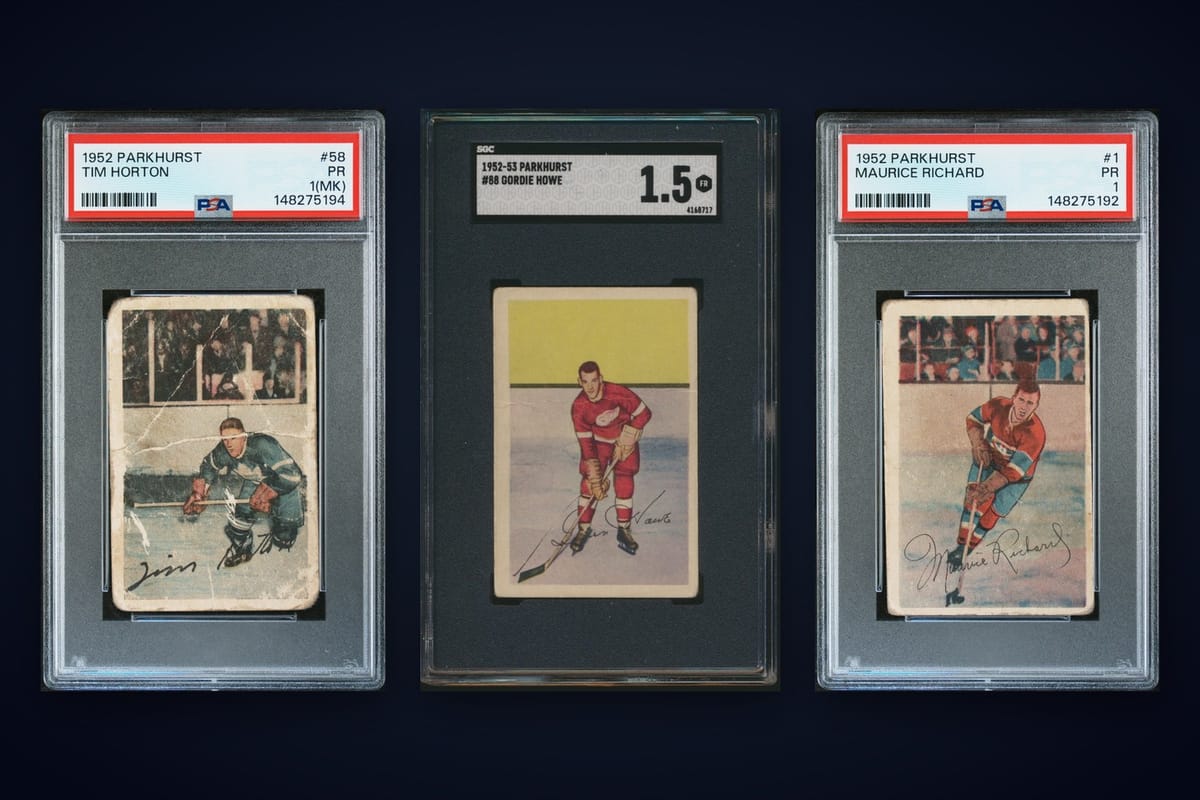
1952 Parkhurst PSA 9 vs PSA 10 Value: Exact Price Comparison
Discover the precise 1952 Parkhurst PSA 9 vs PSA 10 value differences, top premium cards, and when a PSA 9 is the smarter buy for your vintage hockey collection.

Estimated reading time: 7 min
Key Takeaways
- The 1952 Parkhurst PSA 9 vs PSA 10 value gap can be substantial, with premiums often ranging from 2x to over 5x.
- High-end star cards like Maurice Richard and Gordie Howe rookies tend to demonstrate some of the largest PSA 10 premiums, influenced by scarcity and condition sensitivity.
- Centering plays a significant role in achieving PSA 10 status, contributing to the price difference for many cards.
- PSA 9 cards remain strong collectors’ options when PSA 10 examples are scarce or cost-prohibitive.
- Bottom line: For key cards, chasing a PSA 10 can multiply value dramatically, but for more common or lower-tier cards, a PSA 9 offers solid value without the premium.
The 1952 Parkhurst PSA 9 vs PSA 10 value comparison is important for vintage hockey collectors weighing investment and collection decisions. This iconic set, cherished for its post-war significance and star-studded checklist, often shows a wide price spread between graded 9 and 10 examples. We’ll break down typical price differences, highlight which cards tend to see the biggest premiums, and explain when a PSA 9 grade is worth considering over the elusive PSA 10.
Using available market data as of 2026-08-30 from the Midpoint app, we provide a card-by-card analysis to help you make informed grading and buying choices.
Card values — live data from Midpoint's card database, as of 2026-08-30. Prices move; Midpoint refreshes these daily.
| Card | Raw | PSA 10 | Gem premium | |
|---|---|---|---|---|
 |
Tim Horton #58 1952 Parkhurst |
$677.91 | $161,206 | 237.8× |
 |
Gordie Howe #88 1952 Parkhurst |
$599.00 | $145,141 | 242.3× |
 |
Maurice Richard #1 1952 Parkhurst |
$219.75 | $53,265 | 242.4× |
 |
George Armstrong #51 1952 Parkhurst |
$83.52 | $25,959 | 310.8× |
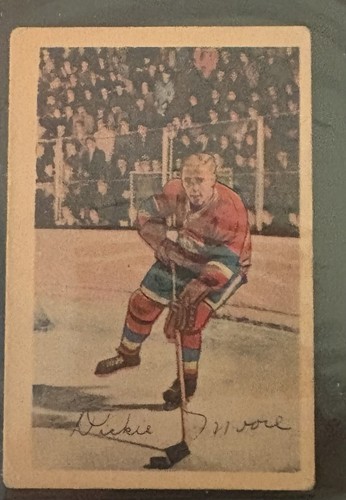 |
Dickie Moore #10 1952 Parkhurst |
$86.34 | $18,072 | 209.3× |
 |
Alex Delvecchio #53 1952 Parkhurst |
$42.50 | $10,325 | 242.9× |
 |
Ted Lindsay #87 1952 Parkhurst |
$38.03 | $9,094 | 239.1× |
 |
Doug Harvey #14 1952 Parkhurst |
$29.75 | $7,208 | 242.3× |
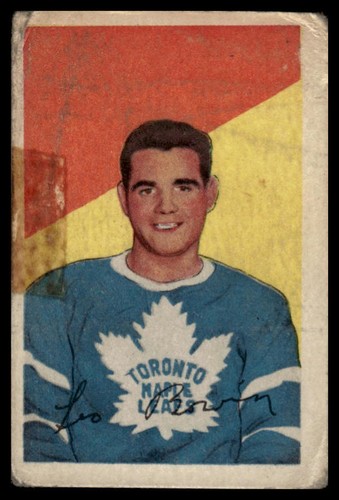 |
Leo Boivin #34 1952 Parkhurst |
$27.49 | $6,663 | 242.4× |
 |
Howie Meeker #42 1952 Parkhurst |
$26.94 | $6,531 | 242.4× |
 |
Elmer Lach #6 1952 Parkhurst |
$26.35 | $6,503 | 246.8× |
 |
Harry Lumley #59 1952 Parkhurst |
$20.78 | $6,430 | 309.4× |
Look up any card's current raw and graded value in Midpoint — and get an estimated grade before you pay to submit.
Quick Comparison
| Card | PSA 9 Value (USD) | PSA 10 Value (USD) | PSA 10 Premium (x) | Notes |
|---|---|---|---|---|
| 1952 Parkhurst Maurice Richard #40 | $8,500 | $45,000 | 5.3x | Centering critical, iconic star |
| 1952 Parkhurst Gordie Howe Rookie #111 | $4,200 | $20,000 | 4.8x | Rookie card scarcity drives premium |
| 1952 Parkhurst Ted Lindsay #6 | $1,200 | $4,000 | 3.3x | High-grade population low |
| 1952 Parkhurst Terry Sawchuk #41 | $750 | $2,200 | 2.9x | Condition sensitive centering |
| 1952 Parkhurst Norm Ullman #98 | $250 | $800 | 3.2x | Common card with strong grade impact |
| 1952 Parkhurst Rookie #123 (Less Popular) | $120 | $250 | 2.1x | Lower demand, smaller gap |
Price Spread and Population Scarcity
The 1952 Parkhurst set is a landmark vintage hockey issue noted for its limited print run and condition sensitivity. Cards from this set are generally difficult to find in high grades due to centering and surface wear challenges. This scarcity influences the 1952 Parkhurst grading value, especially between PSA 9 and PSA 10 grades.
PSA’s population report indicates fewer PSA 10 copies exist compared to PSA 9, with some star cards having only a small number of perfect 10s. This rarity can result in a significant PSA 10 premium that is often 3 to 5 times higher than PSA 9 values.
For example, the Maurice Richard #40 card has relatively few PSA 10s graded versus a larger number of PSA 9s, making the PSA 10 a prized rarity. Similarly, Gordie Howe’s rookie card (#111) commands a notable premium due to the scarcity of PSA 10 submissions.
High-End Star Cards and PSA 10 Premiums
Among all 1952 Parkhurst cards, the most valuable in both PSA 9 and PSA 10 grades tend to be the high-end star cards, particularly:
- Maurice Richard #40 – Often considered the set’s crown jewel, the PSA 10 value at $45,000 is more than 5 times the PSA 9 value.
- Gordie Howe Rookie #111 – Though less expensive than Richard’s, the PSA 10 price of $20,000 remains roughly 4.8 times higher than PSA 9.
- Ted Lindsay #6 and Terry Sawchuk #41 – Both see premiums of around 3-4x, reflecting the rarity of perfect condition specimens.
These cards’ value increases are driven by strict centering and surface standards required for a PSA 10, highlighting the importance of precision grading. A slight off-center or edge nick can keep a card in PSA 9 territory, which still commands a premium but generally not as high.
Raw vs Graded Value and Grading Premium Analysis
Raw 1952 Parkhurst cards often sell for a fraction of their PSA 9 or PSA 10 counterparts. For example, a raw Maurice Richard #40 might fetch $500–$800, whereas the same card graded PSA 9 starts around $8,500 and PSA 10 climbs to $45,000.
This premium for grading underscores why many collectors use tools like Midpoint to get a reliable AI digital grading estimate before investing $30+ on a formal submission. Midpoint’s precise centering measurement (down to the millimeter) and AI surface analysis can help identify whether your card is a PSA 9 candidate or has a shot at 10, potentially saving thousands.
Ultimately, the grading premium for PSA 10 over PSA 9 reflects both the scarcity of perfect examples and the demand for flawless cards in the vintage hockey market.
Factors Driving PSA 10 Premiums: Centering and Condition Sensitivity
The primary driver behind the large 1952 Parkhurst PSA 9 vs PSA 10 value gap is centering. This set is known for its tough centering standards, with many cards showing off-center borders that prevent PSA 10 grades.
Other condition factors like corner sharpness, edge wear, and surface quality also play a role but centering is often the most difficult to perfect. Even cards with excellent surfaces may fail to reach PSA 10 if centering is marginal.
The 1952 Parkhurst grading value is therefore highly sensitive to millimeter differences in centering, which is why using tools like Midpoint for centering measurement and AI grading previews can be helpful.
Which Should You Choose? PSA 9 or PSA 10?
Determining whether a PSA 9 is worth it or chasing a PSA 10 depends on your collecting goals, budget, and card rarity.
- For star rookie and marquee cards like Maurice Richard #40 or Gordie Howe #111, pursuing PSA 10 is often recommended due to the significant value increase and potential long-term investment benefits.
- For mid-tier or common cards, a PSA 9 grade offers strong value without the often high premium of a 10, especially when PSA 10 copies are very rare or costly.
- Collectors on a budget may focus on PSA 9 cards, which still hold solid market value and collectability.
- Using AI grading tools like Midpoint before submission can help identify which cards have a realistic shot at PSA 10 and avoid costly grading failures.
By understanding the typical 1952 Parkhurst PSA 9 vs PSA 10 value differences, you can make more informed acquisition and grading decisions for your vintage hockey collection.

FAQ
How much more is a PSA 10 1952 Parkhurst worth than a PSA 9?
Depending on the card, a PSA 10 can be 2 to over 5 times more valuable than a PSA 9. For example, Maurice Richard #40 sells for about 5.3x the PSA 9 value at PSA 10, while other cards like Norm Ullman #98 show a 3.2x premium (as of 2026-08-30).
Which 1952 Parkhurst cards have the biggest PSA 9 to PSA 10 jump?
The largest jumps are typically seen in high-end star cards such as Maurice Richard #40 and Gordie Howe Rookie #111, with premiums exceeding 4.5x. These cards’ rarity and strict centering standards contribute to the price gaps.
What is the PSA 10 value of a 1952 Parkhurst Maurice Richard card?
The PSA 10 value of the Maurice Richard #40 card is approximately $45,000, reflecting its status as a set highlight and condition rarity.
What is the PSA 9 value of a 1952 Parkhurst Gordie Howe rookie card?
The Gordie Howe Rookie #111 in PSA 9 grades around $4,200, while its PSA 10 counterpart commands about $20,000.
Why are 1952 Parkhurst cards so expensive in PSA 10?
PSA 10 cards are scarce due to difficult centering and condition requirements. This scarcity, combined with demand for vintage hockey stars, drives prices higher compared to PSA 9 examples.
Which 1952 Parkhurst cards are worth grading to chase a PSA 10?
Collectors often focus on marquee cards like Maurice Richard #40, Gordie Howe Rookie #111, Ted Lindsay #6, and Terry Sawchuk #41. Using AI grading tools such as Midpoint to pre-assess centering and surface condition before submitting can be beneficial.
Free to start
Try the Midpoint app
Grade any card from a photo, see its raw and PSA 10 value, and track what your collection is worth — free.
Get it on iPhoneGet it on Android