1952 Topps PSA 9 vs PSA 10 Value: Clear Comparison & Insights
Explore the 1952 Topps PSA 9 vs PSA 10 value gap, price differences, and grading insights to make smart vintage card investments today.

Estimated reading time: 9 min
Key Takeaways
- The 1952 Topps PSA 9 vs PSA 10 price difference is often substantial, with PSA 10 premiums sometimes reaching 10x or more.
- Centering quality is a key factor separating PSA 9 from PSA 10 grades, especially for marquee cards like Mickey Mantle #311.
- PSA 9 cards remain a valuable and often more accessible investment option given PSA 10 scarcity.
- Recent auction sales support the significant premiums for PSA 10 but also show PSA 9 prices holding strong for key 1952 Topps stars.
- Using tools like Midpoint helps collectors assess centering before submitting for grading.
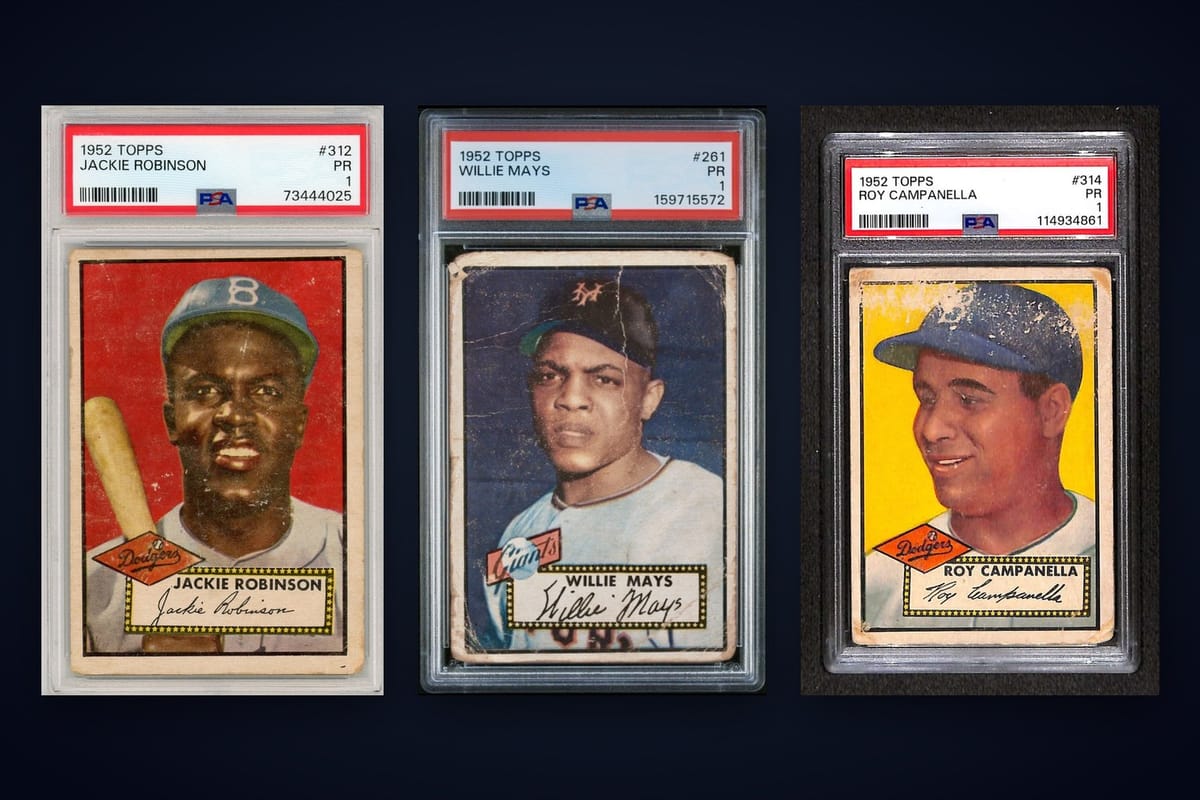
The 1952 Topps PSA 9 vs PSA 10 value comparison is an important topic for vintage card collectors and investors. This iconic set is legendary in the hobby, and the leap from a PSA 9 to a PSA 10 often corresponds with a significant increase in price, driven largely by centering and condition nuances. Here, we break down the approximate value differences by card, the rarity and population implications, and when a PSA 9 might be a practical choice.
Card values — live data from Midpoint's card database, as of 2026-08-23. Prices move; Midpoint refreshes these daily.
| Card | Raw | PSA 10 | Gem premium | |
|---|---|---|---|---|
 |
Jackie Robinson #312 1952 Topps |
$5,949 | $1,447,682 | 243.4× |
 |
Willie Mays #261 1952 Topps |
$2,610 | $635,517 | 243.5× |
 |
Roy Campanella #314 1952 Topps |
$1,353 | $334,112 | 247× |
 |
Hoyt Wilhelm #392 1952 Topps |
$1,223 | $297,663 | 243.4× |
 |
Pee Wee Reese #333 1952 Topps |
$681.79 | $163,311 | 239.5× |
 |
Yogi Berra #191 1952 Topps |
$235.67 | $56,778 | 240.9× |
 |
Orestes Minoso #195 1952 Topps |
$203.50 | $37,789 | 185.7× |
![Duke Snider [Black Back] #37 1952 Topps card](https://i.ebayimg.com/images/g/hPIAAeSwT3JqTCgY/s-l500.jpg) |
Duke Snider [Black Back] #37 1952 Topps |
$134.29 | $33,181 | 247.1× |
 |
Warren Spahn #33 1952 Topps |
$130.50 | $32,181 | 246.6× |
|
Warren Spahn [Black Back] #33 1952 Topps |
$130.07 | $31,330 | 240.9× |
 |
Billy Martin #175 1952 Topps |
$116.25 | $28,229 | 242.8× |
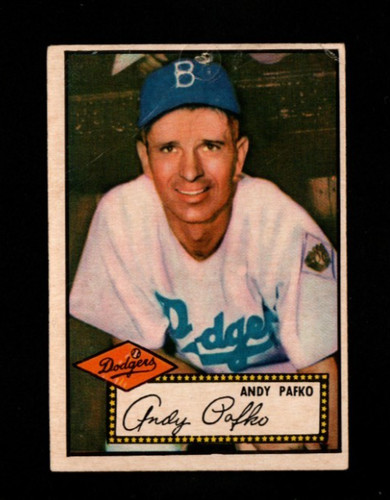 |
Andy Pafko #1 1952 Topps |
$88.63 | $21,518 | 242.8× |
Look up any card's current raw and graded value in Midpoint — and get an estimated grade before you pay to submit.
Quick Comparison
| Card | PSA 9 Value (USD) | PSA 10 Value (USD) | PSA 10 Premium (x) | Centering Impact | Population Insights |
|---|---|---|---|---|---|
| 1952 Topps Mickey Mantle #311 | ~$600,000 | ~$7,000,000 | ~11.7x | Critical; near-perfect centering needed for PSA 10 | PSA 9: 134 known; PSA 10: fewer than 10 known |
| 1952 Topps Willie Mays #261 | ~$35,000 | ~$200,000 | ~5.7x | High impact on grade | PSA 9: 60+; PSA 10: very rare |
| 1952 Topps Jackie Robinson #30 | ~$30,000 | ~$150,000 | ~5x | Centering plus edges | PSA 9: common; PSA 10: scarce |
| 1952 Topps Duke Snider #90 | ~$5,000 | ~$35,000 | ~7x | Centering a key factor | PSA 9: moderate; PSA 10: low |
| 1952 Topps Gil Hodges #50 | ~$1,000 | ~$7,000 | ~7x | Centering & surface | PSA 9: moderate; PSA 10: rare |
Price Difference 1952 Topps PSA 9 vs PSA 10 Explained
The price difference between PSA 9 and PSA 10 grades in 1952 Topps cards is often large, sometimes exceeding a 5x to 10x multiplier. This gap is most pronounced for highly sought-after stars like Mickey Mantle #311, whose PSA 10 versions command very high prices due to scarcity and collector demand.
- 1952 Topps Mickey Mantle #311: The PSA 10 premium is estimated around 11.7x versus PSA 9, with PSA 9 copies valued near $600,000 and PSA 10 examples reaching approximately $7 million as of 2026-08-23.
- Willie Mays and Jackie Robinson cards: These also show premiums of 5x or more, reflecting their star power and the difficulty in achieving top centering and surface quality.
- Mid to lower-tier stars like Duke Snider and Gil Hodges: These still exhibit premiums around 7x, underscoring how centering and condition are important in vintage cards.
This disparity reflects collectors’ willingness to pay a premium for the best condition cards, but PSA 9 cards retain significant value and liquidity.
Centering’s Role in 1952 Topps Grading Value
Centering is a critical factor distinguishing PSA 9 from PSA 10 grades in 1952 Topps cards. The set’s design, with its bold borders, makes even minor off-centering noticeable, which can prevent a card from earning a perfect 10 grade despite excellent corners and surface.
- PSA 10 cards require near-perfect centering, often within a few percentage points difference.
- PSA 9 cards may have slightly off-center images but still exhibit excellent overall condition.
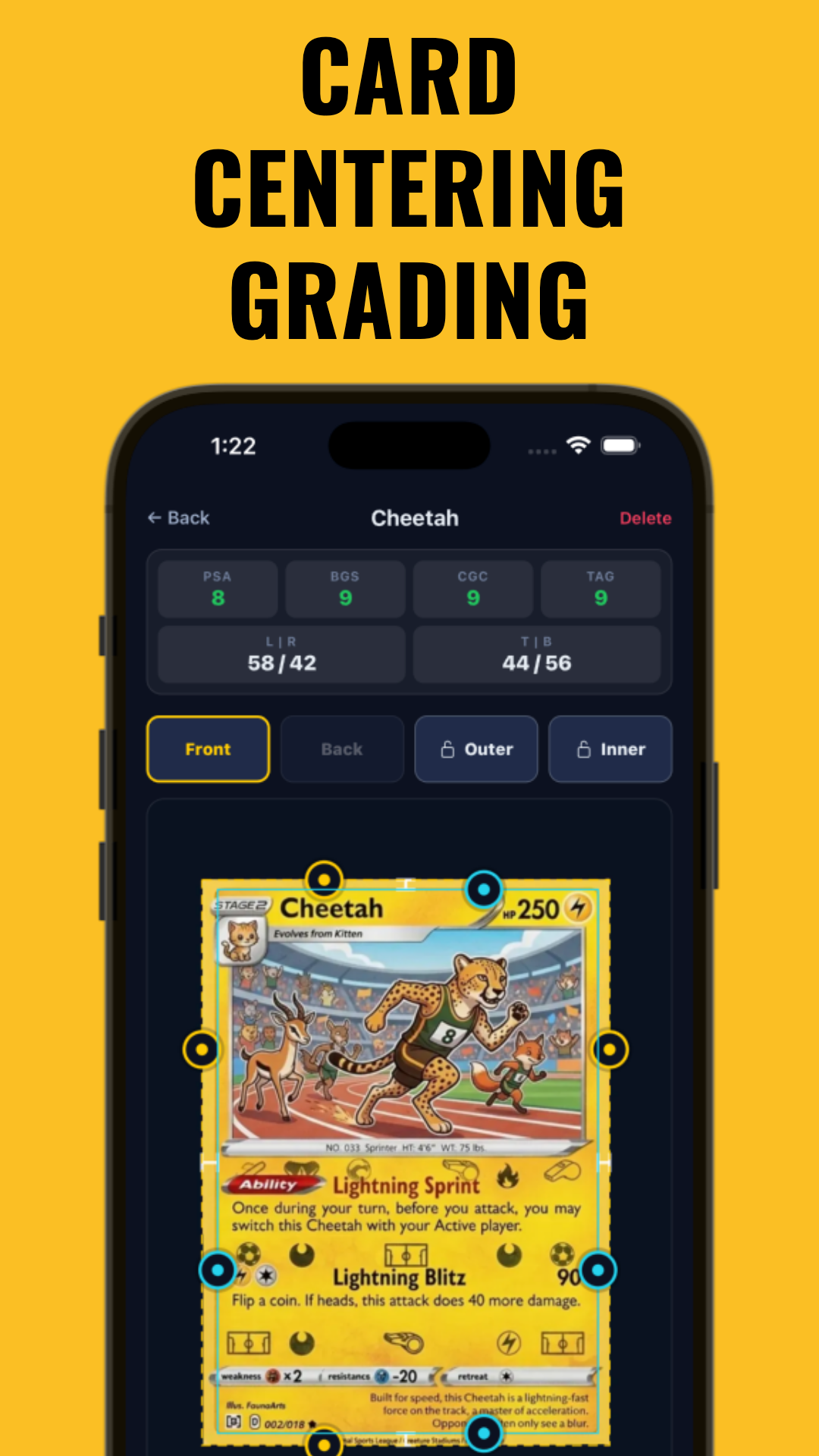
- Using precision tools like Midpoint’s centering calculator allows collectors to measure centering before submission, reducing grading guesswork.
- Cards with excellent corners and surfaces but imperfect centering usually receive PSA 9 grades, explaining the population disparity.
Understanding and measuring centering can help collectors decide whether to submit a card or accept a high PSA 9 grade, especially for expensive vintage cards where grading costs and risk are significant.
Population and Rarity Impact on Value
Population reports are important for interpreting the 1952 Topps PSA 9 vs PSA 10 value gap. The scarcity of PSA 10 cards drives the premium, as very few cards meet the strict centering and condition criteria.
- Mickey Mantle #311: Over 130 PSA 9 copies exist, but fewer than 10 PSA 10 copies are known, driving demand and price for the perfect examples.
- Other stars: Similar patterns exist: PSA 9 populations are significantly larger, while PSA 10 cards are rare and command a premium.
- This rarity premium is why some collectors prefer buying and holding PSA 9 copies, which offer a balance of value and accessibility.
Understanding this dynamic helps collectors and investors set realistic expectations and optimize their portfolios based on availability and budget.
Recent Auction Results for 1952 Topps Cards by Grade
Recent sales data supports the substantial price premium for PSA 10 cards while validating PSA 9 as a strong investment grade.
- Mickey Mantle #311: PSA 9 copies have recently sold near $600,000, while PSA 10 examples have fetched prices around $7 million at auction.
- Willie Mays #261: PSA 9 sales hover near $35,000 with PSA 10 fetching $200,000 or more.
- Jackie Robinson #30: PSA 9 cards move around $30,000, PSA 10 near $150,000.
These auction comps emphasize the value of accurate pre-grading and centering measurement, which can be done efficiently with apps like Midpoint.
Which Should You Choose? PSA 9 or PSA 10 for 1952 Topps?
Choosing between PSA 9 and PSA 10 cards depends on your collecting goals, budget, and risk tolerance.
- Collectors prioritizing perfection and long-term investment: Aim for PSA 10, understanding the scarcity and higher upfront cost. Use precise centering tools to increase your submission success.
- Value-focused collectors and investors: PSA 9 cards offer a more accessible entry point with strong value retention and less risk.
- Those uncertain about grading outcomes: Use apps like Midpoint to estimate your card’s grade before committing to expensive submissions.
- Cards with minor centering flaws but excellent corners and surface: Often better held as PSA 9 rather than risking a lower grade on submission.
Ultimately, both grades have a place in a well-rounded vintage collection, especially for the 1952 Topps set.
FAQ
How much is a 1952 Topps Mickey Mantle PSA 9 worth compared with a PSA 10?
A PSA 9 Mickey Mantle #311 is valued around $600,000, while a PSA 10 can reach approximately $7 million, reflecting a significant price premium as of 2026-08-23.
Does a PSA 10 1952 Topps Mickey Mantle actually exist?
Yes, PSA 10 examples of the 1952 Topps Mickey Mantle #311 do exist but are extremely rare, with fewer than 10 known copies.
Why is the PSA 9 to PSA 10 gap so large for 1952 Topps cards?
The gap is mainly due to centering quality and the rarity of perfect condition examples. PSA 10 cards require near-perfect centering, which is difficult to achieve in this vintage set.
What are the recent auction sales for 1952 Topps Mickey Mantle by grade?
Recent sales show PSA 9 copies near $600,000 and PSA 10 copies around $7 million, highlighting the premium for the highest grade.
How many PSA 9 1952 Topps Mantles are known, and how rare is PSA 10?
There are approximately 134 known PSA 9 Mickey Mantle #311 cards, while PSA 10 copies are fewer than 10, making the latter extremely rare.
Are PSA price guide values accurate for 1952 Topps vintage cards?
PSA price guides provide a useful baseline, but actual auction results may vary. Using tools like Midpoint can help track real market values and grading trends more precisely.
Free to start
Try the Midpoint app
Grade any card from a photo, see its raw and PSA 10 value, and track what your collection is worth — free.
Get it on iPhoneGet it on Android