
1953 Topps Baseball Cards Value: Complete Collector's Guide
Discover the 1953 Topps baseball cards value, top cards, grading tips, rookie highlights, and price guide to maximize your collection's worth.

Estimated reading time: 12 min
Key Takeaways
- The 1953 Topps baseball cards value varies widely by card condition, centering, and grading, with PSA 10s generally commanding higher prices.
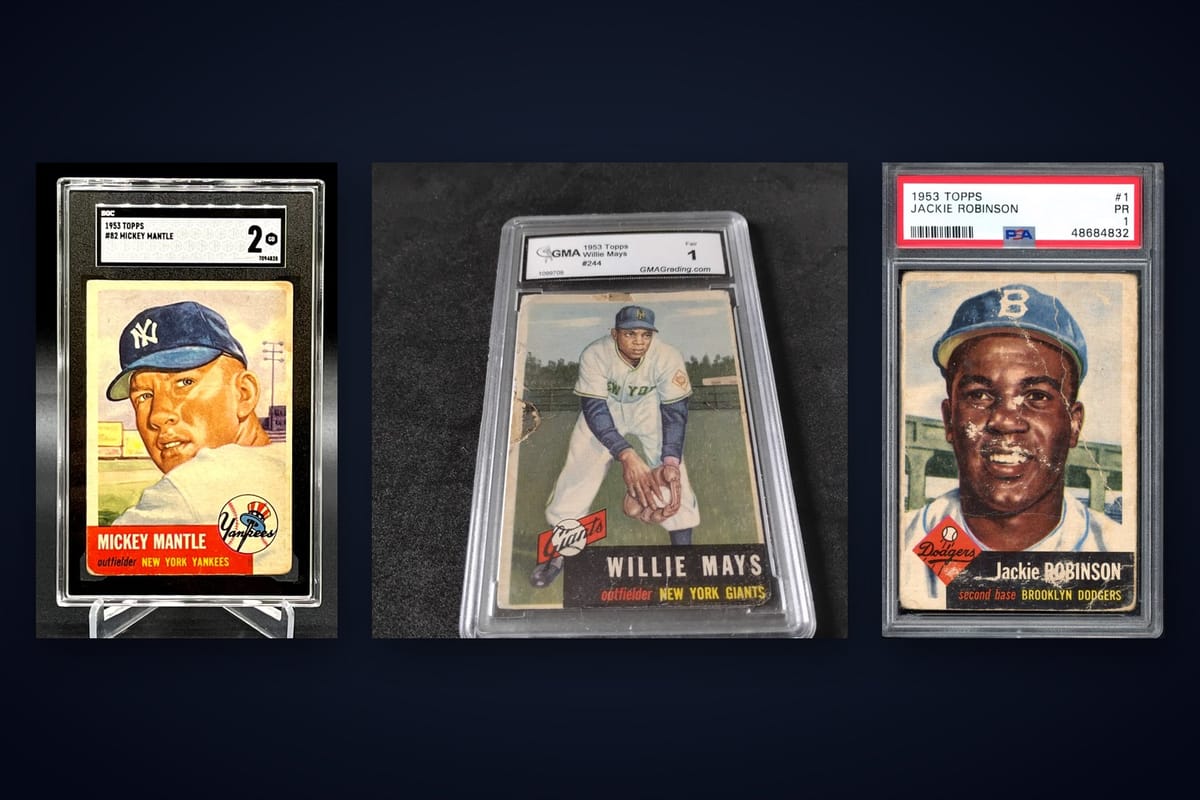
- Key cards include Mickey Mantle #82, Jackie Robinson #1, Willie Mays #244, and rare high-number cards #221–280.
- Rookie cards such as Roy Face #246 and Johnny Podres #263 are sought-after and may be worth grading if well-centered.
- Centering, corners, surface, and color significantly impact value; digital grading tools like Midpoint can help estimate grades before submission.
- Recent auction data often shows notable price increases from PSA 8 to PSA 9 and above, making professional grading a strategic consideration for valuable cards.
Card values — live data from Midpoint's card database, as of 2026-10-06. Prices move; Midpoint refreshes these daily.
| Card | Raw | PSA 10 | Gem premium | |
|---|---|---|---|---|
 |
Mickey Mantle #82 1953 Topps |
$3,196 | $732,845 | 229.3× |
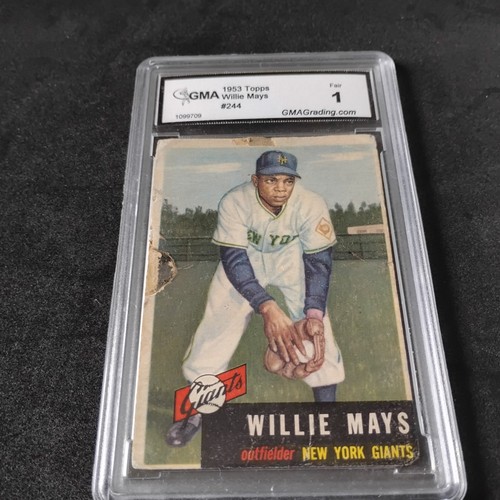 |
Willie Mays #244 1953 Topps |
$1,240 | $291,747 | 235.3× |
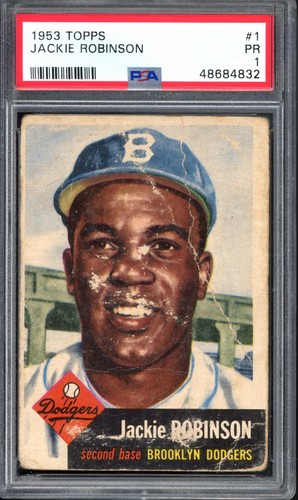 |
Jackie Robinson #1 1953 Topps |
$885.00 | $205,120 | 231.8× |
 |
Satchell Paige #220 1953 Topps |
$754.45 | $177,593 | 235.4× |
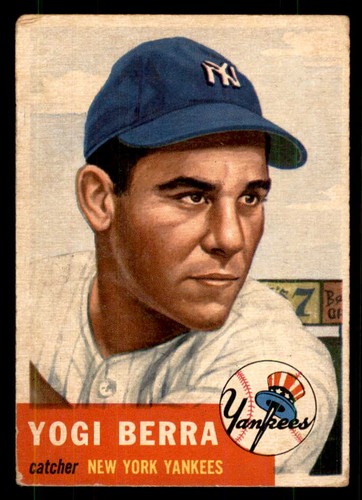 |
Yogi Berra #104 1953 Topps |
$112.13 | $59,432 | 530× |
 |
Jim Gilliam #258 1953 Topps |
$132.41 | $36,679 | 277× |
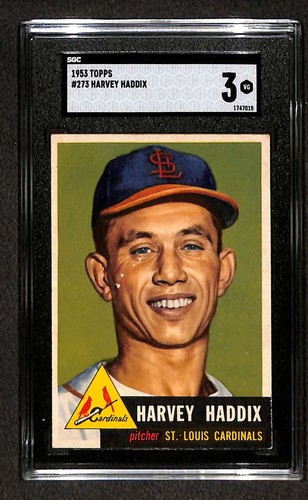 |
Harvey Haddix #273 1953 Topps |
$88.03 | $23,262 | 264.3× |
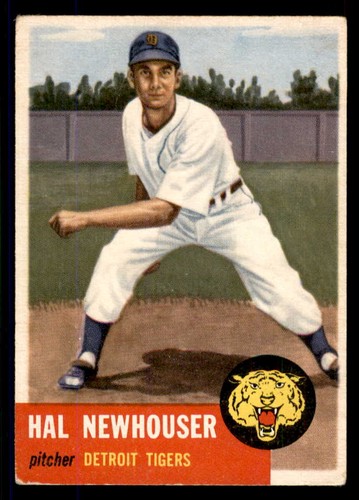 |
Hal Newhouser #228 1953 Topps |
$75.07 | $18,744 | 249.7× |
 |
John Podres #263 1953 Topps |
$76.97 | $18,493 | 240.3× |
 |
Milt Bolling #280 1953 Topps |
$72.27 | $17,155 | 237.4× |
 |
Minnie Minoso #66 1953 Topps |
$79.32 | $16,538 | 208.5× |
 |
Ed Mathews #37 1953 Topps |
$69.49 | $16,203 | 233.2× |
Look up any card's current raw and graded value in Midpoint — and get an estimated grade before you pay to submit.
Table of Contents
- Section 1: Overview of 1953 Topps Baseball Cards Value
- Section 2: Most Valuable 1953 Topps Cards and Their Market Prices
- Section 3: The Complete 1953 Topps Checklist and Card Number Breakdown
- Section 4: Understanding High-Number Series Cards and Their Premiums
- Section 5: Key Rookie Cards and Their Grading Potential
- Section 6: How Card Condition and Centering Affect 1953 Topps Value
- Section 7: Grading Companies, Population Reports, and Price Guide Insights
- Conclusion
- FAQ
Section 1: Overview of 1953 Topps Baseball Cards Value
The 1953 Topps baseball cards are iconic in the sports memorabilia world, featuring large-sized cards with watercolor-style portraits and a rich checklist of stars, rookies, and commons. Understanding the 1953 Topps baseball cards value involves considering condition gradations from poor to PSA 10 gem mint, as well as print variations and rarity.
Values differ significantly based on condition, centering, and authenticity. For example, raw low-grade commons may be worth only a few dollars, while a PSA 10 Mickey Mantle #82 has been known to sell for over $100,000 in recent years. This wide value spectrum makes grading and condition assessment important steps for collectors and sellers.
One challenge collectors face is determining which cards are worth grading. Since professional grading services like PSA, BGS, and CGC charge fees that can exceed $30 per card, pre-assessment tools such as Midpoint's AI-powered centering and surface analysis can provide instant grading estimates and help avoid costly submissions for low-grade cards.
Below is a snapshot of representative 1953 Topps baseball card values based on condition and grading (detailed table follows):

- Raw low-grade commons: $1–$20
- Mid-grade raw cards: $20–$150
- High-grade raw cards: $150–$1,000+
- PSA 8 to PSA 9 graded cards: $1,000–$20,000+
- PSA 10 and Rare BGS 9.5+ examples: $50,000 to $150,000+
With such variability, collectors should familiarize themselves with the set's structure, key rookies, and grading nuances before investing in expensive submissions.
Section 2: Most Valuable 1953 Topps Cards and Their Market Prices
The most valuable 1953 Topps cards feature baseball legends whose cards have appreciated significantly due to rarity, condition, and collector demand. These include:
Mickey Mantle #82
Mickey Mantle's #82 card is often considered the crown jewel of the 1953 Topps set. Raw versions in poor condition can be modestly priced, but a PSA 10 Mantle #82 card has sold for over $100,000 in recent years. Cards graded PSA 9 typically sell for tens of thousands of dollars, reflecting a steep price premium for gem mint condition.
Jackie Robinson #1
The Jackie Robinson #1 card holds historic significance as the first card in the set. Its value ranges from roughly a few hundred dollars in raw low-grade form to tens of thousands for high-grade PSA 9 cards. PSA 10 Robinson cards are rare and can command very high prices at auction.
Willie Mays #244
Willie Mays, another Hall of Famer, has his 1953 Topps card #244 valued from low hundreds in raw low-grade to several thousands in PSA 9 or higher. The card's vibrant colors and condition-sensitive attributes make it a popular grading candidate.
Satchel Paige #220 and Yogi Berra #104
Satchel Paige #220 and Yogi Berra #104 are also sought after. Paige's card, notable for its rarity and historical importance, can fetch premiums in high grade. Yogi Berra's card holds collector interest, with PSA 9 examples often valued in the low thousands.
Warren Spahn #194
Warren Spahn #194 is generally less expensive than the other legends but still commands respectable prices, especially graded above PSA 8.
These cards illustrate the importance of condition and professional grading for maximizing 1953 Topps baseball cards value.
Section 3: The Complete 1953 Topps Checklist and Card Number Breakdown
The 1953 Topps set consists of 324 cards, including commons, stars, rookies, and high-number series. Understanding this breakdown helps collectors identify valuable cards and potential gaps in their collections.
Commons and Stars
The majority of cards, numbered #2–#220, feature established players and common cards. These vary in value based on condition but generally form the backbone of the set.
Double Prints and Unissued Numbers
The set includes a few double-printed cards and unissued numbers, adding complexity for collectors verifying authenticity and completeness.
High-Number Series (#221–#280)
This series is known for short-print cards and increased scarcity. Many collectors prize these for their rarity and condition-sensitive nature. The high-number cards often command a price premium over commons, especially when graded well.
Rookie Cards
Noteworthy rookies are scattered throughout the checklist, including Roy Face #246, Jim Gilliam #258, and Johnny Podres #263. These have become increasingly collectible and are often worth grading to enhance value.
Collectors aiming for a complete set should pay special attention to these categories to ensure authenticity and optimize their collection's worth.
Section 4: Understanding High-Number Series Cards and Their Premiums
The high-number series cards (#221–280) are particularly interesting due to their relative scarcity and higher typical values. These cards were short-printed compared to the main series, making them less common in circulation and often more valuable in high grades.
Common High-Number Cards and Value Impact
Cards such as Roy Face #246 and Johnny Podres #263 fall into this category. Raw mid-grade cards typically sell for tens to a couple hundred dollars, but PSA 9 or higher examples can command premiums several times higher.
Short-Print Status and Collector Demand
The relative scarcity of these cards in top condition drives collector demand. Well-centered cards with sharp corners and clean surfaces from this series are prime candidates for grading submissions.
Pricing Trends
Recent sales indicate that high-number cards graded PSA 9+ can sell for amounts ranging from around $1,000 to several thousand dollars, depending on the player. This contrasts with many base cards, which rarely exceed a few hundred dollars in similar grades.
Investing in high-number cards with good centering and surface quality can offer better return potential, especially when leveraging digital pre-grading tools like Midpoint to assess submission worthiness.
Section 5: Key Rookie Cards and Their Grading Potential
Rookie cards from the 1953 Topps set are prized by collectors for their historical significance and potential for price appreciation. Among these, Roy Face #246, Jim Gilliam #258, and Johnny Podres #263 stand out.
Roy Face #246
Roy Face’s rookie card is considered a notable card, with raw values ranging from low double digits in low grade to potentially over a thousand dollars in PSA 9 condition. Its large size and centering sensitivity make it a challenge to grade well, emphasizing the value of precise centering measurement tools.
Jim Gilliam #258
Gilliam’s rookie card is less common and commands a modest premium. PSA 9 examples can reach around $1,000, reflecting collector interest in quality rookies from this era.
Johnny Podres #263
Podres' rookie card is another desirable item, with high-grade cards selling for amounts in the low thousands. Its condition sensitivity further enhances the importance of pre-submission grading evaluation.
For collectors evaluating which 1953 Topps cards are worth grading, these rookies represent reasonable candidates, especially when paired with digital centering and surface assessments to anticipate PSA or BGS grades.
Section 6: How Card Condition and Centering Affect 1953 Topps Value
Condition is the single most important factor influencing the 1953 Topps baseball cards value. Key condition elements include centering, corners, surface, color vibrancy, creases, trimming, stains, and overall authenticity.
Centering
Centering refers to the alignment of the card image within its borders. 1953 Topps cards have large borders, making centering especially noticeable. Cards centered within a roughly 55/45 to 60/40 ratio generally command higher grades. Off-center cards lose significant value, especially when grading companies downgrade for centering flaws.
Corners and Edges
Sharp corners and clean edges are essential. Rounded or frayed corners and edge wear reduce value sharply, especially in high-grade submissions.
Surface and Color
Surface condition includes gloss, stains, creases, and any print defects. The watercolor-style portraits on 1953 Topps cards make surface imperfections more apparent. Bright colors and clean surfaces add to eye appeal and grade.
Authentication and Trimming
Authenticity is paramount. Trimming to improve centering is detected by experts and grading companies, resulting in grade denial or card rejection. Using AI-based tools like Midpoint’s centering calculator and surface analysis can help detect these issues before submission.
For a detailed explanation of how centering impacts card value, consider exploring this guide on centering impacts.
Section 7: Grading Companies, Population Reports, and Price Guide Insights
Professional grading companies like PSA, BGS, CGC, and TAG play a crucial role in establishing market value. Each has distinct grading scales, but PSA’s grading is the most recognized in the 1953 Topps market.
PSA Grading Scale and Population Reports
PSA’s grades range from 1 to 10, with PSA 10 representing gem mint quality. Population reports show how many cards have been graded at each level, influencing rarity and price. For example, very few 1953 Topps Mickey Mantle #82 cards exist in PSA 10, contributing to their high prices.
Price Guide Considerations
Price guides reflect recent auction results and private sales. The 1953 Topps price guide should be consulted regularly, as prices fluctuate based on market demand and condition trends. Recent auctions have demonstrated notable price increases from PSA 8 to PSA 9, illustrating the premium for near-perfect cards.
Using Midpoint for Grading Estimates and Collection Tracking
Before submitting cards for grading, collectors can use tools like Midpoint to get AI-powered estimates of PSA, BGS, CGC, and TAG grades based on centering, corners, edges, and surface analysis. This pre-grading step helps avoid unnecessary grading fees and can maximize return on investment.
Additionally, Midpoint’s portfolio tracking features allow collectors to monitor their collection’s value over time and make informed buying or selling decisions.
Conclusion
The 1953 Topps baseball cards value depends heavily on card condition, centering, rarity, and grading status. Iconic cards such as Mickey Mantle #82 and Jackie Robinson #1 are among the highest valued, especially when graded PSA 9 or 10. High-number series and rookie cards offer strong grading opportunities due to scarcity and collector interest.
Collectors should consider leveraging digital tools like Midpoint to perform precise centering measurements and AI grading estimates before investing in professional grading. This approach can help minimize risk, save money, and better understand the potential value of 1953 Topps cards.
For more detailed advice on storing and preserving your valuable cards, see our ultimate collector’s guide on storage.
FAQ
Q: How much is a 1953 Topps Mickey Mantle card worth?
A: The 1953 Topps Mickey Mantle #82 card varies widely in value depending on condition. Raw low-grade cards may be worth a few hundred dollars, while a PSA 10 example has sold for over $100,000 in recent years.
Q: What is the most valuable 1953 Topps baseball card?
A: The most valuable card in the set is widely considered to be the Mickey Mantle #82, especially in PSA 10 condition. Other highly valuable cards include Jackie Robinson #1 and Willie Mays #244.
Q: How much is a 1953 Topps Jackie Robinson card worth?
A: Jackie Robinson #1 cards range from a few hundred dollars in raw poor condition to tens of thousands for PSA 9 graded cards, reflecting their historic significance and collector demand.
Q: Are 1953 Topps high-number cards worth more?
A: Yes, the high-number series (#221–280) are generally rarer and command price premiums, especially in high grades. Cards like Roy Face #246 and Johnny Podres #263 are sought after and can fetch several thousand dollars in PSA 9+ condition.
Q: What are the key rookie cards in the 1953 Topps baseball set?
A: Key rookies include Roy Face #246, Jim Gilliam #258, and Johnny Podres #263. These cards are valuable for grading and can appreciate in high condition.
Q: How can I tell if my 1953 Topps baseball card is valuable?
A: Value depends on condition (centering, corners, surface), rarity, and player. Using digital tools like Midpoint to measure centering and estimate grading can help identify cards worth professional grading and maximize value.
Free to start
Try the Midpoint app
Grade any card from a photo, see its raw and PSA 10 value, and track what your collection is worth — free.
Get it on iPhoneGet it on Android


