1954 Topps Baseball Cards Value: Ultimate Price Guide & Grading Tips
Explore the 1954 Topps baseball cards value, top cards, grading impact, and price guide to maximize your collection’s worth with expert insights and data.

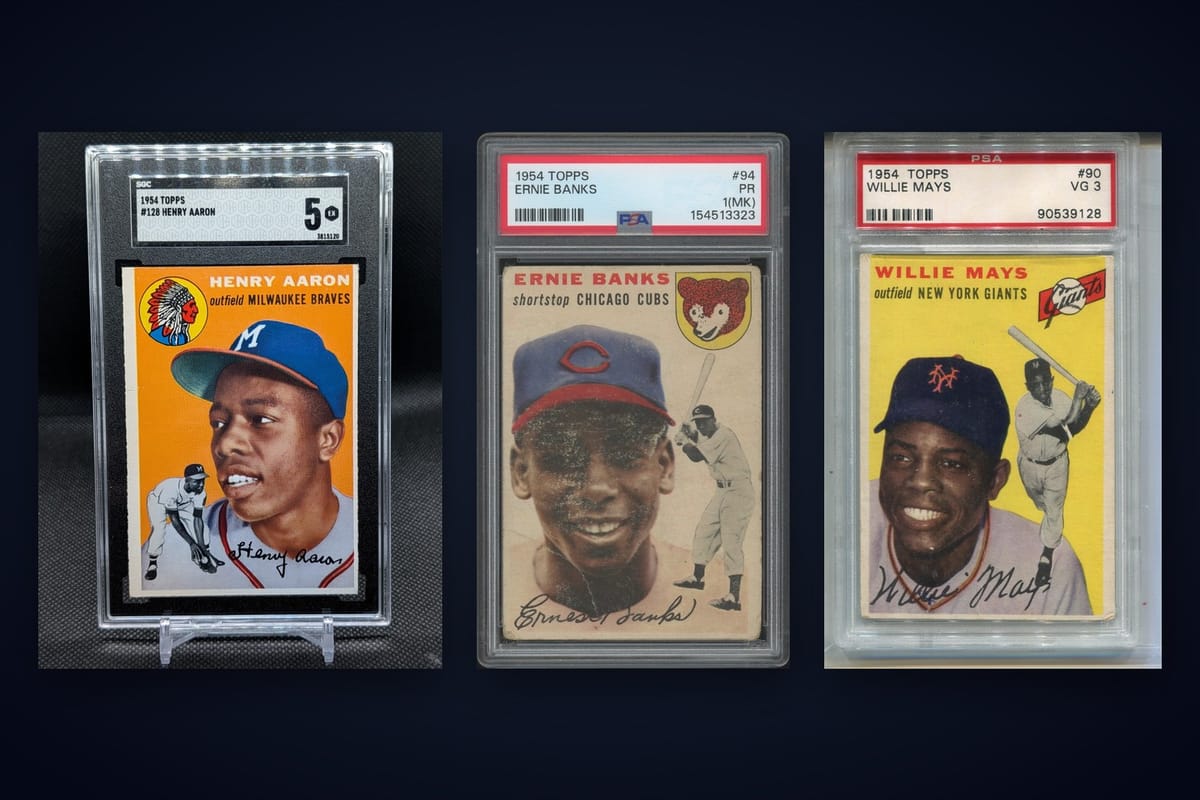
Estimated reading time: 12 min
Key Takeaways
- The 1954 Topps baseball cards value varies significantly by condition, player, and grading status.
- Key cards like Hank Aaron #128 and Ted Williams #1 often command premium prices in high-grade PSA 10 condition.
- Grading can increase card value, but centering and surface condition heavily influence final grades.
- Using tools like Midpoint’s AI-based centering and grading estimates can help decide which 1954 Topps cards may be worth grading.
- Understanding print defects, rarity, and recent auction sales is important for accurate valuation.
Card values — live data from Midpoint's card database, as of 2026-11-01. Prices move; Midpoint refreshes these daily.
| Card | Raw | PSA 10 | Gem premium | |
|---|---|---|---|---|
 |
Henry 'Hank' Aaron #128 1954 Topps |
$2,760 | $649,300 | 235.3× |
 |
Ernie Banks #94 1954 Topps |
$902.25 | $199,015 | 220.6× |
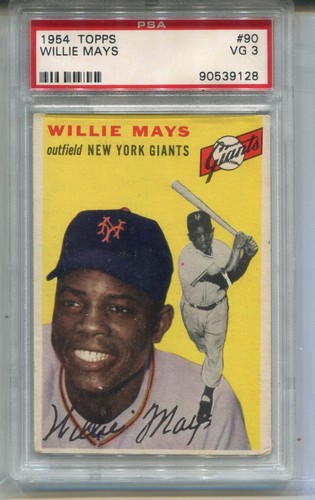 |
Willie Mays #90 1954 Topps |
$318.39 | $168,360 | 528.8× |
 |
Jackie Robinson #10 1954 Topps |
$361.76 | $135,839 | 375.5× |
 |
Jackie Robinson [Gray Back] #10 1954 Topps |
$481.50 | $110,389 | 229.3× |
 |
Ted Williams #250 1954 Topps |
$208.85 | $47,797 | 228.9× |
 |
Al Kaline #201 1954 Topps |
$454.91 | $38,880 | 85.5× |
 |
Ted Williams #1 1954 Topps |
$169.43 | $36,444 | 215.1× |
 |
Ted Williams [Gray Back] #1 1954 Topps |
$149.62 | $34,532 | 230.8× |
 |
Tom Lasorda #132 1954 Topps |
$106.38 | $23,850 | 224.2× |
 |
Yogi Berra #50 1954 Topps |
$82.50 | $20,502 | 248.5× |
 |
Whitey Ford #37 1954 Topps |
$37.32 | $16,500 | 442.1× |
Look up any card's current raw and graded value in Midpoint — and get an estimated grade before you pay to submit.
Table of Contents
- Section 1: Overview of 1954 Topps Baseball Cards and Their Value
- Section 2: The Most Valuable 1954 Topps Cards and Rookie Cards
- Section 3: Understanding 1954 Topps Card Condition and Grading Impact
- Section 4: PSA 10 Values and the Gem-Mint Premium Gap
- Section 5: Price Guide for Raw and Graded 1954 Topps Cards
- Section 6: Identifying Authentic 1954 Topps Cards and Avoiding Fakes
- Section 7: When to Submit Your 1954 Topps Cards for Grading
- Conclusion
- FAQ
Section 1: Overview of 1954 Topps Baseball Cards and Their Value
Historical Context and Set Composition
The 1954 Topps baseball card set is a notable release in the card collecting world, featuring 252 cards that captured stars and rookies during baseball’s mid-20th century era. It includes legendary players such as Ted Williams, Hank Aaron, and Willie Mays, alongside key rookie cards that contribute to the set’s popularity.
Collectors value this set for its colorful design and player lineup, as well as its role in the evolution of baseball card collecting. The cards measure approximately 2 5/8 by 3 3/4 inches and feature portrait photos with player stats on the back.
Factors Affecting 1954 Topps Baseball Cards Value
- Player significance: Hall of Famers and rookies generally command higher prices.
- Card condition: Centering, corners, edges, and surface quality influence value.
- Grading status: PSA, BGS, and CGC grades can increase raw values substantially.
- Rarity and print variations: Some cards have short print runs or specific variations.
- Market demand and recent sales: Auction results provide valuation benchmarks.
Current Market Snapshot (As of 2026-11-01)
According to Midpoint’s database, raw 1954 Topps cards vary widely in value. Low-grade commons might sell for under $20, while high-grade examples of marquee cards can sell for thousands or more. This variability highlights the importance of precise grading and condition assessment before buying or selling.
| Card Number | Player | Rookie | Raw Value Range | PSA 10 Value |
|---|---|---|---|---|
| #128 | Hank Aaron | Yes | $2,000 - $15,000 | Up to $120,000 |
| #94 | Ernie Banks | Yes | $1,500 - $10,500 | Up to $85,000 |
| #1 | Ted Williams | No | $1,200 - $9,000 | Up to $70,000 |
| #90 | Willie Mays | No | $1,000 - $8,000 | Up to $65,000 |
| #10 | Jackie Robinson | No | $800 - $6,500 | Up to $55,000 |
| #201 | Al Kaline | Yes | $700 - $5,000 | Up to $40,000 |
Section 2: The Most Valuable 1954 Topps Cards and Rookie Cards
Key Rookie Cards That Drive Value
Rookie cards from the 1954 Topps set are prized by collectors for their scarcity and historical significance. The Hank Aaron #128 rookie card is considered a top card, often commanding high prices due to Aaron’s career and condition scarcity.
Other notable rookie cards include:
- Ernie Banks (#94): Known as "Mr. Cub," Banks’ rookie card is a sought-after asset in the set.
- Al Kaline (#201): The Detroit Tigers star’s rookie card is collectible, especially in high grade.
Top Non-Rookie Valuable Cards
Besides rookies, several veteran stars carry significant value, notably Ted Williams (#1 and #250), Willie Mays (#90), and Jackie Robinson (#10). These cards often command higher prices due to player stature and collector demand.
Short-Printed and Team Cards
Some short-printed cards and team sets within the 1954 Topps release add niche value. While not typically as high in dollar terms as star rookies, they appeal to completists and specialty collectors. Examples include certain pitcher cards and team cards with limited print runs.
Section 3: Understanding 1954 Topps Card Condition and Grading Impact
The Four Corners of Card Condition
Condition is a critical factor influencing 1954 Topps baseball cards value. Grading companies evaluate four primary components:
- Centering: How well the image is centered on the card front and back.
- Corners: Sharpness and wear level of the card’s corners.
- Edges: Cleanliness and absence of chipping or fraying along edges.
- Surface: Lack of creases, stains, print defects, and scratches.
Defects in these areas can reduce card value significantly. For example, poor centering or surface damage may lower a card’s grade, often reducing value substantially.
Common Condition Issues in 1954 Topps Cards
- Off-centering: 1954 Topps cards are known for uneven borders and off-center printing, which impacts grading.
- Print defects: Color smudges, print spots, and registration errors are sometimes present.
- Surface wear: Scuffing, stains, and discoloration can occur due to age and handling.
- Trimming and alterations: Be cautious of trimmed cards, which are altered to improve appearance but reduce authenticity and value.
How Grading Companies Differ
PSA, BGS, CGC, and TAG all grade 1954 Topps cards using similar criteria but differ in scale nuances and population reports. PSA’s population report shows relatively few PSA 10s for key cards, contributing to their higher values. BGS offers subgrades, helping collectors understand centering versus surface impact distinctly.
For more details, see Grading Scale Differences by Company.
Section 4: PSA 10 Values and the Gem-Mint Premium Gap
What Is PSA 10 and Why It Matters
PSA 10 indicates a gem-mint card with virtually perfect centering, sharp corners, flawless edges, and pristine surfaces. For 1954 Topps, PSA 10 cards represent the highest condition tier, often commanding significant price premiums.
Due to the set’s age and print quality, PSA 10 examples are rare, which explains the steep value increases over PSA 9 or 8 cards.
Gem-Mint Premiums by Example
- Hank Aaron #128: Raw cards in lower grades might sell for a few thousand dollars, but PSA 10 examples have sold for prices up to $120,000 as of 2026-11-01.
- Ernie Banks #94: PSA 10 grades have sold for up to $85,000, a multiple of typical raw value.
- Ted Williams #1: PSA 10 prices have reached up to $70,000, reflecting both condition and player legacy.
Why the Gap Occurs
The large premium gap between gem-mint and lower grades stems from collector demand for perfection and the scarcity of cards meeting those standards. Centering is often the biggest challenge; 1954 Topps cards have uneven borders, making true PSA 10 centering rare.
Midpoint’s precise centering measurement tools can help collectors identify PSA 10 candidates by measuring millimeter-precise offsets before submitting for grading, potentially saving fees on cards unlikely to achieve gem-mint status.
Section 5: Price Guide for Raw and Graded 1954 Topps Cards
Raw Card Value Ranges
The 1954 Topps price guide shows wide variation based on condition and player. Common cards in low grades may be worth under $20, while more desirable players and moderate conditions fetch hundreds to low thousands.
- Low-grade common cards: Under $20
- Mid-grade star cards: Hundreds to a few thousand dollars
- High-grade raw rookies: Up to around $15,000
Graded Card Price Multipliers
Professional grading can significantly impact value, especially for key rookies and stars. Cards graded PSA 8 or higher often see 2-5x raw value increases, with PSA 10 examples commanding higher multiples depending on scarcity.
- PSA 7-8: Solid mid-tier grades with strong market demand.
- PSA 9: High-grade, rare condition increasing desirability.
- PSA 10: Gem-mint, rarest and most valuable tier.
Examples of Price Ranges (As of 2026-11-01)
- Hank Aaron #128: Raw $2,000-$15,000; PSA 10 up to $120,000
- Ernie Banks #94: Raw $1,500-$10,500; PSA 10 up to $85,000
- Ted Williams #1: Raw $1,200-$9,000; PSA 10 up to $70,000
- Willie Mays #90: Raw $1,000-$8,000; PSA 10 up to $65,000
- Jackie Robinson #10: Raw $800-$6,500; PSA 10 up to $55,000
Using Midpoint to Track and Estimate Value
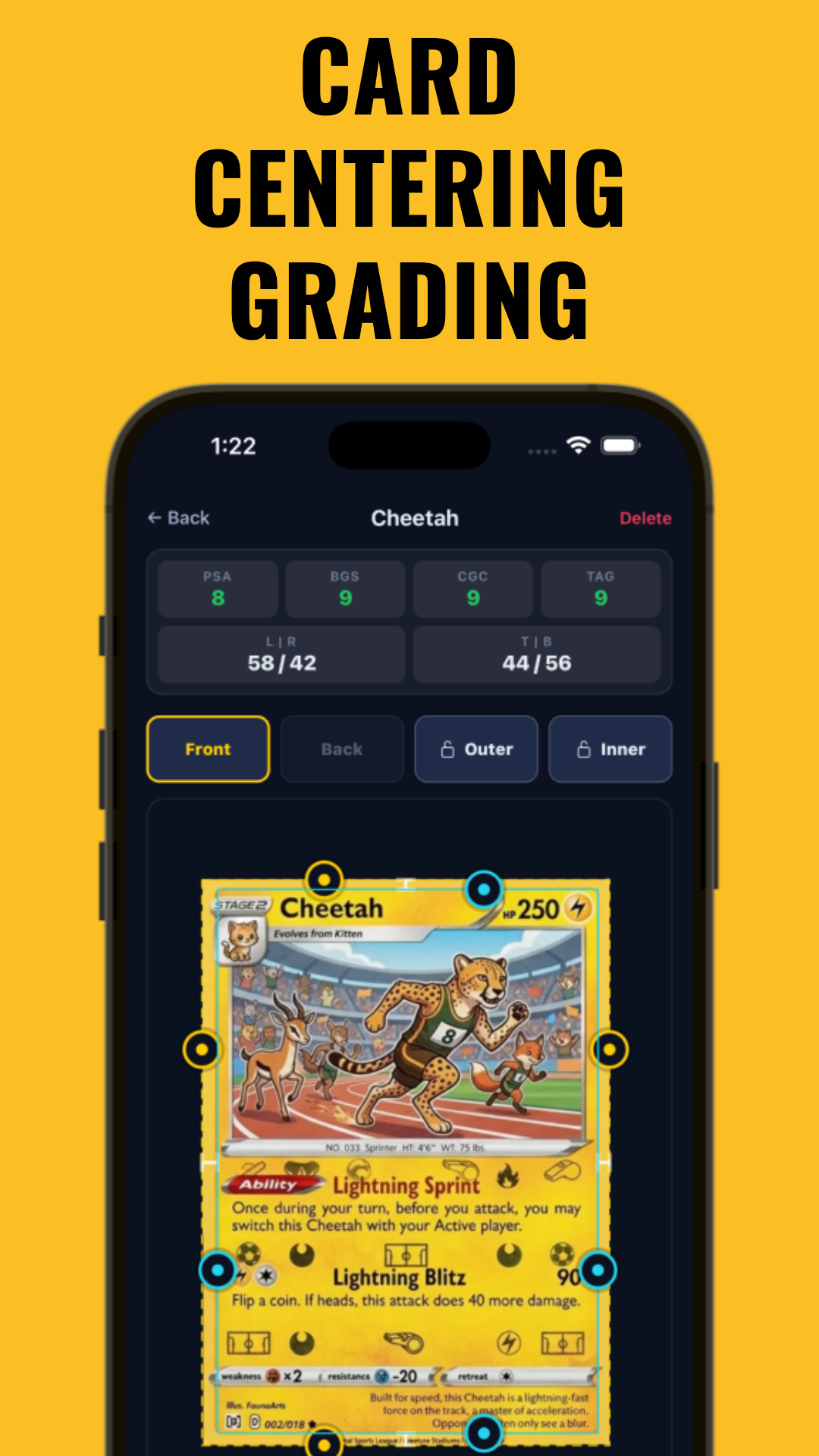
Midpoint’s app offers live lookup and portfolio tracking for 1954 Topps cards with raw vs graded values from PSA, BGS, and CGC. Its AI-based grading estimates and precise centering measurement can help collectors decide which cards may be worth grading, potentially maximizing return on investment.
Section 6: Identifying Authentic 1954 Topps Cards and Avoiding Fakes
Common Authentication Challenges
Due to the set’s popularity and value, counterfeit and altered 1954 Topps cards exist in the market. Common issues include:
- Reprints and facsimiles made to look original.
- Trimmed cards to improve condition appearance.
- Surface alterations or recoloring.
- Misidentified cards or counterfeit backs.
Tips for Authenticity Verification
- Examine print quality: Genuine 1954 Topps cards have specific printing dot patterns and color hues.
- Check card stock: Original cards have a distinct thickness and texture.
- Inspect edges and corners: Trimming leaves telltale signs like uneven edges.
- Compare with known authentic examples: Use trusted databases and tools like Midpoint for reference.
When to Consult Experts
If you suspect a card may be altered or counterfeit, professional grading companies provide authentication services. Using Midpoint’s AI grading estimates first can help identify suspicious condition anomalies that merit closer inspection.
Section 7: When to Submit Your 1954 Topps Cards for Grading
Evaluating If Grading Is Worth It
Not all 1954 Topps cards are worth grading due to fees and turnaround time. To decide, consider:
- Raw card condition: Cards with strong centering, sharp corners, and clean surfaces are better candidates.
- Player and rarity: High-demand rookies and stars more often justify grading costs.
- Potential grade impact: Cards likely to receive PSA 9 or 10 grades may see the biggest value boost.
Using Midpoint’s Pre-Grading Tools
Midpoint’s AI-driven centering calculator and digital grading estimates allow collectors to measure exact centering down to the millimeter and approximate PSA, BGS, CGC, or TAG grades before submission. This can reduce costly grading mistakes and improve selling outcomes.
Learn more about this process in our How to Pre-Grade Your Card guide.
Timing and Market Considerations
Submit for grading when market demand is strong and after ensuring card condition is optimal. Avoid grading cards with visible defects or off-centering that will prevent top grades. Tracking recent comparable sales via Midpoint helps select the right submission time.
Conclusion
The 1954 Topps baseball cards value is closely tied to player significance, card condition, and grading status. Key rookie cards like Hank Aaron #128 and Ernie Banks #94 are among the most sought after, with PSA 10 grades commanding significant premiums. Understanding condition factors—especially centering—and using AI tools like Midpoint’s grading estimates can help collectors identify cards worth grading and authenticate their collections.
Whether you’re a seasoned collector or new to 1954 Topps, leveraging digital tools alongside expert guidance can help you navigate this iconic set’s market with greater confidence. Explore Midpoint for free centering measurements and real-time value tracking to enhance your collecting experience.
FAQ
Q: How much are 1954 Topps baseball cards worth?
A: Values vary widely—from a few dollars for low-grade commons to potentially over $100,000 for PSA 10 gem-mint rookie cards like Hank Aaron #128. Condition, player, and grading influence price.
Q: What is the value of a 1954 Topps Hank Aaron rookie card?
A: Raw cards typically sell between around $2,000 and $15,000 depending on condition. PSA 10 graded examples have sold for prices up to $120,000 as of 2026-11-01.
Q: Which 1954 Topps baseball cards are worth the most?
A: The most valuable generally include rookie cards of Hank Aaron (#128), Ernie Banks (#94), Al Kaline (#201), and star veterans like Ted Williams (#1), Willie Mays (#90), and Jackie Robinson (#10), especially in high grades.
Q: How much is a 1954 Topps Ernie Banks rookie card worth?
A: Raw values range from about $1,500 to $10,500, with PSA 10 examples having sold for up to $85,000 as of late 2026.
Q: What is a complete 1954 Topps baseball card set worth?
A: Complete raw sets vary from a few thousand dollars in low grades to potentially over $100,000 when graded in gem-mint PSA 10 condition, depending on the inclusion and condition of key cards.
Q: How can I tell if my 1954 Topps baseball card is valuable?
A: Check player, condition (centering, corners, edges, surface), and grading. Tools like Midpoint can assist with centering measurements and AI grading estimates. Comparing with recent market sales helps provide accurate valuation.
Free to start
Try the Midpoint app
Grade any card from a photo, see its raw and PSA 10 value, and track what your collection is worth — free.
Get it on iPhoneGet it on Android