Best 1958 Hockey Cards: Top Values & Rookie Highlights
Discover the best 1958 hockey cards, rookie gems, PSA 10 values, and grading tips to maximize your collection’s worth today.

Estimated reading time: 12 min
Key Takeaways
- The 1958-59 Topps set includes some of the most valuable and sought-after hockey cards, especially rookie cards like Bobby Hull’s.
- Condition, centering, and PSA 10 grades significantly influence card values, with gem mint examples often commanding substantial premiums.
- Identifying authentic 1958 hockey cards requires attention to print details and awareness of known reprints or variations.
- Using tools like Midpoint’s AI grading and centering calculator can help collectors estimate card value before submitting for professional grading.
- Where to buy and sell these vintage cards includes auctions, reputable dealers, and specialized marketplaces.
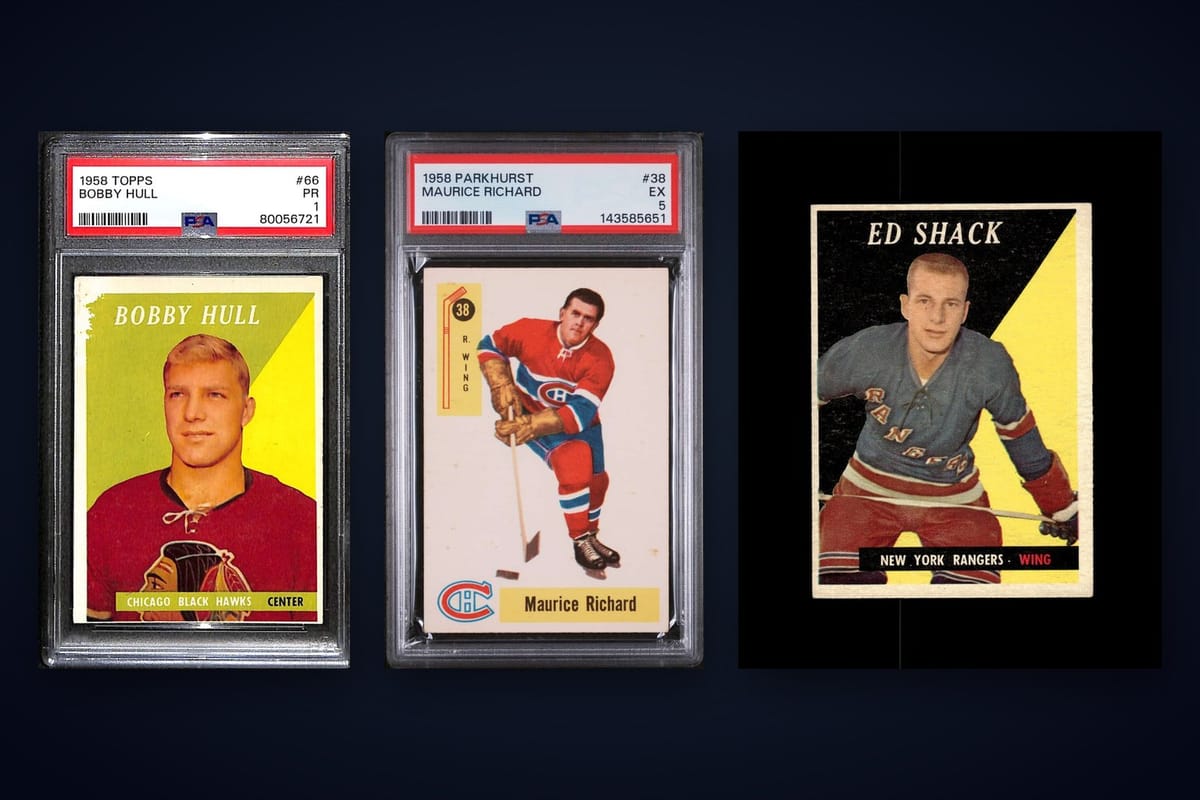
The best 1958 hockey cards come from the landmark 1958-59 Topps set, a cornerstone for collectors seeking iconic rookie cards and star player issues. This guide dives into which cards are generally considered valuable, highlights notable rookie cards, explains grading impacts, and offers practical tips for collectors aiming to grade or sell their vintage hockey cards. Whether you’re hunting for the Bobby Hull rookie or seeking to understand the premiums for gem-quality PSA 10 examples, this overview provides a clear path to maximizing the value of your 1958 hockey card collection.
Card values — live data from Midpoint's card database, as of 2026-11-01. Prices move; Midpoint refreshes these daily.
| Card | Raw | PSA 10 | Gem premium | |
|---|---|---|---|---|
 |
Bobby Hull #66 1958 Topps |
$528.91 | $106,738 | 201.8× |
 |
Maurice Richard #38 1958 Parkhurst |
$196.01 | $39,620 | 202.1× |
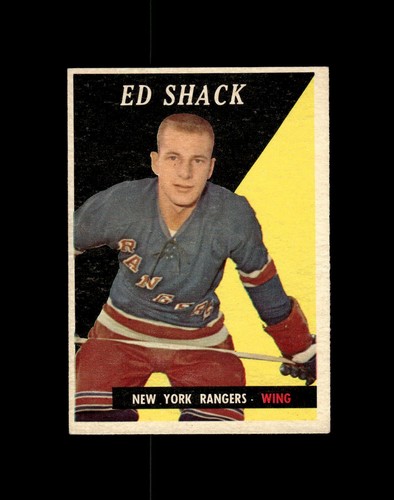 |
Eddie Shack #30 1958 Topps |
$94.98 | $19,195 | 202.1× |
 |
Jean Beliveau #34 1958 Parkhurst |
$52.42 | $12,563 | 239.7× |
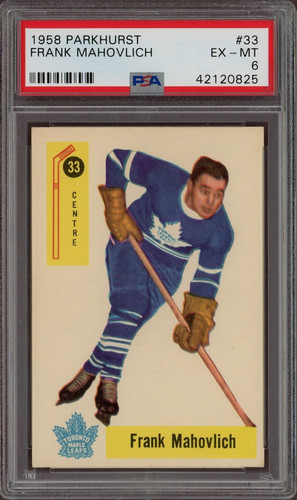 |
Frank Mahovlich #33 1958 Parkhurst |
$51.43 | $10,325 | 200.8× |
 |
Terry Sawchuk #2 1958 Topps |
$45.48 | $9,559 | 210.2× |
 |
Jacques Plante #22 1958 Parkhurst |
$45.13 | $9,060 | 200.8× |
 |
Johnny Bucyk #40 1958 Topps |
$43.34 | $8,735 | 201.6× |
 |
Henri Richard #2 1958 Parkhurst |
$43.03 | $8,661 | 201.3× |
 |
Doug Harvey #49 1958 Parkhurst |
$33.56 | $6,764 | 201.5× |
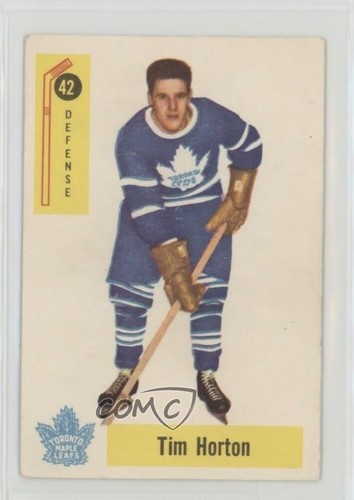 |
Tim Horton #42 1958 Parkhurst |
$34.18 | $6,747 | 197.4× |
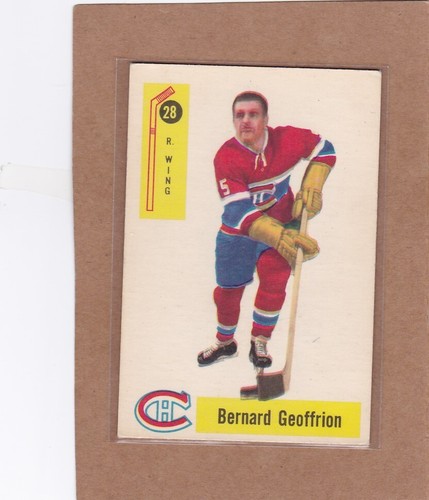 |
Boom Boom Geoffrion #28 1958 Parkhurst |
$32.17 | $6,485 | 201.6× |
Look up any card's current raw and graded value in Midpoint — and get an estimated grade before you pay to submit.
1. Bobby Hull Rookie Card
Bobby Hull’s 1958-59 Topps rookie card (#60) is widely regarded as one of the crown jewels of 1958 hockey cards. As of 2026-11-01, raw versions can fetch thousands, and PSA 10 graded copies often increase in value substantially, sometimes commanding prices into the five-figure range. This card’s iconic image and Hull’s Hall of Fame career contribute to its desirability.
Collectors should carefully assess centering and corners, as these factors heavily influence grading. Perfectly centered cards with sharp edges and clean surfaces are rare and may be worth the grading investment. Using Midpoint’s AI digital grading tool can help estimate a card’s grade before committing to professional grading fees.
- Card number: #60
- Raw value estimate: $3,000–$5,000
- PSA 10 value: often $30,000 or more
2. Gordie Howe and Other Star Player Cards
Gordie Howe, known as Mr. Hockey, features prominently in the 1958-59 Topps set. His card (#110) is a sought-after piece for collectors aiming to build a Hall of Fame collection. Other stars like Terry Sawchuk (#59) and Glenn Hall (#15) also have cards that hold value, especially in high-grade conditions.
While these cards generally don’t reach the same price heights as Hull’s rookie, their rarity in PSA 10 condition and the player’s legendary status maintain strong demand. Collectors should focus on condition nuances such as surface gloss and corner sharpness, which can differentiate between a PSA 9 and PSA 10.
- Gordie Howe card number: #110
- Terry Sawchuk card number: #59
- Glenn Hall card number: #15
3. 1958 Hockey Rookie Cards Beyond Hull
The 1958-59 Topps set includes several other rookie cards that are valuable, though less famous than Hull’s. John Hanna (#26), Ken Wharram (#70), and Eddie Shack (#113) are notable rookies to watch. These cards tend to have lower raw and graded values but offer accessible entry points for collectors.
Their values can range from a few hundred dollars raw to several thousand for PSA 10 examples, depending on condition and market demand. Identifying these rookies accurately and assessing their condition before grading is essential to avoid overpaying for grading services.
- John Hanna (#26)
- Ken Wharram (#70)
- Eddie Shack (#113)
4. Understanding the Impact of Card Condition and Grading
Condition is a critical factor when it comes to vintage hockey cards, especially those from 1958. The major grading companies—PSA, BGS, CGC, and TAG—evaluate centering, corners, edges, and surface to assign grades. Cards graded PSA 10, known as Gem Mint, typically command the highest premiums.
The difference in value between a raw card and a PSA 10 can be substantial, sometimes exceeding 10x. However, many cards fall in the PSA 7-9 range, which still holds significant value but with notable price differences compared to perfect centering and flawless surfaces.
Midpoint’s AI grading estimates can help you pre-grade cards accurately, measuring centering down to the millimeter and analyzing surface flaws, allowing you to target cards worth submitting for professional grading.
5. Identifying Authentic 1958-59 Topps Hockey Cards
Due to the set’s popularity, reprints and alterations exist, making authentication important. Authentic 1958-59 Topps cards have distinct printing characteristics, including the paper stock, gloss, and color saturation typical of the era.
Collectors should compare suspected cards against verified examples and be cautious of cards with inconsistent print quality or altered edges. For detailed guidance, Midpoint’s grading guides and the related How to Pre-Grade Your Card post offer useful insights.
6. Variations, Errors, and Regional Scarcity
The 1958-59 Topps set features some minor variations and errors, such as off-center print runs and color shifts. Regional scarcity can also affect values; cards distributed in limited markets may be harder to find in top condition, potentially adding to their premium.
Understanding these nuances can help collectors identify undervalued cards or rare versions worth grading. Using Midpoint’s card lookup with raw vs graded values across 250,000+ cards can assist in pinpointing these variations and their market impact.
7. Best Places to Buy and Sell 1958 Hockey Cards
Auctions, specialized dealers, and online marketplaces remain the primary venues for trading 1958 hockey cards. Reputable sources often offer authentication guarantees and grading verification, which help protect buyers and sellers alike.
Collectors should leverage tools like Midpoint to track portfolio values over time and analyze market trends before buying or selling. This approach supports informed decisions and helps maximize return on investment.
8. How Grading Influences Insurance and Storage
High-grade 1958 hockey cards often require insurance due to their significant value. Grading impacts insurance premiums and coverage limits. Accurate grading using PSA, BGS, or CGC certificates provides proof of condition and authenticity for insurance claims.
Proper storage is equally important. Consult the Ultimate Collector’s Guide for best practices to maintain card condition and protect investments over time.
9. Using Midpoint to Enhance Your 1958 Hockey Card Collection
Midpoint is a useful app for collectors of 1958 hockey cards, offering AI-powered digital grading, precise centering measurement, and value tracking. Before paying to submit valuable cards for grading, use Midpoint to get instant PSA, BGS, CGC, and TAG grade estimates based on scanned images.
This pre-assessment helps avoid costly grading surprises and informs whether a card is worth professional submission. The app’s portfolio feature also helps monitor your collection’s market value as trends shift.

Conclusion
The best 1958 hockey cards, particularly from the 1958-59 Topps set, represent some of the most valuable and collectible pieces in hockey card history. Bobby Hull’s rookie card leads the pack with notable raw and PSA 10 values, while other star players and rookie cards offer strong investment opportunities.
Condition and grading remain the most critical factors in determining value. Leveraging AI tools like Midpoint can help collectors better assess card condition and centering before investing in professional grading, ultimately enhancing your collection’s long-term worth. Whether buying, selling, or grading, informed decisions backed by reliable data are key to success in the vintage hockey card market.
FAQ
Q: What is the most valuable 1958 hockey card?
A: The Bobby Hull rookie card (#60) from the 1958-59 Topps set is generally considered the most valuable 1958 hockey card, especially in PSA 10 condition where it can exceed $30,000 as of 2026-11-01.
Q: How much is a 1958-59 Topps Bobby Hull rookie card worth?
A: Raw copies typically range from $3,000 to $5,000, while PSA 10 graded examples can sell for over $30,000 depending on market demand and card condition.
Q: What hockey cards came out in 1958?
A: The primary set released in 1958 was the 1958-59 Topps hockey card set, featuring key rookie cards like Bobby Hull, John Hanna, Ken Wharram, and Eddie Shack, as well as star cards like Gordie Howe and Terry Sawchuk.
Q: How can you tell if a 1958-59 Topps hockey card is real?
A: Authentic cards have specific print characteristics, paper stock, and color saturation consistent with 1958-59 Topps production. Comparing to verified authentic examples and watching for reprints or alterations is essential.
Q: What are the key rookie cards in the 1958-59 Topps hockey set?
A: Bobby Hull (#60) is the most famous rookie card, with other notable rookies including John Hanna (#26), Ken Wharram (#70), and Eddie Shack (#113).
Q: Does the condition or PSA grade significantly affect the value of 1958 hockey cards?
A: Yes, condition and PSA grading have a significant impact. PSA 10 (Gem Mint) cards can be worth multiple times more than raw or lower-graded cards, making grading and condition assessment important for collectors.
Free to start
Try the Midpoint app
Grade any card from a photo, see its raw and PSA 10 value, and track what your collection is worth — free.
Get it on iPhoneGet it on Android