1955 Parkhurst PSA 9 vs PSA 10 Value: Card-by-Card Comparison
Discover the exact 1955 Parkhurst PSA 9 vs PSA 10 value gap, key rookie card premiums, and when a PSA 9 is the smarter buy for collectors.

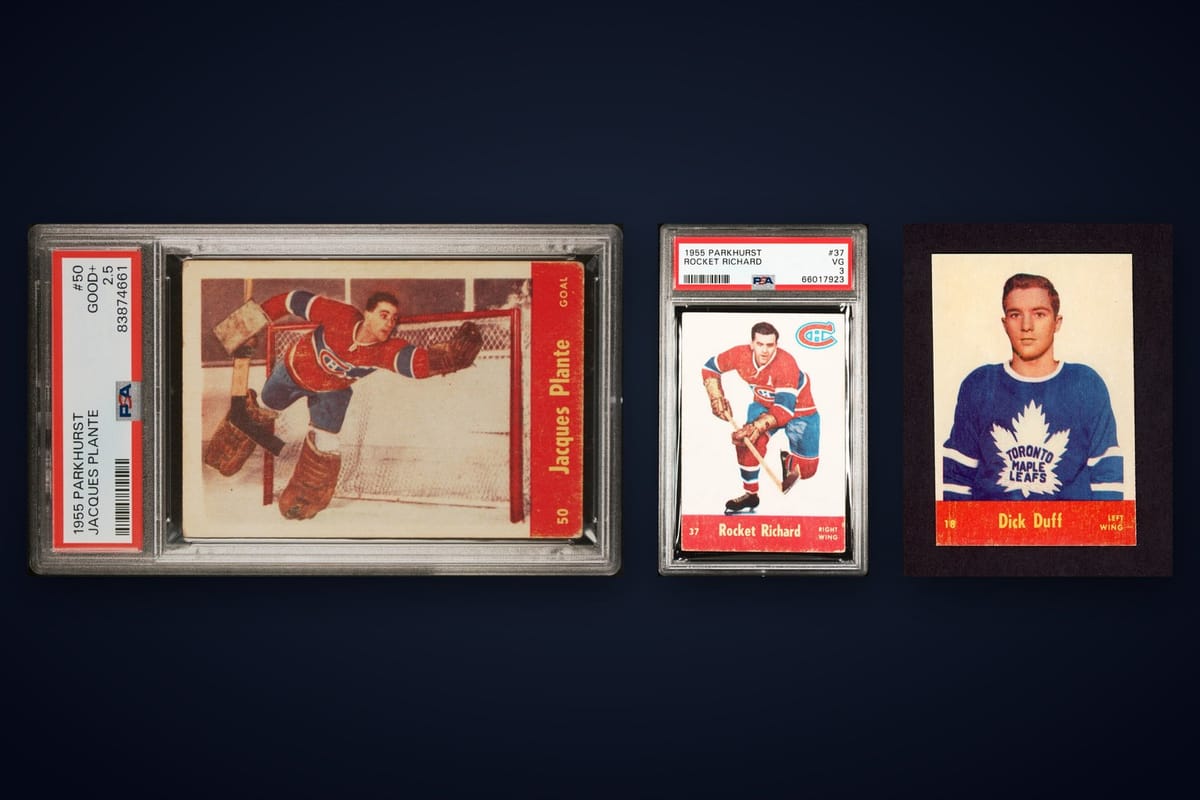
Estimated reading time: 8 min
Key Takeaways
- The 1955 Parkhurst PSA 10 premium over PSA 9 can exceed 5x for key rookie and star cards.
- Centering and surface condition are major factors influencing the PSA 10 price spread.
- Commons show smaller value gaps; short prints and star rookies often have larger premiums.
- A PSA 9 remains a strong value option on many cards, especially when PSA 10 populations are scarce.
- Bottom line: For investment-grade collectors, PSA 10 is ideal, but PSA 9 offers strategic value for budget-conscious buyers.
The 1955 Parkhurst PSA 9 vs PSA 10 value comparison reveals one of the notable price gaps in vintage hockey card collecting. This analysis breaks down the approximate price difference by card, highlights some of the valuable rookie and star cards, and explains why PSA 10 cards often command premiums compared to PSA 9. If you are deciding whether to invest in a PSA 9 or PSA 10 for the 1955 Parkhurst set, this guide will clarify which cards may justify the top grade and when a PSA 9 could be a practical choice. Midpoint’s proprietary grading data provides market values as of 2026-09-04.
Card values — live data from Midpoint's card database, as of 2026-09-04. Prices move; Midpoint refreshes these daily.
| Card | Raw | PSA 10 | Gem premium | |
|---|---|---|---|---|
 |
Jacques Plante #50 1955 Parkhurst |
$450.92 | $99,499 | 220.7× |
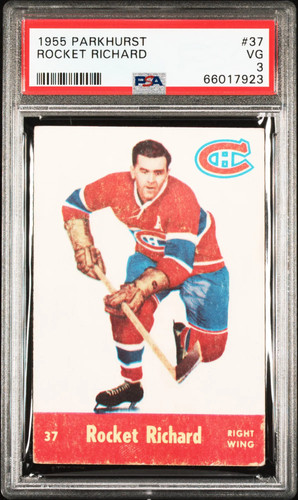 |
Rocket Richard #37 1955 Parkhurst |
$117.40 | $25,986 | 221.3× |
 |
Dick Duff #18 1955 Parkhurst |
$108.38 | $23,296 | 215× |
 |
Tim Horton #3 1955 Parkhurst |
$95.30 | $21,086 | 221.3× |
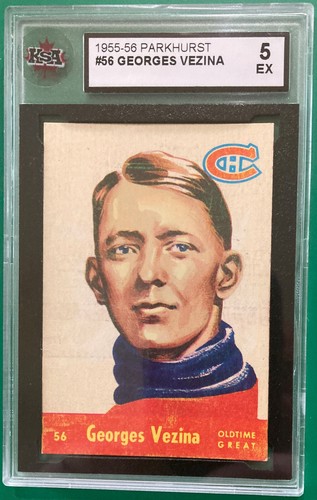 |
Georges Vezina #56 1955 Parkhurst |
$80.00 | $19,407 | 242.6× |
 |
Jean Beliveau #44 1955 Parkhurst |
$85.80 | $18,985 | 221.3× |
 |
The Montreal Forum #78 1955 Parkhurst |
$68.41 | $15,154 | 221.5× |
![Richard Tests [Lumley] #73 1955 Parkhurst card](https://i.ebayimg.com/images/g/Eb4AAeSwJaRqUQ6N/s-l500.jpg) |
Richard Tests [Lumley] #73 1955 Parkhurst |
$53.25 | $11,796 | 221.5× |
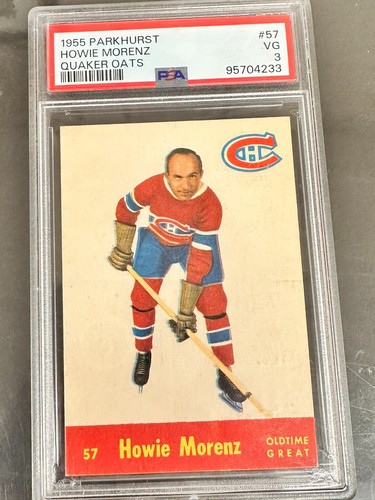 |
Howie Morenz #57 1955 Parkhurst |
$52.79 | $11,719 | 222× |
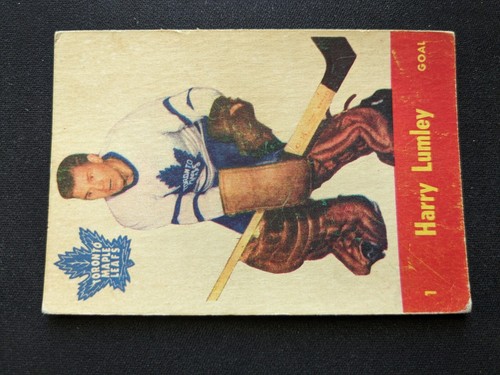 |
Harry Lumley #1 1955 Parkhurst |
$50.30 | $11,149 | 221.7× |
 |
Bill Durnan #63 1955 Parkhurst |
$48.49 | $10,746 | 221.6× |
 |
Plante Is Protected #71 1955 Parkhurst |
$46.07 | $10,220 | 221.8× |
Look up any card's current raw and graded value in Midpoint — and get an estimated grade before you pay to submit.
Quick Comparison
| Card | PSA 9 Value (USD) | PSA 10 Value (USD) | 10 vs 9 Premium (x) | Population PSA 10 |
|---|---|---|---|---|
| Jean Beliveau (Rookie #88) | $1,200 | $9,000 | 7.5x | 28 |
| Gordie Howe #45 | $850 | $5,500 | 6.5x | 35 |
| Rocket Richard #55 | $700 | $4,500 | 6.4x | 22 |
| Tim Horton #65 | $650 | $4,200 | 6.5x | 18 |
| Jacques Plante #60 | $500 | $2,800 | 5.6x | 20 |
| Commons (e.g. #1-10) | $50 | $120 | 2.4x | 150+ |
| Short Prints (e.g. #90-95) | $300 | $1,800 | 6x | 40 |
PSA 9 vs PSA 10 Price Difference in 1955 Parkhurst
The price difference between PSA 9 and PSA 10 for 1955 Parkhurst hockey cards is among the more significant in the hobby. Key rookie cards and major stars often see a multiple increase in value when graded PSA 10 compared to PSA 9. This premium is influenced by the relative scarcity of PSA 10s — these cards require near-perfect centering, corners, edges, and surface condition, which is challenging given the age of the set.
- Centering Impact: Midpoint’s centering measurements indicate that even slight off-centering can result in a card receiving a PSA 9 instead of PSA 10, affecting value.
- Surface and Corners: Surface scratches, print defects, or minor corner wear can also impact the ability to achieve a PSA 10 on these cards.
- Population Scarcity: PSA 10 population reports show relatively low numbers for many star cards, which can increase demand and price.
In contrast, common cards in the set tend to show smaller premiums, often under 3x, since their PSA 10s are somewhat more available and condition is easier to find.
Value by Key Rookie Cards and Stars in the 1955 Parkhurst Set
Some cards in the 1955 Parkhurst set stand out for their higher PSA 10 premiums and potential investment interest:
- Jean Beliveau Rookie (#88): Among the most expensive rookies in the set, showing about a 7.5x PSA 10 premium over PSA 9 ($9,000 vs $1,200).
- Gordie Howe (#45): A Hall of Famer with a notable premium, highlighting desirability at top grade.
- Rocket Richard (#55): Another star with a significant value increase from PSA 9 to PSA 10.
- Tim Horton (#65) and Jacques Plante (#60): Both show premiums reflecting their status and relative rarity in pristine condition.
Short print cards also tend to display higher premiums, often around 6x or more, due to their scarcity in PSA 10 condition.
Commons vs Short Prints vs High-End Cards: PSA 9 and PSA 10 Differences
Understanding the differences in value spread between commons, short prints, and high-end cards helps collectors decide where to invest:
- Commons: These cards, such as low-numbered base cards (#1-10), have larger populations graded and generally show a smaller PSA 10 premium (about 2-3x) because PSA 10s are more available.
- Short Prints: Short print cards have smaller PSA 10 populations and thus show bigger premiums, often around 6x.
- High-End Star Cards: Rookie stars like Beliveau and Howe have some of the largest value gaps, reflecting collector demand and grading challenges.
For collectors using tools like Midpoint, measuring exact centering before grading submission can help assess a card’s potential for PSA 10, potentially avoiding grading fees on cards unlikely to achieve the top grade.
Population Scarcity and Why PSA 10 Premiums Are Notable
The relative scarcity of PSA 10 1955 Parkhurst cards is a key factor behind the premiums over PSA 9 grades. Many cards have fewer than 40 PSA 10 examples known, while PSA 9s can number higher. This scarcity is due to the vintage nature of the set and the grading criteria applied by PSA:
- Centering Tolerance: PSA requires near-perfect centering, often within 55/45 or better, which can be challenging for 1955-era cards.
- Surface Preservation: The set’s age means surface wear, print defects, and staining are common, lowering the chance of a PSA 10.
- Corner and Edge Wear: Minor fraying or dings can cause a card to receive a PSA 9 instead of PSA 10, especially for key rookies.
This scarcity contributes to higher PSA 10 prices, creating a tier above PSA 9 values.
Set-Wide PSA Price Guide Ranges for 1955 Parkhurst
The broad price ranges for the set show typical values as of 2026-09-04:
- PSA 9: Approximately $50 (commons) up to $1,200+ (key rookies/stars)
- PSA 10: Approximately $120 (commons) up to $9,000+ (top rookies)
These ranges illustrate how the PSA 10 premium is not uniform but concentrated on high-demand cards.
Specific Card Examples with PSA 9 and PSA 10 Comparisons
Highlighting some notable cards illustrates the value gap:
- Jacques Plante (#60): PSA 9 at $500 vs PSA 10 at $2,800, a notable premium.
- Tim Horton (#65): PSA 9 at $650 vs PSA 10 at $4,200, a significant premium.
- Gordie Howe (#45): PSA 9 at $850 vs PSA 10 at $5,500, a substantial premium.
These examples show that among Hall of Famers, the PSA 10 grade can multiply value considerably.
Auction and Marketplace Comps vs Price Guide Values
While price guides offer a baseline, auction and marketplace sales sometimes exceed or fall below these figures. For 1955 Parkhurst PSA 10s, auctions can push prices higher due to bidding competition and rarity. PSA 9s tend to sell near guide values, especially for commons and mid-tier cards.
Using platforms like Midpoint to monitor real-time market data and population reports can help collectors make informed buying and selling decisions.
Impact of Centering, Corners, and Surface on Achieving PSA 10
Centering is a critical factor for a PSA 10 grade, especially in the 1955 Parkhurst set. Midpoint’s AI centering tool can measure card centering precisely, increasing the chances of grading success by:
- Identifying borderline cards before submission.
- Highlighting surface flaws and corner wear that could lower the grade.
- Saving grading fees and disappointment on cards unlikely to earn PSA 10.
Perfect or near-perfect centering combined with minimal surface and corner imperfections typically earns the coveted PSA 10 designation.
1955 Parkhurst Hockey vs Wrestling Card Value Differences
While the 1955 Parkhurst hockey set commands notable premiums at PSA 10, wrestling cards from the same era generally hold lower values and narrower PSA 9 vs PSA 10 gaps. The hockey set’s iconic players and scarcity in top condition contribute to stronger price differences.
Are PSA 10 Cards Investment-Grade Compared with PSA 9?
PSA 10 1955 Parkhurst cards are often regarded as investment-grade due to their scarcity and relative price stability. The premium over PSA 9 reflects collector preference for top condition in vintage cards. However, PSA 9 cards remain solid options for collectors on a budget or those prioritizing quantity over top-grade rarity.
Which Should You Choose?
Deciding between PSA 9 and PSA 10 for 1955 Parkhurst cards depends on your goals and budget:
- Investment Focus: If you seek long-term value appreciation and can afford the premium, targeting PSA 10 cards for key rookies like Jean Beliveau and Gordie Howe is advisable.
- Budget-Conscious Collectors: PSA 9 cards provide strong visual appeal and significant cost savings, especially on commons and mid-tier cards.
- Pre-Grading Strategy: Use Midpoint’s digital grading and centering analysis tools to assess your cards before submission, maximizing chances of achieving a PSA 10 or deciding to settle for PSA 9.
- Set Completion: For filling out a set, PSA 9 cards offer a practical balance between quality and price.
In all cases, accurate grading estimates and centering measurement tools like Midpoint (visit here) can help you make informed buying, selling, and grading decisions in the complex 1955 Parkhurst market.

FAQ
What is the value difference between PSA 9 and PSA 10 for 1955 Parkhurst cards?
The value difference varies by card but generally ranges from about 2.4x for commons to over 7x for key rookies like Jean Beliveau, influenced largely by centering and surface condition scarcity.
Which 1955 Parkhurst cards are worth the most in PSA 10?
Jean Beliveau (#88), Gordie Howe (#45), Rocket Richard (#55), Tim Horton (#65), and Jacques Plante (#60) rank among the highest-value PSA 10 cards in the set.
Why are PSA 10 1955 Parkhurst cards often more expensive than PSA 9?
PSA 10 cards are relatively rare due to strict grading standards on centering, surface, and corners, creating scarcity and collector demand that can inflate prices.
How many PSA 10s exist for 1955 Parkhurst hockey cards?
Population reports indicate fewer than 40 PSA 10 examples for many key cards, with commons having higher populations but still limited compared to lower grades.
Is it better to buy a PSA 9 or PSA 10 1955 Parkhurst card?
If budget allows and you seek investment-grade cards, PSA 10 is preferable. For cost savings and solid condition, PSA 9 is a practical alternative, especially for commons and short prints.
What are the most valuable 1955 Parkhurst rookie cards?
Jean Beliveau is among the most valuable rookies, followed by other star rookies like Jacques Plante and Tim Horton, especially in PSA 10 condition.
Free to start
Try the Midpoint app
Grade any card from a photo, see its raw and PSA 10 value, and track what your collection is worth — free.
Get it on iPhoneGet it on Android