1957 Topps PSA 9 vs PSA 10 Value: Exact Price Differences and Insights
Explore the 1957 Topps PSA 9 vs PSA 10 value gap, key card premiums, and when a PSA 9 is a smarter buy for collectors and investors.

Estimated reading time: 7 min
Key Takeaways
- The 1957 Topps PSA 9 vs PSA 10 price difference varies widely by card, with some premiums reaching several times the PSA 9 value.
- Centering quality is a critical factor separating PSA 9 from PSA 10, significantly influencing the value gap.
- Key stars like Mickey Mantle and Willie Mays often show substantial PSA 10 premiums, while some rookies have more modest jumps.
- PSA 9 cards can offer strong value, especially when PSA 10 examples are scarce or prohibitively expensive.
- Use tools like Midpoint to measure centering and estimate grading before investing in submissions.
When comparing the 1957 Topps PSA 9 vs PSA 10 value, the difference can be significant but is highly card-specific. This comparison covers the approximate price gaps for key cards, notable value jumps from PSA 9 to PSA 10, and insights on when a PSA 9 may be a better buy. Whether you're chasing iconic baseball stars like Mickey Mantle and Willie Mays or seeking rookies in football and basketball sets, understanding these premiums is helpful for informed collecting and investing.
Card values — live data from Midpoint's card database, as of 2026-08-30. Prices move; Midpoint refreshes these daily.
| Card | Raw | PSA 10 | Gem premium | |
|---|---|---|---|---|
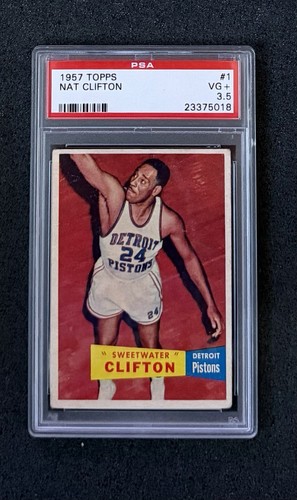 |
Nat Clifton #1 1957 Topps |
$138.75 | $29,104 | 209.8× |
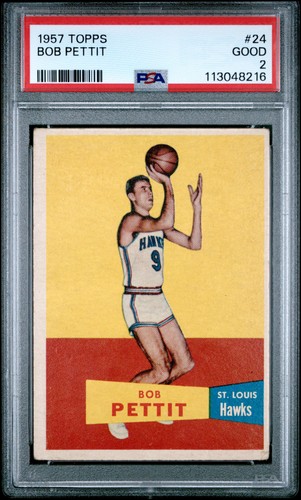 |
Bob Pettit #24 1957 Topps |
$101.67 | $22,139 | 217.8× |
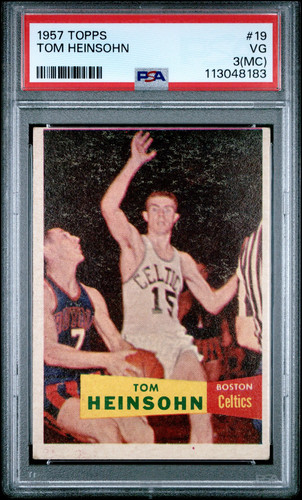 |
Tom Heinsohn #19 1957 Topps |
$100.49 | $21,444 | 213.4× |
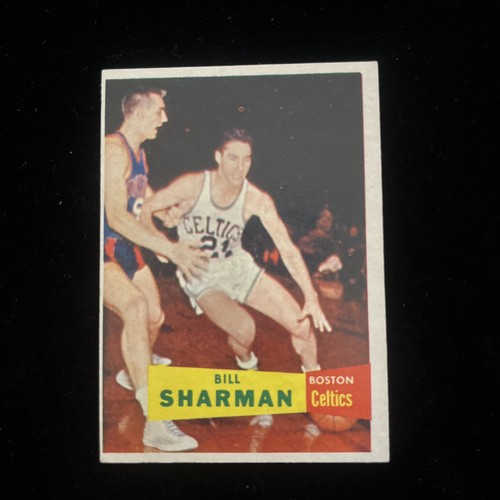 |
Bill Sharman #5 1957 Topps |
$56.00 | $12,569 | 224.5× |
 |
Frank Ramsey #15 1957 Topps |
$32.35 | $7,957 | 246× |
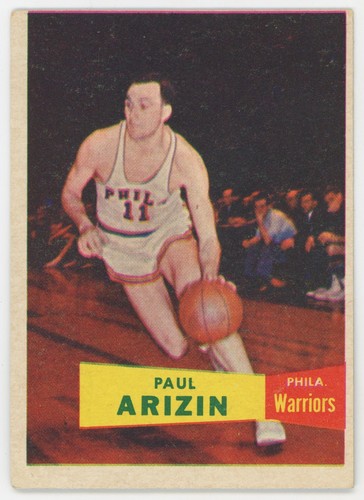 |
Paul Arizin #10 1957 Topps |
$32.50 | $6,438 | 198.1× |
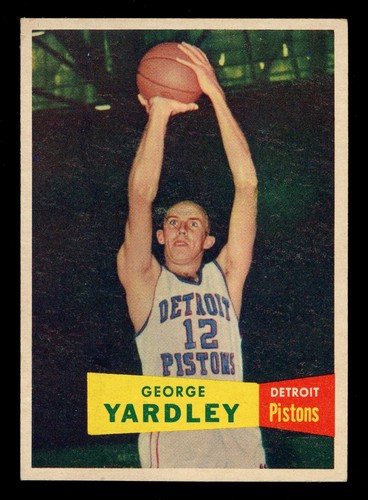 |
George Yardley #2 1957 Topps |
$30.01 | $6,263 | 208.7× |
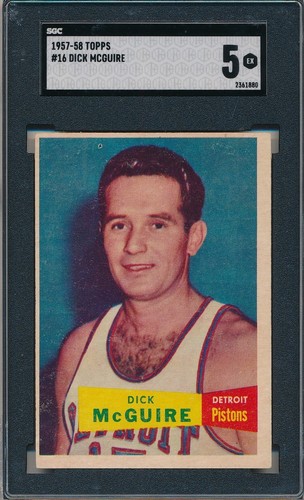 |
Dick McGuire #16 1957 Topps |
$28.93 | $6,061 | 209.5× |
 |
Slater Martin #12 1957 Topps |
$22.48 | $5,689 | 253.1× |
 |
Bob Leonard #74 1957 Topps |
$29.24 | $5,555 | 190× |
 |
Bob Houbregs #56 1957 Topps |
$24.87 | $5,526 | 222.2× |
 |
John Kerr #32 1957 Topps |
$26.30 | $5,516 | 209.7× |
Look up any card's current raw and graded value in Midpoint — and get an estimated grade before you pay to submit.
Quick Comparison
| Card | PSA 9 Value (USD) | PSA 10 Value (USD) | PSA 10 Premium (x) | Key Notes |
|---|---|---|---|---|
| 1957 Topps Mickey Mantle #95 | $7,500 | $65,000 | ~8.7x | Centering is critical; PSA 10 examples are rare |
| 1957 Topps Willie Mays #10 | $3,300 | $26,000 | ~7.9x | Highly coveted card with strong PSA 10 premium |
| 1957 Topps Hank Aaron #128 | $1,200 | $9,000 | ~7.5x | Scarcity of PSA 10 copies increases value |
| 1957 Topps Luis Aparicio #90 | $900 | $5,500 | ~6.1x | Centering and surface grade influence premium |
| 1957 Topps Bart Starr (Football) #71 | $350 | $2,800 | ~8x | Rookie card with significant PSA 10 scarcity |
| 1957 Topps Johnny Unitas (Football) #79 | $1,000 | $7,500 | ~7.5x | Hall of Famer with strong collector demand |
| 1957 Topps Bill Russell (Basketball) #4 | $1,100 | $8,000 | ~7.3x | Rare PSA 10s drive premium |
| 1957 Topps Bob Cousy (Basketball) #22 | $700 | $5,200 | ~7.4x | Centering and edges key to grade jump |
Price Gap Drivers: Centering and Condition Impact
In the 1957 Topps set, the difference between a PSA 9 and PSA 10 is largely about centering precision. PSA 10 generally requires near-perfect centering, often within 55/45 to 60/40 ratios, while PSA 9 allows slightly more tolerance. This subtle difference can multiply a card's value by several times, especially for marquee cards.
Other condition factors like edges, corners, and surface also influence grading but centering is often the key component for these vintage cards. Slight miscentering typically results in a PSA 9 grade, which still holds significant value but is generally less than PSA 10.
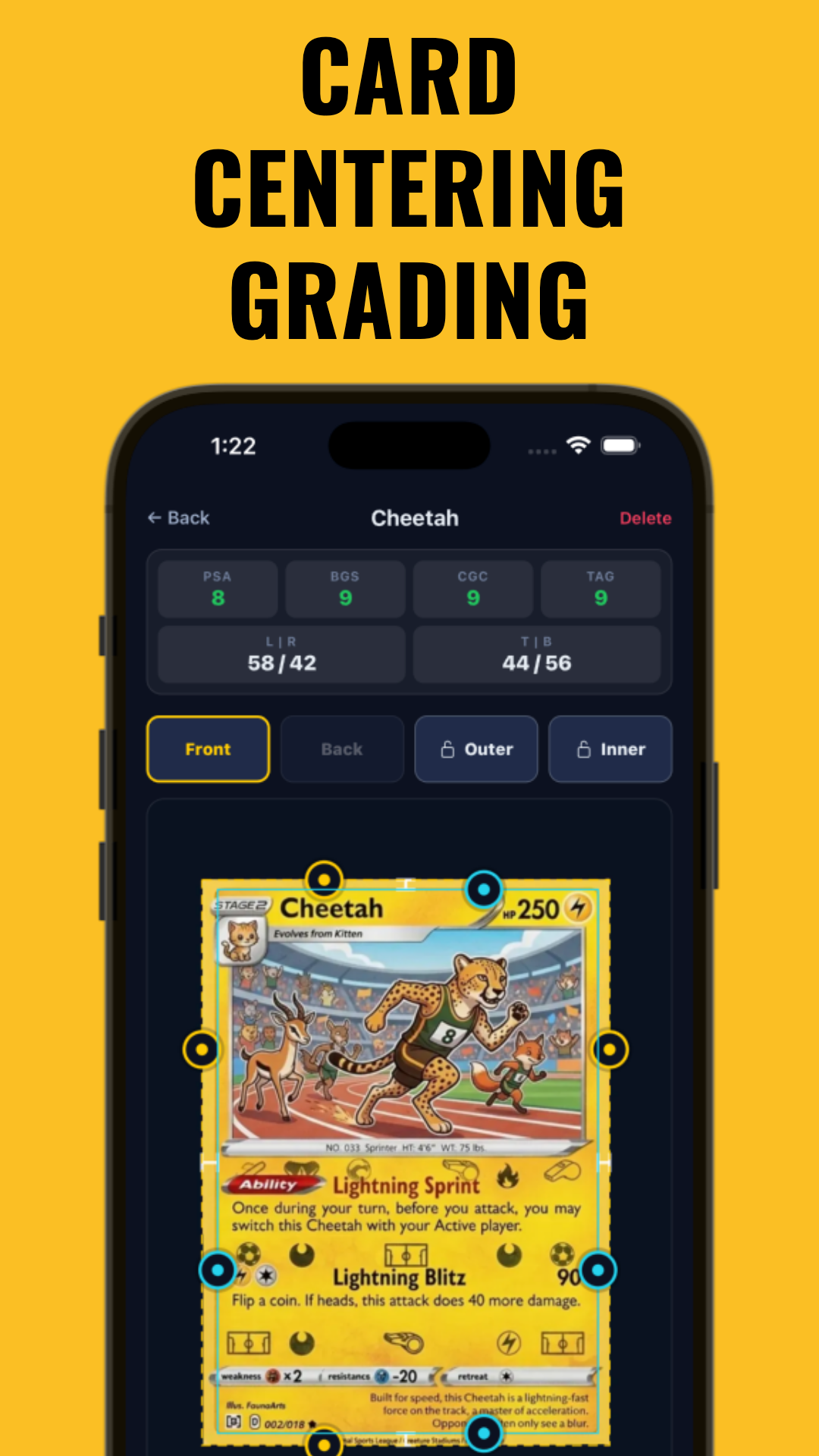
For collectors unfamiliar with evaluating centering, apps like Midpoint can measure centering down to the millimeter and provide AI-driven grade estimates for PSA, BGS, CGC, and TAG. This can help avoid costly grading fees on cards unlikely to reach PSA 10.
Most Valuable 1957 Topps Cards in PSA 9 and PSA 10
Several legendary stars and rookies define the 1957 Topps value landscape:
- Mickey Mantle #95: Among the most valuable cards in the set, with PSA 10s commanding roughly $65,000 versus $7,500 for PSA 9s.
- Willie Mays #10: Another top-tier card, selling for about $26,000 in PSA 10, nearly 8 times PSA 9 value.
- Hank Aaron #128: Slightly more affordable but with a similar premium to PSA 10.
- Luis Aparicio #90: A key shortstop whose PSA 10s are scarce, driving premiums above 6x PSA 9.
Football and basketball rookies also show strong premiums:
- Bart Starr #71 (Football): PSA 10 copies fetch around $2,800, roughly 8 times PSA 9.
- Johnny Unitas #79 (Football): Valued at $7,500 PSA 10, about 7.5x PSA 9.
- Bill Russell #4 (Basketball) and Bob Cousy #22 (Basketball): Both have PSA 10 premiums above 7x.
Population Scarcity and Market Volatility
PSA 10 examples of 1957 Topps cards are generally rarer than PSA 9s due to centering standards and the age of the cards. This scarcity can inflate prices, especially in recent auctions and sales where high-grade examples may attract competition and volatility.
Collectors should monitor population reports and recent sales to gauge market trends. The Midpoint app offers portfolio tracking to observe your collection’s value over time and compare raw versus graded values across many cards, helping you time purchases or sales strategically.
When Is a PSA 9 Worth It for 1957 Topps?
Despite the allure of PSA 10 premiums, PSA 9 cards remain a smart and accessible buy in several scenarios:
- Budget-conscious collectors who want iconic cards without the extreme PSA 10 price tag.
- Cards with very limited PSA 10 population, where finding or affording a PSA 10 is impractical.
- Cards with marginal centering flaws that still grade well and look visually appealing.
- Raw card owners using pre-grade apps like Midpoint to estimate grading before submission.
In short, PSA 9 is often a strong value proposition for serious collectors balancing condition and cost.
Which Should You Choose?
Your choice depends on your collecting goals and budget:
- For high-end investment: Aim for PSA 10 on key stars like Mantle, Mays, Aaron, and Aparicio. The multiplier can justify the premium if you can source or submit cards with perfect centering.
- For building a solid vintage collection: PSA 9 cards provide a balance of quality and affordability, especially on rookies and secondary stars.
- For raw card holders: Use tools such as Midpoint’s centering calculator and AI grading estimates to decide whether to submit for PSA 10 or settle for PSA 9.
- For multi-sport collectors: Consider the relative scarcity and premiums in football and basketball cards, where PSA 10s are rarer and premiums similarly steep.
Overall, understanding the 1957 Topps grading value landscape and leveraging precise centering measurement can help save grading fees and ensure informed buying decisions.
FAQ
How much more is a PSA 10 worth than a PSA 9 for 1957 Topps cards?
PSA 10 cards often sell for several times more than PSA 9 copies, depending on the card, with iconic stars like Mickey Mantle showing premiums near 8.7x.
Which 1957 Topps card has the biggest PSA 9 to PSA 10 value jump?
Mickey Mantle #95 is among the cards with the largest gaps, with PSA 10 prices around $65,000 compared to $7,500 for PSA 9, nearly a 9x premium.
What is the PSA 9 and PSA 10 value of 1957 Topps Mickey Mantle #95?
As of 2026-08-30, a PSA 9 Mantle #95 is valued at approximately $7,500, while a PSA 10 commands about $65,000.
What is the PSA 9 and PSA 10 value of 1957 Topps Willie Mays #10?
The Willie Mays #10 card sells for roughly $3,300 in PSA 9 and $26,000 in PSA 10 grades.
Why do PSA 10 1957 Topps cards sell for so much more than PSA 9 cards?
PSA 10 cards have near-perfect centering and condition, making them rarer and more desirable. This scarcity combined with collector demand drives the premium.
Which 1957 Topps cards are most valuable in PSA 10?
Mickey Mantle #95, Willie Mays #10, Hank Aaron #128, and Luis Aparicio #90 are among the most valuable PSA 10 cards in the set.
Free to start
Try the Midpoint app
Grade any card from a photo, see its raw and PSA 10 value, and track what your collection is worth — free.
Get it on iPhoneGet it on Android