
1965 Topps Football Cards Value: Complete Price Guide & Grading Tips
Discover the 1965 Topps football cards value, top rookies, grading insights, and how to maximize your collection’s worth with expert tips and Midpoint app tools.

Estimated reading time: 15 min
Key Takeaways
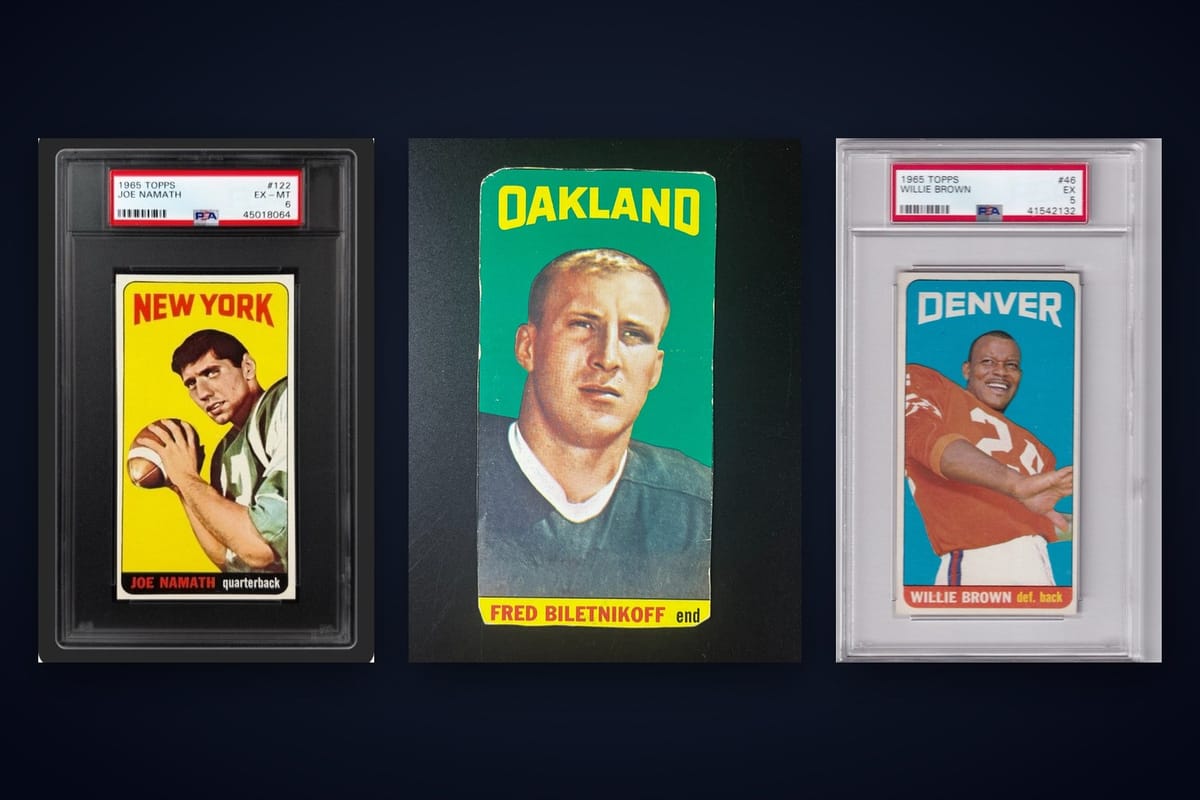
- 1965 Topps football cards hold notable collector interest, especially key rookies like Joe Namath (#122) and Fred Biletnikoff (#133), with some cards achieving high sales in exceptional cases.
- Card condition, centering, and professional grading significantly influence 1965 Topps football cards' value, with PSA 10 examples often commanding premium prices well above raw counterparts.
- Short prints and checklist variations add rarity, potentially increasing prices beyond common cards by multiples, sometimes attracting more attention than popular star cards.
- Using AI tools like Midpoint can help collectors measure centering and estimate grading before costly submissions, potentially reducing grading fees risk and optimizing investment.
- Complete set values differ from singles; unopened packs and graded collections often fetch higher prices than raw individual cards, with unopened packs from 1965 occasionally reaching high auction prices.
Card values — live data from Midpoint's card database, as of 2026-09-04. Prices move; Midpoint refreshes these daily.
| Card | Raw | PSA 10 | Gem premium | |
|---|---|---|---|---|
 |
Joe Namath #122 1965 Topps |
$1,913 | $302,178 | 158× |
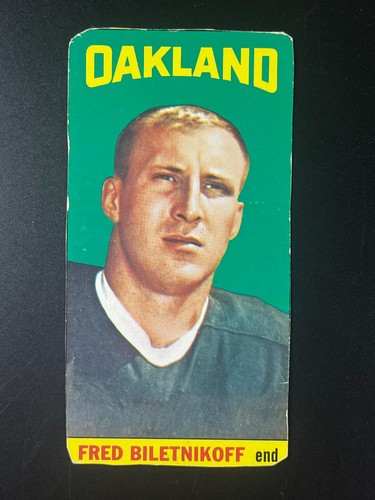 |
Fred Biletnikoff #133 1965 Topps |
$237.19 | $37,177 | 156.7× |
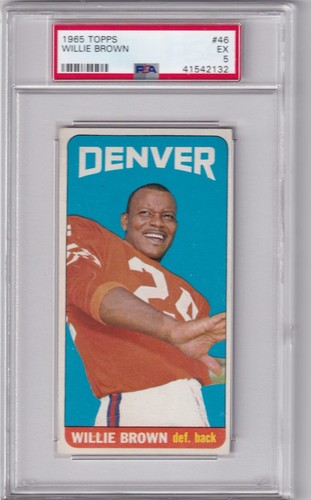 |
Willie Brown #46 1965 Topps |
$60.17 | $10,168 | 169× |
 |
Len Dawson #99 1965 Topps |
$49.69 | $7,650 | 154× |
 |
Lance Alworth #155 1965 Topps |
$41.78 | $6,699 | 160.3× |
 |
Tom Addison #1 1965 Topps |
$6.53 | $6,192 | 948.2× |
 |
Don Maynard #121 1965 Topps |
$35.13 | $5,554 | 158.1× |
 |
Winston Hill #116 1965 Topps |
$44.05 | $5,520 | 125.3× |
 |
George Blanda #69 1965 Topps |
$34.94 | $5,513 | 157.8× |
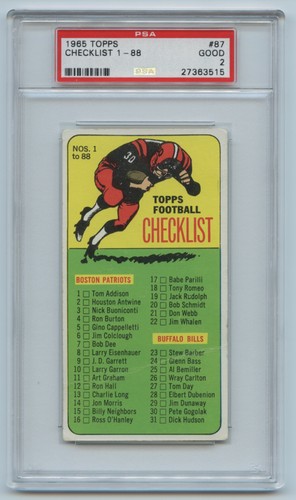 |
Checklist 1-88 #87 1965 Topps |
$49.27 | $5,207 | 105.7× |
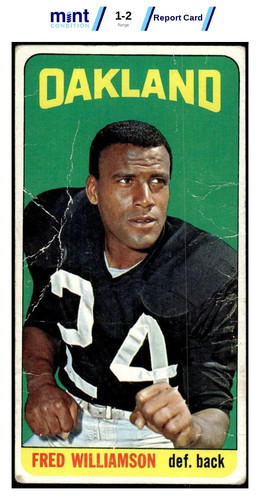 |
Fred Williamson #152 1965 Topps |
$31.00 | $5,054 | 163× |
 |
Jon Gilliam #100 1965 Topps |
$5.50 | $4,341 | 789.3× |
Look up any card's current raw and graded value in Midpoint — and get an estimated grade before you pay to submit.
Table of Contents
- Section 1: Overview of the 1965 Topps Football Set and Market Value
- Section 2: Most Valuable 1965 Topps Football Cards and Their Prices
- Section 3: The Impact of Grading and PSA 10 Value Insights
- Section 4: Card Condition, Centering, and How They Affect Value
- Section 5: Short Prints, Checklist Variations, and Rarity Factors
- Section 6: Recent Sales Trends and Market Realities
- Section 7: Using Midpoint to Pre-Grade and Track Your Collection
- Conclusion
- FAQ
Section 1: Overview of the 1965 Topps Football Set and Market Value
1965 Topps Football Set Composition
The 1965 Topps football set is a notable collection featuring 176 cards, showcasing both NFL and AFL players during a significant era of American football history. The set includes key rookie cards such as Joe Namath (#122) and Fred Biletnikoff (#133), as well as established Hall of Famers, notable players, and coaches. The checklist integrates players from both leagues prior to the full NFL-AFL merger, making it a historically interesting issue that appeals to collectors interested in the sport’s evolution.
The design features a white border with photography, player stats on the back, and a simple graphic layout. The set’s rarity is influenced by print quality issues common to mid-1960s cards, such as off-centering and less durable card stock, which makes high-grade examples less common and generally more valuable.
Current Value Ranges
As of 2026-09-04, the overall value of the complete 1965 Topps football set varies depending on condition, grading, and completeness. Raw complete sets in mid-grade condition typically range from around $300 to $1,200, reflecting the availability of lower-condition cards and the challenge in finding all cards in decent shape.
High-grade or professionally graded complete sets can command prices between approximately $2,000 and $6,000 or more, depending on the specific grade tiers (PSA 8 and above) and the presence of key cards within the set.
Individual cards have a broad range—from as low as $1 for common, heavily worn cards, to several thousand dollars for PSA 10 graded key rookies such as Joe Namath. Market fluctuations and collector demand cycles can influence these values over time.
Key Market Factors
- Condition: Cards with better centering, sharp corners, clean surfaces, and minimal print defects generally command higher prices. Condition is often the largest determinant of value.
- Grading: Third-party grading from PSA, BGS, CGC, and TAG provides authentication and a standardized condition assessment that heavily influences resale price, often leading to multiples of raw card values.
- Scarcity: Certain cards are short prints or have checklist variations, making them rarer. These cards generally attract collector interest and higher prices.

Section 2: Most Valuable 1965 Topps Football Cards and Their Prices
Top Rookie Cards Worth Watching
The most valuable 1965 Topps football cards often center on iconic rookie cards that mark the debut of future notable players. These rookies typically represent the highest-value cards in the set due to their historical importance and collector demand:
- Joe Namath (#122 rookie): Known as the "Broadway Joe," Namath’s rookie card is a highlight of the set. Raw values vary widely from approximately $100 for lower-grade copies with wear and centering issues, to several hundred dollars for high-quality raw cards. PSA 10 graded copies have sold for several thousand dollars, with some exceptional examples surpassing $7,000 in recent auctions. This card’s value is influenced by Namath’s iconic status and the card’s relative scarcity in top condition.
- Fred Biletnikoff (#133 rookie): Another key rookie, Biletnikoff’s card ranges from around $50 in raw condition to over $2,000 in PSA 10 condition. His Hall of Fame career and moderate scarcity in premium grades contribute to its desirability.
- Willie Brown rookie cards: Willie Brown’s card is less common and commands strong prices in high grades, often ranging from about $150 raw to over $1,500 graded, especially as interest in defensive legends grows.
Hall of Famers and Other Valuable Cards
Beyond rookies, the set features numerous Hall of Famers and established stars whose cards are sought-after by collectors:
- Jim Brown (#10): Considered one of the greatest football players ever, his card typically sells for $50-$200 raw depending on condition, with PSA 9 and 10 copies fetching several hundred to over $1,000.
- Jack Kemp (#98): Valued for both his football and political career, his card commands $30-$150 raw and higher when graded.
- Paul Hornung (#8): As a Heisman Trophy winner and NFL star, Hornung’s card ranges from $40-$250 raw, with premium grades significantly increasing value.
Common Cards vs. Short Prints
Common base cards typically range from $1 to $5 raw unless associated with a popular player. However, short prints and checklist variations can command prices 2-5 times higher than typical commons due to their rarity. For instance, a short print card in excellent condition can sell for $20-$50 raw, and significantly more when graded.
Collectors often prioritize these rarer cards to complete high-grade sets or pursue niche collecting goals, making them significant targets despite lesser-known player names.
Section 3: The Impact of Grading and PSA 10 Value Insights
Why Grading Matters for 1965 Topps Cards
Professional grading has become important in the vintage card market, particularly for 1965 Topps football cards. Grading services like PSA, BGS, CGC, and TAG provide authentication, assess card condition, and encapsulate cards in tamper-evident holders. This process builds buyer confidence, making it easier to sell and often resulting in higher prices.
For vintage cards, grading reflects not only visual quality but also authenticity, which is critical given the prevalence of counterfeits and altered cards in the market. Consequently, graded cards frequently sell for multiples of the value of raw, ungraded cards, especially at the upper end of the grading scale.
PSA 10 Value Breakdown
PSA 10 (Gem Mint) is the highest grade achievable and signifies a virtually flawless card. Because 1965 Topps cards were printed on relatively soft stock and often exhibit centering issues, PSA 10 examples are rare and command substantial premiums.
- Joe Namath #122 PSA 10: Valued at approximately $5,000+, with occasional sales exceeding $7,000 depending on market conditions and auction environment.
- Fred Biletnikoff #133 PSA 10: Typically around $2,000+, with scarcity in this grade driving premiums.
- Common cards in PSA 10: Depending on player popularity and rarity, prices range from $50 to $200+; many cards rarely achieve this grade, making them prized among collectors.
This premium is driven by flawless centering (often measured within 55/45 to 60/40 ratios), sharp corners, bright surfaces free of stains or print defects, and well-preserved edges.
Gem Premium and Grading Trends
The "gem premium gap" is a known phenomenon where PSA 10 graded cards sell for multiples of PSA 9 or lower grades. For example, a PSA 9 Joe Namath #122 might sell for $1,500-$2,000, whereas a PSA 10 can exceed $5,000, a 2.5x+ premium.
This premium is especially pronounced for key rookies and rare cards because collectors prize perfection for investment and display purposes. As a result, submitting cards for grading with a strong chance of earning PSA 10 grades can be worthwhile.
However, cards with notable centering issues or surface imperfections rarely achieve PSA 10, so understanding condition nuances beforehand is important.
Section 4: Card Condition, Centering, and How They Affect Value
Key Condition Factors
Several key condition factors determine the value of 1965 Topps football cards:
- Centering: Centering is the relative alignment of the printed image within the card borders. Ideally, a card should be centered within a 55/45 to 60/40 ratio (measured horizontally and vertically). Cards with centering beyond 70/30 ratios are usually downgraded and lose value.
- Corners and Edges: Sharp, crisp corners and edges without fraying, dings, or bends are essential. Vintage cards are often handled poorly, so well-preserved corners significantly boost value.
- Surface Quality: Cards should be free from stains, creases, print defects (such as ink smudges or scratches), discoloration, and other damage. Gloss retention on vintage cards can be a plus but is often diminished.
Centering Measurement and Its Importance
Centering is quantified as the percentage of border width on opposite sides. For example, if the left border measures 0.25 inches and the right border measures 0.20 inches, centering horizontally is calculated as 0.20 / (0.20 + 0.25) = 44.4%, indicating fairly good centering.
Even slight off-centering can cause a drop in grading, especially near the cutoff thresholds PSA uses. For example, a card with centering greater than 65/35 is likely to be graded lower than one within 60/40, all else equal.
Because vintage cards often suffer from centering issues due to the printing technology of the era, centering is a primary differentiator of high-grade 1965 Topps football cards.
Using Midpoint to Assess Centering and Condition
Midpoint’s AI-powered grading tool uses advanced image recognition and machine learning to analyze centering with millimeter precision. Users upload card images and receive detailed centering ratios on vertical and horizontal axes, along with estimated grades for PSA, BGS, CGC, and TAG.
This assessment includes evaluating corners, edges, and surface conditions by detecting common defects such as whitening, creases, or print spots. By providing a pre-grade report, Midpoint helps collectors make informed grading submission decisions, potentially saving money in grading fees for cards unlikely to earn high grades.
Learn more about how to pre-grade your card with Midpoint and understand how centering impacts your card’s value by visiting our detailed guides packed with screenshots and user tips.
Section 5: Short Prints, Checklist Variations, and Rarity Factors
Short-Printed Cards in 1965 Topps
Short prints are cards produced in smaller quantities than the base set, often intentionally to add rarity and value. In the 1965 Topps football set, certain cards are recognized as short prints, including specific star players or cards issued as special inserts or variations.
For example, the 1965 Topps #100 Jim Otto card is considered a short print relative to other commons, making it more difficult to find in high grade and more valuable. Collectors prize these cards because they are less readily available, especially in PSA 8+ condition.
Checklist Variations and Their Influence
Checklist cards are included in the set to help collectors track their collection progress. However, some checklists have printing variations, such as different back designs, numbering anomalies, or print run differences that create scarcity.
For instance, checklist #176 has multiple variations in print runs, and some versions are harder to find in high grade, increasing their collector value relative to the common checklist.
Rarity and Market Value
- Short prints can command 2 to 5 times or more the price of common cards in similar condition, with some rare short prints reaching even higher multiples.
- Rarity combined with a popular player can raise value; for example, a short print of a Hall of Famer in PSA 9 or 10 might sell for more than a common card of the same player.
- Collectors should consult PSA population reports, which provide detailed grading population data, to understand how many cards exist at each grade level. This data aids realistic pricing and grading decisions.
- Understanding print run numbers and production history helps collectors identify which cards are worth prioritizing for grading or acquisition.
Section 6: Recent Sales Trends and Market Realities
Sold Comparable Sales vs. Asking Prices
Market data from platforms such as eBay, auction houses, and card marketplaces reveals a consistent gap between asking prices and final sold prices for 1965 Topps football cards. Sellers often list cards at premium prices based on optimistic valuation or emotional attachment; however, actual sold transactions reflect what buyers are willing to pay.
Savvy collectors and dealers rely on recent sold comps to price cards realistically. For example, a PSA 9 Joe Namath #122 may be listed at $3,000 but only sell for around $2,200 after bidding competition. Similarly, raw cards with minor defects may sit unsold at asking prices unless lowered to reflect condition.
Condition and Grading Impact on Sales
Cards graded PSA 8 and above tend to sell more consistently and at stable prices. Cards graded PSA 7 or below often see a steep drop-off in value, especially for key rookies. For example, a PSA 7 Joe Namath card might sell for $800-$1,200, roughly half or less than a PSA 9 or 10.
Raw cards with excellent condition but off-centering or minor surface defects may not achieve top prices without grading, because buyers lack confidence in condition. Conversely, well-centered raw cards with minor imperfections can sometimes approach mid-grade PSA prices.
Complete Sets, Unopened Packs, and Collection Values
Complete sets from 1965 Topps vary widely in value depending on condition and grading. High-grade graded sets (PSA 8+) command significant premiums, often selling for 20-30% above the sum of their individual cards due to completeness and collector demand.
Unopened wax packs from 1965 Topps are rare and highly coveted. Such packs can fetch high prices in premium condition because they present the chance to find high-grade cards or rare inserts. However, unopened boxes or cases are exceedingly scarce.
Tracking collection values over time is useful to understand market trends. Tools like Midpoint’s portfolio feature offer dynamic valuation updates based on recent sales data for over 250,000 cards, providing a comprehensive view of collection worth and investment performance.
Section 7: Using Midpoint to Pre-Grade and Track Your Collection
AI Digital Grading Overview
Midpoint provides a digital platform that leverages AI and machine learning to provide grading estimates across major grading companies — PSA, BGS, CGC, and TAG. This AI grading evaluates multiple factors including centering, corners, edges, and surface condition, offering an estimate that helps collectors decide whether to submit cards for professional grading.
The AI model is trained on thousands of graded cards, enabling it to assess nuances such as whitening, print defects, and centering with precision. This approach aims to make grading more accessible and cost-efficient.
Precise Centering Measurement Tool
Centering is often the most critical factor for vintage card grading. Midpoint’s tool measures centering down to the millimeter by detecting card edges and printed image boundaries in high-resolution photos. The platform reports exact percentages horizontally and vertically, enabling collectors to identify if their cards meet the strict centering requirements for PSA 9 or 10 grades.
By identifying centering issues early, collectors can avoid submission fees ($30+ per card) on cards unlikely to achieve high grades, or alternatively, target cards with strong centering for maximum return.
Portfolio Tracking and Value Monitoring
Beyond grading, Midpoint offers portfolio tracking allowing users to catalog their entire collection. The platform updates estimated card values based on recent market data, giving collectors real-time insights into their collection’s worth and investment trends.
Users can set alerts for market fluctuations, track grading submissions, and analyze collection distribution by player, set, or grade. This intelligence supports strategic buying, selling, and grading decisions, especially for vintage sets like 1965 Topps football where condition and market demand fluctuate.
Explore Midpoint today for smarter grading and collection management at Midpoint.
Conclusion
The value of 1965 Topps football cards depends heavily on card condition, centering, grading, and rarity. Key rookies such as Joe Namath and Fred Biletnikoff are among the most sought-after cards, particularly in PSA 10 condition where scarcity is greatest. Understanding the nuances of centering, sharp edges, and surface quality is important for maximizing card value and making informed grading decisions.
Short prints and checklist variations add important rarity factors that can elevate prices beyond common cards. Collectors should research population reports and print run information to identify these rarities.
Using AI-powered tools like Midpoint allows collectors to pre-grade their cards and measure centering before incurring grading fees. Staying current with recent sales trends and population reports supports realistic pricing and smart investment strategies. Whether managing single cards, complete sets, or unopened packs, a strategic approach to grading and condition evaluation can help unlock the potential of your 1965 Topps football cards.
FAQ
Q: How much is a 1965 Topps Joe Namath rookie card worth?
A: As of 2026-09-04, raw Joe Namath #122 rookie cards typically range from about $100 to $500 depending on condition. PSA 10 graded copies can exceed $5,000 due to their rarity and premium condition, with some exceptional sales reaching over $7,000.
Q: What are the most valuable 1965 Topps football cards?
A: The most valuable cards include Joe Namath #122 rookie, Fred Biletnikoff #133 rookie, Willie Brown rookie, and other Hall of Famers like Jim Brown and Jack Kemp. Short prints and checklist variations also carry higher values and should be considered by collectors.
Q: How much is a complete 1965 Topps football set worth?
A: Complete sets vary widely in value. Raw mid-grade sets may be worth a few hundred dollars, while high-grade or graded complete sets can reach several thousand dollars depending on condition, grading, and market demand.
Q: Are 1965 Topps football cards rare or short prints?
A: Yes, several cards in the set are short prints or checklist variations, making them rarer and more valuable compared to common cards. These rarer cards are sought after especially in high grades.
Q: What is the value of a 1965 Topps football card in PSA 7, PSA 8, or PSA 9 condition?
A: Values generally increase with higher grades. PSA 7 and 8 cards hold good market value, while PSA 9 cards approach premium prices just below PSA 10 gems. Exact values depend on the specific card and player, with key rookies showing the most notable price increases.
Q: How can I tell if my 1965 Topps football card is worth grading?
A: Assess your card’s condition, centering, edges, and surface first. Tools like Midpoint provide AI digital grading estimates and precise centering measurements that can help you determine if submission for professional grading is likely to increase your card’s value and justify grading fees.
Free to start
Try the Midpoint app
Grade any card from a photo, see its raw and PSA 10 value, and track what your collection is worth — free.
Get it on iPhoneGet it on Android


