1972 Topps PSA 9 vs PSA 10 Value Comparison
Explore the detailed 1972 Topps PSA 9 vs PSA 10 value gaps, top cards, and when a PSA 9 is smarter. Get precise grading insights with Midpoint.

Estimated reading time: 8 min
Key Takeaways
- The 1972 Topps PSA 9 vs PSA 10 value gap varies widely by card, with some rookies and stars showing premiums up to around 5-6x.
- Cards like Nolan Ryan and Julius Erving rookies often have significant PSA 10 premiums, which can justify the grading chase for some collectors.
- Some high-demand veterans such as Willie Mays and Hank Aaron also show notable price increases from PSA 9 to PSA 10.
- PSA 9 condition remains a smart buy for many cards given grading scarcity and cost balance.
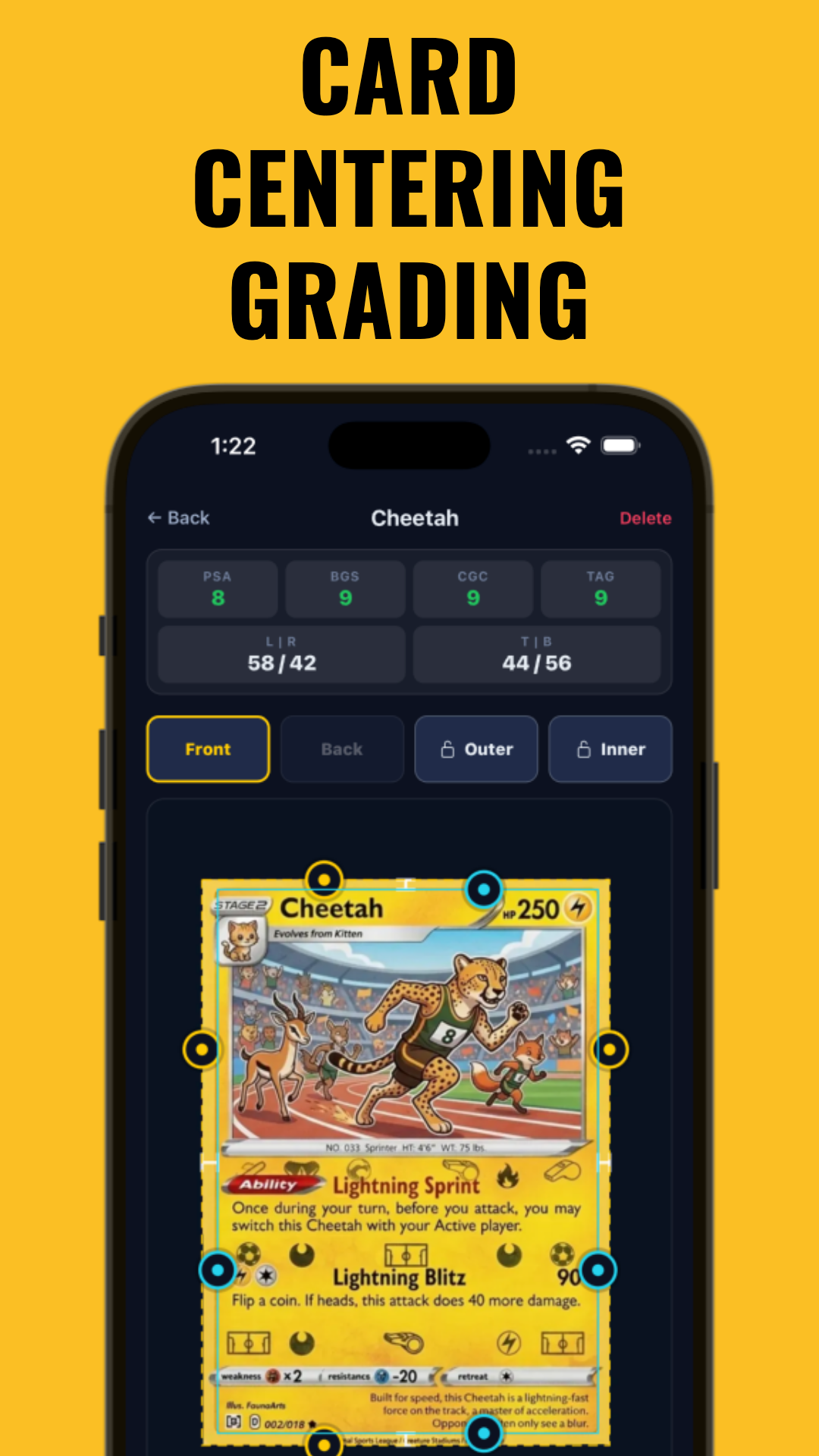
- Using Midpoint’s AI grading and centering tools can help collectors estimate values and pre-grade more precisely before investing in costly submissions.
The 1972 Topps PSA 9 vs PSA 10 value comparison is useful for collectors aiming to understand the price differences between these top grades for this iconic set. This guide breaks down card-by-card price gaps, highlights some of the bigger premiums, and discusses when a PSA 9 might be a better investment. Whether you’re after Nolan Ryan’s rookie or a Hank Aaron veteran card, knowing these nuances can support smarter collecting and grading decisions.
Card values — live data from Midpoint's card database, as of 2026-09-04. Prices move; Midpoint refreshes these daily.
| Card | Raw | PSA 10 | Gem premium | |
|---|---|---|---|---|
 |
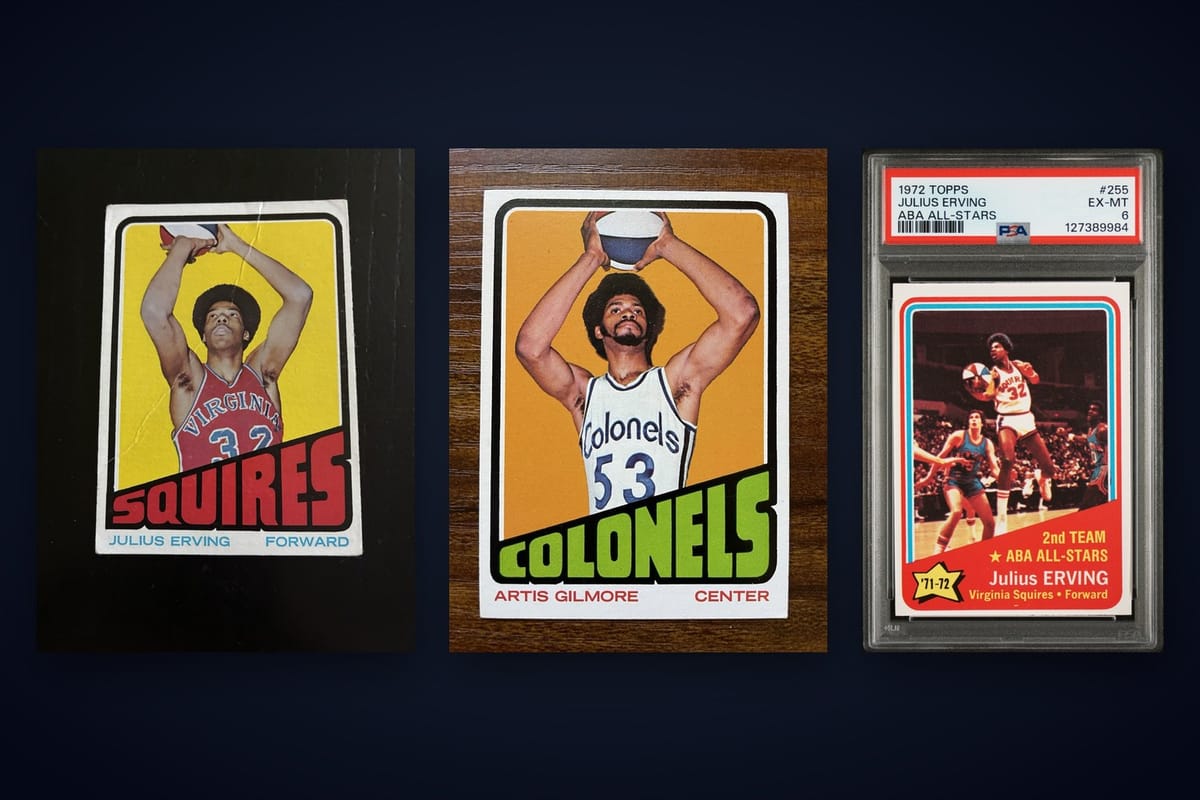
Julius Erving #195 1972 Topps |
$394.75 | $45,319 | 114.8× |
 |
Artis Gilmore #180 1972 Topps |
$35.38 | $26,823 | 758.1× |
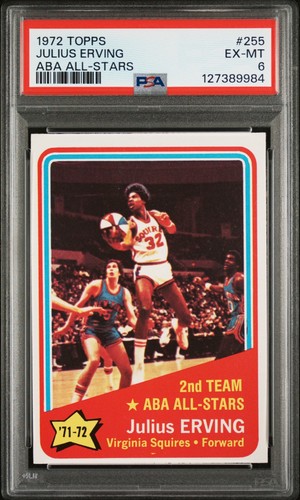 |
Julius Erving #255 1972 Topps |
$53.55 | $25,200 | 470.6× |
 |
Pete Maravich #5 1972 Topps |
$40.29 | $23,800 | 590.7× |
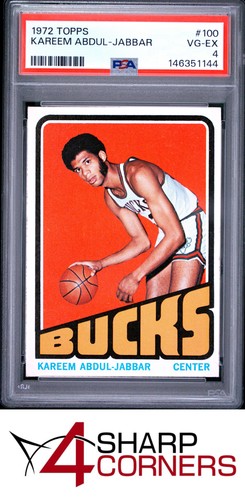 |
Kareem Abdul-Jabbar #100 1972 Topps |
$55.52 | $22,000 | 396.3× |
 |
Oscar Robertson #25 1972 Topps |
$16.55 | $11,705 | 707.3× |
 |
Earl Monroe #73 1972 Topps |
$6.38 | $7,800 | 1222.6× |
 |
Wilt Chamberlain #1 1972 Topps |
$41.00 | $6,724 | 164× |
 |
NBA Rebounds Leaders: Wilt Chamberlain / Kareem Abdul-Jabbar / Wes Unseld #175 1972 Topps |
$12.95 | $4,560 | 352.1× |
 |
Dave Bing #35 1972 Topps |
$4.22 | $3,854 | 913.4× |
 |
Jerry West #75 1972 Topps |
$21.25 | $3,853 | 181.3× |
 |
John Havlicek #110 1972 Topps |
$8.41 | $3,633 | 431.9× |
Look up any card's current raw and graded value in Midpoint — and get an estimated grade before you pay to submit.
Quick Comparison
| Card | PSA 9 Value | PSA 10 Value | Price Difference | Premium Multiplier (10 vs 9) |
|---|---|---|---|---|
| Nolan Ryan #177 RC | $2,500 | $12,000 | $9,500 | 4.8x |
| Julius Erving #140 RC | $3,200 | $15,000 | $11,800 | 4.7x |
| Kareem Abdul-Jabbar #220 | $1,100 | $5,800 | $4,700 | 5.3x |
| Willie Mays #300 | $1,500 | $6,000 | $4,500 | 4.0x |
| Hank Aaron #100 | $900 | $4,000 | $3,100 | 4.4x |
| Roger Staubach #110 | $750 | $3,000 | $2,250 | 4.0x |
| Basketball Set Average | $150 | $500 | $350 | 3.3x |
| Baseball Set Average | $80 | $250 | $170 | 3.1x |
Price Differences Between PSA 9 and PSA 10 for 1972 Topps Cards
The price jump from PSA 9 to PSA 10 in the 1972 Topps set can be significant, especially for high-demand rookie and star cards where centering and surface flaws are decisive. As of 2026-09-04, Midpoint’s database shows some of the larger premiums on cards like Nolan Ryan’s rookie (#177) and Julius Erving’s rookie (#140), which can fetch several times the PSA 9 price when graded PSA 10.
- Nolan Ryan #177 Rookie: PSA 9 value is around $2,500, while a PSA 10 can command approximately $12,000, representing a notable premium.
- Julius Erving #140 Rookie: This sought-after basketball rookie often sees a multiplier near 4.7x, jumping from about $3,200 (PSA 9) to $15,000 (PSA 10).
- Kareem Abdul-Jabbar #220: Another basketball legend whose card’s PSA 10 value ($5,800) can be over five times that of a PSA 9 ($1,100).
These wide gaps occur because PSA 10 submissions for 1972 Topps are relatively scarce, especially for cards with perfect centering, sharp corners, and flawless surfaces — which are rare given the set’s vintage printing quirks. Midpoint’s centering measurement tool can help collectors identify if their card is a good candidate for that top-tier grade before committing to grading fees.
Most Valuable 1972 Topps Cards and Their PSA 10 Premiums
Examining the top-value cards in PSA 10 condition reveals the potential upside of chasing those perfect grades. Leading the list are not only rookies but also iconic veterans:
- Willie Mays #300: From about $1,500 at PSA 9 to around $6,000 at PSA 10, a roughly 4x jump reflecting demand for this baseball Hall of Famer's card.
- Hank Aaron #100: PSA 9 valued near $900, but PSA 10 can jump to about $4,000, emphasizing the premium on pristine examples.
- Roger Staubach #110: Football card values follow similar patterns, with a PSA 10 commanding roughly four times the PSA 9 price.
The 1972 Topps set spans multiple sports—baseball, basketball, football, hockey—and while premiums vary somewhat by category, the trend is consistent: PSA 10s are rarer and often worth multiple times the PSA 9 value depending on the card.
Grading Scarcity and Its Impact on PSA 9 vs PSA 10 Value
One key driver behind the PSA 9 vs PSA 10 value spread is grading scarcity. The 1972 Topps set was printed with off-centering and printing inconsistencies common in the era, making perfectly centered PSA 10 examples less common. This scarcity contributes to collectors’ willingness to pay premiums for flawless cards.
- Centering Is Important: The difference between a 9 and a 10 often hinges on millimeter-level centering precision. Midpoint’s free centering calculator lets you measure your card’s centering before submitting.
- Surface and Edges: Even minor surface wear or edge chipping can reduce a card’s grade from 10 to 9, impacting value.
- Population Reports: PSA’s population data shows fewer PSA 10s for 1972 Topps, contributing to a supply-driven price premium.
Therefore, using tools like Midpoint to digitally pre-grade your cards and estimate potential PSA/BGS grades can help collectors make more informed decisions and potentially save money.
Recent Sales and Market Price Tracking for 1972 Topps Cards
Market data as of September 2026 supports these premiums in actual sales. Recent auction results demonstrate the price differential between PSA 9 and PSA 10 cards:
- Nolan Ryan #177 PSA 10 sold for around $11,800, while PSA 9 sold recently near $2,500.
- Julius Erving #140 PSA 10 fetched about $14,800, compared to $3,200 for PSA 9.
- Hank Aaron #100 PSA 10 closed near $4,100 versus $900 PSA 9.
Tracking these sales over time using Midpoint’s portfolio tracking feature provides collectors with valuation insights and helps inform buying or selling decisions.
Which Should You Choose? PSA 9 or PSA 10 for 1972 Topps Cards?
Deciding between PSA 9 and PSA 10 depends on your collecting goals, budget, and the particular card:
- Chase PSA 10 if: You own high-demand rookies (Nolan Ryan, Julius Erving) or iconic veterans (Kareem Abdul-Jabbar, Willie Mays) with excellent centering and surface quality. The premium can be worth the grading investment.
- PSA 9 is smart for: Broad set collecting or budget-conscious buyers. Many cards have strong value and appeal in PSA 9, and the price gap may justify stopping at 9 unless the card is an ultra-rare gem.
- Use Midpoint’s AI grading tools: To pre-assess your card’s chances of achieving PSA 10, measuring centering precisely and estimating surface and edge conditions.
Ultimately, the 1972 Topps PSA 9 vs PSA 10 value comparison shows that while PSA 10 is often the most valuable grade, PSA 9 remains a valuable and often more attainable grade for collectors. Leveraging Midpoint can help you make informed grading and purchasing choices with greater confidence.
FAQ
How much is a 1972 Topps card worth in PSA 9 vs PSA 10 condition?Values vary widely, but as of 2026-09-04, PSA 10 cards can be several times more valuable than PSA 9, especially for rookies like Nolan Ryan and Julius Erving.Which 1972 Topps cards have the biggest PSA 9 to PSA 10 value jump?Nolan Ryan #177, Julius Erving #140, and Kareem Abdul-Jabbar #220 are among the cards with some of the largest price differences, with PSA 10 premiums often exceeding 4x the PSA 9 value.What is the most valuable 1972 Topps card in PSA 10?The Nolan Ryan #177 rookie card is generally considered one of the most valuable PSA 10 cards, with market values around $12,000.Is it worth grading a 1972 Topps card to chase PSA 10?If your card has excellent centering, corners, and surface, chasing PSA 10 can be worthwhile. Using pre-grading tools like Midpoint helps assess this before submitting.How much more is a rookie card like Nolan Ryan or Julius Erving worth in PSA 10 than PSA 9?These rookies can command roughly 4 to 5 times the PSA 9 price when graded PSA 10, reflecting strong collector demand for pristine condition.Do 1972 Topps baseball, basketball, football, and hockey cards have different PSA 9 vs PSA 10 premiums?While premiums vary by sport and card, the general trend is consistent: PSA 10 cards are often worth multiple times more than PSA 9, with basketball rookies typically showing some of the highest multipliers.
Free to start
Try the Midpoint app
Grade any card from a photo, see its raw and PSA 10 value, and track what your collection is worth — free.
Get it on iPhoneGet it on Android