2025 Topps Chrome Basketball Cards Value: Comprehensive Price Guide
Discover the 2025 Topps Chrome basketball cards value, top cards to grade, PSA 10 prices, and detailed grading insights for collectors and investors.

Estimated reading time: 16 min
Key Takeaways
- The 2025 Topps Chrome basketball cards value varies widely by card type, rarity, and grade, with PSA 10 versions often commanding premiums that can range from two to several times raw card prices.
- Some of the most sought-after 2025 Topps Chrome cards include rookies like Cooper Flagg and prospects such as Victor Wembanyama, with serial-numbered parallels and autographed versions typically driving higher market prices, sometimes reaching into the four-figure range.
- Understanding base cards, refractors, parallels, inserts, and autograph tiers is important to identifying which 2025 Topps Chrome cards may be worth grading and investing in.
- Grading premiums differ between PSA 10, BGS 9.5, CGC 10, and raw card prices, influenced by centering, surface quality, autograph condition, and label aesthetics.
- Using AI-driven tools like Midpoint can help assess centering and estimate grading before costly submissions, potentially optimizing collector investments and minimizing grading fees on lower-value cards.
Card values — live data from Midpoint's card database, as of 2026-09-04. Prices move; Midpoint refreshes these daily.
| Card | Raw | PSA 10 | Gem premium | |
|---|---|---|---|---|
 |
Cooper Flagg [RayWave Red Refractor] #251 2025 Topps Chrome |
$15,301 | $65,030 | 4.3× |
 |
Stephen Curry [Frozenfractor] #201 2025 Topps Chrome |
$6,000 | $25,939 | 4.3× |
 |
Stephen Curry [Black Geometric Refractor] #201 2025 Topps Chrome |
$5,107 | $21,665 | 4.2× |
 |
Yang Hansen [Superfractor] #266 2025 Topps Chrome |
$7,500 | $15,000 | 2× |
 |
Stephen Curry [Black Basketball Refractor] #201 2025 Topps Chrome |
$3,000 | $14,640 | 4.9× |
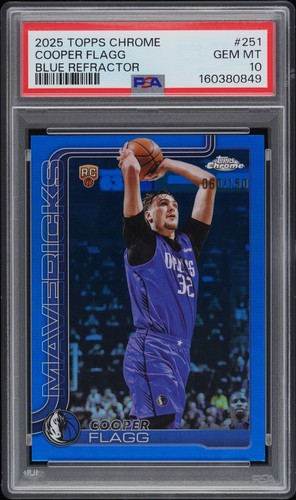 |
Cooper Flagg [Blue Refractor] #251 2025 Topps Chrome |
$2,051 | $11,929 | 5.8× |
 |
Cooper Flagg [Orange Basketball Refractor] #251 2025 Topps Chrome |
$280.00 | $9,250 | 33× |
 |
Kon Knueppel [Orange Image Variation] #254 2025 Topps Chrome |
$2,000 | $6,000 | 3× |
 |
Carter Bryant [Black Refractor] #264 2025 Topps Chrome |
$925.00 | $3,951 | 4.3× |
 |
Dylan Harper [1st Day Issue] #252 2025 Topps Chrome |
$787.87 | $2,900 | 3.7× |
 |
Derik Queen [Black Basketball Refractor] #263 2025 Topps Chrome |
$650.00 | $2,791 | 4.3× |
 |
Nikola Jokic [Black Refractor] #25 2025 Topps Chrome |
$2,010 | $2,750 | 1.4× |
Look up any card's current raw and graded value in Midpoint — and get an estimated grade before you pay to submit.
Table of Contents
- Section 1: Overview of 2025 Topps Chrome Basketball Cards Value
- Section 2: Most Valuable 2025 Topps Chrome Cards and Key Players
- Section 3: Understanding Card Types and Parallels in the 2025 Set
- Section 4: Raw vs Graded Values and the Grading Premiums
- Section 5: Checklist Details, Rookies, and Variations to Know
- Section 6: Factors Affecting Card Prices and Collector Demand
- Section 7: Practical Tips for Buying, Grading, and Selling 2025 Topps Chrome Cards
Section 1: Overview of 2025 Topps Chrome Basketball Cards Value
The 2025 Topps Chrome basketball cards value landscape reflects a complex interplay of card types, player popularity, and grading quality that shapes the investment and collecting environment. The set, released ahead of the 2025-2026 NBA season, captures emerging rookies, established stars, and numerous parallels and inserts designed to appeal to collectors at various levels.
As of 2026-09-04, raw base cards generally start at a modest $5-$20 range depending on player recognition, condition, and market demand. However, these prices can increase significantly when cards achieve top grades such as PSA 10 or BGS 9.5, particularly for rookies and premium parallels. For example, a gem mint graded rookie card can sell for multiples of the raw price, sometimes exceeding several hundred dollars.
Collectors should note that the value of cards from this set is sensitive to grading, parallel scarcity, and player performance trajectory. Serial-numbered parallels such as Gold (limited to 50 copies), Red (limited to 10 copies), and the ultra-rare SuperFractor (1/1) often command premiums, sometimes reaching into the thousands of dollars.
Midpoint’s extensive database, covering over 250,000 cards, provides a comprehensive view of price trends and values for a selection of 2025 Topps Chrome basketball cards. This includes detailed tracking of raw sales, graded sales, and parallels, which can be useful for collectors aiming to make informed decisions.
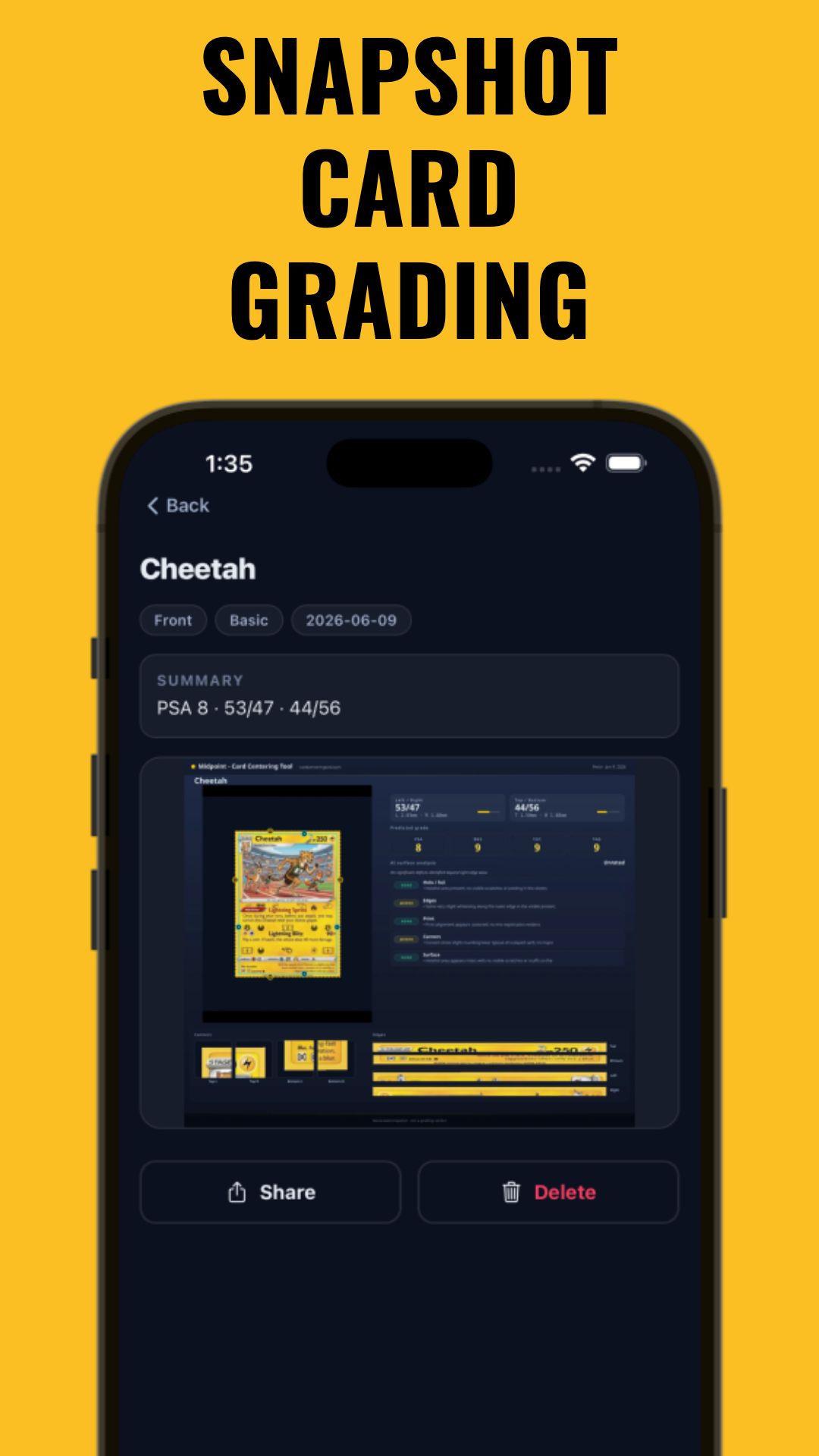
Using Midpoint’s AI grading and centering tools offers collectors estimates of PSA, BGS, CGC, and TAG grades before sending cards for professional grading. This approach can help avoid costly grading submissions of cards unlikely to achieve high grades, ensuring budgets are allocated to cards with stronger resale or collection value.
Section 2: Most Valuable 2025 Topps Chrome Cards and Key Players
Top Rookie Cards Driving Market Value
The 2025 Topps Chrome basketball set features several rookie cards that have attracted collector interest due to the players’ potential and early hype. Among these is Cooper Flagg, whose rookie card (#212) commands notable attention. Raw copies typically trade around $120, while PSA 10 graded versions have been reported to exceed $500, reflecting a premium for gem mint condition.
Similarly, Dylan Harper (#218) and Kon Knueppel (#225) have shown upward price trends, especially for refractors and serial-numbered parallels. For example, Dylan Harper’s Red parallel (numbered to 10) can sell for $200-$300 raw, with PSA 10 versions sometimes reaching higher prices. Kon Knueppel’s inserts and autograph parallels have also gained interest, driven by his collegiate success and draft positioning.
Established Stars and High-Profile Prospects
While rookies drive much of the excitement, the 2025 set also includes established NBA superstars who maintain steady value. Stephen Curry and LeBron James cards, particularly limited parallels and autographed versions, remain sought after by collectors. Their cards often provide a value floor, with base autographed parallels sometimes selling for hundreds of dollars.
Victor Wembanyama, widely regarded as a generational talent, commands some of the higher values in the set. His rookie cards, especially serial-numbered Gold or Sapphire parallels graded PSA 10, have been reported to fetch prices in the range of $700 to $1,200. Wembanyama’s market demand is influenced by his skill set and anticipated league impact.
Serial-Numbered Parallels with the Highest Value
- Gold Parallels: Limited to 50 copies, these are popular among collectors seeking scarcity without the extreme rarity of 1/1 cards. Gold parallels often sell for multiples of the base card value.
- Red Parallels: Numbered to 10 copies, these are highly coveted by investors and collectors alike. For example, a Cooper Flagg Red Refractor PSA 10 could command prices over $1,000, reflecting the high scarcity.
- Geometric Parallels and SuperFractor (1/1): The rarest cards, these one-of-a-kind cards can reach four-figure prices or more. Due to their uniqueness, sales are infrequent but can set benchmark values for the set.
This tiered value structure means that even for the same player, card values can vary widely depending on the parallel and grade. Collectors often aim for a balanced approach between pursuing ultra-rare parallels and more accessible graded base cards.
Section 3: Understanding Card Types and Parallels in the 2025 Set
Base Cards vs Refractors and Parallels
The 2025 Topps Chrome base cards serve as the foundational layer of the set, numbered from 1 to 250. While base cards tend to have modest value on their own—often $5-$20 raw—they can become more valuable when featuring popular rookies or graded in gem mint condition.
Refractors are a hallmark feature of the Chrome line, distinguished by their reflective finish. These refractors come in various color parallels, each with unique serial-numbering that impacts scarcity and value. For instance, standard refractors are typically numbered to 299, whereas color parallels like Blue might be numbered to 150, Purple to 75, and Gold to only 50 copies.
Collectors interested in maximizing investment often seek refractors graded PSA 10, which can command premiums over raw refractors. For example, a Cooper Flagg Blue Refractor raw card might retail around $250, but a PSA 10 could sell for significantly more.
Image Variations and Short Prints
The set includes image variations and short prints (SPs) that introduce alternate photographs or poses for the same player and card number. These variations are often produced in lower quantities, making them more desirable to collectors who value uniqueness. Short prints frequently sell at a premium above the standard card, depending on player popularity.
For example, a short print of a high-profile rookie like Dylan Harper may trade for more than the base card. Recognizing and cataloging these variations is useful for collectors aiming to complete high-value sets.
Inserts and Autographed Cards
- Inserts: These are special subset cards that feature unique designs, themes, or commemorative elements. Inserts usually have much lower print runs than base cards, often under 1,000 copies, and are sometimes serial-numbered. Popular insert themes in the 2025 set include "Future Stars," "Rising Rookies," and "Chrome Highlights."
- Autographs: Cards signed by players are among the most prized collectibles. Autographed cards typically have limited print runs and are often paired with serial numbering to enhance scarcity. The condition of the autograph itself—clarity, smudges, fading—plays a significant role in the card's desirability and grading outcome.
Identifying and prioritizing these insert and autograph cards within your collection can guide efficient grading and investment choices, as their potential for appreciation can exceed that of base cards.
Section 4: Raw vs Graded Values and the Grading Premiums
The Value Gap Between Raw and PSA 10 Cards
The difference in value between raw and graded cards in the 2025 Topps Chrome set can be significant, especially for rookies and scarce parallels. Grading certifies the card’s condition, centering, surface quality, and authenticity, which reassures buyers and often commands higher prices.
For instance, a raw Cooper Flagg rookie card typically sells for approximately $120. Once graded PSA 10, the same card's price can increase substantially, sometimes exceeding $500, reflecting a premium. Similarly, a serial-numbered Gold parallel raw card valued at around $400 might reach higher prices once graded PSA 10.
This premium is driven by collector confidence in the card’s condition and the scarcity of gem mint grades. Cards with slight imperfections or centering issues tend to receive lower grades (e.g., PSA 9 or BGS 9.5) and sell for less.
Comparison Among Grading Companies
While PSA remains the most widely recognized grading authority, Beckett (BGS), CGC, and TAG also provide grading services with nuanced differences in grading scale and label style.
- BGS (Beckett): Known for its subgrades (centering, edges, corners, surface), BGS grades 9.5 (Gem Mint) can sometimes command premiums close to PSA 10, especially for cards with perfect centering.
- CGC: Increasingly popular, CGC offers grades up to 10 with detailed subgrades. CGC 10 cards often sell at prices comparable to PSA 10, appealing to collectors seeking a modern grading company.
- TAG: A newer grading company gaining traction, with competitive grading standards and pricing, though market acceptance varies.
Collectors should consider label aesthetics, subgrade breakdowns, and market acceptance when choosing a grading company. For instance, a BGS 9.5 with a 10 for centering may be preferred over a PSA 9.5 in some circles, affecting resale value.
Centering and Surface: Key Drivers of Grading Premium
Centering is often a critical component in determining a high grade. Cards centered within approximately 55/45 to 60/40 ratios typically qualify for PSA 10 or BGS 9.5 grades. Even slight off-centering of less than 1 mm can downgrade a card by a full grade level, impacting its market value.
Surface quality, including the absence of scratches, print defects, or stains, is equally important. Edge wear and corner sharpness also factor heavily into the final grade. Autograph condition—clarity, smudge-free ink—adds another layer of complexity for signed cards.
Tools like Midpoint provide precise centering measurements by analyzing card scans, and use AI-based surface grading to predict potential PSA 10 or BGS 9.5 outcomes. This upfront assessment allows collectors to strategically submit only high-potential cards for grading, potentially saving time and money.
Section 5: Checklist Details, Rookies, and Variations to Know
Complete Card Numbers and Print Runs
The 2025 Topps Chrome basketball set includes a comprehensive checklist that helps collectors identify and authenticate cards. Base cards are numbered 1 through 250, covering key NBA players and rookies. Parallel subsets have their own numbering conventions, often including suffixes or alternate numbering to denote color or serial-numbering.
Print runs vary widely by card type and parallel. Base cards are often mass-produced with print runs in the thousands or more. Refractors and colored parallels have limited print runs ranging from 299 down to 10 copies for the rarest parallels. Autographed parallels typically have the lowest print runs, sometimes under 100 copies.
Rookie Cards and Their Identification
Rookie cards in this set are typically marked with the "RC" logo, making them easier to spot. Key rookies include Cooper Flagg (#212), Dylan Harper (#218), and Kon Knueppel (#225). Understanding which rookie cards have stronger market demand is helpful for investment considerations.
Print runs for rookies differ by parallel type. For example, Cooper Flagg’s base rookie card may have thousands of copies, but his Gold Refractor parallel is limited to 50 copies, while Red Refractor parallels are numbered to just 10 copies. This scarcity hierarchy affects pricing and grading strategies.
Image Variations and Insert Subsets
- Image Variations: Some cards feature alternate images or action shots for the same player and card number. These variations can be harder to find and often command premiums above the base card.
- Insert Subsets: The set includes unique inserts such as "Future Stars," "Rising Rookies," and "Chrome Highlights." Insert print runs typically range from 500 to 1,000 copies, and some are serial-numbered. These cards are sought after for their design and relative scarcity.
Consulting a detailed 2025 Topps Chrome price guide can help collectors track these nuances and make informed decisions about which cards to prioritize for grading or sale.
Section 6: Factors Affecting Card Prices and Collector Demand
Player Popularity and Performance
Player popularity remains a primary driver of card demand. Established superstars like Stephen Curry and LeBron James provide a valuation anchor due to their loyal fan base and consistent performance. Their cards tend to retain stable value, even during seasonal market fluctuations.
Conversely, emerging talents such as Cooper Flagg and Victor Wembanyama experience more variable price movements, influenced by rookie season performance, media attention, and injury status. Positive performances can cause price appreciation, while setbacks may temper demand.
Team and Market Demand
Players on winning or popular teams often see elevated card demand. For example, rookies on playoff-contending franchises tend to have better price stability. Market trends also shift seasonally, with heightened demand around major events such as the NBA draft, All-Star weekend, or playoff runs.
Condition, Authentication, and Sales History
- Condition: Cards exhibiting near-perfect centering, sharp corners, and flawless surfaces command premiums.
- Authentication: Professional grading adds buyer confidence, especially in online marketplaces like eBay where verifying card condition remotely is challenging.
- Sales History: Utilizing apps like Midpoint allows collectors to monitor recent comparable sales, providing realistic pricing benchmarks and helping avoid overpaying or underselling.
Seasoned collectors often track not only asking prices but also completed sales and price trends over time, adjusting their strategies accordingly.
Section 7: Practical Tips for Buying, Grading, and Selling 2025 Topps Chrome Cards
Pre-Grading Assessment
Given that professional grading fees typically start around $30-$50 per card, pre-assessment using AI-powered tools like Midpoint’s free centering calculator and digital grading estimates can be valuable. Uploading high-resolution scans enables precise centering measurement and surface quality prediction, helping collectors decide whether grading expenditure is justified.
This approach can prevent costly grading submissions of cards unlikely to achieve PSA 10 or equivalent grades, conserving budget for cards with higher upside.
Evaluating Sealed Products vs Singles
Purchasing sealed boxes or packs offers the potential for high-value pulls but carries significant variance risk. Boxes can contain rare inserts or autographed parallels but may also yield mostly base cards with lower value.
Alternatively, buying singles allows targeted investment focusing on high-demand rookies or scarce parallels with known market prices. Singles also reduce uncertainty and allow buyers to inspect card condition before purchase.
Authentication and Selling Strategy
- Submit only high-potential raw cards for grading, especially those with strong centering and surface quality, to maximize resale value.
- Factor in marketplace fees (e.g., eBay, COMC), shipping costs, and grading turnaround times when pricing cards for sale.
- Use collection management and price tracking apps like Midpoint to monitor portfolio value and market trends, enabling informed timing of sales and acquisitions.
By applying these practical steps, collectors and investors can better position themselves in the 2025 Topps Chrome basketball card market, balancing risk and reward in a dynamic environment.
Conclusion
The 2025 Topps Chrome basketball cards value ecosystem offers opportunities for collectors who understand the nuances of rarity, grading impact, and market dynamics. From base cards to scarce serial-numbered parallels and coveted rookies like Cooper Flagg and Victor Wembanyama, knowing which cards to grade and how to evaluate them is important for maximizing potential returns.
Leveraging AI-driven tools like Midpoint enables accurate centering measurements and estimated grading outcomes, empowering collectors to make strategic decisions that can help avoid unnecessary grading expenses and focus on high-return submissions.
By closely monitoring raw and graded prices, understanding checklist details and variations, and employing smart buying and selling strategies, collectors can navigate the evolving marketplace effectively, capitalizing on the 2025 Topps Chrome basketball card set’s value propositions.
FAQ
Q: How much are 2025 Topps Chrome basketball cards worth?
A: Values vary significantly by card type, player, and condition. Raw base cards generally range from $5-$20, while graded rookies like Cooper Flagg PSA 10 have been reported to exceed $500 as of 2026-09-04.
Q: What is the most valuable 2025 Topps Chrome basketball card?
A: High-end serial-numbered parallels of rookies such as Victor Wembanyama and Cooper Flagg, especially Gold or SuperFractor 1/1 cards, tend to hold the highest market values, sometimes reaching four figures.
Q: Which 2025 Topps Chrome basketball rookies are worth money?
A: Cooper Flagg, Dylan Harper, Kon Knueppel, and Victor Wembanyama rookie cards are among the most valuable, particularly in graded or rare parallel forms.
Q: How much is a Cooper Flagg 2025 Topps Chrome rookie card worth?
A: Raw Cooper Flagg rookie cards typically value around $120, while PSA 10 graded versions have been reported to sell for more than $500 as of 2026-09-04.
Q: Are 2025 Topps Chrome basketball base cards worth anything?
A: Base cards have modest value unless they are rookies in excellent condition or graded PSA 10, which can significantly increase their price.
Q: What 2025 Topps Chrome basketball parallels are worth the most?
A: Gold, Red, Geometric, Sapphire, and SuperFractor (1/1) parallels are among the most valuable due to their scarcity and collector demand.
Free to start
Try the Midpoint app
Grade any card from a photo, see its raw and PSA 10 value, and track what your collection is worth — free.
Get it on iPhoneGet it on Android