Baseball Card Prices Dropping September 2026: What Collectors Must Know
Explore why baseball card prices are dropping September 2026, which cards fall fastest, and how to buy the dip smartly with Midpoint’s expert insights.

Estimated reading time: 8 min
Key Takeaways
- Baseball card prices are showing signs of decline in September 2026, influenced by supply and changing market dynamics.
- Rookie cards, graded PSA 10 slabs, and refractors appear to be experiencing notable value decreases.
- Sealed boxes and preorders now command less premium, suggesting some market cooling.
- Midpoint’s AI grading tools can assist collectors in evaluating cards before submitting them for grading.
- Some 2026 releases and autograph cards may still retain value despite broader market shifts.
The baseball card market in September 2026 is showing signs of cooling, with prices for raw and graded cards affected. This trend may reflect supply pressures, fading release-week hype, and changes in grading and authentication costs. For collectors and investors, understanding potential reasons for price changes and which cards might be impacted is important for informed decisions. This listicle outlines key market factors and highlights baseball cards collectors might consider buying during this period — including how Midpoint’s AI-powered grading tools can help pregrade cards affordably and accurately before submitting them for grading.
30-day price movers — live data from Midpoint's card database, as of 2026-09-04. Prices move; Midpoint refreshes these daily.
| Card | Raw | PSA 10 | 30-day | |
|---|---|---|---|---|
 |
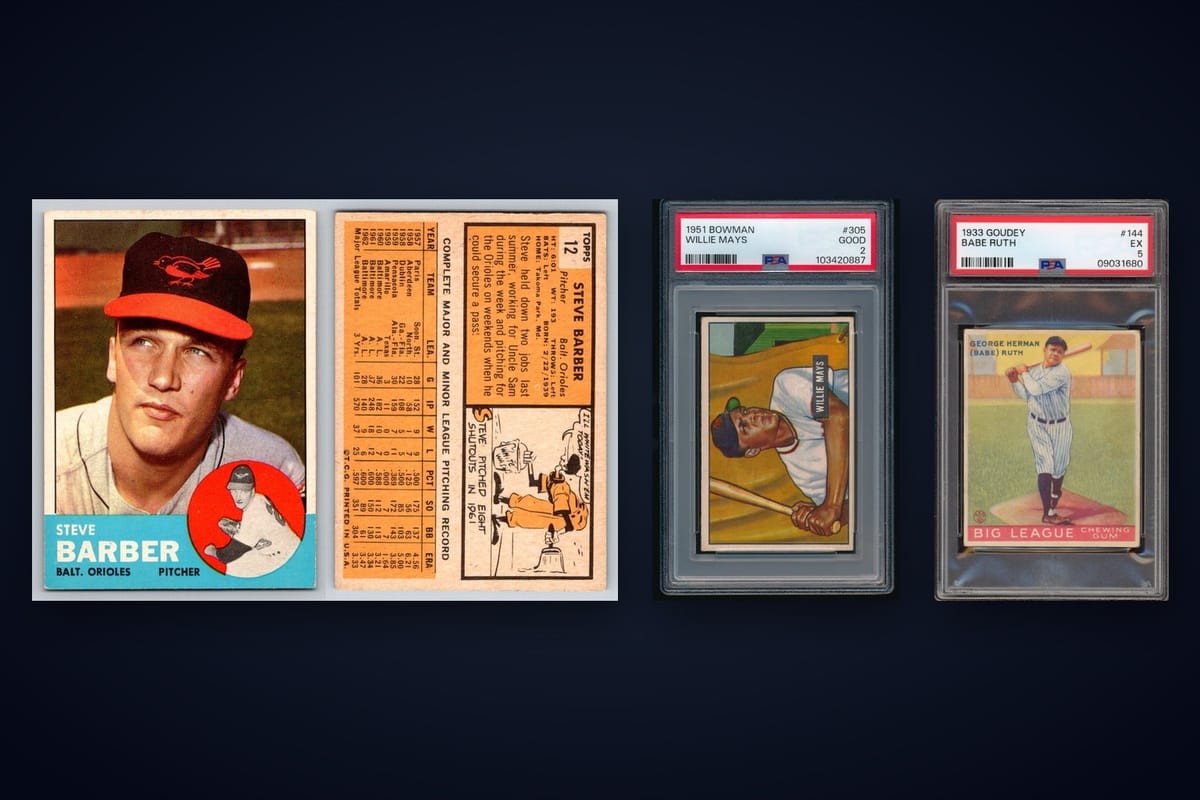
Complete Set 1963 Topps |
$10,698 | — | -53.8% |
 |
Willie Mays #305 1951 Bowman |
$2,526 | $616,625 | -41.2% |
 |
Babe Ruth #144 1933 Goudey |
$8,287 | $3,830,697 | -37.6% |
![Jac Caglianone [1952 Variation Autograph] #138 2026 Topps card](https://i.ebayimg.com/images/g/xd0AAeSwVnNqghzS/s-l500.jpg) |
Jac Caglianone [1952 Variation Autograph] #138 2026 Topps |
$218.23 | $982.04 | -27.4% |
 |
Yogi Berra #50 1954 Topps |
$57.86 | $13,615 | -26.3% |
 |
Ted Williams #27 1940 Play Ball |
$849.50 | $287,269 | -24.8% |
 |
Ted Williams #165 1951 Bowman |
$217.65 | $54,330 | -17.8% |
 |
Stan Musial #24 1949 Bowman |
$375.78 | $100,180 | -15.8% |
![Frank Thomas [White Back] #153 1956 Topps card](https://i.ebayimg.com/images/g/D4oAAeSw5epqRXcA/s-l500.jpg) |
Frank Thomas [White Back] #153 1956 Topps |
$231.22 | $72,053 | -14.8% |
 |
Pee Wee Reese #33 1953 Bowman Color |
$385.98 | $93,556 | -14.1% |
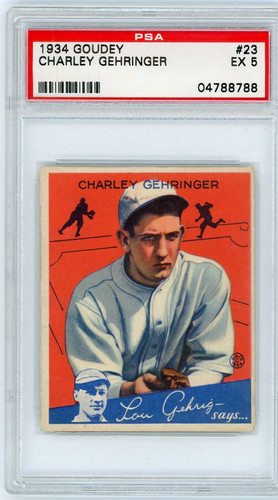 |
Charley Gehringer #23 1934 Goudey |
$149.00 | $58,621 | -13.9% |
 |
Lou Gehrig #37 1934 Goudey |
$3,663 | $1,459,779 | -13.7% |
Look up any card's current raw and graded value in Midpoint — and get an estimated grade before you pay to submit.
1. Why Are Baseball Card Prices Showing Declines in September 2026?
One factor contributing to the baseball card market changes in September 2026 is increased supply combined with shifts in demand. Multiple 2026 Topps releases introduced a large number of rookie cards, refractors, and graded slabs shortly after release week, which may have contributed to downward price pressure.
Collectors who preordered boxes and sealed jumbo packs initially supported higher prices, but as hype subsided and more supply entered secondary markets, prices have tended to soften. Additionally, rising grading costs and evolving authentication standards may have influenced seller behavior, potentially leading to some price adjustments.
- Example: Some reports indicate the 2026 Bowman Draft Picks rookie cards experienced declines in raw and PSA 10 slab values during August.
- Sealed value boxes have seen some price decreases, possibly due to changing demand from casual collectors.
- Announcements about reprints of certain inserts may have affected collector enthusiasm, contributing to price changes.
2. Release-Week vs. Post-Release Price Trends for 2026 Topps Products
Release-week prices for 2026 Topps products were supported by excitement and perceived scarcity, but prices have generally softened after the initial surge. Data as of early September 2026 suggests raw rookie cards have experienced average declines post-release week, with graded rookies also seeing value adjustments.
This pattern may reflect collectors realizing short-term hype premiums and speculators adjusting portfolios. Jumbo boxes and hobby boxes have shown price decreases following the release period, indicating a market correction phase.
- Preorder premiums have diminished as more cards became available in secondary markets.
- Collectors holding sealed boxes longer may have mitigated some losses but still face value declines.
3. The Role of Sealed Boxes, Preorders, and Secondary-Market Presales in Price Movements
Sealed boxes—especially hobby and jumbo boxes—initially commanded premiums due to limited availability and preorder demand. However, as supply increased and more sellers entered the secondary market, prices for these products have tended to decline.
Secondary-market presales, often at elevated prices, may have set expectations that adjusted once actual product became widely available. This dynamic has contributed to price softening in September 2026, particularly for value and jumbo boxes.
- 2026 Topps Value boxes have experienced price decreases from August to early September.
- Preorder prices for Bowman chrome refractors have declined as collectors recalibrated expectations.
- Collectors who waited to buy sealed boxes post-release may find opportunities to purchase below initial peak prices.
4. Which Baseball Card Segments Are Experiencing Notable Value Changes?
Data from early September 2026 indicates rookie cards, graded PSA 10 slabs, and refractors are among the segments showing more pronounced value decreases compared to base singles or autographs. Rookie cards face increased supply and reduced hype, while graded cards are influenced by grading cost pressures and authentication changes.
Refractors, once highly sought after for their shine and scarcity, are seeing value adjustments as new inserts increase overall supply. Base singles tend to maintain more stable prices but still reflect the overall market cooling.
- Example: Some raw Bowman Draft Picks rookies, PSA 10 rookies, and refractors have experienced declines in the 18-25% range.
- Autographs and low-population cards generally hold value better, with some remaining stable or showing slight gains.
5. How eBay Market Data and Sell-Through Rates Reflect Current Demand
Sell-through rates on eBay have reportedly decreased in September 2026 compared to previous months, indicating reduced buyer enthusiasm. Listings for graded rookies and refractors tend to remain available longer, while base singles and lower-tier graded cards sell more slowly.
This data aligns with broader market trends of cooling demand and price adjustments, suggesting more cautious buying behavior among collectors.
- Lower sell-through rates may encourage sellers to reduce prices to attract buyers.
- Buyers can potentially capitalize on this by targeting undervalued cards that still have long-term potential.
6. The Impact of Grading Costs and Authentication Changes on Raw vs. Graded Card Pricing
Grading fees have increased in 2026, with PSA and BGS raising submission costs by an estimated 15-20%. Updates to authentication rules have also added complexity to grading submissions, particularly for lower-value cards.
This has led some collectors to hold raw cards or delay grading, which may contribute to falling prices for graded cards. However, high-quality raw cards with excellent centering can still gain value if submitted strategically.
- Midpoint’s AI digital grading tool helps estimate PSA, BGS, CGC, and TAG grades quickly, reducing uncertainty before costly submissions.
- Collectors using Midpoint can identify cards with precise centering, potentially increasing chances of high grades and better returns.
7. Which 2026 Releases Are Showing Relative Strength or Weakness?
While many 2026 releases are experiencing price declines, some segments remain more resilient. Autographed cards from marquee rookies and limited low-population parallels tend to hold value better. In contrast, base singles and refractors from mass-produced sets like 2026 Topps base and Bowman Draft Picks appear to be declining more rapidly.
Collectors may benefit from focusing on scarce, high-demand cards and being cautious with overhyped mass-market inserts currently losing momentum.
- 2026 Topps Mantle autographs appear to be relatively stable or showing slight price strength.
- Bowman Chrome refractors and base rookies have experienced notable declines.
- Sealed autograph boxes tend to hold value better compared to value boxes.
8. Player- and Brand-Specific Performance: Topps, Bowman, Chrome, Mantle, Autographs, and PSA Cards
Brand performance varies: Topps base cards show moderate declines, while Bowman rookies and refractors have seen sharper decreases. Chrome refractors, once highly valued, are among those facing steeper price adjustments. Mantle autographs continue to maintain value, likely due to player legacy and scarcity.
PSA 10 graded cards generally have experienced more value declines than raw cards but remain sought after for investment-grade quality if well-centered and surface-clean.
- Midpoint’s centering calculator and AI grading estimates can assist in identifying Topps and Bowman cards with potential for PSA 10 grades.
- Collectors targeting Mantle autographs and low-population PSA cards should monitor the market closely for buying opportunities.
9. How Hobby Box, Jumbo Box, and Value Box Pricing Differ in a Cooling Market
In the September 2026 market, hobby boxes generally hold more value than jumbo and value boxes, which face deeper discounts possibly due to higher production runs and lower collector interest.
Value boxes have declined around 12%, jumbo boxes about 13%, while hobby boxes have seen smaller declines near 8%. This suggests collectors still place a premium on hobby products with better odds for inserts and autographs.
- Collectors buying the dip might prioritize hobby boxes for better long-term value potential.
- Sealed value and jumbo boxes may offer bargains for casual collectors but could carry higher risk of further declines.
Conclusion
Baseball card price changes in September 2026 reflect a market adjustment influenced by supply increases, fading hype, and rising grading costs. Rookie cards, graded PSA 10 slabs, and refractors appear to be declining fastest, while autographs and low-population cards tend to retain value better. Understanding these dynamics can help collectors make informed buying decisions.
Tools like Midpoint provide collectors with digital pregrading, precise centering measurement, and portfolio tracking — useful resources in today’s evolving baseball card market. Whether looking to buy undervalued rookies or decide which sealed boxes to hold, data-driven insights and AI grading can support smarter collecting strategies in September 2026 and beyond.
FAQ
Q: Why are baseball card prices showing declines in September 2026?
A: Prices are influenced by increased supply from multiple 2026 releases, fading hype after release week, higher grading costs, and changes in authentication standards that affect demand for graded cards.
Q: Do baseball cards usually fall in price after release week?
A: Yes, post-release price adjustments are common as initial hype and scarcity premiums tend to fade, especially for rookies and graded slabs.
Q: Which baseball cards are losing value the fastest currently?
A: Rookie cards, refractors, and PSA 10 graded cards appear to be experiencing the most notable value declines, including Bowman Draft Picks and 2026 Topps refractors.
Q: Are graded baseball cards dropping more or less than raw cards?
A: Graded cards, particularly PSA 10 slabs, have generally seen larger declines due to higher grading costs and shifting collector preferences, though high-quality raw cards also face value adjustments.
Q: Is now a bad time to buy 2026 Topps or Bowman baseball cards?
A: While prices are lower, collectors who research and use tools like Midpoint’s AI pregrading may find opportunities to buy undervalued cards with strong centering and grading potential.
Q: What baseball cards are still holding value despite the market changes?
A: Autographed cards, low-population parallels, and legacy player cards such as 2026 Topps Mantle autographs tend to hold value better than mass-produced rookies and refractors.
Free to start
Try the Midpoint app
Grade any card from a photo, see its raw and PSA 10 value, and track what your collection is worth — free.
Get it on iPhoneGet it on Android