Basketball Card Prices Dropping October 2026: What Collectors Need to Know
Explore why basketball card prices are dropping in October 2026 and how collectors can buy the dip smartly with grading tips and market insights.

Estimated reading time: 8 min
Key Takeaways
- Basketball card prices have experienced declines of approximately 10–20% in October 2026, influenced by increased supply and changes in rookie hype.
- Raw and PSA 9 mid-tier modern cards appear to be declining more noticeably, while scarce vintage and high-end PSA 10 cards tend to show more stability.
- New 2026–27 releases, particularly Panini Prizm and National Treasures, affect demand and pricing for existing cards.
- Collectors may find opportunities to acquire undervalued cards and consider submitting well-centered copies for grading to potentially enhance value.
- Timing purchases and sales around product releases and grading submissions can be important for navigating market fluctuations.
Basketball card prices dropping in October 2026 have drawn attention as the market adjusts following a summer surge. This recent decline of roughly 10–20% in raw and mid-tier cards is associated with factors such as increased supply, market saturation, cautious buyer demand, and seasonal changes in rookie hype. Understanding these dynamics and which card segments are most affected can help collectors make informed buying and selling decisions. In this article, we explore the main factors behind the October price dip, highlight which basketball cards are experiencing declines, and offer tips on how to approach this market correction — including how to use digital grading tools like Midpoint before committing to grading submissions.
30-day price movers — live data from Midpoint's card database, as of 2026-10-19. Prices move; Midpoint refreshes these daily.
| Card | Raw | PSA 10 | 30-day | |
|---|---|---|---|---|
 |
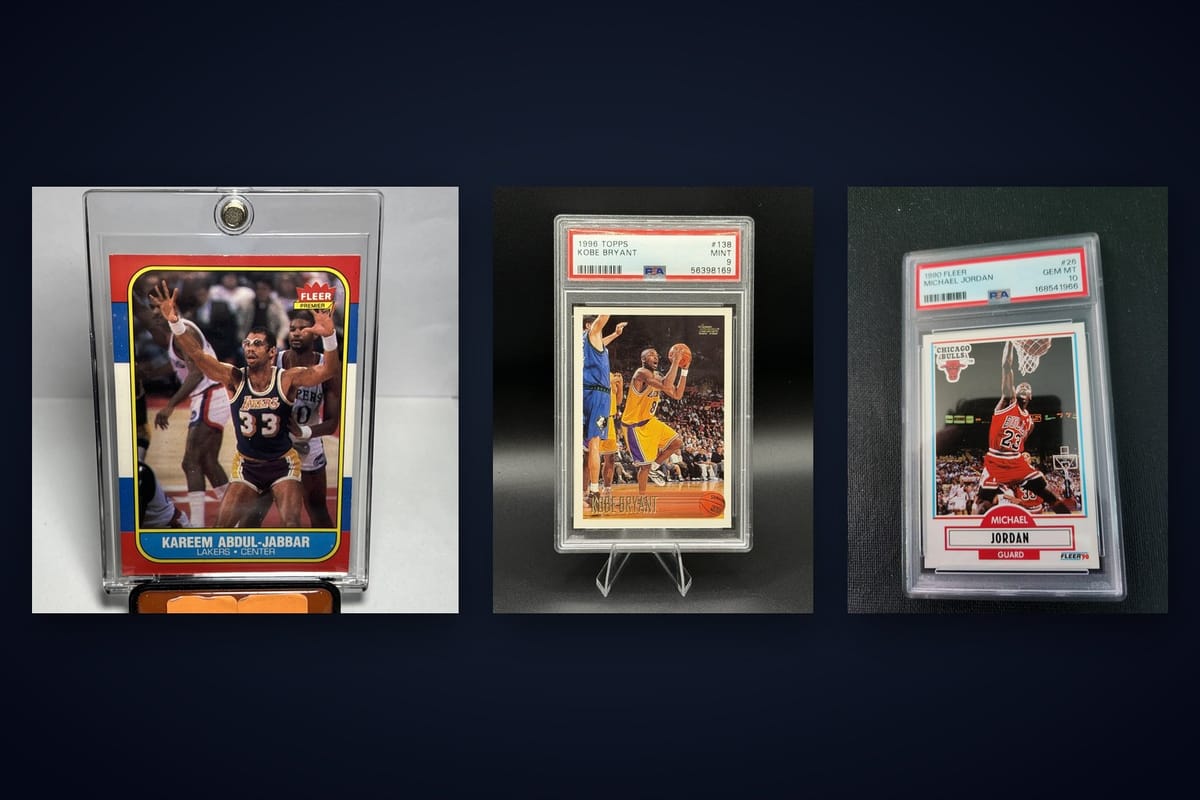
Kareem Abdul-Jabbar #1 1986 Fleer Sticker |
$44.99 | $15,641 | -22.4% |
 |
Kobe Bryant #138 1996 Topps |
$113.37 | $2,537 | -16.4% |
 |
Michael Jordan #26 1990 Fleer |
$10.00 | $757.73 | -16% |
 |
Michael Jordan #57 1986 Fleer |
$4,654 | $321,806 | -9.4% |
 |
Michael Jordan #21 1989 Fleer |
$27.54 | $3,860 | -7% |
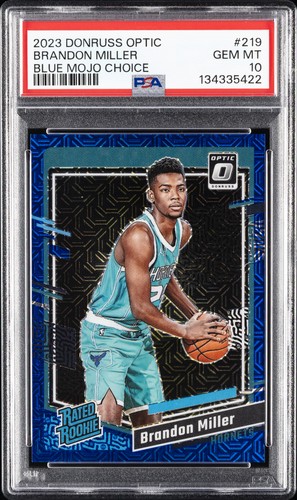 |
Brandon Miller [Blue Mojo Choice] #219 2023 Panini Donruss Optic |
$17.43 | $83.51 | -0.5% |
 |
Michael Jordan #120 1988 Fleer |
$215.75 | $13,293 | 0% |
 |
Kon Knueppel [Refractor] #254 2025 Topps Chrome |
$46.03 | $640.00 | 0% |
 |
Kobe Bryant [Refractor] #269 1996 Finest |
$6,500 | — | 0% |
 |
Kobe Bryant #81 1997 Metal Universe |
$346.39 | $3,001 | 0% |
 |
LeBron James [Black Refractor] #111 2003 Topps Chrome |
$1,330 | $480,000 | 0% |
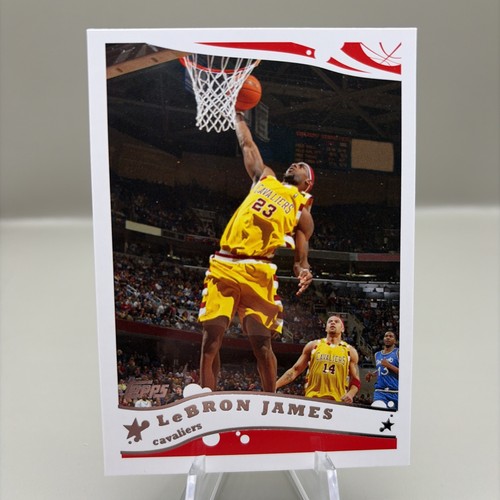 |
LeBron James #200 2005 Topps |
$10.77 | $299.02 | 0% |
Look up any card's current raw and graded value in Midpoint — and get an estimated grade before you pay to submit.
1. 10–20% Price Declines in Raw and Mid-Tier Modern Cards
As of data from October 19, 2026, basketball card prices have shown notable declines since summer 2026, with raw singles and PSA 9 modern cards among those experiencing decreases. These generally include popular 2025–26 rookies and mid-tier inserts whose prices rose during preseason hype and early NBA season excitement.
For instance, raw cards of rookies such as Victor Wembanyama and Scoot Henderson have reportedly declined by around 15%, while PSA 9 copies of top rookies and mid-tier veterans have seen declines estimated between 10% and 20%. The raw 2025-26 Panini Prizm Scoot Henderson base card has been noted to fall by about 18%, illustrating how supply and changing hype can impact the raw market.
- Raw cards tend to be more volatile due to immediate market supply changes.
- PSA 9 grades may experience steeper declines than PSA 10, reflecting buyer preference for top-grade cards.
- Mid-tier modern cards that saw speculative buying appear to be correcting.
2. Why Basketball Cards Are Losing Value: Supply, Hype, and Seasonal Adjustments
Several factors contribute to the basketball card market correction observed in October 2026. Panini’s 2026–27 releases, especially Prizm and National Treasures, have introduced new cards to the market, increasing supply and shifting demand away from prior-year stock.
Additionally, the initial hype around the 2025 draft class rookies is moderating as the NBA season progresses, which may temper speculative buying. Some collectors have become more cautious amid reports of overproduction and secondary-market saturation. Seasonal patterns also influence the market — October often sees adjustments as collectors reassess before the holiday buying season.
- Overstock and reprints can reduce scarcity premiums.
- Buyers may wait for clearer rookie performance trends before committing.
- Seasonal market patterns often lead to price adjustments in early fall.
3. Impact of 2026–27 Product Releases on Existing Card Demand
The launch of 2026–27 Panini Prizm and National Treasures sets has shifted collector focus toward new rookies and parallels, which can reduce demand for established 2025 cards. Preorder interest in these new sets may temporarily depress prices on comparable cards from the previous season.
Collectors often delay selling or buying older cards until they observe new rookie performance and product sell-through. This dynamic contributes to the current price softness for many raw and mid-tier graded cards from the prior year.
- New releases can create temporary supply-demand imbalances.
- Collectors may prioritize fresh rookies over prior season’s mid-tier cards.
- Preorder activity can cause short-term price volatility in existing stock.
4. Card Categories Falling Fastest: Raw Singles, PSA 9s, and Mid-Tier Rookie Cards
The most pronounced declines appear in raw singles and PSA 9 cards of popular modern rookies and mid-tier veterans. Raw base cards of Victor Wembanyama and Scoot Henderson have reportedly dropped near 18%, while PSA 9 versions of similar rookies have seen declines in the range of 12–20%.
Sealed hobby boxes from these sets also face downward pressure due to overstock and increased secondary-market availability, leading to price adjustments. Hobby boxes of 2025-26 Panini Prizm, for example, have softened as sellers compete in a saturated market.
- Raw cards lack grading premiums and reflect more immediate market shifts.
- PSA 9 cards may lose value faster than PSA 10 due to buyer preference for near-perfect condition.
- Sealed boxes experience downward pressure amid reprints and oversupply.
5. PSA 10 vs PSA 9 vs Raw: Grading Premiums and Volatility
PSA 10 basketball cards generally hold value better than PSA 9 or raw cards during the October 2026 price adjustments. The premium for top-grade cards persists because collectors often value perfect condition highly and pay premiums for PSA 10s, especially for scarce or iconic cards.
PSA 9 cards, while still valuable, tend to show greater price volatility and sharper declines as they occupy a more speculative price range. Raw cards, lacking grading validation, fluctuate more with supply and hype changes.
- Condition and centering are important: minor flaws can impact PSA 9 prices more than PSA 10.
- Midpoint’s AI digital grading tool can help estimate PSA and BGS grades before submission, potentially reducing grading risk.
- Collectors may benefit from targeting PSA 10 candidates by analyzing centering and condition.
6. Sealed Hobby-Box Pricing, Overstock, and Secondary Market Effects
Sealed hobby boxes for popular 2025–26 sets like Panini Prizm and National Treasures have softened in price, likely due to overproduction and increased availability. The October 2026 correction reflects cautious collector spending and anticipation of upcoming releases.
This surplus, combined with ongoing reprints and product restocks, contributes to downward price pressure. Buyers interested in sealed boxes should monitor inventory levels and consider timing purchases after price dips but before new product launches potentially increase prices.
- Overstock can lead to discounting and slower sales pace.
- Secondary market saturation may reduce urgency among buyers.
- Preorders for new sets can temporarily undercut sealed box values.
7. Card Segments Showing Resilience: Vintage Scarcity and High-End PSA 10s
Despite widespread price declines, some card categories remain relatively steady or show resilience. Scarce vintage cards, iconic Michael Jordan and LeBron James inserts, and high-grade PSA 10 examples tend to maintain stronger demand.
For example, PSA 10 Michael Jordan 1986 Fleer and high-grade LeBron James rookies have shown limited price impact. These segments benefit from collector passion, rarity, and historical significance, which may help insulate them from short-term market fluctuations.
- Low-population vintage cards often maintain value despite broader declines.
- High-end inserts and autographs may be less affected by market swings.
- Collectors often prioritize condition and rarity over short-term hype.
8. Buying Opportunities: How to Identify Undervalued Cards and Assess Grading Potential
The October 2026 dip may present strategic buying opportunities for collectors who can identify undervalued cards and grade well-centered copies. Tools like Midpoint allow collectors to measure centering precisely and obtain AI-based PSA, BGS, and CGC grade estimates before submitting cards for grading.
This pre-grading step can help minimize grading risks and assist in spotting raw cards with potential for high grades. Purchasing mid-tier cards at discounts and grading them might increase long-term value as the market evolves.
- Look for raw cards with strong centering and minimal edge or surface flaws.
- Use AI grading to estimate potential PSA or BGS grades and value.
- Consider grading cards during price dips to potentially maximize future returns.
9. Timing Purchases, Sales, and Grading Around Market Cycles
Timing can be important in the fluctuating basketball card market. Collectors may consider buying during dips in October before the holiday season, selling or grading cards ahead of new 2026–27 releases, and submitting cards for grading when market demand appears to be rising.
Monitoring preseason hype, rookie performance, and product release schedules can help optimize decisions. For example, submitting a well-centered 2025 rookie card for grading before Panini’s 2026–27 releases might position collectors to benefit from renewed interest.
- Track market trends and rookie performance closely.
- Avoid selling at the lowest points; buy strategically during dips.
- Use grading timing to add value before potential market rebounds.
10. Key 2026–27 Rookies and Modern Players Influencing October Prices
Rookies like Victor Wembanyama and Scoot Henderson remain central to market dynamics. While early hype has moderated, their ongoing NBA performance will likely influence price trends. Mid-tier players with variable performance also impact mid-level card values.
Collectors tracking these players and utilizing grading tools like Midpoint may better anticipate price movements and identify cards to buy or hold during the correction.
- Top rookies’ performance can affect card demand and prices.
- Mid-tier veterans’ cards may reflect broader market confidence.
- Using digital grading tools can support more informed investment choices.
Conclusion
The basketball card price declines observed in October 2026 appear to result from a combination of increased supply, moderating rookie hype, new product releases, and seasonal market cycles. While raw and PSA 9 mid-tier modern cards seem to face the steepest declines, vintage, scarce, and PSA 10 cards tend to hold value better. Collectors may leverage this dip by identifying undervalued cards, accurately measuring centering and condition with Midpoint, and timing grading submissions and purchases thoughtfully. Staying informed about rookie performance and product release schedules can help navigate this market adjustment and position collections for potential long-term growth.
FAQ
Q: Why are basketball card prices dropping in October 2026?
A: Prices have declined due to factors including increased supply from new 2026–27 releases, moderating rookie hype from the 2025 draft class, market saturation, cautious buyer demand, and seasonal adjustments common in early fall.
Q: Which basketball cards are losing value the fastest right now?
A: Raw singles, PSA 9 mid-tier modern cards, rookie cards from the 2025-26 class, and sealed hobby boxes experiencing overstock and reprints are among those showing the most noticeable declines as of October 2026.
Q: Are basketball cards a good buy during the October 2026 dip?
A: The dip may offer buying opportunities for undervalued cards, particularly well-centered raw cards that could grade highly. Using AI grading tools can help identify these prospects and reduce grading risks.
Q: Do PSA 10 basketball cards hold value better than PSA 9 or raw cards?
A: PSA 10 cards generally maintain stronger value and tend to show less volatility during market adjustments because collectors prize perfect condition and scarcity in top grades.
Q: Should I buy raw basketball cards or graded cards during the market correction?
A: Buying raw cards with strong centering and condition can be advantageous if you plan to grade them. Digital grading tools like Midpoint can help estimate grades beforehand, potentially reducing grading risk and enhancing value.
Q: Will basketball card prices continue to fall after October 2026?
A: Prices may stabilize or recover depending on factors such as rookie performance, new product demand, and broader market trends. Collectors should monitor these elements and consider using dips strategically for buying or grading cards.
Free to start
Try the Midpoint app
Grade any card from a photo, see its raw and PSA 10 value, and track what your collection is worth — free.
Get it on iPhoneGet it on Android