Best 1951 Hockey Cards: Value, Rookies & Grading Insights
Discover the best 1951 hockey cards, top rookie cards, PSA 10 values, and grading tips to maximize your collection’s worth.

Estimated reading time: 8 min
Key Takeaways
- The 1951 Parkhurst set is a notable hockey card collection, prized for its rookie cards and classic design.
- Gordie Howe, Maurice Richard, and Terry Sawchuk rookie cards are among the most valuable 1951 hockey cards.
- PSA 10 grades can significantly increase card value, especially for the top rookies.
- Centering and condition are critical for grading; tools like Midpoint can help measure centering precisely before submission.
- The 1951 Parkhurst set’s market trends suggest potential long-term investment value for key rookie cards.
When it comes to vintage hockey cards, the best 1951 hockey cards remain a prized focus for collectors and investors alike. The 1951 Parkhurst set, in particular, is a historic collection featuring iconic rookies such as Gordie Howe, Maurice Richard, and Terry Sawchuk. Knowing which cards from this set are worth grading, their current values especially in PSA 10 condition, and how condition impacts price can help inform your collecting strategy. In this guide, we break down the most valuable 1951 hockey cards, rookie highlights, grading insights, and market trends as of 2026-09-04 so you can make informed decisions and maximize your collection’s potential.

Card values — live data from Midpoint's card database, as of 2026-09-04. Prices move; Midpoint refreshes these daily.
| Card | Raw | PSA 10 | Gem premium | |
|---|---|---|---|---|
 |
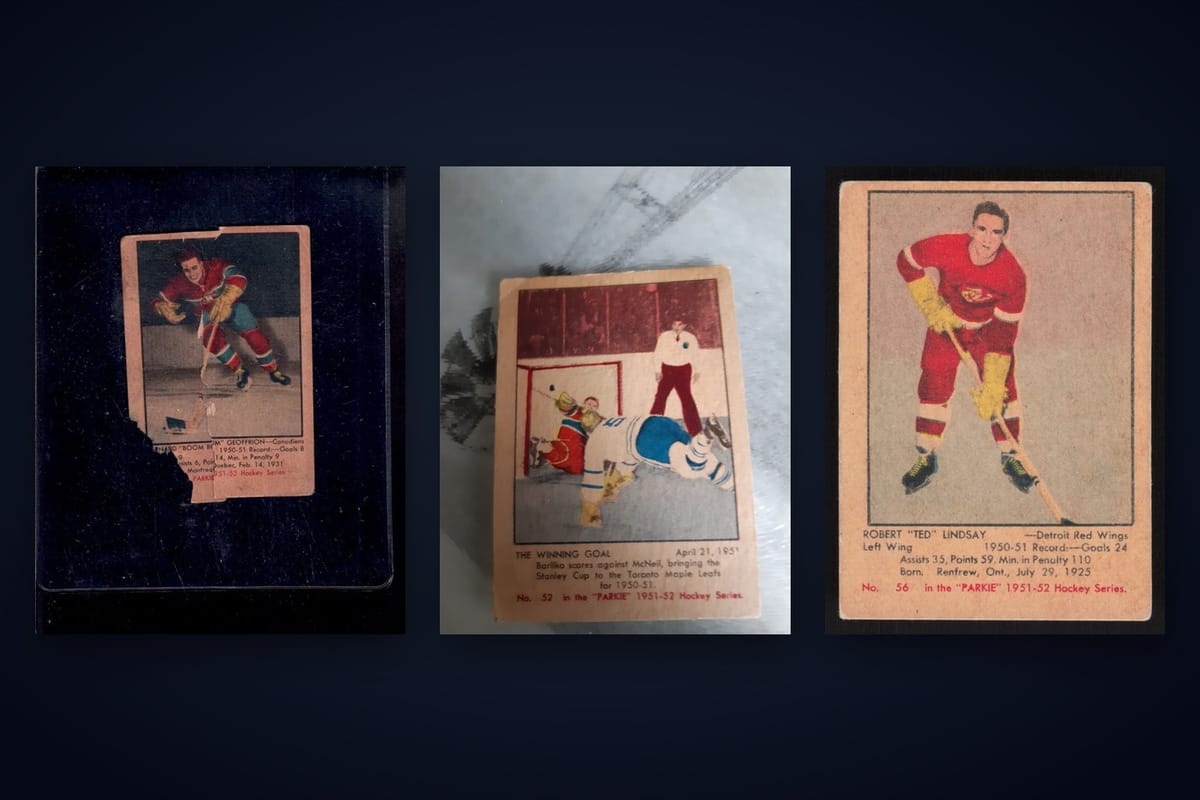
Boom Boom Geoffrion #14 1951 Parkhurst |
$220.50 | $55,134 | 250× |
 |
The Winning Goal #52 1951 Parkhurst |
$205.02 | $49,987 | 243.8× |
 |
Ted Lindsay #56 1951 Parkhurst |
$155.57 | $38,943 | 250.3× |
 |
Red Kelly #55 1951 Parkhurst |
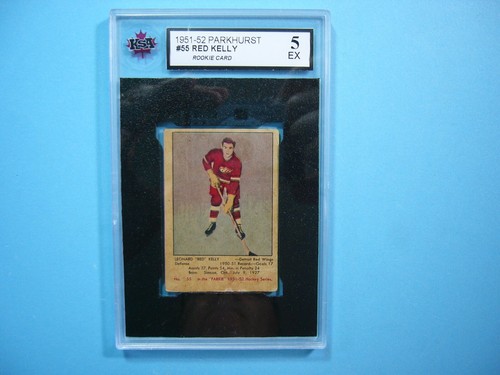
$136.16 | $33,576 | 246.6× |
 |
Alex Delvecchio #63 1951 Parkhurst |
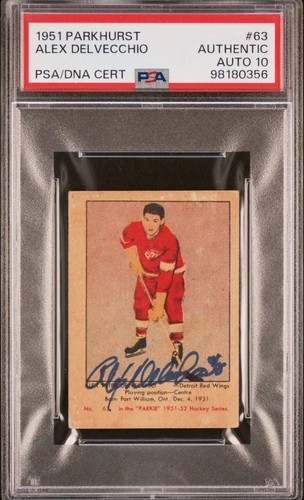
$106.63 | $26,669 | 250.1× |
 |
Turk Broda #75 1951 Parkhurst |
$108.39 | $25,730 | 237.4× |
 |
Elmer Lach #1 1951 Parkhurst |
$95.33 | $23,841 | 250.1× |
 |
Teeder Kennedy #86 1951 Parkhurst |
$84.87 | $21,248 | 250.4× |
 |
Bill Mosienko #49 1951 Parkhurst |
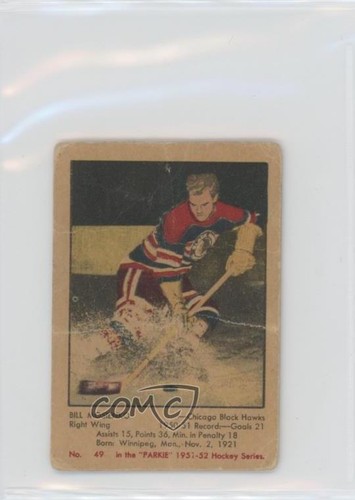
$80.94 | $20,211 | 249.7× |
 |
Sid Abel #64 1951 Parkhurst |
$66.11 | $18,314 | 277× |
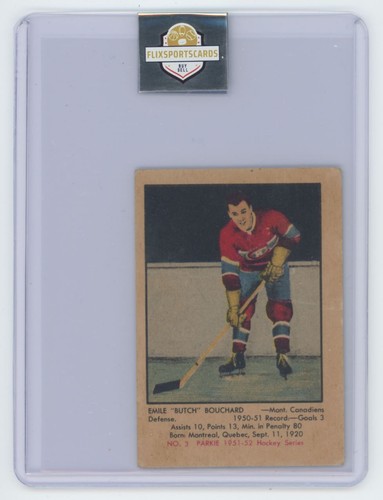 |
Butch Bouchard #3 1951 Parkhurst |
$68.35 | $17,371 | 254.2× |
 |
Howie Meeker #72 1951 Parkhurst |
$59.40 | $14,986 | 252.3× |
Look up any card's current raw and graded value in Midpoint — and get an estimated grade before you pay to submit.
1. 1951 Parkhurst Set: Why It Matters
The 1951 Parkhurst hockey card set is regarded as a foundational vintage hockey collection. It features 100 cards showcasing the top NHL stars of the era with a clean design that appeals to collectors. This set is especially known for its key rookie cards, making it a sought-after target for both enthusiasts and investors.
Its importance is amplified by the scarcity of high-grade specimens. Cards from this set in PSA 9 or 10 are relatively rare and can command significant premiums. The set’s size and checklist simplicity make it approachable, yet challenging to complete in gem condition.
- 100-card set featuring top 1950-51 NHL players
- Known for iconic rookie cards
- Scarcity of high-grade examples can drive value
2. Top Rookie Cards: Gordie Howe, Maurice Richard, Terry Sawchuk
The marquee rookies in the 1951 Parkhurst set are central to its value. Gordie Howe’s rookie card (#32) is often considered the key card of the set. Maurice Richard (#35) and Terry Sawchuk (#34) rookie cards also rank among the most valuable and desirable.
Each player’s rookie card holds both historical significance and market demand, with values typically higher in PSA 10 condition. These rookies represent legendary NHL careers, making their cards sought-after assets.
- Gordie Howe #32: Considered the set’s key rookie card, high-grade copies have been known to fetch significant sums.
- Terry Sawchuk #34: A top-tier goalie rookie with notable values in gem grades.
- Maurice Richard #35: A Hall of Famer whose rookie card commands strong prices in PSA 10.
3. Card Value Tiers: Which 1951 Hockey Cards Are Worth Money?
While the rookie cards dominate, several other cards in the 1951 Parkhurst set are also valuable but tiered below the top rookies. Stars like Ted Lindsay (#29), Elmer Lach (#22), and Bill Barilko (#61) hold collector interest and can command four-figure values in high grades.
Lower-tier cards in the set tend to trade in the low hundreds raw, but any card in PSA 9 or 10 can see significant appreciation. This tiered value structure helps collectors prioritize which cards merit grading based on budget and goals.
- Top tier: Rookie cards of Howe, Richard, Sawchuk
- Mid-tier: Other stars like Lindsay, Lach, Barilko
- Lower tier: Role players and less prominent stars
4. 1951 Hockey Cards PSA 10: The Gem-Grade Premium
The difference in value between raw and PSA 10 graded 1951 hockey cards can be substantial. For example, Gordie Howe’s rookie card in raw condition may average several thousand dollars, but PSA 10 specimens have sold for significantly higher amounts, reflecting a premium.
This premium reflects the scarcity of perfectly centered, flawless cards from the 1950s. PSA 10 grades signal top-tier quality that collectors and investors prize. However, many cards from this set fail to reach PSA 10 due to centering or surface wear.
- PSA 10 Howe rookie card: prices have exceeded $40,000 (as of 2026-09-04)
- PSA 10 Maurice Richard rookie: prices around $25,000
- PSA 10 Sawchuk rookie: prices above $15,000
5. How Centering and Condition Impact 1951 Hockey Card Value
Centering is one of the most critical factors in grading 1951 hockey cards. Slight misalignment can downgrade a card by multiple points, severely affecting its value. Surface quality, corners, and edges also play major roles.
Using digital grading tools like Midpoint lets collectors precisely measure centering down to the millimeter before submitting cards for grading, improving chances of achieving PSA 10 or BGS 9.5 grades.
- Perfect centering often distinguishes PSA 10 from PSA 9 cards
- Surface flaws and edge wear reduce grade and value
- AI-powered tools help pre-grade and estimate before costly grading fees
6. Market Trends & Recent Sales of 1951 Parkhurst Cards
Recent auction data and private sales show steady demand for 1951 Parkhurst rookies. While the market fluctuates, the top rookies have maintained strong collector interest. For example, a PSA 9 Gordie Howe rookie has sold near $12,000, indicating ongoing demand.
Lower-grade raw cards have also gained traction among budget collectors, but grading remains a key differentiator for premium pricing. Investors keep a close eye on population reports, which show relatively few PSA 10s exist, maintaining scarcity.
- Consistent demand for Howe, Richard, Sawchuk rookies
- PSA 10 population is low, supporting higher prices
- Growing interest in mid-grade raw cards as affordable entry points
7. 1951 Hockey Rookie Cards: Identification and Value
Identifying true rookie cards from 1951 is important. The Parkhurst set’s rookies are clearly defined, with Gordie Howe (#32), Terry Sawchuk (#34), and Maurice Richard (#35) standing out as the highest-value rookies. Other notable rookies include Jack McDonald (#57) and Paul Ronty (#60), who carry more modest value.
Rookie cards from this set are generally more scarce in high grade, which can push values upward. Collectors focusing on rookies often prioritize these cards to build iconic vintage hockey collections.
- Rookies have the highest demand and value
- Cards #32, #34, #35 are top rookies
- Secondary rookies include #57 and #60
8. Comparing 1951 Parkhurst to Other Vintage Hockey Sets
Compared to contemporaneous sets like the 1951-52 Topps hockey cards, the Parkhurst set is smaller but more focused on star power. Its clean design and scarcity in high grades often give it an edge in collector preference.
The Topps set is larger and features more cards but can be less condition-sensitive. Parkhurst’s rookie cards generally command higher premiums, making it a preferred choice for many vintage hockey collectors.
- Parkhurst: 100 cards, star-focused, higher-grade scarcity
- Topps 1951-52: larger set, more common, lower grade premiums
- Parkhurst rookies are often more valuable on average
9. Best Long-Term Holds from the 1951 Parkhurst Set
For collectors and investors, the Gordie Howe rookie card is often considered a premier long-term hold due to Howe’s legendary status and the card’s rarity. Maurice Richard and Terry Sawchuk rookies also offer potential investment value.
Other high-grade stars like Ted Lindsay and Bill Barilko are solid secondary holds. Using Midpoint’s portfolio tracking tools can help monitor your collection’s value over time and inform when to buy or sell.
- Gordie Howe rookie: top long-term investment
- Maurice Richard & Terry Sawchuk: prime secondary holds
- Use tools like Midpoint for portfolio tracking and grading insights
Conclusion
The best 1951 hockey cards, particularly from the Parkhurst set, remain highly coveted for their historic rookie cards and scarcity in top condition. Understanding which cards are most valuable, how PSA 10 grades impact price, and the critical role of centering can help collectors and investors make informed decisions.
Before submitting your cards for grading, consider using AI-driven tools like Midpoint to pre-grade and measure centering precisely. This approach can maximize the chances of achieving gem-grade PSA 10s and capturing premium market value, especially for the iconic Gordie Howe, Maurice Richard, and Terry Sawchuk rookies.
FAQ
Q: What are the best 1951 hockey cards to buy?
A: The top 1951 hockey cards to buy are generally the rookie cards of Gordie Howe (#32), Maurice Richard (#35), and Terry Sawchuk (#34) from the Parkhurst set. These cards hold the highest value and collector demand.
Q: Which 1951 hockey card is the most valuable?
A: Gordie Howe’s rookie card (#32) from the 1951 Parkhurst set is widely regarded as the most valuable, especially in PSA 10 condition, where it has sold for over $40,000 as of 2026-09-04.
Q: Is the 1951 Parkhurst Gordie Howe rookie card the key card in the set?
A: Yes, Gordie Howe’s rookie card is considered the key card of the 1951 Parkhurst set due to its iconic status and high market value.
Q: How much is a 1951 Maurice Richard card worth?
A: A Maurice Richard rookie card (#35) in PSA 10 condition can be worth around $25,000, though values vary based on condition and grading.
Q: How rare is the 1951 Parkhurst hockey set in high grade?
A: High-grade (PSA 9 or 10) 1951 Parkhurst cards are relatively rare due to centering and condition challenges, leading to significant premiums for gem-grade examples.
Q: Which 1951 Parkhurst cards are considered rookies?
A: The primary rookies in the 1951 Parkhurst set are Gordie Howe (#32), Terry Sawchuk (#34), and Maurice Richard (#35). Other rookies include Jack McDonald (#57) and Paul Ronty (#60).
Free to start
Try the Midpoint app
Grade any card from a photo, see its raw and PSA 10 value, and track what your collection is worth — free.
Get it on iPhoneGet it on Android