Best 1952 Baseball Cards: Top Picks & Value Guide
Discover the best 1952 baseball cards that are worth money, including PSA 10 values, rookie highlights, and grading tips for collectors.

Estimated reading time: 8 min
Key Takeaways
- The 1952 Topps set is one of the most iconic baseball card collections, prized for stars and rookies.
- Mickey Mantle #311 is widely considered the most valuable 1952 baseball card, especially in high-grade condition.
- Card condition, centering, and grading significantly impact 1952 card values.
- Low-number cards tend to be rarer and often more valuable than high-number counterparts.
- Midpoint app helps collectors estimate grading and value before costly submissions.
For baseball card collectors, the 1952 baseball cards remain some of the most sought-after items in the hobby. This guide covers the best 1952 baseball cards, including the most valuable rookie cards, grading insights, and how to navigate the gem premium gap. Whether you’re a seasoned collector or just starting, knowing which cards from the 1952 Topps set and others are worth money can help you make smart decisions about buying, grading, or holding. Using data from Midpoint’s extensive trading card database as of 2026-09-04, we’ll also highlight key cards and offer tips on authenticating and valuing your collection.
Card values — live data from Midpoint's card database, as of 2026-09-04. Prices move; Midpoint refreshes these daily.
| Card | Raw | PSA 10 | Gem premium | |
|---|---|---|---|---|
 |
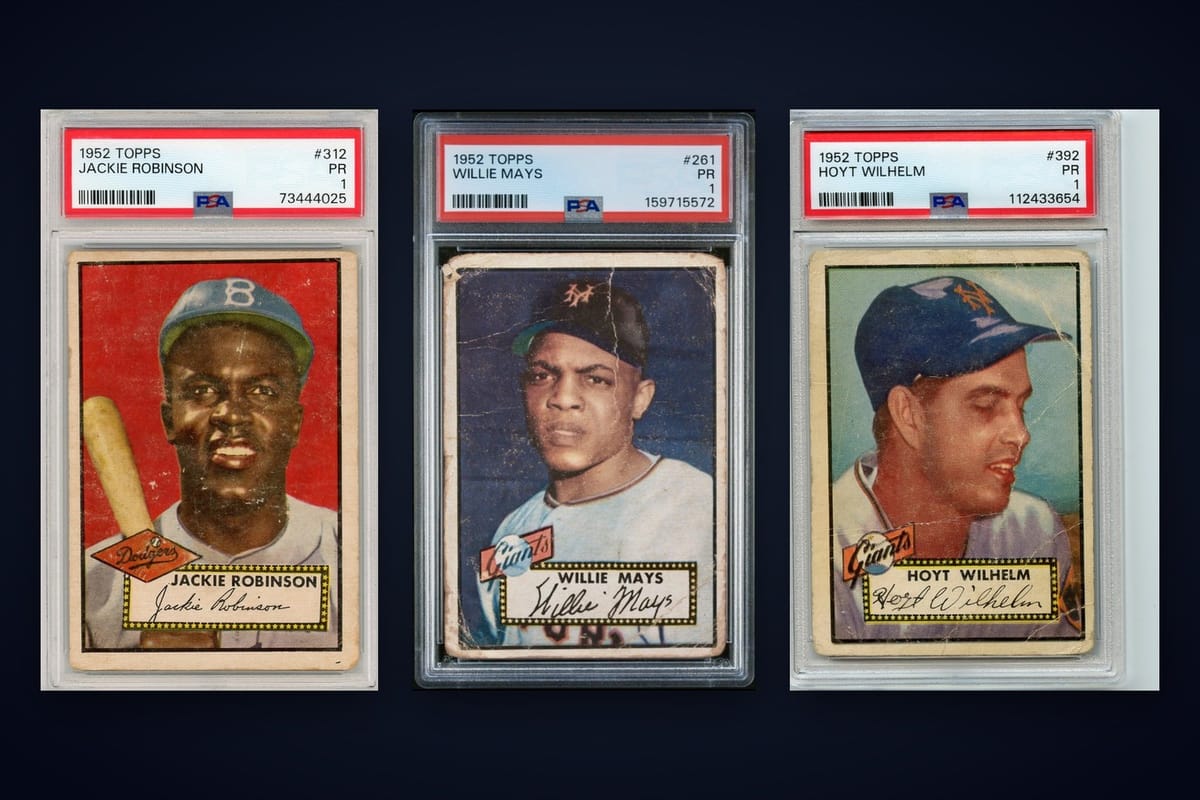
Jackie Robinson #312 1952 Topps |
$6,754 | $1,449,443 | 214.6× |
 |
Willie Mays #261 1952 Topps |
$3,644 | $979,149 | 268.7× |
 |
Hoyt Wilhelm #392 1952 Topps |
$1,406 | $335,199 | 238.4× |
 |
Roy Campanella #314 1952 Topps |
$2,177 | $329,618 | 151.4× |
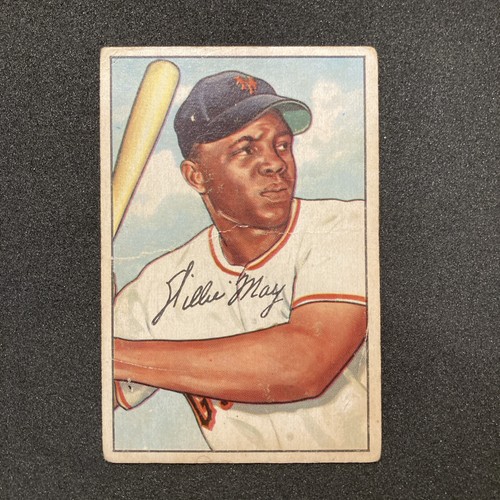 |
Willie Mays #218 1952 Bowman |
$1,048 | $250,730 | 239.3× |
 |
Pee Wee Reese #333 1952 Topps |
$926.37 | $220,128 | 237.6× |
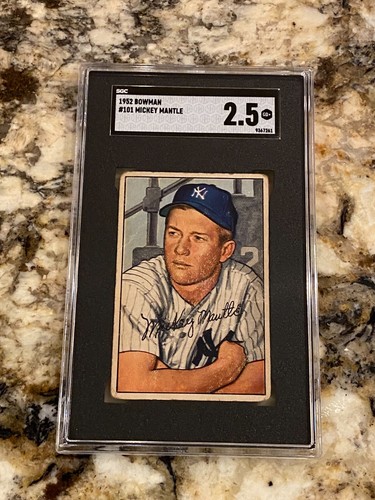 |
Mickey Mantle #101 1952 Bowman |
$2,700 | $102,981 | 38.1× |
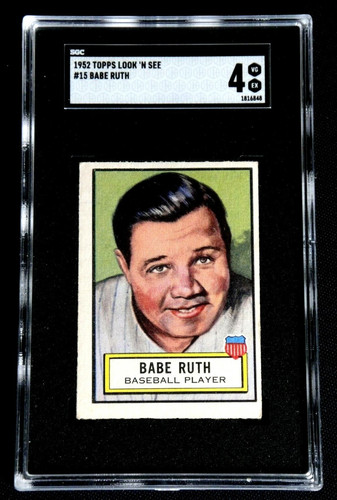 |
Babe Ruth #15 1952 Topps Look 'n See |
$400.00 | $97,525 | 243.8× |
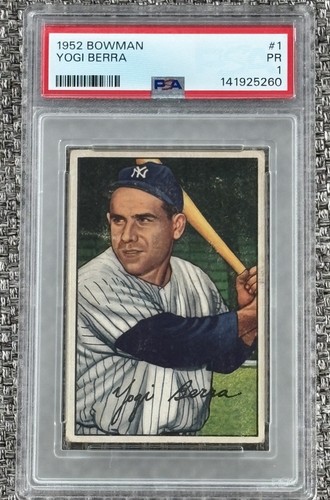 |
Yogi Berra #1 1952 Bowman |
$136.01 | $90,000 | 661.7× |
 |
Yogi Berra #191 1952 Topps |
$256.50 | $68,619 | 267.5× |
 |
Stan Musial #196 1952 Bowman |
$250.00 | $60,106 | 240.4× |
 |
Bob Feller #88 1952 Topps |
$120.97 | $55,632 | 459.9× |
Look up any card's current raw and graded value in Midpoint — and get an estimated grade before you pay to submit.
1. The 1952 Topps Set Overview
The 1952 Topps baseball card set is widely regarded as a cornerstone of modern baseball card collecting. Consisting of 407 cards, it introduced vibrant artwork and larger card sizes that set a new standard. The set features several Hall of Famers, rookies, and star veterans, making it a must-have for many collectors.
Topps’ 1952 release gained prominence over competitors like 1952 Bowman, due to its iconic design and star power. Because of the set’s size and printing inconsistencies, some cards are rarer in certain numbering sequences, especially low-number cards, which tend to be more sought after.
- Contains 407 cards, including stars, rookies, and managers
- Introduced oversized, colorful card design
- Low-number cards are generally scarcer and more valuable
2. Mickey Mantle #311: The Key Flagship Rookie Card
Mickey Mantle’s #311 card remains the most famous and valuable 1952 baseball card. Its scarcity, condition sensitivity, and Mantle’s legendary status drive demand and pricing. A raw Mantle #311 in decent condition can fetch thousands, while high-grade PSA 10 versions have sold for six figures.
As of 2026-09-04, a 1952 Topps Mickey Mantle #311 graded PSA 10 has been known to command prices exceeding $200,000. The card's value fluctuates heavily based on centering, surface quality, and corners, so pre-grading with tools like Midpoint’s AI digital grading can help collectors estimate potential PSA or BGS grades before submission.
- Mickey Mantle #311 is the 1952 Topps flagship rookie
- PSA 10 versions have sold for over $200,000
- Centering and surface quality significantly impact grade and price
3. Other Most Valuable 1952 Baseball Cards
Beyond Mantle, several other cards from the 1952 Topps set are highly valuable. Notable Hall of Famers include Jackie Robinson (#220), Willie Mays (#261), Eddie Mathews (#181), and Robin Roberts (#159). These cards command premium prices especially in PSA 9 or 10 grades.
Some of the top valuable cards as of 2026-09-04 include:
- Jackie Robinson #220 – key early integration-era card
- Willie Mays #261 – highly sought rookie
- Eddie Mathews #181 – star third baseman rookie
- Robin Roberts #159 – dominant pitcher card
These cards can range from several thousands for raw copies in good condition to tens of thousands or more when graded PSA 9 or higher. The rarity of high-grade versions and the players’ legendary status fuel strong collector interest.
4. Understanding PSA Grading and Price Tiers
Condition is a critical factor in the 1952 baseball card market. PSA grading tiers greatly influence a card’s value. For example, a PSA 10 (Gem Mint) card is typically much more valuable than a PSA 8 or 9 due to the rarity of perfect centering, sharp corners, and flawless surfaces.
Knowing the grading scale differences by company (PSA, BGS, CGC, TAG) is helpful for collectors. Midpoint’s AI grading tool estimates these grades based on centering, corners, edges, and surface, helping you decide if grading is worth the cost. For example, a 1952 Topps Mantle card estimated at PSA 9 by Midpoint might be worth grading, whereas a card with visible flaws might not justify submission fees.
- PSA 10 cards are rare and command premium prices
- PSA 8 or 9 grades still hold strong value but less than Gem Mint
- Midpoint helps pre-grade and assess card condition accurately
5. Low-Number vs High-Number Cards
The 1952 Topps set is divided into low-number (1-200) and high-number (201-407) series. Low-number cards are generally scarcer since Topps produced fewer copies, making them more valuable. High-number cards are more plentiful but often suffer from centering issues, peeling, and other condition problems.
The so-called “high-number scarcity problem” refers to the fact that high-number cards are often found in poorer condition, decreasing their value despite availability. Collectors prize low-number cards like Mickey Mantle #311 and Jackie Robinson #220 for their rarity and condition potential.
- Low-number cards are generally scarcer and more desirable
- High-number cards tend to have condition problems
- Centering measurement tools aid in spotting gem-quality cards
6. How to Identify Authentic 1952 Topps Cards
With growing demand, counterfeit and reprint 1952 Topps cards exist. To ensure authenticity, collectors should examine print dot patterns, card stock texture, and ink quality. Authentic cards have specific printing characteristics and paper weight unique to Topps in 1952.
Using Midpoint’s card centering tool and grading app can help detect anomalies by analyzing edges and surface conditions. Also, consulting trusted grading companies and checking population reports can help prevent costly mistakes.
- Check print quality and dot patterns carefully
- Feel card stock for correct thickness and texture
- Use grading tools and expert opinions for verification
7. Complete 1952 Topps Set Breakdown
The full 1952 Topps set comprises 407 cards spread across multiple series and includes stars, rookies, managers, and coaches. It offers a broad collecting opportunity, from affordable commons to ultra-premium rarities.
Collectors often start with key rookie cards and Hall of Famers, then gradually build toward the complete set. Midpoint's database covers all cards and their current market values, making it easy to track your collection’s worth and identify gaps.
8. Investment Outlook and Graded Vs Raw Cards
Investing in 1952 baseball cards requires balancing raw card condition, grading costs, and market demand. High-grade PSA 10 cards generally command the highest prices, but grading fees and submission risks are factors.
Raw cards in excellent condition with sharp centering and minimal wear may be worth grading, especially if Midpoint’s pre-grade estimate suggests a PSA 9 or 10. Conversely, lower-condition cards often hold more value raw due to grading costs outweighing potential price gains.
- High-grade PSA 10 cards tend to yield the best investment returns
- Pre-grade with Midpoint to avoid unnecessary grading fees
- Raw cards with visible flaws might not be worth grading
9. 1952 Topps Vs 1952 Bowman: Why Topps Dominates
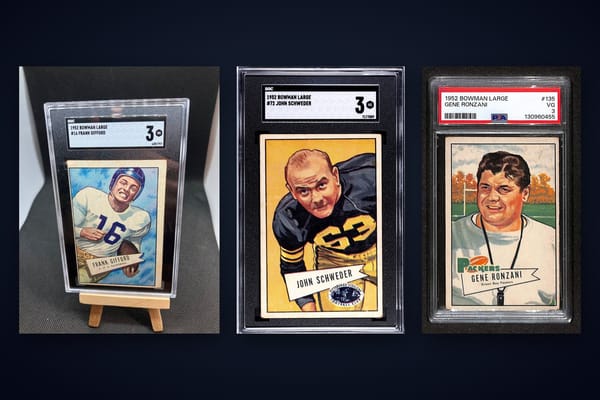
While 1952 Bowman also produced baseball cards, Topps gained greater popularity due to superior card design, star players, and marketing. Topps’ larger card size and better color made it more collectible. Today, 1952 Topps cards generally command higher prices and are more widely recognized.
Collectors typically prioritize 1952 Topps over Bowman, though some Bowman cards remain collectible. The strong brand recognition and historical significance of Topps contribute to its dominance.
Conclusion
The best 1952 baseball cards are centered around the iconic 1952 Topps set, with Mickey Mantle’s #311 card leading the pack as the most valuable. Understanding grading tiers, centering impact, and rarity differences between low- and high-number cards is essential for collectors aiming to build or invest wisely in this classic era. Using the Midpoint app to pre-grade and track your collection can save money and guide your investment decisions by providing instant PSA, BGS, CGC, and TAG estimates before submitting cards for grading. Whether you’re chasing rookies, Hall of Famers, or completing the full 407-card set, this guide equips you with the essentials to navigate the market confidently.
Explore more about grading and centering with Midpoint at Midpoint and consider reading their detailed Card Centering Tool guide for precise grading insights.
FAQ
Q: What is the most valuable 1952 baseball card?
A: The Mickey Mantle #311 card from the 1952 Topps set is widely considered the most valuable, with PSA 10 graded versions having sold for over $200,000 as of 2026.
Q: Why is the 1952 Topps Mickey Mantle card so expensive?
A: Its combination of rarity, Mantle’s legendary status, and the difficulty in finding high-grade copies drive its high value, especially in PSA 10 condition.
Q: What are the rarest 1952 Topps baseball cards?
A: Low-number cards, particularly those under #200, are generally rarer and more valuable than high-number cards due to lower print runs and better condition potential.
Q: How much is a 1952 Topps baseball card worth in different grades?
A: Values vary widely; PSA 10 cards can be worth many times more than PSA 8 or 9. For example, a Mantle #311 PSA 10 has sold for over $200,000, while lower grades are considerably less.
Q: How can you tell if a 1952 Topps card is real or a reprint?
A: Authentic cards show specific print dot patterns, correct card stock, and ink quality. Tools like Midpoint’s grading app aid in detecting inconsistencies. Expert grading and population reports also help verify authenticity.
Q: Is 1952 Topps or 1952 Bowman more valuable?
A: The 1952 Topps set is generally more valuable and collectible due to its iconic design, star players, and higher demand compared to 1952 Bowman.
Free to start
Try the Midpoint app
Grade any card from a photo, see its raw and PSA 10 value, and track what your collection is worth — free.
Get it on iPhoneGet it on Android