Best 1957 Basketball Cards: Top Picks, Values & Grading Tips
Discover the best 1957 basketball cards, key rookies, and grading tips. Learn which cards hold top value raw and in PSA 10 grades.

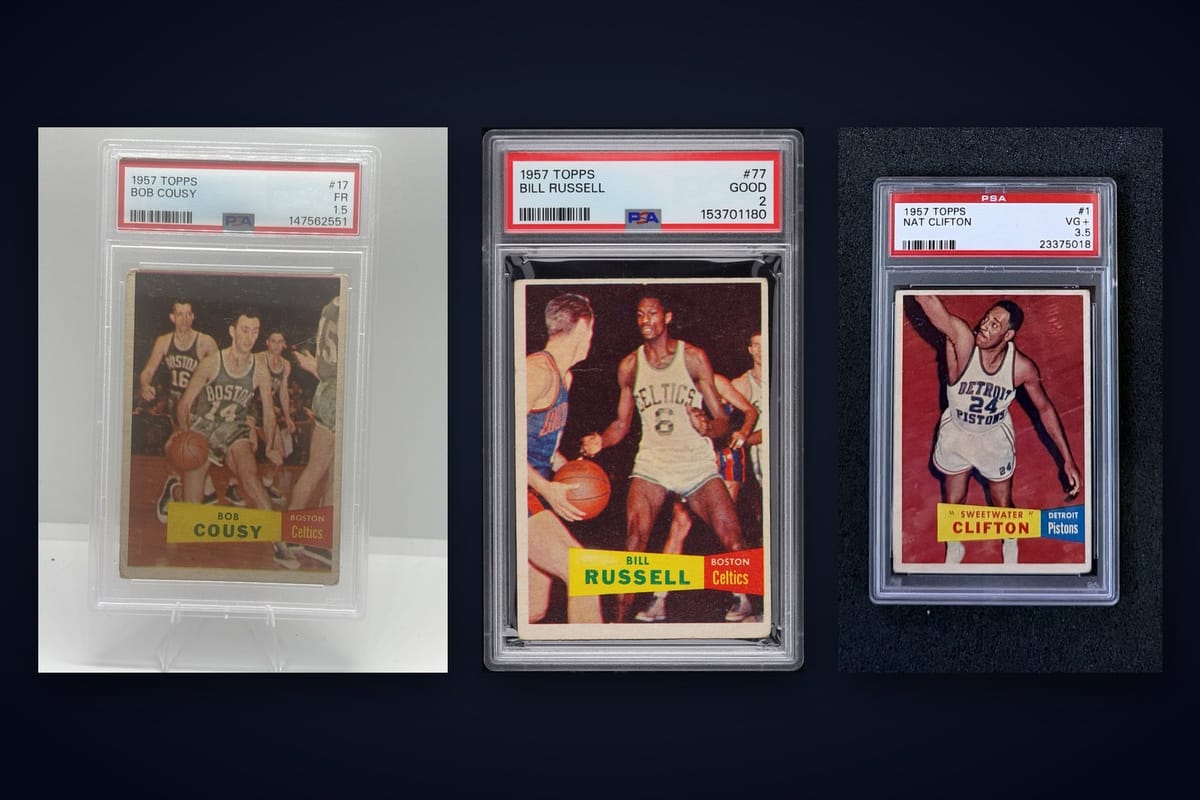
Estimated reading time: 9 min
Key Takeaways
- The 1957 Topps basketball set is a cornerstone of vintage hoops collecting, featuring notable rookie cards like Bill Russell #77.
- Key rookie cards and stars such as Bob Cousy #17 and Bill Russell are highly sought after, especially in top PSA grades.
- Centering and card condition are important grading factors that can significantly affect value.
- Population data indicates that high-grade 1957 basketball cards are relatively scarce, which can influence prices.
- Using AI tools like Midpoint can help collectors measure centering and estimate grading before submission.
The 1957 Topps basketball card set is a landmark in vintage basketball collecting, marking Topps’ first basketball issue. Collectors seeking the best 1957 basketball cards will find this set packed with valuable rookies, iconic stars, and challenging grading standards. Whether you’re hunting raw cards worth money or aiming for top PSA 10 grades, understanding the nuances of this set is key.
Below, explore a detailed list of the most valuable cards, rookie highlights, grading considerations, and market insights to help you navigate the 1957 basketball card landscape with confidence.
Card values — live data from Midpoint's card database, as of 2026-09-04. Prices move; Midpoint refreshes these daily.
| Card | Raw | PSA 10 | Gem premium | |
|---|---|---|---|---|
 |
Bob Cousy #17 1957 Topps |
$496.00 | $424,560 | 856× |
 |
Bill Russell #77 1957 Topps |
$708.60 | $401,485 | 566.6× |
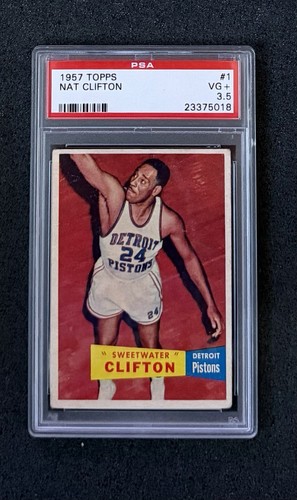 |
Nat Clifton #1 1957 Topps |
$138.75 | $29,104 | 209.8× |
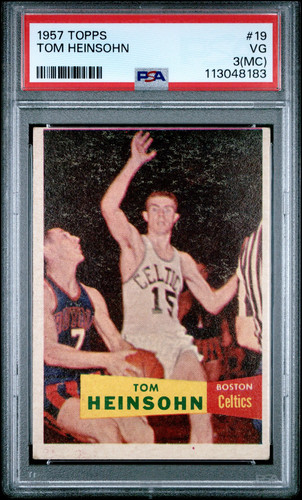 |
Tom Heinsohn #19 1957 Topps |
$100.49 | $21,444 | 213.4× |
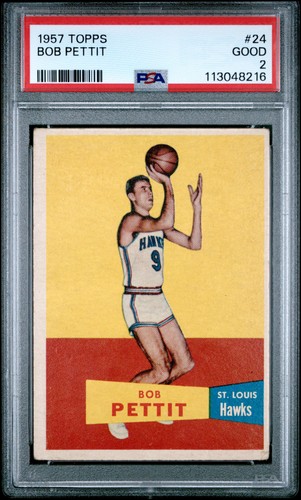 |
Bob Pettit #24 1957 Topps |
$98.18 | $21,335 | 217.3× |
 |
Cliff Hagan #37 1957 Topps |
$95.19 | $19,934 | 209.4× |
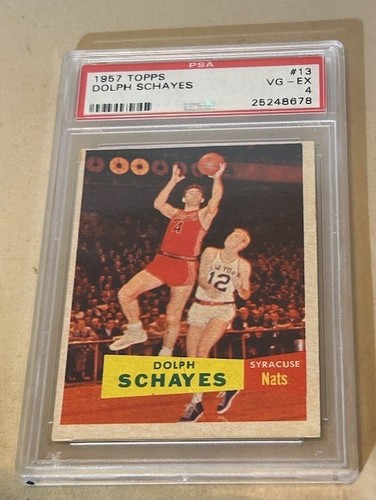 |
Dolph Schayes #13 1957 Topps |
$75.70 | $15,884 | 209.8× |
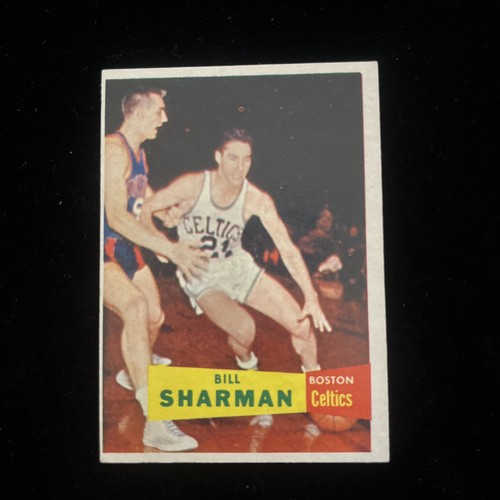 |
Bill Sharman #5 1957 Topps |
$67.88 | $14,023 | 206.6× |
 |
Jack Twyman #71 1957 Topps |
$50.79 | $10,697 | 210.6× |
 |
Tom Gola #44 1957 Topps |
$50.50 | $10,610 | 210.1× |
 |
Clyde Lovellette #78 1957 Topps |
$41.29 | $9,558 | 231.5× |
 |
Larry Foust #18 1957 Topps |
$42.58 | $8,953 | 210.3× |
Look up any card's current raw and graded value in Midpoint — and get an estimated grade before you pay to submit.
1. 1957 Topps Basketball: Why This Set Matters
The 1957-58 Topps basketball set was Topps’ inaugural basketball release, making it historically significant and highly collectible. This 72-card set introduced key rookie cards and early NBA legends in a format that collectors appreciate for its vintage aesthetics and relative scarcity of high-grade examples.
Its importance comes from several factors:
- First major basketball set by Topps, a dominant sports card manufacturer.
- Contains rookie cards of Hall of Famers like Bill Russell and Bob Cousy.
- Cards are known to be challenging to find in high grade due to centering and corner issues.
These elements combine to make the 1957 basketball cards a sought-after foundation for vintage collectors.
2. Bill Russell #77 Rookie Card: The Crown Jewel
Bill Russell’s rookie card (#77) is among the most iconic and valuable cards in the 1957 set. As an 11-time NBA champion and one of the greatest defensive players ever, Russell’s card holds significant basketball history.
As of 2026-09-04, raw copies of Bill Russell #77 generally start around $5,000, while PSA 10 graded examples can command substantially higher prices, sometimes tens of thousands of dollars, reflecting their relative scarcity. The premium gap between raw and gem mint grades on this card is notable in vintage basketball.
Key tips for collectors:
- Check centering carefully—off-center cards often lose significant value.
- Condition flaws like worn corners or surface marks can sharply reduce grade and price.
- Use AI grading tools, such as Midpoint, to estimate PSA/BGS grades before costly submissions.
3. Bob Cousy #17 Rookie Card: A Top-Value Rookie
Bob Cousy #17 is another important rookie card from the 1957 Topps set. Cousy was a 13-time All-Star and a beloved Boston Celtics legend. Though generally less expensive than Russell, Cousy’s rookie card remains highly collectible.
Raw Cousy #17 cards typically range from approximately $1,000 to $3,000 depending on condition, while PSA 10 copies can fetch significantly higher prices. Centering and corner condition again play major roles.
Collectors often target Cousy cards for team sets or as a more accessible vintage rookie alternative.
4. Other Notable 1957 Basketball Cards Worth Money
Beyond the Russell and Cousy rookies, the set includes several other valuable cards:
- Bill Sharman #25: A top shooting guard of the era; PSA 10 examples have sold for several thousand dollars.
- Bob Pettit #16: Hall of Famer and scoring star; raw cards often start near $1,000.
- Paul Arizin #24: Another NBA legend; valuable in high grades.
These cards contribute to the set’s overall appeal and provide options for collectors focusing on stars or team sets.
5. Complete 1957 Topps Basketball Checklist and Special Subsets
The full 1957 Topps basketball set consists of 72 base cards. Notable short prints and subsets include:
- Some cards have relatively lower population counts in PSA 10 due to centering challenges.
- Star players’ cards are often considered premium short prints given demand.
- Team sets, especially for Boston Celtics and St. Louis Hawks, are popular among collectors.
Completing a high-grade set is a challenging but rewarding goal for vintage basketball enthusiasts.
6. Card Condition Challenges: Centering, Corners & Eye Appeal
The condition of 1957 basketball cards heavily influences value. Centering is particularly problematic because many cards were printed off-center, and collectors prize well-centered cards.
Corners tend to be soft or rounded on older cards, and surface wear or print defects can further reduce grades. Eye appeal—how attractive the card looks overall—is also important.
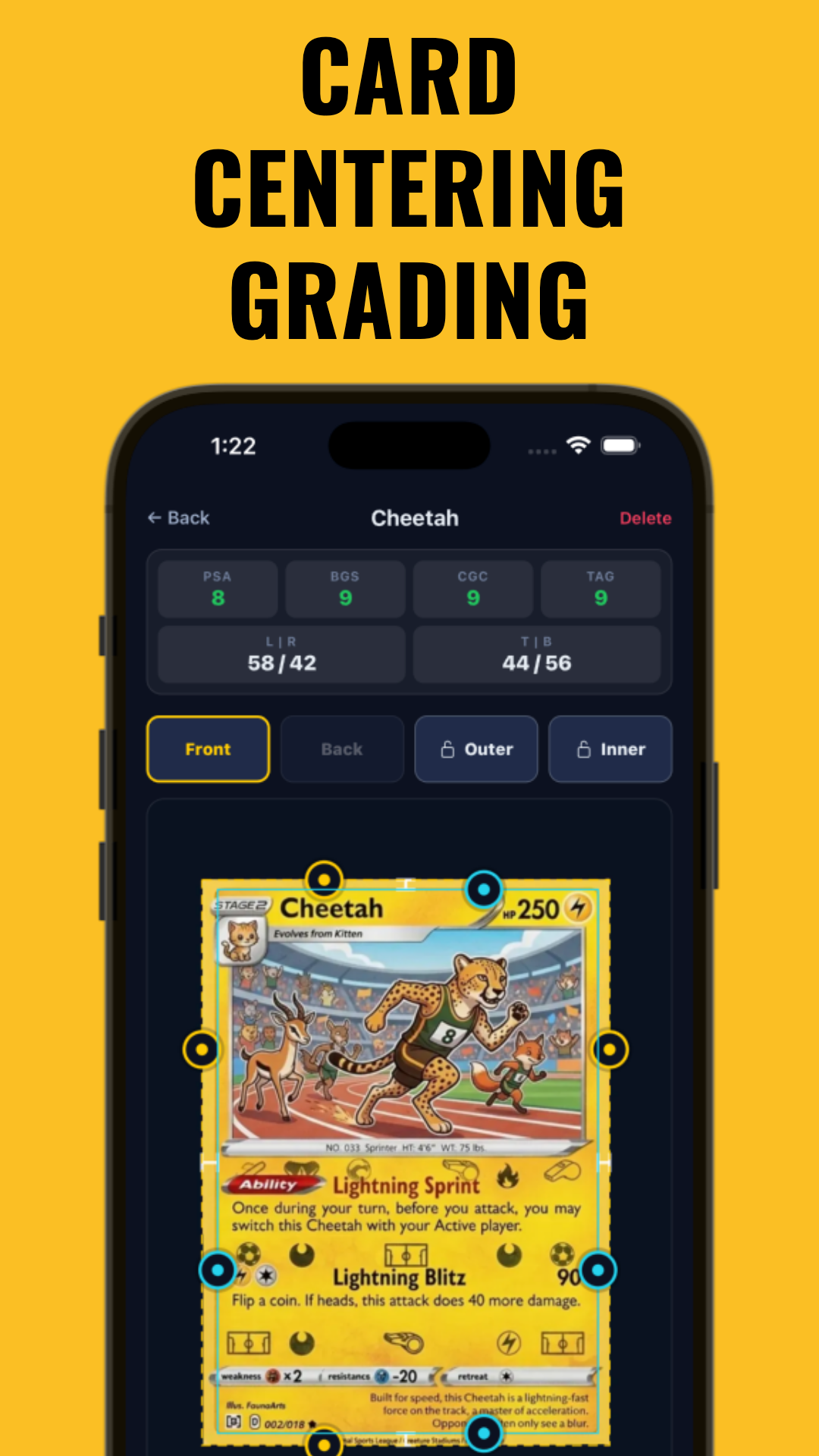
Using precise centering measurement is helpful. Tools like the Midpoint centering calculator can measure card centering to the millimeter, giving collectors a realistic grading estimate before submitting to PSA or BGS.
7. Population Data and Scarcity of PSA 10 1957 Basketball Cards
Population reports indicate that PSA 10 grades for 1957 basketball cards are relatively rare. For example, the Bill Russell #77 rookie card has a low number of PSA 10 examples known, which can drive prices higher at auction.
Other rookie cards like Bob Cousy #17 and Bill Sharman #25 also have limited PSA 10 populations, making those grades premium targets for collectors and investors alike.
Understanding population scarcity helps collectors decide which cards to prioritize for grading or acquisition.
8. Auction Results and Record Sales for Top 1957 Cards
Recent auction sales showcase the strong market for the best 1957 basketball cards:
- A PSA 10 Bill Russell #77 has sold for over $100,000 in major auctions.
- Bob Cousy #17 PSA 10 cards have fetched prices in the high five figures at top sales.
- High-grade team sets and key star cards regularly exceed estimates, reflecting strong demand.
These sales illustrate why collectors focus on top-condition examples and rookie cards from this set.
9. How to Identify Authentic 1957 Basketball Cards
With high value comes risk of reprints and altered cards. To confirm authenticity:
- Compare card stock and ink quality to known originals.
- Look for print dot patterns and card back details consistent with 1957 Topps.
- Beware of counterfeit cards or professionally altered edges and corners.
- Use trusted grading services or AI-based digital grading tools, like Midpoint, for initial verification.
Careful examination can help prevent costly mistakes when buying these vintage cards.
10. Team Sets and Star Cards: Collector Focus Areas
Many collectors pursue complete team sets from the 1957 Topps basketball release to showcase favorite franchises like the Boston Celtics or St. Louis Hawks. Star cards from these teams, like Bill Russell and Bob Pettit, anchor these collections.
Focusing on star rookies and key veterans helps build value and cohesion in collections. Team sets also often offer more affordable entry points compared to chasing only the rarest rookies.
Combining star cards with solid team players creates a balanced vintage basketball portfolio.
Conclusion
The best 1957 basketball cards remain some of the most coveted and valuable vintage basketball collectibles. From Bill Russell’s iconic rookie card to key stars like Bob Cousy and Bill Sharman, the set offers a rich mix of history and investment potential.
Collectors should prioritize condition, centering, and grading population data when choosing which cards to acquire or submit. Tools like Midpoint empower collectors to digitally pre-grade and measure centering, helping avoid costly grading fees on off-center or damaged cards.
Whether building a team set or chasing high-grade rookie cards, the 1957 Topps basketball set offers a rewarding challenge and a chance to own a piece of basketball history.
FAQ
Q: What are the most valuable 1957 Topps basketball cards?
A: The Bill Russell #77 rookie card is among the most valuable, especially in high-grade condition, followed by Bob Cousy #17 and Bill Sharman #25. High-grade versions of these cards command top prices.
Q: Which 1957 Topps basketball cards are rookie cards?
A: Key rookie cards include Bill Russell #77 and Bob Cousy #17. These cards mark the debut of these Hall of Famers and are highly sought after by collectors.
Q: How much is a 1957 Topps Bill Russell rookie card worth?
A: Raw copies generally start around $5,000, while PSA 10 graded examples can command significantly higher prices due to rarity and demand as of 2026-09-04.
Q: How many cards are in the 1957 Topps basketball set?
A: The set contains 72 cards, featuring rookies, stars, and team players from the 1957-58 NBA season.
Q: Why is the 1957 Topps basketball set so important?
A: It was Topps’ first basketball card release and includes some of the earliest and most iconic NBA rookie cards, making it a foundational vintage basketball set.
Q: What should I look for when buying 1957 Topps basketball cards?
A: Focus on centering, corners, surface condition, and authenticity. Using AI grading tools like Midpoint can help estimate card grades before purchase or submission.
Free to start
Try the Midpoint app
Grade any card from a photo, see its raw and PSA 10 value, and track what your collection is worth — free.
Get it on iPhoneGet it on Android