Best 1972 Basketball Cards: Value, Rookie Picks & Grading Tips
Discover the best 1972 basketball cards worth money, top rookies, PSA 10 values, and grading tips to maximize your collection’s value.

Estimated reading time: 8 min
Key Takeaways
- The 1972-73 Topps basketball set includes 264 cards spanning NBA and ABA stars, rookies, and Hall of Famers.
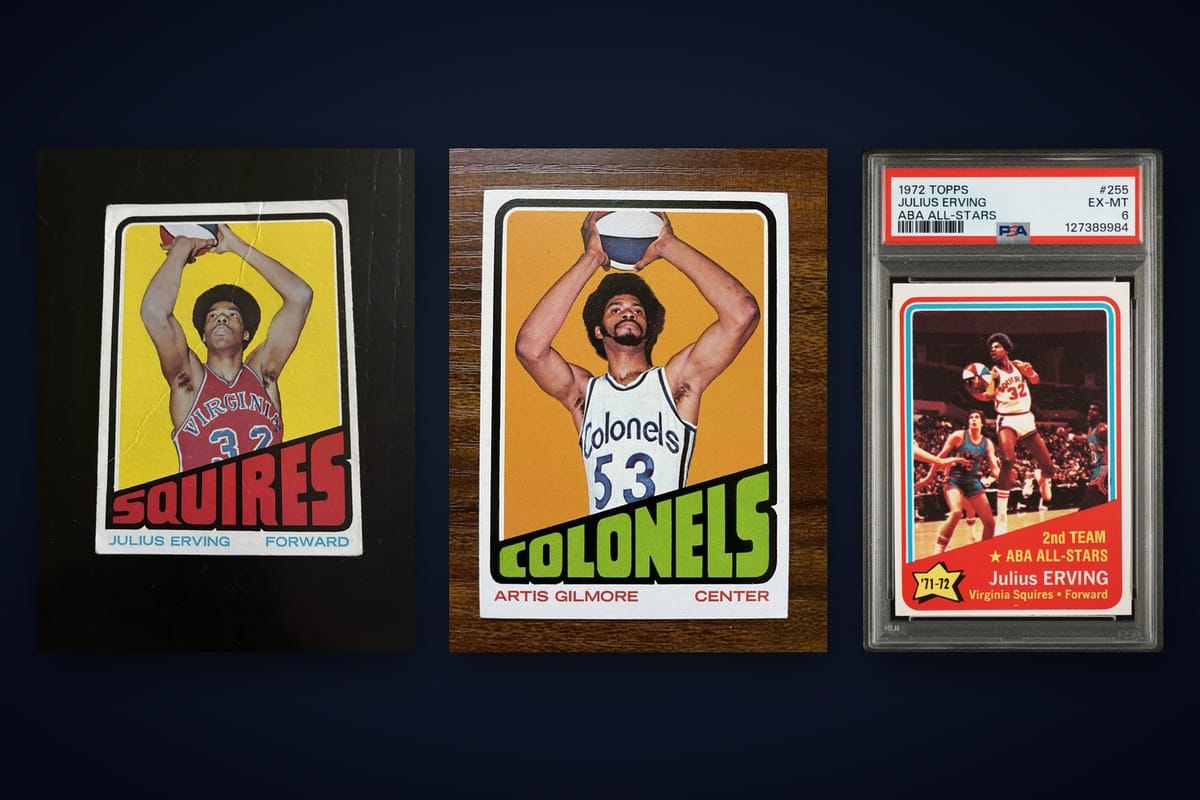
- Julius Erving #195 is widely regarded as the most valuable rookie card, with PSA 10 prices reported to exceed $130,000 as of 2026-09-04.
- Condition, centering, and surface defects heavily influence values, especially for PSA 9 and PSA 10 grades.
- Other notable rookie cards include Artis Gilmore #180, Phil Jackson #32, and George McGinnis #183, which can be valuable both raw and graded.
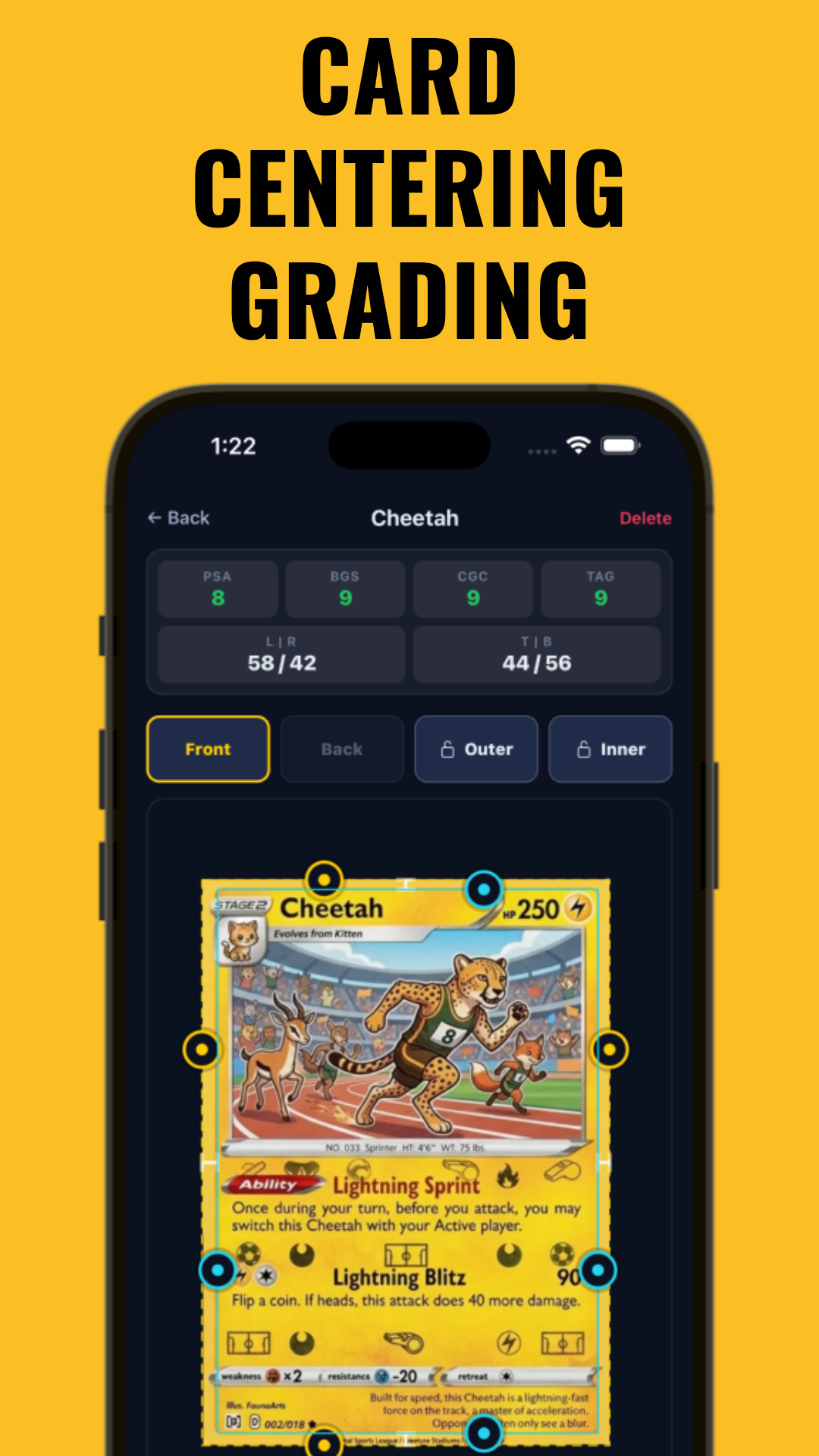
- Tools like Midpoint can assist in digitally pre-grading and measuring centering before costly PSA submissions.
The 1972-73 Topps basketball card set remains a popular collection among vintage sports card collectors. Featuring NBA and ABA players, this 264-card set includes key rookie cards, Hall of Fame veterans, and subsets like All-Stars and playoff highlights. For collectors interested in which 1972 basketball cards may hold value and how to approach grading, this guide outlines some of the most notable cards, rookie standouts, and grading considerations to help maximize potential returns.
Card values — live data from Midpoint's card database, as of 2026-09-04. Prices move; Midpoint refreshes these daily.
| Card | Raw | PSA 10 | Gem premium | |
|---|---|---|---|---|
 |
Julius Erving #195 1972 Topps |
$394.75 | $45,319 | 114.8× |
 |
Artis Gilmore #180 1972 Topps |
$35.38 | $26,823 | 758.1× |
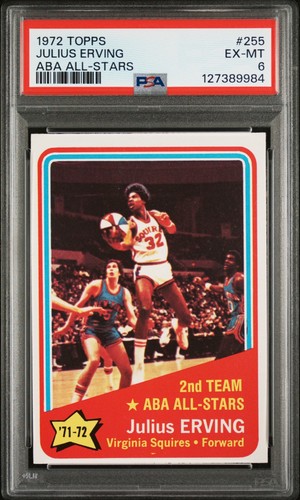 |
Julius Erving #255 1972 Topps |
$53.55 | $25,200 | 470.6× |
 |
Pete Maravich #5 1972 Topps |
$40.29 | $23,800 | 590.7× |
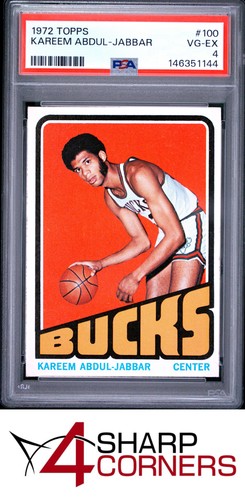 |
Kareem Abdul-Jabbar #100 1972 Topps |
$55.52 | $22,000 | 396.3× |
 |
Wilt Chamberlain 1972 Icee Bear |
$177.30 | $21,035 | 118.6× |
 |
Oscar Robertson #25 1972 Topps |
$16.55 | $11,705 | 707.3× |
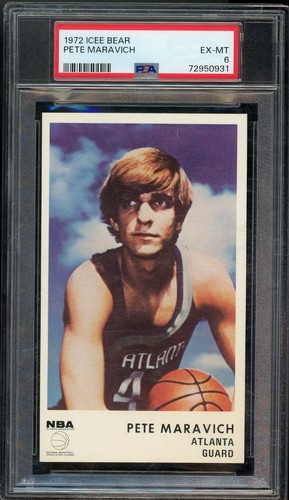 |
Pete Maravich 1972 Icee Bear |
$95.58 | $11,371 | 119× |
 |
Earl Monroe #73 1972 Topps |
$6.38 | $7,800 | 1222.6× |
 |
Wilt Chamberlain #1 1972 Topps |
$41.00 | $6,724 | 164× |
 |
George McGinnis #183 1972 Topps |
$13.50 | $5,563 | 412.1× |
 |
Oscar Robertson 1972 Icee Bear |
$63.83 | $5,505 | 86.2× |
Look up any card's current raw and graded value in Midpoint — and get an estimated grade before you pay to submit.
1. Julius Erving Rookie Card #195
Julius "Dr. J" Erving’s rookie card (#195) is generally considered the crown jewel of the 1972-73 Topps basketball set. As of 2026-09-04, PSA 10 graded examples have been reported to sell for upwards of $130,000, reflecting strong demand among collectors.
This card’s value is influenced by Dr. J’s Hall of Fame career, his impact in both the NBA and ABA, and the card’s relative scarcity in gem mint condition. Many raw examples have sold in the $20,000–$40,000 range, though grading premiums can create a significant price difference.
Centering and surface quality are important factors in achieving PSA 10 grades. Minor corner wear or centering off by a few millimeters can result in a PSA 9 grade, which typically sells for a lower price.
2. Artis Gilmore Rookie Card #180
Artis Gilmore (#180) is another notable rookie in the 1972-73 set, known for his ABA and NBA career. Raw Gilmore cards have been observed to range from around $1,000 to $3,000, while PSA 10 examples have been reported to reach $10,000 or more.
Collectors value Gilmore’s rookie card for his career achievements and the ABA’s historical significance. Like Erving’s card, grading focuses on centering, edges, and surface condition.
Using tools such as Midpoint’s centering calculator can help determine if a Gilmore card is a good candidate for professional grading, potentially reducing submission costs.
3. Phil Jackson Rookie Card #32
Phil Jackson’s rookie card (#32) from the same set is less prominent but still collectible, especially for fans of NBA coaching legends. Raw cards have been known to sell between $200 and $500, with PSA 10 graded cards sometimes commanding $1,500–$2,000.
This card appeals to collectors interested in basketball history beyond player performance, recognizing Jackson’s coaching impact. Condition standards remain important; surface scratches or corner wear can affect value.
4. George McGinnis Rookie Card #183
George McGinnis (#183) is another rookie card of interest from the 1972-73 Topps set. Raw cards generally trade around $500–$1,000, with PSA 10 prices reported near $4,000.
McGinnis’s ABA and NBA career has contributed to demand for his rookie card. Grading emphasis includes sharp edges and good centering.
5. Hall of Fame Veterans: Chamberlain, Maravich, Abdul-Jabbar & More
The set also includes veterans such as Wilt Chamberlain (#1), Pete Maravich (#5), Kareem Abdul-Jabbar (#100), Jerry West, and Oscar Robertson. These cards often have collector interest and can hold value both raw and graded.
Wilt Chamberlain’s #1 card, for example, has sold for several thousand dollars in high grades, reflecting his legendary status. Maravich and Abdul-Jabbar cards similarly benefit from Hall of Fame recognition.
Collectors should be aware that vintage condition issues like print defects or centering flaws can significantly affect pricing for these veterans.
6. NBA vs ABA Cards and Card Number Ranges
The 264-card set is divided between NBA cards (#1-176) and ABA cards (#177-264), which collectors often consider separately. The ABA subset includes many rookies and stars like Erving and Gilmore, making it particularly sought after.
Understanding these divisions can assist in portfolio tracking and pricing comparisons, especially when using apps like Midpoint that cover extensive raw and graded value data.
7. Special Subsets: All-Stars, Playoff Highlights & Statistical Leaders
In addition to base cards, the set contains subsets highlighting NBA and ABA All-Stars, playoff standouts, and statistical leaders. These cards add depth and interest to collections and may hold niche value.
While generally less valuable than top rookies or veteran stars, these subsets can appeal to collectors seeking complete checklists and historical context.
8. Raw vs PSA 10 Prices and Grading Premiums
A notable consideration is the price difference between raw and PSA 10 cards. For example, Julius Erving’s card has been known to increase from around $30,000 raw to over $130,000 in PSA 10, illustrating a significant premium.
Other rookies like Gilmore and McGinnis show similar but smaller premiums. This highlights the potential financial upside of grading, but also the risk if cards do not achieve top grades.
Midpoint’s AI digital grading tool can estimate PSA, BGS, CGC, and TAG grades quickly, helping collectors decide whether to submit cards for grading or hold them raw.
9. Condition Factors: Centering, Corners, Surface & Print Defects
Condition remains a critical factor for 1972 basketball cards. Grading companies typically weigh:
- Centering: Cards with perfect or near-perfect centering down to the millimeter tend to earn higher grades.
- Corners: Sharp, undamaged corners are important for gem mint designations.
- Surface: Clean surfaces free of scratches, stains, or print defects add value.
- Print Defects: Issues such as off-register printing or color flaws can reduce grade and value.
Using Midpoint’s card centering tool and AI surface grading can facilitate pre-assessment, potentially saving money and reducing submission issues.
10. PSA Population Reports, Rarity & Grading Worthiness
PSA population reports provide insight into the rarity of PSA 9 and PSA 10 versions for many 1972 cards. For example, the Julius Erving #195 card has relatively few PSA 10 graded examples, contributing to scarcity premiums.
Cards with low population but higher raw counts may be good candidates for grading, while those with high population might offer less grading premium. Midpoint’s portfolio tracking can help monitor values over time and inform grading decisions.
Conclusion
The best 1972 basketball cards combine historical significance, player legacy, and condition rarity to create a vibrant collecting market. Julius Erving’s rookie card is generally considered the most valuable, followed by other key rookies and Hall of Fame veterans. Grading premiums can be substantial, so leveraging AI-based digital grading tools like Midpoint to measure centering and estimate grades before submission is a prudent approach.
Collectors should focus on condition, understand the distinctions between NBA and ABA cards in the set, and monitor population trends to maximize their collection’s value. Whether holding raw or graded cards, the 1972-73 Topps basketball set remains a cornerstone for vintage basketball enthusiasts.
FAQ
Q: What is the most valuable 1972 Topps basketball card?
A: Julius Erving’s rookie card (#195) is widely regarded as the most valuable, with PSA 10 examples reported to sell for over $130,000 as of 2026-09-04.
Q: How much is a 1972 Topps Julius Erving rookie card worth?
A: Raw Erving rookie cards generally range from $20,000 to $40,000, while PSA 10 graded cards have been known to exceed $130,000.
Q: What cards are in the 1972-73 Topps basketball set?
A: The set includes 264 cards covering NBA cards #1-176 and ABA cards #177-264, featuring rookies, veterans, All-Stars, and statistical leaders.
Q: Which 1972 Topps basketball cards are worth money?
A: Key cards often include Julius Erving #195, Artis Gilmore #180, Phil Jackson #32, George McGinnis #183, and Hall of Fame veterans like Wilt Chamberlain #1.
Q: What are the key rookie cards in the 1972-73 Topps basketball set?
A: Julius Erving #195, Artis Gilmore #180, Phil Jackson #32, and George McGinnis #183 are among the primary rookie cards sought by collectors.
Q: Should I get my 1972 Topps basketball cards graded?
A: If your card has strong centering, sharp corners, and clean surfaces, grading can potentially increase its value. Using tools like Midpoint to pre-grade and measure centering can help determine if grading is a worthwhile investment.
Free to start
Try the Midpoint app
Grade any card from a photo, see its raw and PSA 10 value, and track what your collection is worth — free.
Get it on iPhoneGet it on Android