Card Value Scanner: How to Check Card Prices & Maximize Value
Discover how to check card prices accurately with a card value scanner, understand raw vs graded values, and learn what makes cards valuable.

Estimated reading time: 15 min
Key Takeaways
- A card value scanner app uses photo recognition and databases to estimate raw and graded card prices quickly, leveraging AI trained on large card image libraries.
- Raw vs graded card value often differs due to condition, centering, and grading population reports, which can reflect scarcity and collector demand.
- Card value depends on rarity, player/character popularity, set, and condition, with grading potentially adding premium value by assuring authenticity and quality.
- Using tools like Midpoint can help measure centering and condition before costly grading submissions, reducing risk and improving decision-making.
- Tracking portfolio value and sales history with integrated apps aids in understanding when to sell or hold cards for potential returns based on market trends.
Card values — live data from Midpoint's card database, as of 2026-07-11. Prices move; Midpoint refreshes these daily.
| Card | Raw | PSA 10 | Gem premium | |
|---|---|---|---|---|
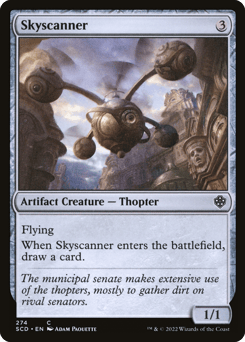 |
Skyscanner #274 Starter Commander Decks (2022) |
$0.11 | — | — |
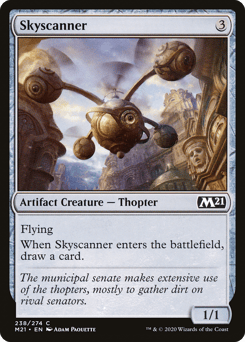 |
Skyscanner #238 Core Set 2021 (2020) |
$0.23 | — | — |
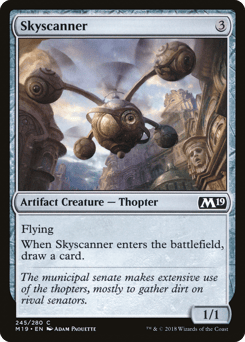 |
Skyscanner #245 Core Set 2019 (2018) |
$0.43 | — | — |
Look up any card's current raw and graded value in Midpoint — and get an estimated grade before you pay to submit.
Table of Contents
- Section 1: How Card Value Scanners Work
- Section 2: Understanding Raw vs Graded Card Value
- Section 3: What Makes a Card Valuable?
- Section 4: Pricing Sources and Accuracy Factors
- Section 5: Using Card Value Scanners for Portfolio Tracking and Sales
- Section 6: Tips for Better Card Scans and Accurate Pricing
Conclusion
FAQ
Section 1: How Card Value Scanners Work
Photo Recognition and Card Identification
Card value scanner apps use photo recognition technology to identify trading cards from images. When you scan a card, the app detects features such as the card’s name, set, year, and card number. This process often uses AI models trained on many card images to improve recognition accuracy, even with variations in lighting or angle. For example, Midpoint’s AI aims to discern differences between similar cards, such as alternate art versions or reprints, by analyzing visual markers and text placement.
The scanning process typically involves several steps: first, the app detects the card edges and isolates the card from the background. Then, it extracts text using Optical Character Recognition (OCR), combined with image feature analysis to confirm the card identity. This approach helps reduce errors from glare, shadows, or card curvature.
Value Lookup From Comprehensive Databases
Once identified, the app cross-references the card against price databases containing recent sales, marketplace averages, and price guides. For example, Midpoint’s database includes a large number of cards spanning Pokémon, Magic: The Gathering, sports cards, Yu-Gi-Oh, Lorcana, and One Piece, providing a broad value spectrum for collectors. This database is updated regularly through automated data collection from marketplaces like eBay, TCGPlayer, and auction sites, aiming to keep pricing current.
The app aggregates this data to present a valuation range, reflecting both raw and graded sales. For example, if a Pokémon Charizard card has sold for between $300 and $350 raw over the past month, and graded copies at PSA 9 have averaged around $1,200, Midpoint provides this context to help users set expectations.
Instant Grading Estimates
Some scanners, including Midpoint, offer AI-driven grading estimates. By analyzing centering, corners, edges, and surface quality, the app predicts PSA, BGS, CGC, and TAG grades, helping users understand how much their card might fetch if professionally graded before submission. This can be valuable given the cost of grading, which varies depending on speed and card value.
Midpoint’s AI assesses centering by measuring distances between card borders and image or text elements, comparing these to grading standards. It also detects corner wear or edge chipping by analyzing pixel-level irregularities and surface scratches via texture recognition. By providing an estimated grade, collectors can prioritize which cards may be worth grading, potentially optimizing their investment.
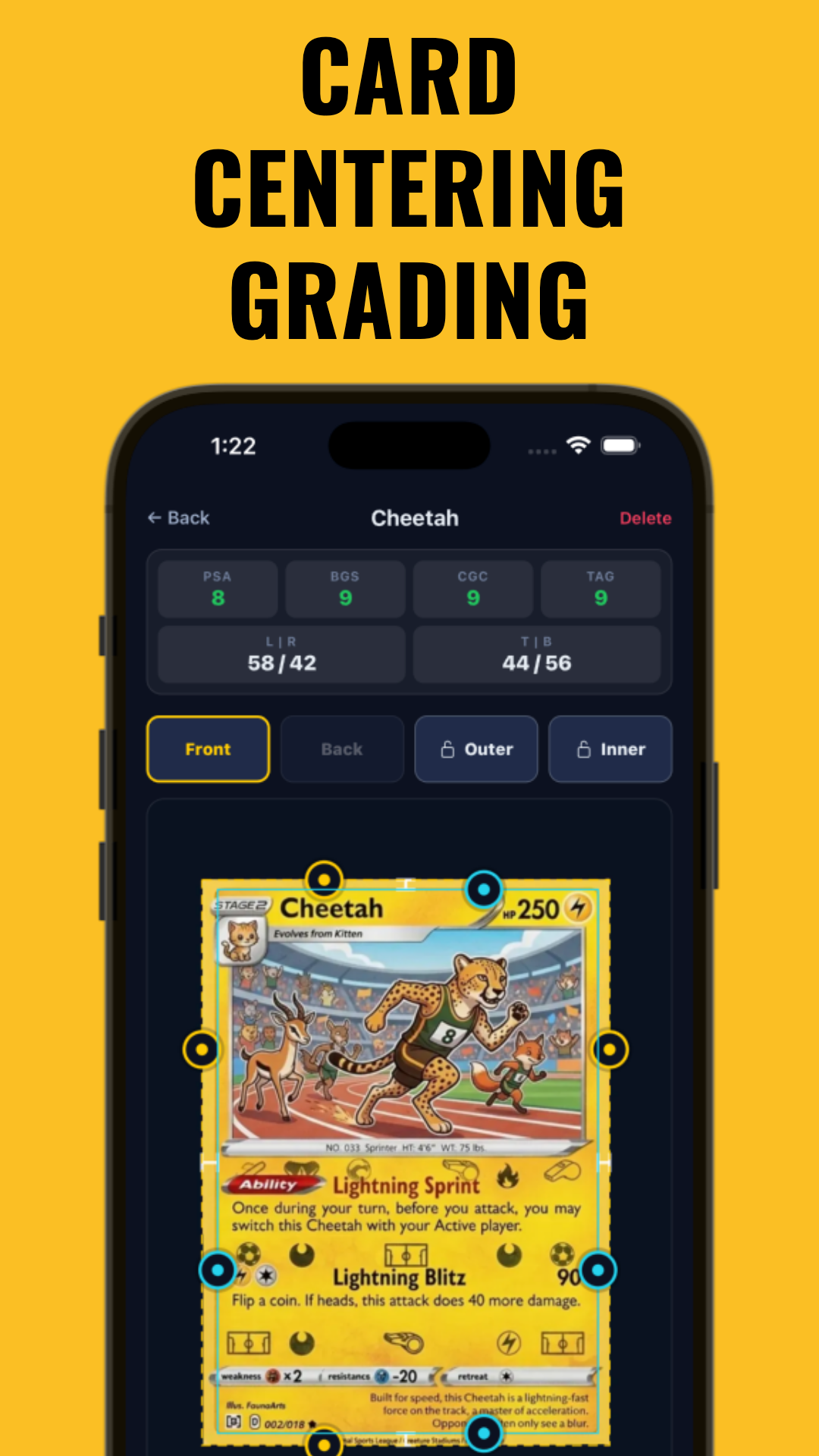
Using a card value scanner like Midpoint can streamline the process of checking "how much are my cards worth," delivering instant insights without manual searching. It can reduce research time and guesswork, making it useful for both casual collectors and serious investors.
Section 2: Understanding Raw vs Graded Card Value
Defining Raw and Graded Cards
A raw card is one that hasn’t been professionally graded or encapsulated. Its value depends on the visible condition and market demand. A graded card has been evaluated by a third-party grading company like PSA or BGS and assigned a numerical grade representing its condition and centering accuracy. The card is then sealed in a tamper-evident holder, often called a "slab," which certifies authenticity and grade.
Raw cards can vary greatly in condition, from mint to heavily damaged, and buyers must assess risk themselves. Graded cards provide a standardized quality measure, reducing uncertainty and making them easier to trade or sell.
Why Graded Cards Are Often Worth More
Graded cards often command higher prices because the grade assures buyers of the card’s condition and authenticity. For example, a Skyscanner #274 card from Starter Commander Decks 2022 might be worth roughly $0.11 raw but can fetch significantly more as a PSA 10 grade, sometimes multiplying the value depending on demand. The confidence in quality reduces buyer risk, which can drive prices up.
Grading also protects cards from further damage, preserving their value over time. Cards with high grades (e.g., PSA 9 or 10) are often the centerpiece of collections and investment portfolios, attracting premium buyers willing to pay more.
Population Reports and Their Effect on Value
Population reports show how many cards of a certain grade exist, impacting scarcity. For example, if only 100 PSA 10 copies of a particular card exist but thousands are graded lower, the scarcity of those top-grade cards can increase desirability and value. Midpoint integrates population data from grading companies to help collectors understand how rarity within grades may influence pricing decisions.
These reports also inform grading submission strategies. For instance, if a particular card has a high population of PSA 10s, the market may be saturated, potentially lowering resale value. Conversely, a low population grade can command a significant price premium due to rarity.
Understanding the gap between raw and graded card value is important when deciding whether to send cards for grading or sell as-is. Factors such as grading fees, turnaround times, and market demand should be considered to determine the best approach. This is a common question when collectors ask, "Should I sell raw or graded?" Midpoint’s grading estimates and population insights provide data-driven guidance on this decision.
Section 3: What Makes a Card Valuable?
Key Value Drivers
- Rarity: Limited print runs, chase cards, first editions, or misprints often have higher demand due to scarcity. For example, a first edition Charizard from the Pokémon Base Set generally commands a higher price than a regular unlimited edition.
- Player or Character Popularity: Iconic athletes, fan-favorite characters, or highly anticipated releases can increase card value. For example, a rookie card of a star athlete like LeBron James or a rare holographic card of a popular Pokémon like Pikachu often sells for a premium.
- Set and Year: Certain sets are more collectible depending on historical significance and print quality. Older sets, such as the 1993 Magic: The Gathering Alpha set, are prized due to their age and limited availability.
- Card Condition: Centering, corners, edges, and surface damage are critical; even minor flaws can reduce value. Cards with perfect centering and sharp corners are rarer and thus more valuable.
Spotting Fakes and Reprints
Fake or reprint cards can drastically reduce value and cause financial loss. Scanners like Midpoint cross-check card features against known authentic versions, helping detect counterfeit or altered cards. This includes analyzing holographic patterns, font styles, and printing quality. For example, counterfeit Pokémon cards often have subtle color mismatches or incorrect font spacing that AI can detect.
By alerting collectors to potential fakes, these tools help prevent overpaying and protect the integrity of collections. Some apps also provide educational resources on common counterfeit traits for collector awareness.
Why Grading Can Add a Premium
Grading not only certifies authenticity and condition but can enhance resale value by reducing uncertainty. Collectors and investors are often willing to pay a premium for the security grading provides, especially for high-value cards where condition subtleties matter. For example, a PSA 10 graded card can sell for multiple times more than the same card sold raw, depending on demand and rarity.
Moreover, graded cards are often more liquid in the marketplace, as buyers are confident in the card’s quality. This liquidity attracts serious investors and dealers who prefer standardized, authenticated cards.
Section 4: Pricing Sources and Accuracy Factors
Sources Used by Card Value Scanners
Reliable card value scanners aggregate pricing data from multiple reputable sources to help ensure accurate valuations:
- Recent sales on marketplaces like eBay, TCGPlayer, and COMC, including completed auctions and buy-it-now transactions.
- Average listing prices to gauge current asking prices and market sentiment.
- Price guides from industry-standard sources like Beckett and PSA’s own price charts.
- Population reports from grading companies such as PSA, BGS, and CGC to assess scarcity within grades.
- Historical sales trends over months or years to identify price appreciation or depreciation.
Factors Affecting Accuracy
Several variables influence the accuracy of price estimates:
- Image Quality: Blurry or poorly lit photos can lead to misidentification or inaccurate condition assessment. Sharp, well-lit images improve AI grading reliability.
- Card Details: Correct set, year, and card number are essential for precise matches. Some cards have multiple printings with different values, so accurate identification is important.
- Condition Assessment: AI grading accuracy depends on clear visibility of edges, corners, and surfaces. Cards with reflective surfaces or in sleeves can reduce scan quality.
- Market Fluctuations: Prices can change rapidly due to trends, player performance, or hype. Scanners update data frequently to reflect these trends, but short-term volatility can cause price swings.
- Regional Variations: Some cards may have different values in international markets due to availability or collector preferences.
Example: Comparing Raw and PSA10 Prices
Referencing Midpoint’s database as of 2026-07-11, consider Skyscanner #238 (Core Set 2021 2020) priced at approximately $0.23 raw versus its PSA 10 graded value, which can be around $2.50 or more. This illustrates how grading can elevate value multiple times over, highlighting why accurate grading estimates are useful. Such data helps collectors forecast potential returns and make informed decisions about grading investments.
Similarly, high-demand rookie cards or limited edition inserts can see significant value increases when graded PSA 10 or BGS 9.5, underscoring the importance of precise condition assessment.
Section 5: Using Card Value Scanners for Portfolio Tracking and Sales
Inventory and Portfolio Management
Modern apps like Midpoint include portfolio tracking features, allowing collectors to maintain an up-to-date inventory with real-time value estimates. This helps monitor collection value trends over time and identify opportunities to buy or sell. For example, a collector can see how their total portfolio value changes monthly due to market fluctuations or new acquisitions.
Portfolio tools often allow tagging cards by condition, grade, or acquisition cost, enabling ROI calculations and tax reporting for investment purposes. Some apps support export features to spreadsheets or integration with accounting software.
Pricing Cards for Sale
When preparing to sell, knowing how to price cards is important. Card value scanners provide quick market price snapshots for both raw and graded conditions, enabling sellers to set competitive yet profitable prices based on current demand and condition specifics. For example, if a card’s average recent sales are $50 PSA 9 but current listings average $60, a seller might price slightly below $60 for a quicker sale.
Furthermore, scanners can track price trends to advise sellers on optimal timing. During peak demand periods, such as after major tournaments or player milestones, prices may rise, offering better selling opportunities.
Use Cases: Flipping, Grading Prep, and Show Inventory
- Flipping: Quickly scan and price cards to identify undervalued opportunities, enabling rapid buying and resale. For example, spotting a mispriced PSA 8 card selling below market value at a local store or online.
- Grading Prep: Pre-grade cards digitally to decide which to submit for professional grading, potentially maximizing grading ROI. By focusing on cards with higher estimated grades, collectors may avoid wasting fees on low-grade submissions.
- Show Inventory: Use the app to organize and display card values efficiently during in-person sales or trade shows, facilitating transparent pricing and faster transactions.
Section 6: Tips for Better Card Scans and Accurate Pricing
Optimizing Scan Quality
- Lighting: Use bright, natural light without glare or shadows. Position cards near a window or use diffused LED lighting to avoid reflections that can confuse AI.
- Background: Choose a solid, contrasting background to help the scanner detect card edges accurately. A black or white mat works well, depending on the card’s color scheme.
- Angle and Position: Hold the card flat and straight to avoid distortion. Use a stand or flat surface to stabilize the card during scanning.
- Sleeves: Remove reflective sleeves or use non-glare sleeves for scanning. Plastic covers can cause light reflections and obscure surface details.
- Multiple Angles: For better condition assessment, take several photos from different angles, especially for cards with holographic or textured surfaces.
Verifying Card Details
Double-check the card name, set, year, and card number after scanning to ensure the app’s identification matches your card. This reduces errors in value estimation and prevents mispricing. Some cards have similar names or multiple editions; confirming details helps avoid costly mistakes.
If discrepancies arise, manually inputting or correcting card details in the app can improve accuracy. Keeping a log of scanned cards with notes on condition or provenance also aids tracking.
Choosing Between Free and Paid Features
Many scanners offer free basic lookup services but charge for advanced features like AI grading or portfolio tracking. Free versions suit casual collectors checking card prices occasionally, while serious collectors may benefit from paid features for detailed grading estimates and collection management. For example, Midpoint’s free tier allows basic scans and value checks, while premium subscriptions unlock batch scanning, portfolio analytics, and detailed grading breakdowns.
Before upgrading, evaluate your collecting goals and volume. For occasional users, free access may suffice; for investors or dealers handling many cards, paid features may offer valuable time savings and deeper insights.
For a comprehensive tool combining these features, Midpoint offers a free app on iOS and Android, enabling collectors to measure centering precisely and estimate card values before investing in grading fees.
Conclusion
Using a reliable card value scanner can help modern trading card collectors estimate how much their cards are worth and make informed decisions about buying, selling, or grading. Understanding the differences between raw and graded values, what drives card worth, and how population reports influence pricing can assist collectors in maximizing returns. Tools like Midpoint simplify this process with instant card lookup, AI-driven grading estimates, and portfolio management across major card types including Pokémon, Magic: The Gathering, and sports cards. By following best practices for scanning and verifying card details, collectors can better navigate the dynamic card market and protect their investments.
FAQ
Q: What is the most accurate card value scanner app?
A: Apps like Midpoint provide card value scanning by combining AI photo recognition, extensive price databases, and grading estimates, making them among the well-regarded options available.
Q: How do card scanner apps determine a card’s value?
A: They identify card details via image recognition, then cross-reference recent sales, marketplace listings, and price guides to estimate raw and graded values.
Q: Are card value scanner apps free?
A: Many offer free basic scanning and price lookup, with premium features like detailed grading estimates and portfolio tracking available in paid tiers. Midpoint offers a comprehensive free app.
Q: Can a card scanner identify Pokémon cards and sports cards?
A: Yes, leading apps support a wide range of card types including Pokémon, Magic: The Gathering, Yu-Gi-Oh, Lorcana, and major sports cards, providing cross-collection value tracking.
Q: Why is my card scanned with the wrong value or wrong card?
A: This can happen due to poor image quality, incorrect card details, or lighting issues. Ensuring clear, well-lit scans and verifying card information helps improve accuracy.
Q: What factors affect the value shown by a card scanner?
A: Condition, centering, population reports, rarity, player or character popularity, and market fluctuations all influence the estimated card value.
Free to start
Try the Midpoint app
Grade any card from a photo, see its raw and PSA 10 value, and track what your collection is worth — free.
Get it on iPhoneGet it on Android