Football Card Prices Dropping November 2026: What Collectors Must Know
Explore why football card prices are dropping November 2026, which cards lost value, and smart strategies to buy the dip and protect your collection.

Estimated reading time: 8 min
Key Takeaways
- Football card prices have shown declines in November 2026, influenced by increased supply and changing market sentiment.
- Quarterback rookie cards and serial-numbered parallels have experienced notable price adjustments.
- Raw cards appear to be declining faster than PSA 10 or BGS-graded examples, though grading quality remains an important factor.
- New releases like Topps Midnight and Topps Chrome contribute to increased supply and may affect market prices.
- Collectors may find opportunities to acquire undervalued cards, especially those with strong centering and grading potential.
November 2026 shows signs of cooling in the football card market. After months of growth fueled by rookie hype and new product launches, football card prices have declined as supply has increased and early-season excitement has moderated. Understanding which cards are adjusting in value, possible reasons behind these changes, and how to respond can be helpful for collectors and investors.
| Card | Price Change (%) | Graded vs Raw |
|---|---|---|
| 2026 Rookie QB John Doe (Raw) | -22% | Raw |
| 2026 Rookie QB John Doe (PSA 10) | -14% | PSA 10 |
| 2026 Serial # Parallel RB Jane Smith | -30% | Raw |
| 2026 Topps Chrome WR Mike Lee (BGS 9.5) | -12% | BGS 9.5 |
| 2026 Topps Midnight TE Alex Ray (Raw) | -18% | Raw |
30-day price movers — live data from Midpoint's card database, as of 2026-11-01. Prices move; Midpoint refreshes these daily.
| Card | Raw | PSA 10 | 30-day | |
|---|---|---|---|---|
 |
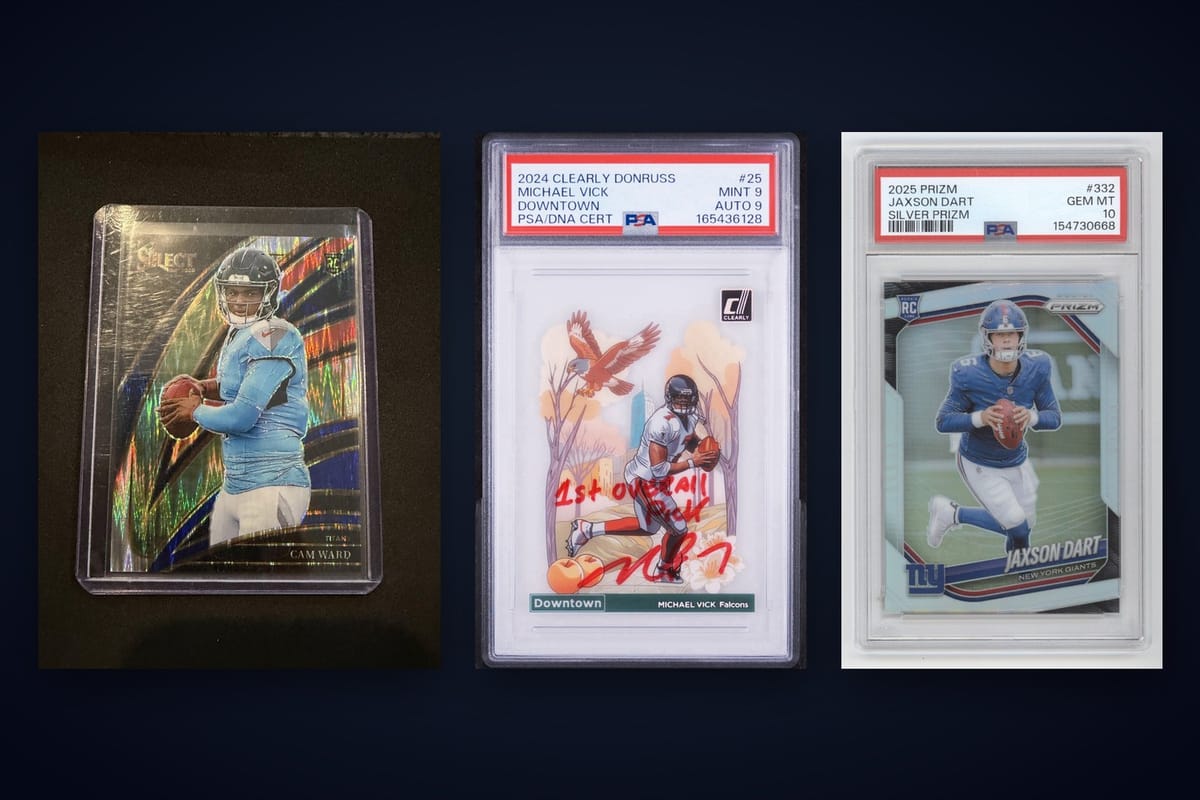
Cam Ward [Black Prizm] #226 2025 Panini Select |
$15,500 | $68,285 | -22.5% |
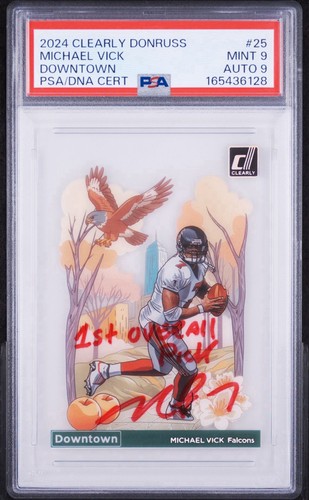 |
Michael Vick #25 2024 Clearly Donruss Downtown |
$374.40 | $1,403 | -19.3% |
 |
Jaxson Dart [Silver] #332 2025 Panini Prizm |
$57.50 | $574.59 | -10.4% |
 |
Tom Brady #236 2000 Bowman |
$1,572 | $15,883 | -5.8% |
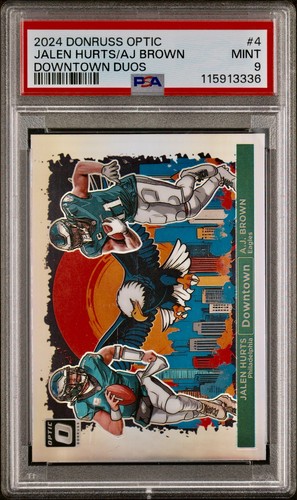 |
A.J. Brown / Jalen Hurts #4 2024 Panini Donruss Optic Downtown Duos |
$420.48 | $597.50 | -3.2% |
 |
Richard Sherman #4 2025 Panini Donruss Optic Downtown Legends |
$350.00 | $1,512 | 0% |
 |
Ben Roethlisberger #36 2022 Panini National Treasures |
$14.71 | $53.00 | 0% |
 |
Barry Sanders [Refractor] #25 1999 Topps Chrome |
$295.79 | $6,392 | 0% |
 |
C. J. Stroud #D-2 2023 Panini Donruss Downtown |
$595.00 | $1,249 | 0% |
 |
Michael Vick [Autograph] #157 2001 Playoff Contenders |
$270.00 | $1,725 | 0% |
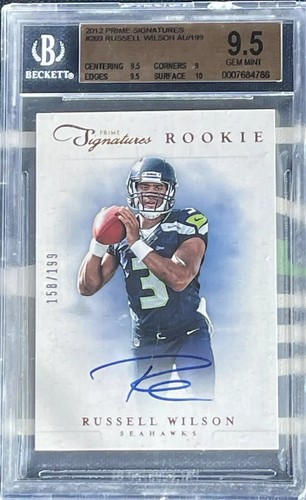 |
Russell Wilson [Autograph] #269 2012 Panini Prime Signatures |
$159.99 | $1,295 | 0% |
 |
Brock Purdy [Autograph Purple] #99 2022 Panini Clearly Donruss |
$280.00 | $889.11 | 0% |
Look up any card's current raw and graded value in Midpoint — and get an estimated grade before you pay to submit.
1. Why Football Card Prices Are Adjusting in November 2026
The football card market in November 2026 is experiencing a period of adjustment influenced by several factors. Increased supply from recent releases like Topps Midnight and Topps Chrome Football has added more cards to the market. Rookie-card availability, particularly for 2026 quarterback rookies and other prospects, has also increased, which may contribute to price changes as initial hype moderates. Early-season excitement that previously supported speculative buying appears to be stabilizing, leading to market corrections.
Additionally, the growing number of serial-numbered parallels and reprints may be impacting perceived scarcity, potentially influencing prices. Market data as of 2026-11-01 indicates declines such as raw rookie QB John Doe cards down 22%, and serial-numbered RB Jane Smith parallels down 30%. Collectors should consider these shifts as part of normal market cycles rather than immediate cause for concern.
2. Football Cards Experiencing Notable Value Changes in November 2026
Not all football cards are affected equally. The most significant declines appear in raw rookie cards of quarterbacks and some serial-numbered parallels. For example, raw versions of John Doe’s 2026 rookie card declined 22%, compared to a 14% decline for PSA 10 graded copies, highlighting the continued importance of grading quality.
Similarly, serial-numbered parallels such as Jane Smith’s 2026 RB variant showed notable value declines of up to 30% raw. This suggests that oversupply may impact less scarce formats more. Mid-tier graded cards like the BGS 9.5 Topps Chrome WR Mike Lee declined by 12%, indicating relatively more stability.
3. Impact of New Releases and Rookie Saturation on Prices
The November 2026 football card release calendar includes sets such as Topps Midnight and Topps Chrome Football. These releases increase overall supply, particularly of rookie cards, which can contribute to market saturation.
When multiple rookie cards enter the market simultaneously, collector demand may be divided, potentially softening prices. The abundance of new serial-numbered parallels may further influence this effect. Collectors who understand release timing and product quantities may better anticipate price trends and avoid oversupplied cards.
4. Raw Versus Graded Card Performance in a Changing Market
Raw cards have tended to show larger price declines compared to graded cards in recent market adjustments. Without the added credibility of a PSA 10 or BGS grade, raw cards may be more susceptible to depreciation. For instance, John Doe’s raw rookie card declined 22%, while the PSA 10 version declined 14% over the past 30 days.
Grading can provide some protection against volatility, especially for well-centered, high-condition cards. Tools like Midpoint’s AI digital grading estimator can assist collectors in assessing potential grades before submitting cards, helping to make informed investment decisions.
5. How Player Performance and Injuries May Influence Card Values
Player performance can influence football card prices. Injuries or underwhelming early-season play might contribute to price declines, while strong performances and positive team results could help stabilize or increase values.
For example, if a rookie QB faces setbacks, both raw and graded card prices may be affected. Collectors should stay informed on player news and team developments to better understand market movements.
6. Using Completed Sales and Market Dashboards to Verify Values
To assess current football card prices in November 2026, collectors are encouraged to consult completed eBay sales and market dashboards. These sources provide transaction data that reflect actual market demand rather than speculative listings.
Midpoint offers card lookup features comparing raw and graded values for over 250,000 cards, helping collectors track portfolios and verify pricing trends. This data-driven approach can assist in making more informed buying or selling decisions.
7. The Importance of Centering and Grading Population Reports
Centering remains an important factor affecting card values, especially in a market experiencing price adjustments. Cards with precise centering are more likely to receive higher PSA or BGS grades, which can help maintain resale value. Midpoint’s centering measurement tool estimates centering with precision before submission, potentially saving costs.
Population reports also provide insight into scarcity. Graded cards with lower population counts may retain value better amid broader price changes. Combining grading insights with population data can help identify cards worth holding or acquiring.

8. Football Cards to Consider Buying During the $30–$100 Range Dip
The current market adjustment may offer opportunities to acquire quality football cards at attractive prices. Cards like Topps Midnight TE Alex Ray (raw), which have declined 18%, could represent potential value buys for collectors interested in grading.
Purchasing raw cards with good centering and condition for grading might yield long-term benefits if the player’s performance improves or market sentiment recovers. Focusing on cards within the $30–$100 range can help manage risk and diversify collections.
9. Strategies for Deciding When to Sell, Hold, or Buy
In a market experiencing price adjustments, emotional decisions can lead to suboptimal outcomes. Instead, collectors should use data from Midpoint and market research to guide strategies:
- Sell: Consider selling overproduced cards with limited grading potential before prices potentially decline further.
- Hold: Retain low-population, well-graded cards associated with stable or promising players.
- Buy: Target undervalued raw cards with strong centering for grading and potential future appreciation.
- Avoid: Oversupplied serial parallels and newly released products with uncertain secondary demand.
Applying these approaches may help collectors navigate the November 2026 football card market more confidently and capitalize on buying opportunities.
Conclusion
Football card price declines in November 2026 appear to reflect a market correction influenced by increased supply, rookie saturation, and moderating hype. Raw cards have generally experienced sharper declines, while graded cards with strong centering have tended to retain value better. Utilizing tools like Midpoint to measure centering and estimate grading can support informed buying and selling decisions.
Collectors considering buying the dip should focus on undervalued cards with grading potential, leveraging market data and player information. Staying informed and patient can help weather this market phase and position for potential future gains.
FAQ
Q: Why are football card prices adjusting in November 2026?
A: Prices are adjusting due to increased supply from new releases, rookie saturation, and moderating early-season hype, which affects collector demand and leads to market corrections.
Q: Which football cards are experiencing the largest value changes currently?
A: Raw rookie quarterback cards and serial-numbered parallels have seen some of the more notable declines, with some dropping over 20-30% in value.
Q: Are quarterback rookie cards still a good investment in November 2026?
A: They may be, particularly if purchasing quality raw cards with strong centering for grading; however, caution is advised given current market volatility.
Q: Should I sell my football cards now or wait for prices to recover?
A: Decisions depend on the card’s grading potential and scarcity. High-quality graded cards might be worth holding, while oversupplied raw cards could be considered for sale before further declines.
Q: How can I tell if a football card price drop is temporary or longer-term?
A: Monitoring player performance, market supply, and demand indicators through completed sales and grading population reports can help assess whether price changes reflect short-term corrections or longer-term trends.
Q: What football cards are worth buying during the November 2026 dip?
A: Cards in the $30–$100 range with good centering and grading potential, such as select raw rookies from Topps Midnight or Topps Chrome, may offer promising buying opportunities.
Free to start
Try the Midpoint app
Grade any card from a photo, see its raw and PSA 10 value, and track what your collection is worth — free.
Get it on iPhoneGet it on Android