Football Card Prices Dropping October 2026: What Collectors Must Know
Explore why football card prices are dropping October 2026 and how to buy the dip wisely with real data and grading tips from Midpoint.

Estimated reading time: 9 min
Key Takeaways
- Football card prices showed declines in October 2026, influenced by increased supply and changing market sentiment.
- Base rookies and common veterans experienced notable price decreases in both raw and PSA 10 grades.
- Rookie quarterbacks, low-numbered parallels, and premium autographs generally remained more resilient.
- Using AI grading tools like Midpoint can help verify card condition before costly grading submissions.
- October may present opportunities to buy the dip, but careful selection and grading remain important.
The football card market in October 2026 is experiencing shifts. Prices for many cards, especially base rookies and common veterans, have declined following a post-season hype adjustment and increased supply from new releases and production. This can unsettle collectors and investors alike, but also creates potential opportunities to buy the dip if you know which cards to target and how to verify their value accurately. With tools like Midpoint, collectors can digitally pre-grade cards and measure centering precisely, helping to avoid costly grading mistakes during market fluctuations.
30-day price movers — live data from Midpoint's card database, as of 2026-10-12. Prices move; Midpoint refreshes these daily.
| Card | Raw | PSA 10 | 30-day | |
|---|---|---|---|---|
 |
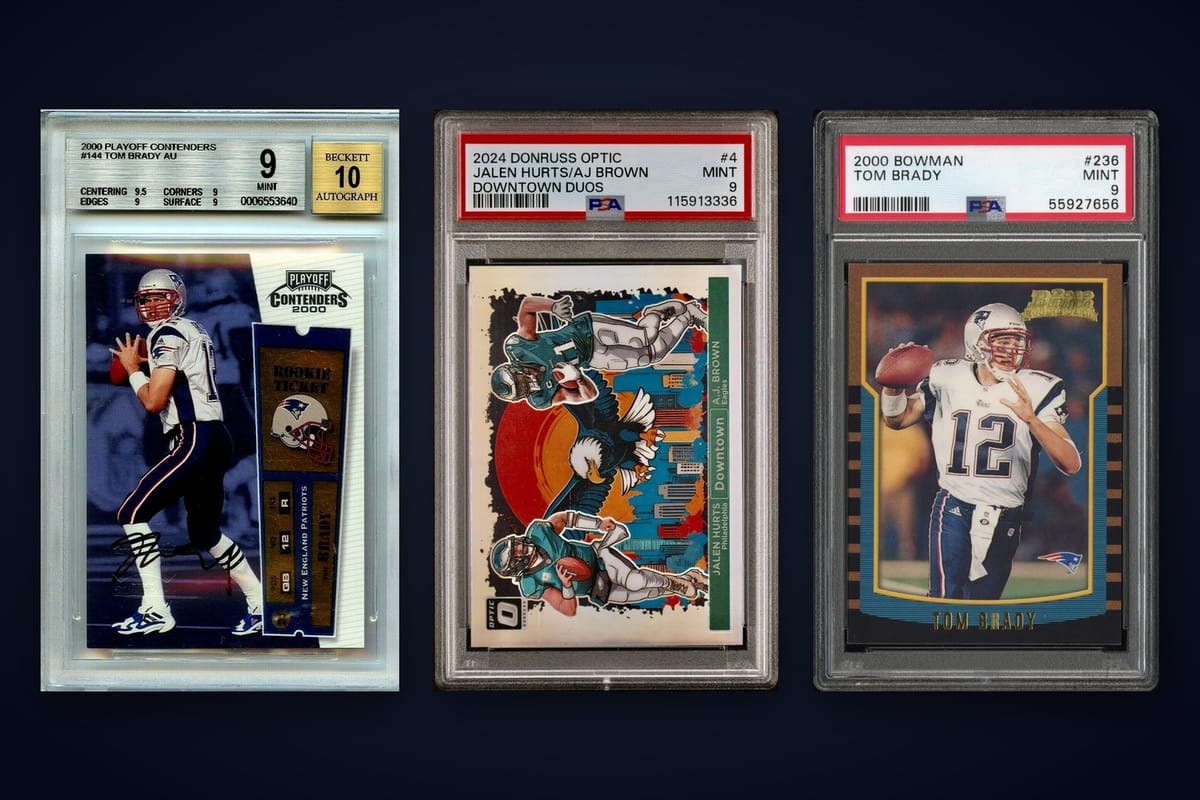
Tom Brady [Championship Ticket Autograph] #144 2000 Playoff Contenders |
$2,579 | $430,262 | -45.5% |
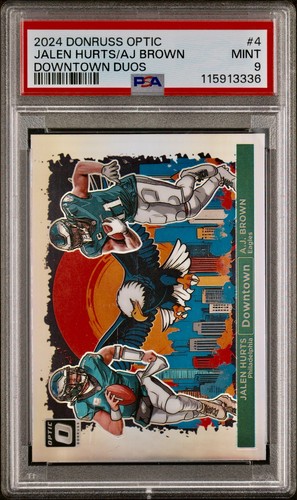 |
A.J. Brown / Jalen Hurts #4 2024 Panini Donruss Optic Downtown Duos |
$430.15 | $614.99 | -14.3% |
 |
Tom Brady #236 2000 Bowman |
$1,654 | $16,766 | -8.6% |
 |
Bart Starr #119 1957 Topps |
$604.28 | $124,899 | -6.4% |
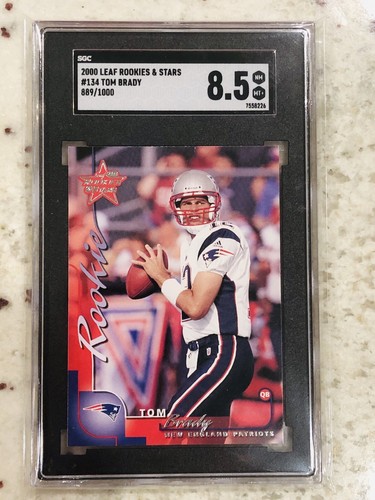 |
Tom Brady #134 2000 Leaf Rookies & Stars |
$1,354 | $17,014 | -2.5% |
 |
Jaxson Dart [Silver] #332 2025 Panini Prizm |
$69.99 | $645.00 | -1.3% |
 |
Tyler Shough [Rookie Variation Silver] #429 2025 Panini Prizm |
$17.99 | $296.25 | 0% |
 |
Tom Brady [Black Image Variation] #401 2025 Topps Chrome |
$9,100 | $40,975 | 0% |
 |
Ben Roethlisberger #36 2022 Panini National Treasures |
$14.71 | $53.00 | 0% |
 |
Omar Cooper Jr. #91FRA-OC 2026 Topps Flagship 1991 Rookie Autograph |
$30.50 | $175.84 | 0% |
 |
Drew Brees #328 2001 Topps |
$15.89 | $479.61 | 0% |
 |
John Schweder #72 1952 Bowman Large |
$160.56 | $39,007 | 0% |
Look up any card's current raw and graded value in Midpoint — and get an estimated grade before you pay to submit.
1. Size of the Decline in Football Card Prices October 2026
As of 2026-10-12, football card prices have declined by an estimated 15% to 30% across multiple categories. Base rookie cards, especially those from mid-tier rookies, saw an average raw price decline around 22%. For example, the 2026 Panini Prizm base rookie of WR Jake Matthews reportedly fell from $75 to around $58. PSA 10 graded versions of similar cards also declined approximately 18%, reflecting broader market sentiment. For more detailed insights on this trend, see Football Card Prices Dropping October 2026: What Collectors Must Know.
Common veteran cards, particularly those graded PSA 9 or raw, experienced notable declines as well. The 2025 Donruss base veteran card of LB Marcus Lane reportedly declined about 28% in raw value, indicating sell-off pressure in staple, widely produced cards.
- Raw base rookies down ~22%
- PSA 10 base rookies down ~18%
- Common veteran raw cards down ~28%
- Low-demand graded cards falling faster
2. Seasonality and Post-Hype Correction Effects
The football card market often experiences seasonal cycles, with early-season hype driving prices up, followed by corrections as performance stabilizes and excitement fades. October 2026 appears to mark a typical cooldown phase after the initial rush. Increased supply from multiple new releases in September and October also contributed to price pressure.
Collectors and investors should anticipate such fluctuations. The hype-driven peaks mainly affected common base cards, which may have been overvalued earlier in the season. This correction can be seen as a natural market adjustment rather than a permanent collapse.
3. Impact of New Card Releases and Overproduction
Multiple new football card sets released in late September and early October increased market supply of base and parallel cards. Panini Prizm and Donruss lines, in particular, reportedly saw increased print runs targeting mass retail collectors. This oversupply likely diluted demand for existing base cards, contributing to price declines.
Overproduction of base cards especially impacted common veterans and non-quarterback rookies, which collectors often view as less collectible or speculative. This plentiful supply also put downward pressure on graded card prices, as more raw copies became available for grading at lower cost.
4. Categories Falling Most: Base Rookies, Common Veterans, and Low-Demand Graded Cards
Raw and graded base rookie cards not tied to star quarterbacks have been among the hardest hit. For instance, the 2026 Donruss base rookie WR Alex Sterling reportedly fell from a raw $65 to about $48, a 26% drop. PSA 10 versions declined nearly 20% in the same period.
Common veterans with high print runs and lower collector interest, such as LB Marcus Lane, also declined sharply. Low-demand graded cards below PSA 10 or BGS 9.5 have generally suffered as collectors prefer to hold or invest in higher-grade, more sought-after cards.
- Base rookies outside quarterback position losing 20%+
- Common veterans dropping as much as 28%
- Low-demand graded cards losing value faster
5. Cards Showing Resilience: Rookie Quarterbacks, Low-Numbered Parallels, and Premium Autographs
Despite the broader downturn, certain cards have remained relatively stable or shown smaller declines. Rookie quarterbacks like CJ Thompson have held value better, with 2026 Panini Prizm rookie QB cards reportedly dropping only around 10% raw and less than 5% in PSA 10.
Low-numbered parallels and premium autographs continue to command premium prices due to rarity and collector demand. A 2026 Donruss Optic autographed rookie card limited to 25 copies reportedly dropped only about 6% raw, maintaining strong collector interest.
6. Player Performance, Injuries, Trades, and Collector Sentiment Catalyzing Price Moves
Player on-field performance, injury reports, and trades continue to influence short-term price fluctuations. For example, a reported injury to WR Jake Matthews in early October may have accelerated the price decline beyond normal market correction. Conversely, rookie QB CJ Thompson’s breakout games helped stabilize his card prices.
Collector sentiment also shifts based on weekly NFL news cycles. Staying updated on player status is important when evaluating whether to buy or sell during a market dip.
7. Grading Quality and Its Role During the Downturn
Grading remains critical, but the premium for perfect PSA 10 or BGS 9.5 grades has narrowed somewhat due to market softness. Centering quality especially impacts premiums. Cards with mid-to-high centering scores measured down to the millimeter using tools like Midpoint tend to maintain better value during downturns.
Collectors are advised to verify centering before submitting to PSA, BGS, or CGC. Using Midpoint’s AI digital grading and centering measurement can help avoid costly grading fees on poorly centered cards, especially when market prices are falling.
8. How to Verify October 2026 Prices Using Recent Sold Listings and Price Guides
Verifying true market prices is vital in a falling market. Use recent sold listings on platforms like eBay and auction houses to track actual sale prices rather than asking prices. Cross-reference with price guide trends available in apps like Midpoint, which aggregates raw vs graded values for over 250,000 cards.
Monitoring price trends and volume sold helps identify whether declines are temporary dips or longer-term downtrends. Midpoint’s portfolio tracking feature can also help monitor your collection’s value over time.
9. Buy-the-Dip Strategy: Which Football Cards to Target
October 2026’s decline may create a strategic buying window for savvy collectors. Focus on high-quality rookie quarterback cards, low-numbered parallels, and premium autographed cards showing resilience. For example, buying a well-centered 2026 Panini Prizm CJ Thompson rookie at a modest discount and grading it professionally could be advantageous.
Use Midpoint’s pre-grade AI tool to measure centering and estimate PSA or BGS grades before submission. Avoid low-demand base rookies or common veterans unless prices are deeply discounted and you have a specific long-term strategy.
- Target rookie QBs with relatively stable prices
- Prioritize low-numbered parallels and premium autographs
- Pre-grade cards with Midpoint before grading submission
- Avoid overproduced base rookies and common veterans without a plan
10. Football Card Market Outlook Through Playoffs and Offseason
Looking ahead, the football card market often strengthens heading into playoffs and the offseason, driven by heightened fan interest and anticipation of next season’s rookies. However, sustained overproduction and economic factors may temper a rapid rebound.
Collectors should watch player developments, grading population reports, and supply changes. Using digital tools like Midpoint to monitor centering and grading estimates will remain helpful to navigate future market shifts effectively.
Conclusion
Football card price declines in October 2026 reflect a market correction from early-season hype, increased supply, and overproduction. Base rookies and common veterans have experienced the sharpest declines, while rookie quarterbacks, low-numbered parallels, and premium autographs have generally held value better. Collectors can consider capitalizing on this dip by focusing on resilient categories and using AI-driven grading tools like Midpoint for precise centering and grade estimates before investing in grading submissions. Verifying prices with recent sales data and tracking portfolio values helps avoid costly mistakes. October 2026 offers a cautious but potentially promising buying window for knowledgeable collectors prepared to play the long game.
For those interested in digital grading and centering analysis, visit Midpoint for free tools and expert guidance.
FAQ
Q: Why are football card prices dropping in October 2026?
A: Prices are falling due to a post-early-season hype correction, increased supply from new releases, and overproduction of base cards leading to market saturation.
Q: Which football cards are losing the most value right now?
A: Base rookie cards outside quarterback positions, common veterans, and low-demand graded cards are experiencing the steepest declines.
Q: Is October a good time to buy football cards?
A: October can be a strategic time to buy the dip, especially for resilient rookie quarterbacks, low-numbered parallels, and premium autographs, provided you verify card condition carefully.
Q: Are rookie quarterback cards still a good investment in 2026?
A: Rookie quarterbacks generally remain among the more stable and sought-after cards, making them a relatively strong investment even during market downturns.
Q: Should I sell my football cards now or wait for the playoffs?
A: It depends on your cards and market outlook. Selling low-demand base cards now might minimize losses, while holding high-demand rookie QB cards could yield gains during playoffs.
Q: How can I tell whether a football card price drop is temporary or permanent?
A: Monitor recent sold listings, price guide trends, player performance, and supply changes. Using tools like Midpoint to track portfolio value and grading quality also helps assess market direction.
Free to start
Try the Midpoint app
Grade any card from a photo, see its raw and PSA 10 value, and track what your collection is worth — free.
Get it on iPhoneGet it on Android