Football Card Prices Dropping September 2026: What Collectors Should Know
Explore why football card prices are dropping in September 2026, which cards are losing value, and how to buy the dip smartly with Midpoint.

Estimated reading time: 8 min
Key Takeaways
- Football card prices are showing signs of cooling in September 2026, influenced by supply and changing hype.
- Rookie quarterbacks and breakout stars continue to influence market movement.
- Graded PSA 10 cards often hold value better than raw copies amid pricing shifts.
- New product releases and preorder pricing can impact secondary market trends.
- Collectors may find opportunities by buying, grading, or holding strategically during price fluctuations.
September 2026 is an important month for football card collectors as prices across many segments show signs of decline. Understanding why football card prices may be dropping in September 2026 and which cards are most affected can help collectors make informed decisions. From rookie quarterbacks to flagship releases like Topps Flagship and Bowman Football, the market reflects trends related to supply dynamics, grading bottlenecks, and changing hype levels. Using tools like Midpoint can help collectors estimate card grades and values quickly, aiding decisions on when to buy or sell during this market adjustment.
30-day price movers — live data from Midpoint's card database, as of 2026-09-04. Prices move; Midpoint refreshes these daily.
| Card | Raw | PSA 10 | 30-day | |
|---|---|---|---|---|
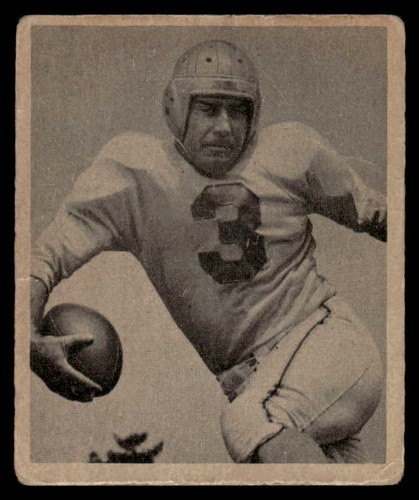 |
Dante Magnani #75 1948 Bowman |
$17.00 | $4,665 | -62.5% |
 |
Chuck Bednarik #12 1951 Bowman |
$43.61 | $10,337 | -31% |
 |
Chuck Bednarik #132 1950 Bowman |
$64.61 | $17,839 | -30.7% |
 |
Sid Luckman #15 1949 Leaf |
$126.80 | $40,131 | -27% |
 |
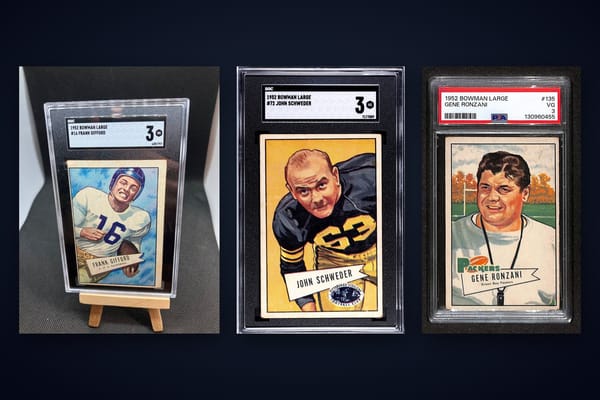
John Schweder #72 1952 Bowman Large |
$160.56 | $39,007 | -24.3% |
![Jaxson Dart [Red] #10 2025 Panini Rookies & Stars Stellar Rookie card](https://i.ebayimg.com/images/g/gdAAAeSwJPdpk43e/s-l500.jpg) |
Jaxson Dart [Red] #10 2025 Panini Rookies & Stars Stellar Rookie |
$23.89 | $113.50 | -18.4% |
![Josh Cribbs [Prizm] #47 2012 Panini Prizm card](https://i.ebayimg.com/images/g/lb0AAeSwWhJo4bZU/s-l500.jpg) |
Josh Cribbs [Prizm] #47 2012 Panini Prizm |
$11.47 | — | -15.5% |
 |
Ernie Davis #36 1962 Topps |
$80.97 | $14,138 | -13.6% |
 |
Paul Hornung #151 1957 Topps |
$348.45 | $72,685 | -13.4% |
 |
Paul Campbell #71 1948 Leaf |
$40.69 | $11,121 | -12.4% |
 |
Don Hutson #97 1955 Topps All American |
$168.35 | $43,200 | -12.2% |
 |
Y.A. Tittle #5 1950 Bowman |
$141.55 | $36,445 | -11.2% |
Look up any card's current raw and graded value in Midpoint — and get an estimated grade before you pay to submit.
1. Football Card Prices Dropping September 2026: Market Overview
As of 2026-09-04, the football card market appears to be undergoing a broad price correction. This dip is influenced by increased supply from recent product releases and preorder price adjustments. Cards that appreciated rapidly over the summer, especially rookie quarterback cards and autographs, are experiencing some retracement.
For example, the 2026 Topps Flagship rookie card of QB Jaxon Fields reportedly dropped roughly 15% in raw value and about 10% in PSA 10 pricing over the last 30 days. This may reflect a market balancing out after heightened hype around his breakout performance in August.
- Supply surge from new releases has contributed to softer prices.
- Preorder prices for Bowman Football have stabilized, influencing resale.
- Collectors are reassessing valuations amid grading fee increases.
2. Key Drivers: Rookie Quarterback Hype and Breakout Performances
Rookie quarterbacks remain significant market movers, though their price momentum appears to have cooled in September. The fading hype cycle after initial breakout games can reduce speculative buying.
Jaxon Fields’ Bowman Football Autograph PSA 10 reportedly saw a price dip from $450 to $390. Meanwhile, other rookies with less media attention experienced sharper declines, some dropping over 20% raw value.
- Quarterback hype fuels short-term spikes but can be volatile.
- Breakout performances may temporarily inflate prices.
- Collectors should monitor 30-day movers for timely buys.
3. Impact of New Product Releases and Preorder Pricing
New football card sets released in late August, including Topps Heritage Football and Bowman Football, brought fresh supply that contributed to price cooling. Preorder pricing trends can provide early signals of market saturation.
Midpoint’s lookup data indicates the Topps Heritage Football base cards declined approximately 12% in raw value post-release, while graded PSA 10 versions held better with only a 5% dip.
- Product launches increase available inventory on secondary markets.
- Preorder prices may act as leading indicators for price trends.
- Flagship/base cards often see slower recovery after dips.
4. Grading Bottlenecks and PSA 10 Scarcity Effects
Higher grading fees and longer turnaround times can create bottlenecks, impacting card values differently between raw and graded copies. PSA 10 cards tend to be scarcer, so their prices have generally dropped less dramatically compared to raw cards.
For instance, a 2026 Topps Flagship rookie autograph graded PSA 10 reportedly lost about 8%, whereas raw versions fell nearly 18%. This premium for graded cards reflects collector confidence in condition assurance.
- Submission fees have increased, potentially reducing grading volume.
- Supply constraints may keep PSA 10 cards relatively stable.
- Raw cards often face more price volatility amid market shifts.
5. Which Football Card Segments Are Moving Most?
Rookie cards, autographs, and low-numbered parallels remain among the most dynamic segments. Flagship and base cards tend to show more muted movements.
Low-numbered parallels of the 2026 Bowman Football set reportedly dropped nearly 20% raw but maintained better graded values, indicating collector preference for rarity and condition.
- Rookies attract speculative buying and selling.
- Autographs have higher baseline value stability.
- Low-numbered parallels are generally more resilient than base cards.
6. Recent High-Value Football Card Sales Reveal Market Sentiment
Recent sales data from Midpoint highlight sentiment shifts. A 2026 Topps Heritage Football rookie card graded PSA 10 sold for $520, down from $580 a month earlier.
Meanwhile, raw copies of the same card are now listed closer to $370, reflecting a divergence between graded and raw prices. These sales illustrate how grading can help protect value during price drops.
- Graded sales confirm collector willingness to pay premiums.
- Raw card sales reflect increased seller urgency.
- Price gaps emphasize grading’s role in value preservation.

7. Set-Specific Pricing: Topps Flagship, Bowman, and Heritage Football
Topps Flagship cards, especially rookies, have seen a 10%-15% decline raw, with PSA 10 cards slightly less affected. Bowman rookies and autographs dropped 12%-20% raw, but PSA 9 and 10 cards retained more value.
Heritage Football base cards dipped about 12% raw, with graded prices down 5%-7%. Collectors often look to Heritage for iconic designs, which may help moderate losses.
- Topps Flagship is sensitive to hype and supply.
- Bowman rookies remain a speculative hotspot.
- Heritage cards offer relative value stability.
8. Comparing Raw, PSA 9, and PSA 10 Values Across Major Cards
Data from Midpoint shows PSA 10 cards generally command the highest prices, followed by PSA 9, then raw copies. The September dip widened the price gap, especially for rookies and autographs.
For example, Jaxon Fields’ Bowman Football rookie autograph raw reportedly dropped 18%, PSA 9 dropped 12%, and PSA 10 dropped only 10%. This demonstrates grading’s potential protective effect during market cooling.
- PSA 10 cards tend to be the most resilient.
- PSA 9 cards offer a middle ground with moderate risk.
- Raw cards fluctuate most and carry grading risk.
9. How Collectors Should Interpret 30-Day Movers and Live Data
Using live marketplace data and 30-day movers helps identify which cards are cooling fastest and which are stabilizing. Midpoint’s portfolio tracking and card lookup tools provide immediate insights into price trends and grading estimates.
Collectors can spot dips and decide on timing for buying, holding, or selling. Monitoring rookies with fading hype or autographs showing strong demand can be useful for timing decisions.
- Track price swings for informed buying opportunities.
- Use grading estimates to assess card condition risk.
- Leverage real-time data to avoid overpaying during dips.
10. What to Do When Football Card Prices Cool: Buy, Hold, Grade, or Sell?
In a cooling market, collectors have options. Buying the dip may yield future gains if focusing on rookies with long-term potential. Holding established cards during short-term drops can help preserve value. Grading underpriced raw cards with excellent centering may unlock premiums, especially when PSA 10 scarcity is a factor.
Midpoint’s AI-powered centering and grading estimates can help identify which raw cards might be worth submitting, potentially saving money on grading fees and maximizing return.
- Buy undervalued rookies with growth potential.
- Hold strong cards to weather price corrections.
- Grade well-centered raw cards to enhance value.
- Sell overpriced or fading-hype cards cautiously.
Conclusion
Football card prices showing declines in September 2026 reflect a market adjustment influenced by supply increases, hype cycles, and grading factors. While raw cards generally face steeper declines, graded PSA 10 copies often maintain relative strength. Collectors who understand these dynamics — tracking rookies, new releases, and grading bottlenecks — may leverage dips effectively. Tools like Midpoint provide valuable grading and valuation insights to guide smarter buying, selling, and grading decisions in this evolving market.
FAQ
Q: Why are football card prices dropping in September 2026?
A: Prices are influenced by increased card supply from new product releases, fading hype around rookie quarterbacks, and grading bottlenecks that affect raw versus graded values.
Q: Is the football card market down right now or just specific cards?
A: The market is broadly cooling, but certain segments like rookies, autographs, and low-numbered parallels tend to be more affected, while flagship and graded PSA 10 cards often show more resilience.
Q: Which football cards are holding value best in 2026?
A: Graded PSA 10 rookie autographs and low-numbered parallels generally hold value better, as scarcity and grading premiums can protect against steep declines.
Q: Do rookie quarterbacks and new releases affect football card prices?
A: Yes, rookie quarterbacks drive hype and price spikes, while new releases increase supply and can contribute to price cooling as collectors digest inventory.
Q: Should I buy football cards now or wait for prices to fall more?
A: Buying the dip may be a good strategy if focusing on well-centered rookie cards with long-term potential. Using grading tools like Midpoint can help assess condition before investing.
Q: Are graded football cards dropping less than raw cards?
A: Generally, graded cards, especially PSA 10, tend to drop less because of scarcity and collector confidence in condition, whereas raw cards often face more volatility.
Free to start
Try the Midpoint app
Grade any card from a photo, see its raw and PSA 10 value, and track what your collection is worth — free.
Get it on iPhoneGet it on Android