Football Card Prices Rising September 2026: Key Market Insights
Explore why football card prices are rising in September 2026, trending cards, grading impacts, and top sets shaping the market now.

Estimated reading time: 9 min
Key Takeaways
- Football card prices have shown increases in September 2026, influenced by rookie hype, breakout quarterbacks, and notable sales.
- Grading bottlenecks and cost increases are contributing to higher PSA and Beckett prices, which can affect card values.
- Topps Flagship and Chrome continue to be popular football card sets this month.
- Raw vs graded card price gaps vary; some cards may better absorb grading costs due to demand.
- Preseason storylines can create buying windows for breakout stars and trending rookies.
In September 2026, football card prices have experienced upward movement, reflecting a market influenced by rookie excitement, grading challenges, and shifting collector interest. This overview breaks down recent trends, highlighting which football cards have increased in value, the impact of grading cost changes, and how licensing and set popularity shape collector strategies. Whether you’re buying, holding, selling, or grading, understanding these factors can help navigate the current football card market.
30-day price movers — live data from Midpoint's card database, as of 2026-09-04. Prices move; Midpoint refreshes these daily.
| Card | Raw | PSA 10 | 30-day | |
|---|---|---|---|---|
![Tom Brady [Refractor] #236 2000 Bowman Chrome card](https://i.ebayimg.com/images/g/IMsAAOSwhkFgUNLY/s-l500.jpg) |
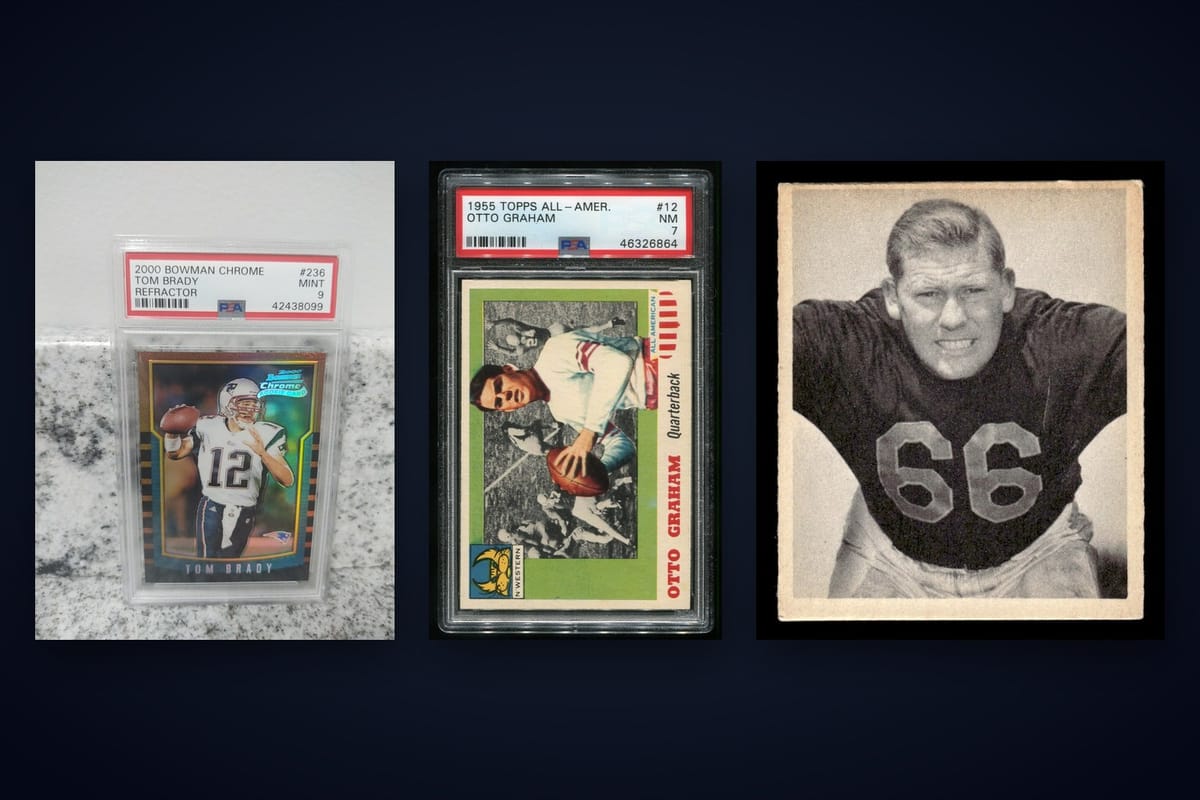
Tom Brady [Refractor] #236 2000 Bowman Chrome |
$10,353 | $1,849,133 | +835.3% |
 |
Otto Graham #12 1955 Topps All American |
$63.38 | $35,000 | +207.1% |
 |
Bulldog Turner #36 1948 Bowman |
$83.28 | $23,466 | +122% |
 |
Buford Ray #108 1948 Bowman |
$118.84 | $46,086 | +96.8% |
 |
Kenny Washington #95 1949 Leaf |
$107.77 | $28,585 | +47.9% |
 |
Jim Brown #62 1958 Topps |
$550.00 | $153,619 | +41% |
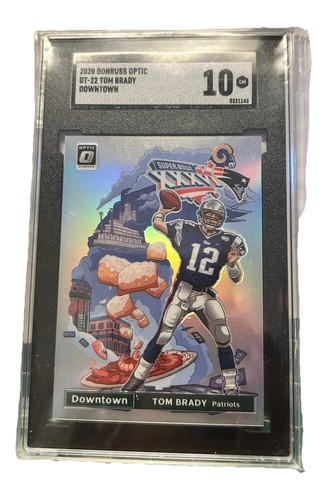 |
Tom Brady #DT-22 2020 Panini Donruss Optic Downtown |
$2,000 | $20,800 | +33.8% |
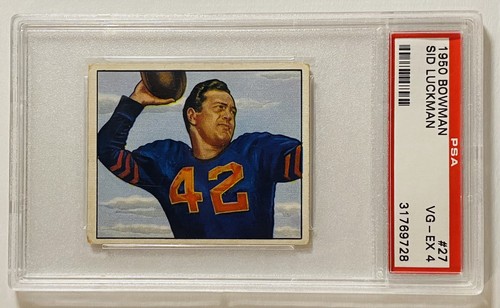 |
Sid Luckman #27 1950 Bowman |
$66.84 | $19,586 | +33.6% |
 |
John Unitas #138 1957 Topps |
$361.88 | $82,929 | +31.3% |
 |
Tom Brady #130 2000 Spx |
$2,663 | $19,300 | +31% |
 |
Knute Rockne #16 1955 Topps All American |
$114.78 | $29,555 | +21.5% |
 |
Dick Butkus #31 1966 Philadelphia |
$284.88 | $42,832 | +20.5% |
Look up any card's current raw and graded value in Midpoint — and get an estimated grade before you pay to submit.
1. Football Card Market September 2026 Overview
The football card market in September 2026 remains active, with prices rising across various segments. Several breakout quarterbacks and highly anticipated rookies have contributed to increased demand, leading to higher raw and PSA 10 values in some cases. Market sentiment is supported by notable sales of headline cards, which can indicate broader collector interest.
As of 2026-09-04, cards like Caleb Williams and Josh Allen have seen appreciation, contributing to overall market confidence. However, the market also faces challenges with grading bottlenecks and rising submission fees from top graders such as PSA, Beckett, and SGC.
- Raw card prices have increased alongside graded values, with some rookies showing notable gains over the past 30 days.
- Grading delays have extended turnaround times, increasing the cost and risk of submitting cards.
- Collectors are balancing the timing of grading submissions against market momentum and grading cost changes.
2. Impact of Rookie Hype & Breakout Quarterbacks
Rookie quarterbacks continue to be a significant factor behind much of the football card market’s gains this September. Caleb Williams leads with strong demand for his rookie cards both raw and graded. Similarly, Josh Allen’s veteran status combined with consistent performance keeps his cards in focus.
The hype around these players can create short-term buying windows, especially during preseason and training camp storylines when excitement peaks. Collectors who time purchases around these events may find value opportunities.
- Caleb Williams Rookie Card (Topps Chrome) raw prices have reportedly risen in the past month.
- Josh Allen’s 2024 Topps Flagship PSA 10 value has shown increases as of early September.
- Rookie hype fuels speculative buying, while veterans with proven track records often hold steady as more stable investments.
3. Record Sales and Headline Cards Driving Sentiment
September’s market momentum is partly influenced by notable sales of key cards. These headline cards can act as market indicators, affecting collector confidence and pricing trends.
For example, Caleb Williams rookie cards have recently set new sales benchmarks. These transactions support rising raw and graded valuations, encouraging collectors to engage more actively.
- High-grade Caleb Williams and Josh Allen cards are commanding premium prices in auctions and private sales.
- Collectors view these cards as valuable assets and cultural touchstones for the current NFL season.
- Notable sales often trigger secondary market price increases across related cards and sets.
4. Grading Bottlenecks & Increasing Submission Costs
A significant factor affecting football card prices in September 2026 is the ongoing grading bottleneck. PSA, Beckett, and SGC have increased submission fees recently to adjust for demand and operational costs. This trend impacts how collectors approach grading and pricing.
The higher cost of grading means some cards must appreciate more to justify the investment. This dynamic can widen the price gap between raw and graded cards, especially for lower-tier or less popular cards.
- PSA submission fees increased in mid-2026, pushing grading costs above $30 per card in many cases.
- Bottlenecks have extended turnaround times, sometimes beyond 6 months, causing market timing challenges.
- Collectors use tools like Midpoint to estimate grading potential before submitting, helping to reduce financial risk.
5. Which Football Card Sets Are Heating Up?
Among the many sets available, Topps Flagship and Topps Chrome remain popular football card products this September. These sets benefit from strong player inclusions, consistent quality, and collector familiarity.
Collectors are particularly interested in rookie cards and short-print parallels from these sets, which have shown price appreciation recently.
- Topps Flagship rookie cards have seen average price increases over the last 30 days.
- Topps Chrome continues to command premium pricing, especially for rookie and breakout star cards.
- Limited edition inserts and parallels from these sets are attracting speculative interest.
6. Preseason & Training Camp Storylines Creating Buying Windows
Preseason and training camp narratives influence short-term football card price movements. Players who perform well or capture media attention often become sought-after in collector markets.
For example, a breakout performance by a rookie quarterback in early September can cause immediate spikes in card demand and prices. Savvy collectors watch these storylines closely to time purchases and sales strategically.
- Tracking player news and team depth chart changes is key to identifying emerging card opportunities.
- Short-term hype can cause rapid price swings, offering both risks and rewards.
- Using portfolio tracking apps like Midpoint helps collectors monitor market changes in real time.
7. Licensing Changes Affecting Collector Demand and Supply
Licensing shifts within the football card industry impact both supply and demand. New licensing deals or changes to existing partnerships influence which manufacturers produce certain cards and how collectors value them.
These changes can create scarcity for some products, driving prices higher, or increase availability in other areas, stabilizing prices.
- Collectors are paying close attention to manufacturer announcements ahead of releases.
- Licensing uncertainty sometimes leads to speculative buying to hedge against future scarcity.
- Understanding licensing trends helps in predicting set popularity and price movements.
8. Raw vs Graded Card Pricing Dynamics
The price differential between raw and graded football cards varies depending on player, card condition, and market sentiment. Some cards can absorb higher grading costs and still deliver strong returns, while others see less benefit from grading.
High-demand rookies and veteran stars typically maintain strong premiums in PSA 10 or Beckett 10 grades. Conversely, niche or lower-profile cards may struggle to justify grading fees.
- Caleb Williams rookie cards show a grading premium over raw prices as of early September.
- Mid-tier cards often have premiums influenced heavily by centering and surface condition.
- Using AI-based tools like Midpoint's card centering and grading estimates can help optimize grading decisions.
9. How to Identify Football Cards Likely to Rise This Month
Spotting football cards poised to increase in value requires attention to rookie hype, player performance, set popularity, and grading potential. Cards connected to trending players, especially breakout quarterbacks, are often prime candidates.
Additionally, cards from popular sets like Topps Flagship and Chrome with low print runs or special parallels may appreciate faster.
- Follow preseason reports and emerging player storylines closely.
- Look for cards with strong centering and surface quality to maximize grading returns.
- Leverage apps like Midpoint to pre-grade and track portfolio value changes.
10. Market-Wide Comparison: Football vs Other Sports in September 2026
Compared to baseball, basketball, and other trading card segments, football cards have shown robust price growth in September 2026. This is influenced by a combination of rookie excitement and grading bottlenecks affecting football collectors.
While basketball cards benefit from NBA season openings, football’s timing with preseason and training camp creates a specific market window that can fuel price increases.
- Football card price increases in September 2026 have outpaced many other sports segments in recent weeks.
- The grading price surge disproportionately impacts football cards due to high submission volumes this season.
- Collectors diversify portfolios but often prioritize football cards during this period for growth potential.

Conclusion
September 2026 marks a notable period of growth and adjustment in the football card market. Rising prices driven by rookie hype, breakout quarterbacks, and notable sales are tempered by grading cost increases and bottlenecks. Collectors who leverage insights on trending sets, preseason storylines, and grading dynamics may be better positioned to capitalize on market opportunities.
Tools like Midpoint provide AI-powered grading estimates and portfolio tracking to help collectors make informed decisions before investing in grading or buying cards. Staying informed and agile in this evolving market is important to maximizing returns and enjoying the hobby.
FAQ
Q: Why are football card prices rising in September 2026?
A: Prices have risen due to rookie quarterback hype, breakout player performances, notable sales of headline cards, and limited supply caused by grading bottlenecks and increased submission fees.
Q: Which football cards are going up the most right now?
A: Caleb Williams and Josh Allen rookie cards, especially from sets like Topps Chrome and Topps Flagship, have seen some of the biggest gains in both raw and graded values as of early September 2026.
Q: Is now a good time to buy football rookie cards before prices climb more?
A: Preseason and training camp storylines can create strategic buying windows. Monitoring player news and using tools to estimate grading potential can help collectors buy ahead of further price increases.
Q: How do grading price increases affect football card values?
A: Higher grading costs can widen the gap between raw and graded card prices. Cards must appreciate more to cover grading fees, so some collectors delay submissions or focus on cards with strong grading premiums. AI grading tools like Midpoint can help assess this risk.
Q: What football card sets are hottest in 2026?
A: Topps Flagship and Topps Chrome remain popular sets, with strong demand for rookie cards and limited parallels driving price gains.
Q: Are rookie quarterbacks or veteran stars better buys in the current football card market?
A: Rookie quarterbacks often offer higher upside due to hype and breakout potential, but veteran stars like Josh Allen provide stability and consistent value retention. A balanced portfolio including both is advisable.
Free to start
Try the Midpoint app
Grade any card from a photo, see its raw and PSA 10 value, and track what your collection is worth — free.
Get it on iPhoneGet it on Android