
How Population Reports Affect Value: A Collector’s Guide
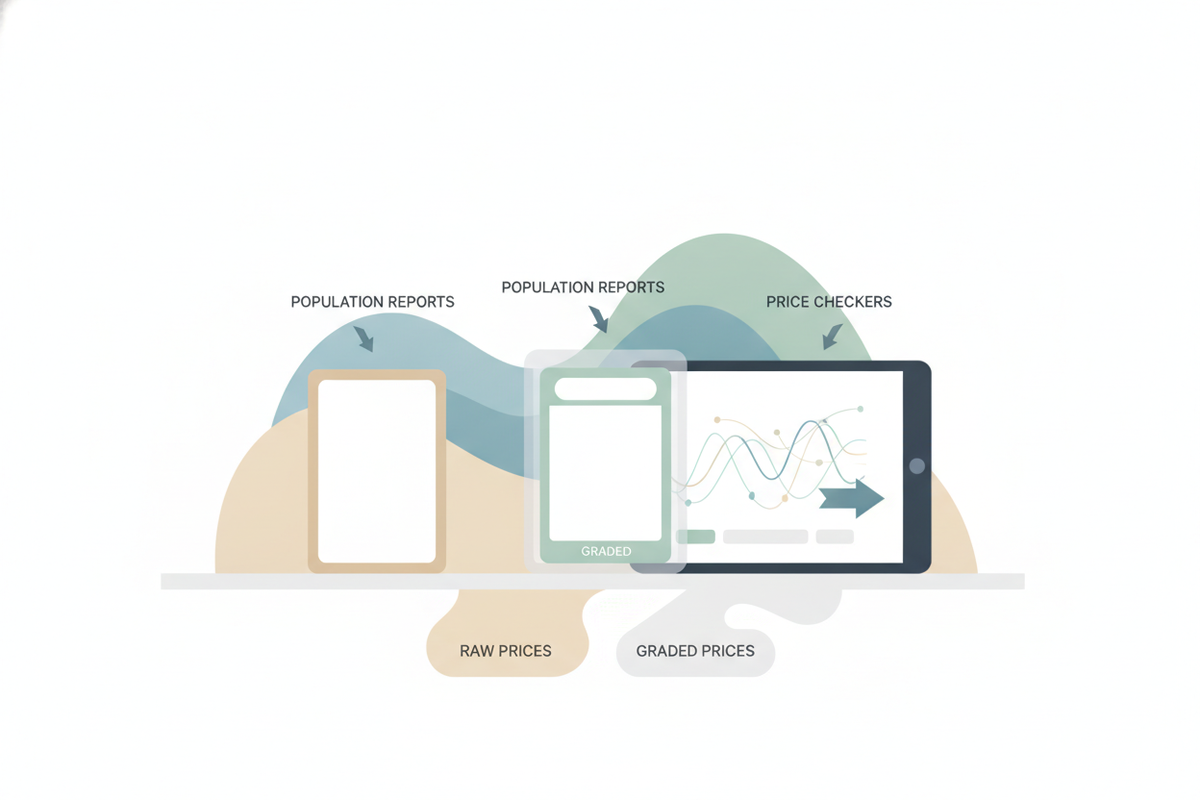
Discover how population reports affect value, raw vs graded prices, and best ways to price cards for sale using top card price checkers.

Estimated reading time: 15 min
Key Takeaways
- Population reports reveal scarcity at each grade, influencing card value when paired with demand, helping collectors assess market dynamics.
- Raw vs graded card values differ significantly due to grading, condition, and market perception; understanding these differences is essential for accurate valuation.
- Population data can guide pricing but should be used alongside sales comps, condition rarity, and market trends for a comprehensive assessment.
- Registry sets, chase cards, and grading company differences can affect population report interpretation; collectors must consider these nuances.
- Using tools like Midpoint helps quickly check card prices, condition, and grading estimates, integrating multiple data points for informed decisions.
Table of Contents
- Section 1: Understanding Population Reports in Card Collecting
- Section 2: How Graded Population Counts Measure Scarcity
- Section 3: When Low Population Influences Card Value
- Section 4: Population Reports and Market Pricing Dynamics
- Section 5: Registry Sets, Chase Cards & Their Impact on Value
- Section 6: Limitations and Pitfalls of Population Reports
- Section 7: Integrating Population Data with Sales Comparisons
Conclusion
FAQ
Section 1: Understanding Population Reports in Card Collecting
What Is a Population Report?
A population report is a detailed record maintained by major grading companies like PSA (Professional Sports Authenticator), Beckett Grading Services (BGS), CGC (Certified Guaranty Company), and TAG Grading. It documents how many cards of a specific type have been graded at each grade level, providing a granular breakdown of the distribution of grades — for example, how many copies of a particular card received a PSA 10, PSA 9, PSA 8, and so forth.
These reports are updated frequently, often in real-time or daily, depending on the grading company, and are accessible to the public through their websites or subscription services. This transparency allows collectors, investors, and dealers to understand the relative scarcity of cards at each grade, which can be a useful input in valuing cards.
How Do Population Reports Work?
Population reports aggregate data from all cards submitted and graded by the company since their inception or the card's release. Every time a card is graded, its details — such as set, player, year, and variant — along with the grade assigned, are logged into a database. The report then tallies these entries by card and grade.
- Example: Suppose a particular 1999 Pokémon Charizard card has 1,000 total PSA graded copies, but only 50 of those achieved a perfect PSA 10 grade.
- This data informs collectors about how many top-grade copies exist, which can be important for understanding scarcity and how that scarcity might impact price.
- Population reports often include breakdowns by grading company, grade, and sometimes card variations such as print runs, error cards, or autograph presence.
- Some grading companies provide additional data such as subgrades (centering, edges, corners, surface) which can be used to analyze condition trends.
Why Are They Important?
Population reports offer an objective measure of supply for graded cards, which can be crucial for collectors and investors who want to understand how rare a card is in a given condition. Because the condition heavily impacts value, knowing the distribution of grades helps set more informed price expectations.
For example, if only 10 PSA 10 copies of a card exist worldwide, but 500 PSA 9 copies exist, the market will often reflect a premium for the PSA 10s. This data helps reduce guesswork and speculation based solely on anecdotal sales.
However, population reports represent only graded cards and don't capture raw cards, so they should be interpreted as part of a larger set of market data.
Section 2: How Graded Population Counts Measure Scarcity
Graded Population vs Raw Copies
Population reports focus exclusively on cards that have been submitted for grading and received an official grade, so they do not account for raw (ungraded) cards. Many collectors hold cards raw due to cost, personal preference, or market conditions. Consequently, the total number of existing cards is often significantly higher than the population report suggests.
Thus, graded population counts measure scarcity in the certified market segment. This scarcity is often more relevant for higher-end collectors and investors because graded cards provide condition assurance and market liquidity.
For example, a vintage 1986 Fleer Michael Jordan rookie card might have tens of thousands of raw copies floating in collections, but only a few thousand graded by PSA. Within that graded population, perhaps only 100 are PSA 9 or higher, making those particular grades scarcer and potentially more valuable.
Why Graded Population Numbers Matter
High-grade cards are typically more valuable due to their rarity and verified condition. Population reports help validate scarcity and can justify price premiums.
- Example: If a card has 100 total graded copies but only 5 are PSA 10, those 5 copies may command prices multiple times higher than PSA 9 copies due to their rarity.
- Population reports provide transparent proof of scarcity that helps collectors avoid overpaying for cards that might seem rare but actually have large graded populations.
- They also reveal trends over time — for instance, if submissions increase, the population grows, potentially reducing scarcity and influencing price.
- Some cards see population declines due to resubmissions or retirements, which can also impact value.
Factors Affecting Population Counts
Several factors influence population data:
- Submission rates: Market interest spikes, such as a player’s induction into a hall of fame or a recent surge in popularity, can increase grading submissions and population counts.
- Resubmissions: Collectors may resubmit cards to the same or different grading companies to try to improve grades, which can inflate population counts.
- Multiple grading companies: PSA, BGS, CGC, and others have varying numbers of graded cards for the same issue, reflecting their market share and grading standards.
- Grading standards: Differences in grading criteria and strictness can lead to population differences; for example, PSA may grade stricter than BGS, affecting the distribution of grades.
- Card variants and print runs: Some cards have many versions, and population reports often separate these, influencing scarcity perception.
Section 3: When Low Population Influences Card Value
Low Population Only Matters With Demand
Low population alone does not guarantee a high card value. Scarcity must be coupled with demand from collectors or investors. Without significant demand, a card with few graded copies may remain undervalued.
- For example, a card with only 20 PSA 10 copies but minimal collector interest due to player obscurity or set unpopularity may not command a premium price.
- Conversely, popular cards with high graded populations can still maintain or increase in value due to strong demand, such as iconic rookies or chase variants.
Therefore, population reports are most insightful when contextualized with market trends, sales data, and buyer interest.
Examples of Low Population Impact
Consider a rare rookie card graded PSA 10 with only 8 copies worldwide. If the player is a Hall of Famer or a cultural icon (e.g., a LeBron James basketball rookie card), demand may surge, causing prices to increase significantly over time.
On the other hand, a niche collectible card from a less popular sport or an obscure set with a similarly low population may not experience significant price appreciation, even if graded examples are scarce.
Some cards might have artificially low populations because they were never widely graded or submitted, which can create perceived scarcity but limited demand.
Why Demand Matters More
Demand ultimately drives price because it reflects what buyers are willing to pay. Population data shows how many graded cards exist but not how much collectors desire them.
For intelligent buying and selling, collectors should balance supply (population) and demand. Tools like Midpoint help by providing real-time pricing data combined with population insights, helping users identify cards where low population and high demand intersect.
Section 4: Population Reports and Market Pricing Dynamics
How Population Data Influences Pricing
Population reports give collectors and dealers a framework to price cards based on scarcity at each grade, reducing guesswork and enhancing market transparency.
- Cards with fewer graded copies in higher grades usually command premiums due to limited availability.
- Tracking population trends over time can signal when a card is becoming more or less scarce, informing investment timing.
- Buyers pay more for certified scarcity as it lowers perceived risk of hidden flaws and condition uncertainty.
Premiums Based on Population
Premiums for high-grade cards with low population typically manifest as significant price multiples over lower grades.
For example, a PSA 10 with only 5 copies might sell for 2-4 times the price of a PSA 9 copy that has hundreds of graded examples. This multiplier varies by card, market conditions, and demand.
Sellers can use population data to price cards realistically. Overpricing a card despite a large graded population can stall sales, while underpricing a rare high-grade card can leave money on the table.
Raw vs Graded Pricing Differences
Raw cards generally sell for less than graded cards due to several reasons:
- Lack of third-party validation means buyers must trust the seller’s assessment of condition, which introduces risk.
- There is a higher likelihood of hidden defects, edge wear, surface scratches, or centering issues that reduce value.
- Graded cards provide liquidity and confidence, enabling higher prices and easier sales.
Population reports only reflect graded cards, so raw cards require different valuation approaches, often using sales comps and price lookup tools like Midpoint’s card lookup feature to quickly compare raw vs graded market values.
For example, a raw card may sell for a lower percentage of a PSA 9 graded copy depending on condition, market trends, and card popularity.
Section 5: Registry Sets, Chase Cards & Their Impact on Value
What Are Registry Sets?
Registry sets are digital collections maintained by grading companies where collectors build and track complete sets of cards, often competing for the highest-graded versions. PSA’s Set Registry, for example, is a popular platform that ranks collectors based on the quality of their sets.
Participation in registry sets can fuel demand for low-pop, high-grade cards because collectors seek to improve their rankings by acquiring the best versions. This competition can drive up prices beyond typical market levels.
Chase Cards and Finest Known Examples
Chase cards are highly coveted variants, such as short-prints, autographs, refractors, or limited-edition parallels, often characterized by lower population counts and higher premiums.
Finest Known Examples (FKEs) are the highest-graded copies of a card currently known to exist. These represent the pinnacle of condition and rarity and are prized by collectors.
- Population reports can highlight how many FKEs exist, which is often just one or a handful worldwide.
- FKEs frequently appreciate faster than other copies due to their exclusivity and status.
- Sellers can leverage the FKE status to command premium prices in auctions or private sales.
Impact on Value
Cards involved in registry sets, chase cards, and FKEs often behave differently than typical market trends. For example, even if the overall population grows, these cards may maintain or increase value due to collector competition and prestige.
Understanding the dynamics of registry-driven demand and chase card premiums enables buyers and sellers to navigate the market strategically, potentially maximizing returns.
Section 6: Limitations and Pitfalls of Population Reports
Cross-Grading and Resubmissions Distort Data
Collectors frequently resubmit cards to different grading companies or multiple times to improve grades or obtain different certifications. This can inflate population counts artificially, making cards appear less scarce than they truly are.
For example, a single card might appear in PSA, BGS, and CGC population reports, counting as three graded copies though physically it is the same card.
Additionally, multiple submissions to the same grading company can create duplicate population entries if companies count each submission separately.
Grading-Company Differences
Each grading company has unique grading standards, population sizes, and market reputations:
- PSA generally has the largest graded population and is a major industry leader, but some collectors find its grading stricter.
- BGS is often preferred for modern cards due to subgrading transparency, sometimes grading slightly more leniently.
- CGC has grown in popularity, especially for non-sports cards and comics.
- These differences mean population comparisons across companies require nuanced understanding.
Population Reports Don’t Reflect Market Value Alone
While population data reveals supply scarcity, it does not capture demand, condition rarity beyond grade, or short-term market trends such as hype or player performance.
Relying solely on population reports can lead to mispricing — either undervaluing in-demand cards with large populations or overvaluing low-demand low-pop cards.
For example, a card with thousands of graded copies might surge in value if the player breaks records or gains media attention.
Therefore, population reports should be one aspect in a multi-factor pricing strategy.
Section 7: Integrating Population Data with Sales Comparisons
Using Sales Comps Alongside Population Reports
The most reliable card pricing approach combines population data with recent sales comparisons from marketplaces and auctions. This dual data approach provides a more realistic market picture.
- Population data tells you the rarity of the card grade.
- Sales comps reveal actual transaction prices reflecting current buyer willingness to pay.
For example, if a PSA 9 card has 500 graded copies but recent sales show stable or rising prices, demand may be strong despite a large population. Conversely, a PSA 10 with only 10 graded copies but weak sales suggests limited demand.
Condition Rarity Beyond Grade
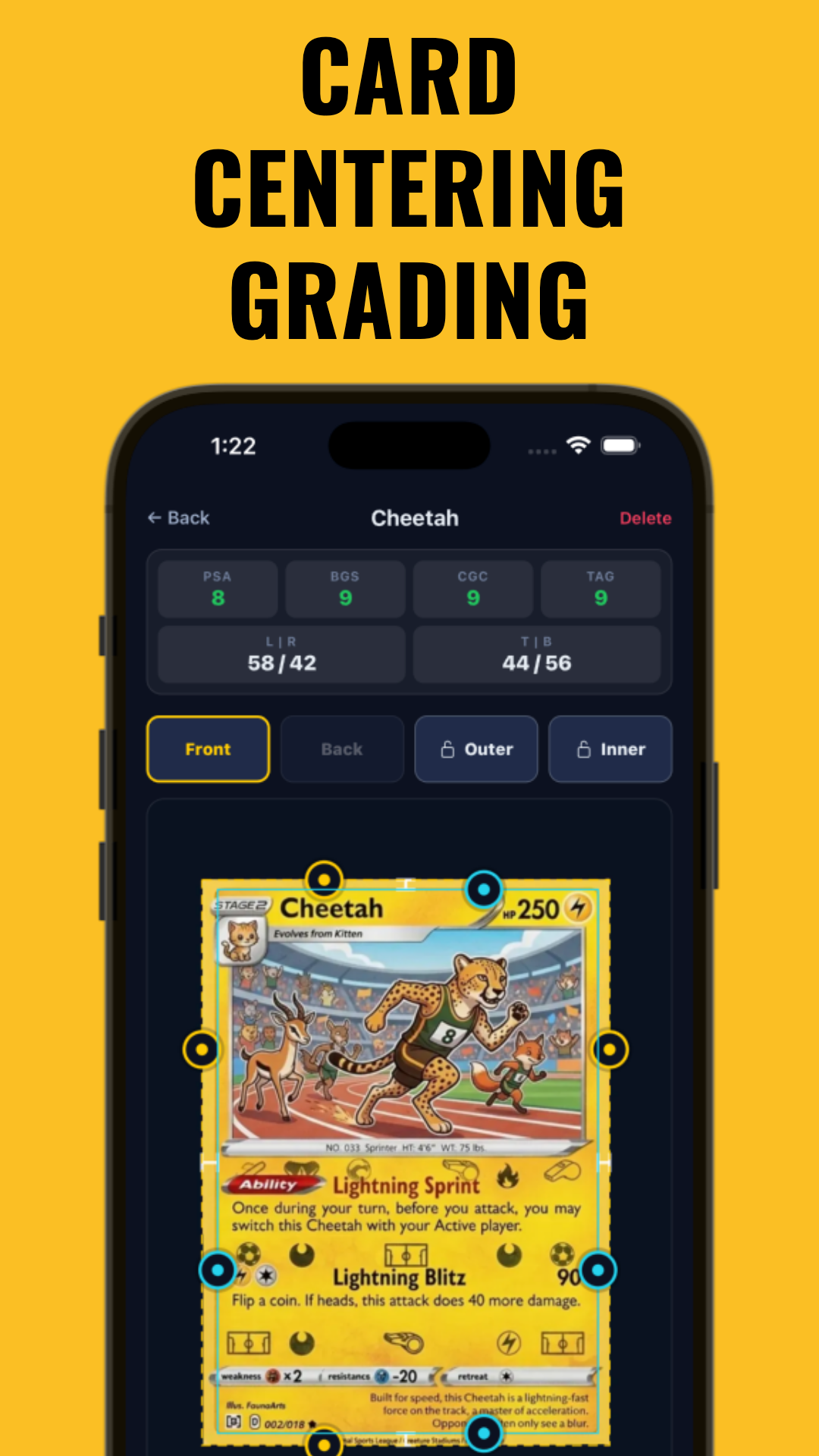
Within the same grade, cards can differ in condition rarity based on precise factors such as centering, edges, corners, and surface quality. For instance, a PSA 9 card tightly centered with pristine edges and surfaces is rarer than one barely meeting PSA 9 criteria.
Midpoint’s AI-powered grading tools analyze these subtleties, measuring centering percentages and condition markers to estimate grades and identify condition rarities before submitting cards for grading.
This granular analysis helps collectors identify potentially undervalued cards or decide which cards are worth grading.
Best Card Price Checker App for Fast Lookup
Midpoint’s card lookup feature aggregates data on over 250,000 cards spanning Pokémon, sports, and other categories, enabling collectors to rapidly check raw vs graded values, population counts, and grading estimates.
By integrating population reports, AI grading estimates, and real-time sales data in one intuitive interface, Midpoint simplifies the complex valuation process. Collectors can quickly decide whether to sell raw or graded, identify fair market prices, and optimize their card investments.
Explore more about accurate grading and pricing with Midpoint at Midpoint.
Conclusion
Population reports are an essential tool in the trading card collector’s arsenal, offering valuable insights into the rarity of cards at each grade. They provide transparency and data-driven evidence to support pricing and investment decisions.
However, their true effectiveness emerges when combined with demand analysis, recent sales comps, and condition rarity assessments. This multi-faceted approach helps collectors avoid common pitfalls such as overvaluing low-demand low-pop cards or undervaluing popular cards with large populations.
Advancements in technology, including AI-powered digital grading and precise centering tools offered by apps like Midpoint, grant collectors a competitive edge in evaluating card condition before investing in grading or selling.
Ultimately, population reports guide you on scarcity, but market value is determined by what buyers are willing to pay. Leveraging multiple data sources and tools ensures smart, confident trading and collecting in today’s dynamic market.
FAQ
Q: How do population reports affect card value?
A: Population reports indicate how many cards have been graded at each grade level, revealing scarcity. Scarce high-grade cards often command higher prices, but population data must be combined with demand and sales data to accurately assess value.
Q: Does low population always mean a card is worth more?
A: No. Low population only drives higher value when there is sufficient demand. A rare card with little collector interest may not increase in price significantly.
Q: What is a population report in collectibles grading?
A: It’s a report from grading companies listing the number of graded cards at each grade for a particular card, helping collectors understand how rare a card is in graded condition.
Q: Can population reports be wrong or misleading?
A: They can be skewed by resubmissions, cross-grading, and differences in grading standards. They don’t reflect raw card counts or market demand, so should not be used alone for pricing decisions.
Q: How do registry sets affect population report prices?
A: Registry sets can increase demand for top-graded cards within a set, often driving up prices for low population cards due to collector competition.
Q: What matters more for value: population or demand?
A: Demand matters more. Population reflects supply scarcity, but without buyer interest, low population does not guarantee high value.
Free to start
Try the Midpoint app
Grade any card from a photo, see its raw and PSA 10 value, and track what your collection is worth — free.
Get it on iPhoneGet it on Android