How to Insure a Card Collection: A Step-by-Step Guide
Learn how to insure a card collection with expert tips on documentation, valuation, storage, and choosing the right policy to protect your investment.


Estimated reading time: 12 min
Key Takeaways
- Insure your card collection by documenting and valuing each card as accurately as possible.
- Understand the difference between homeowners insurance and specialized collectibles policies.
- Use a card collection app like Midpoint to catalog, track value, and estimate grading.
- Proper storage and backup records are important to help protect your collection.
- Update your insurance and inventory regularly to reflect market changes and new acquisitions.
Collecting trading cards can be a rewarding hobby and a meaningful investment, but protecting that investment requires more than just careful storage. Knowing how to insure a card collection properly can help ensure that you can recover its value in case of loss, theft, or damage. This comprehensive guide will walk you through key steps—from documenting your cards to selecting the right insurance policy and maintaining your portfolio over time.
Step 1: Review Your Current Homeowners or Renters Insurance Policy
Before purchasing additional coverage, check your existing homeowners or renters insurance policy to understand what is already covered. Many policies provide limited protection for personal property, but collectibles like trading cards often have low coverage limits or specific exclusions.
Key points to review include:
- Coverage limits for collectibles and personal property.
- Exclusions related to trading cards or collectibles.
- Deductibles and loss types covered (theft, fire, water damage, etc.).
If your policy’s limits are insufficient or exclusions apply, you may want to consider specialized coverage options.
Step 2: Choose Between Scheduled Personal Property Endorsement and Standalone Collectibles Insurance
To help ensure comprehensive protection, you can add a scheduled personal property endorsement (also called a rider) to your existing policy or purchase standalone collectibles insurance. Both options have pros and cons.
Scheduled Personal Property Endorsement:
- Lists specific valuable items with their appraised values.
- Often offers agreed-upon coverage without depreciation.
- Usually requires documentation such as appraisals or receipts.
Standalone Collectibles Insurance:
- Designed specifically for collectibles like trading cards.
- May offer broader coverage and lower deductibles.
- Can include additional services like appraisal updates and loss prevention advice.
Compare premiums, deductibles, and coverage details from specialty insurers to find the best fit for your needs.
Step 3: Document Your Entire Card Collection Thoroughly
Accurate documentation is essential not only for insurance but also for tracking and managing your card portfolio effectively. Take these steps to catalog your collection:
- Photograph each card clearly, capturing front and back.
- Record card details such as name, set, year, condition, and grading status.
- Keep receipts, certificates of authenticity, and appraisal documents organized.
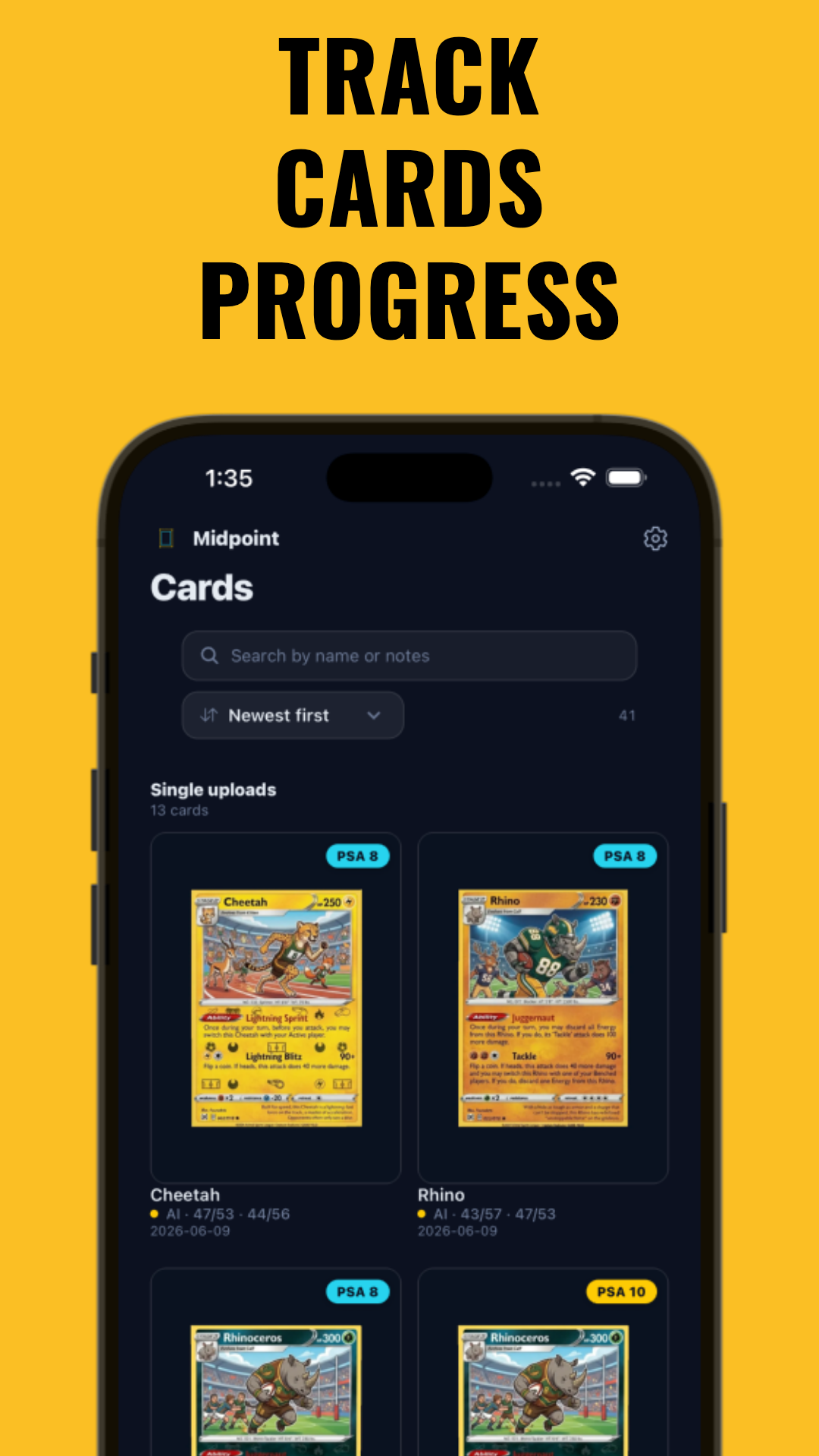
- Use a card collection app like Midpoint to upload and organize your cards digitally, track grading estimates, and monitor market values.
Midpoint’s portfolio tracker helps you see your collection’s estimated total value and individual card grading potential, making documentation and valuation more manageable.
Step 4: Determine the Value of Your Cards Using Market Comparisons and Appraisals
Valuing your collection accurately is important to setting appropriate insurance coverage limits. You can use several methods:
- Check recent sale prices and raw vs. graded values on trusted marketplaces.
- Obtain professional appraisals for rare or high-value cards.
- Use grading certificates (PSA, BGS, CGC, TAG) and grading estimates from tools like Midpoint’s AI digital grading to assess condition and value.
Keep in mind that values fluctuate, so consider setting coverage based on replacement value plus potential appreciation.
Step 5: Set Coverage Limits and Choose Deductibles Based on Your Collection’s Worth
When purchasing insurance, work with your insurer to establish coverage limits that reflect the replacement value of your collection. Avoid undervaluing items to help ensure you receive adequate compensation if a claim arises.
Consider the following:
- Set separate limits for individual cards or groups if necessary.
- Choose deductibles that balance premium costs and out-of-pocket expenses.
- Review if policies cover all relevant loss types, including theft, fire, accidental damage, and mysterious disappearance.
Step 6: Store Your Cards Properly and Maintain Backup Records
Proper storage helps minimize risk of damage and loss. Follow best practices such as:
- Use protective sleeves, top loaders, and airtight cases.
- Store cards in a cool, dry, and dark environment to help prevent warping and fading.
- Keep backup digital records and photographs in a separate secure location or cloud storage.
- Refer to our Ultimate Collector's Guide on How to Store Valuable Cards for detailed tips.
Step 7: Update Your Inventory and Insurance Annually
Your collection’s value and composition will evolve over time. To stay protected:
- Regularly update your card catalog and portfolio tracker to reflect new acquisitions or sales.
- Reappraise your collection annually or when market conditions change.
- Notify your insurer of significant changes to adjust coverage limits accordingly.
Step 8: Understand the Claims Process and Act Promptly
If you experience loss or damage, follow these steps to file a claim smoothly:
- Report the incident promptly to your insurer.
- File a police report if theft is involved.
- Provide detailed documentation, including photos, receipts, and appraisals.
- Keep copies of all correspondence and claim forms.
Prompt and thorough communication can help expedite claim resolution.
Tips & Common Mistakes
Many collectors overlook critical aspects of insuring their cards. Avoid these pitfalls:
- Underinsuring: Don’t rely solely on homeowners insurance limits—specialized coverage is often necessary.
- Inadequate documentation: Without photos, receipts, or grading info, claims can be denied or undervalued.
- Neglecting updates: Failure to update your inventory and policy can leave gaps in coverage.
- Poor storage: Improper handling can lead to damage that insurance may not cover.
Using a comprehensive card collection app like Midpoint can help avoid many of these errors by simplifying cataloging, grading, and portfolio tracking.
Conclusion
Insuring a card collection properly can help protect your investment and provide peace of mind. By documenting your cards meticulously, using apps like Midpoint to track value and grading estimates, selecting the right insurance options, and maintaining proper storage and records, you can better safeguard your collection against unexpected loss. Remember to review and update your coverage regularly to keep pace with market changes and collection growth.
FAQ
Do I need special insurance for a trading card collection?
While some homeowners or renters policies offer limited coverage, trading cards often require specialized insurance due to their unique value and risk. Consider adding a scheduled personal property endorsement or standalone collectibles insurance for more comprehensive protection.
Can I insure cards under homeowners or renters insurance?
Yes, but coverage limits for collectibles are usually low and may exclude certain risks. Check your policy carefully, and if necessary, supplement with specialized coverage tailored for card collections.
What documentation do I need to insure my card collection?
You should provide clear photographs, detailed inventory lists, purchase receipts, certificates of authenticity, and any professional appraisals. Digital tools like Midpoint can make organizing and storing this information easier and more accessible.
How do I value my sports cards or Pokémon cards for insurance?
Use recent market sales data, grading certificates, and professional appraisals. AI grading apps like Midpoint can estimate card grades and values before official grading, helping you set more informed insurance limits.
Is a scheduled personal property endorsement better than a standalone collectibles policy?
It depends on your collection size and needs. Endorsements are convenient additions to existing policies, while standalone policies often offer broader coverage and specialized services. Compare options to decide which suits your situation best.
What types of losses are covered for card collection insurance?
Coverage typically includes theft, fire, water damage, accidental loss, and sometimes mysterious disappearance. Confirm with your insurer which specific risks are included in your policy.
Free to start
Try the Midpoint app
Grade any card from a photo, see its raw and PSA 10 value, and track what your collection is worth — free.
Get it on iPhoneGet it on Android