
Latias Cards Worth Money: Top Valuable Cards & Grading Tips
Discover which Latias cards are worth money, best to grade, and most valuable in PSA 10. Expert guide to rare Latias cards and market trends.


Estimated reading time: 9 min
Key Takeaways
- Latias cards worth money include rare Gold Star, Star era, and Latias & Latios-GX chase cards.
- PSA 10 values can often be higher than raw cards, especially for holo and full art variants.
- Condition and centering are important for grading and value; small differences can impact price significantly.
- Japanese printings sometimes command premium prices over English versions.
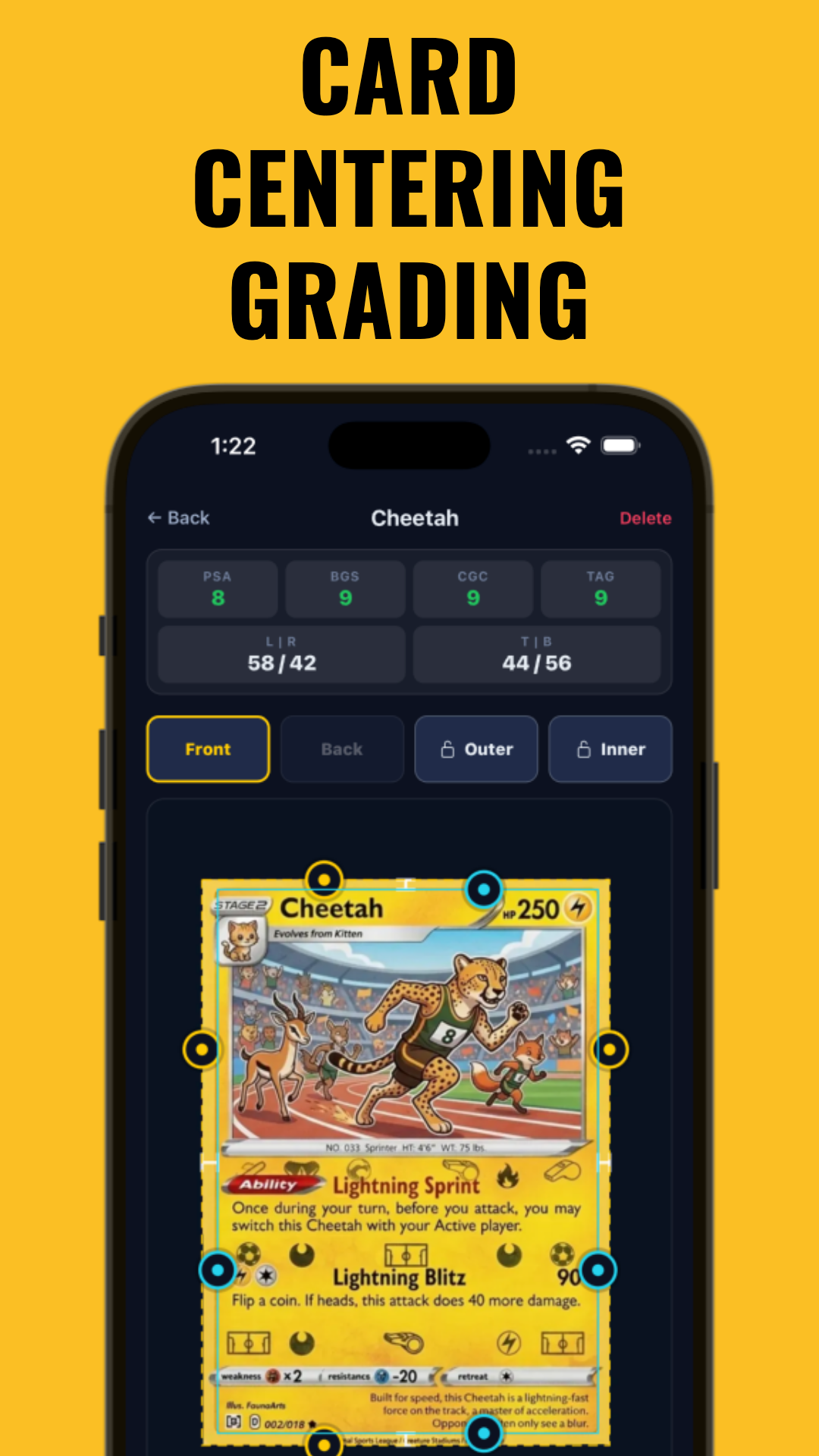
- Using Midpoint’s AI grading tool can help assess centering and condition before costly grading submissions.
If you’re a Pokémon collector or investor, understanding which Latias cards are worth money can help make informed buying, grading, and selling decisions. Latias cards span multiple sets, printings, and variants, from the highly coveted Gold Star Era to recent Latias & Latios-GX chase cards. This guide breaks down some of the most valuable Latias cards, how grading affects value—especially PSA 10 vs raw conditions—and tips to identify notable cards to grade and collect. Whether you hold a holo Latias card from the Deoxys set or a full art promo, knowing market trends and condition benchmarks can help maximize your returns.
Card values — live data from Midpoint's card database, as of 2026-08-10. Prices move; Midpoint refreshes these daily.
| Card | Raw | PSA 10 | Gem premium | |
|---|---|---|---|---|
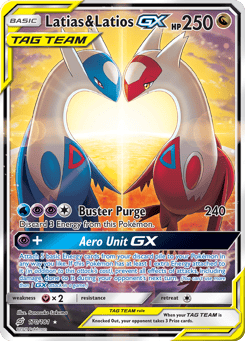 |
Latias & Latios-GX #170/181 Team Up (2019) |
$3,216 | $16,929 | 5.3× |
 |
Latias ex #93/97 Dragon (2003) |
$177.00 | $7,414 | 41.9× |
 |
Latias δ #11/110 Holon Phantoms (2006) |
$101.57 | $6,116 | 60.2× |
 |
Latias δ #8/113 Delta Species (2005) |
$159.33 | $5,207 | 32.7× |
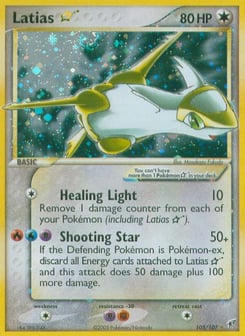 |
Latias ☆ #105/107 Deoxys (2005) |
$249.99 | $3,601 | 14.4× |
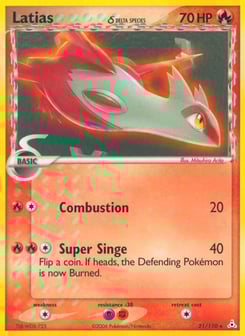 |
Latias δ #21/110 Holon Phantoms (2006) |
$118.65 | $3,114 | 26.3× |
 |
Latias #9/20 Dragon Vault (2012) |
$44.97 | $2,365 | 52.6× |
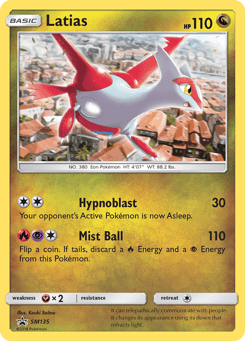 |
Latias #SM135 SM Black Star Promos (2017) |
$12.07 | $1,625 | 134.6× |
 |
Latias #XY78 XY Black Star Promos (2013) |
$86.07 | $1,525 | 17.7× |
 |
Latias #22/106 Great Encounters (2008) |
$15.00 | $1,437 | 95.8× |
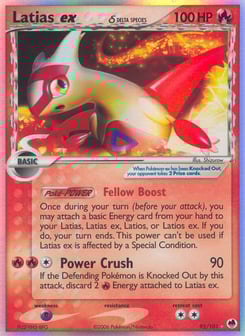 |
Latias ex δ #95/101 Dragon Frontiers (2006) |
$157.50 | $1,210 | 7.7× |
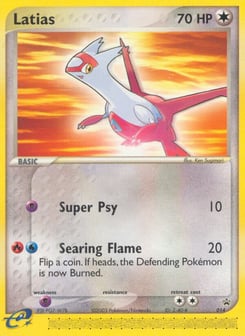 |
Latias #014 Nintendo Black Star Promos (2003) |
$26.85 | $1,097 | 40.9× |
Look up any card's current raw and graded value in Midpoint — and get an estimated grade before you pay to submit.
1. Gold Star Latias Cards from Deoxys Era
Gold Star Latias cards from the 2005 Deoxys set are among the rarest and most sought-after Latias cards. These cards feature the shiny Latias with a star symbol and unique holofoil pattern. Their scarcity and nostalgia contribute to higher prices.
As of 2026-08-10, a raw Gold Star Latias card from the Deoxys set may be worth around $400, while a PSA 10 graded card can reach approximately $1,200. The price difference highlights the importance of grading, especially centering and surface quality, as these cards can be challenging to keep in pristine condition.
- Look for good centering and minimal edge wear to maximize PSA 10 chances.
- Use Midpoint’s AI digital grading to estimate your card’s condition before sending it in.
- Gold Star cards have a relatively low population in PSA 10, which can increase scarcity value.
2. Star Era Latias Cards: Rare Holo and Promo Variants
Following the Gold Star era, Latias cards from the Star era also attract collector interest. These include holofoils from the EX series and special promos. While generally less rare than Gold Star, select Star era cards can retain value due to limited print runs and collector demand.
For example, holo Latias cards from EX Dragon Frontiers have raw values often around $50-$70, with PSA 10 versions sometimes fetching $150-$200. Promo cards like those from the McDonald's 2010 set may also maintain niche collector interest.
- Holo and full art promos tend to retain value better over time.
- Condition grading heavily influences price, with well-centered cards preferred.
3. Latias & Latios-GX Chase Cards from Sun & Moon Era
In the Sun & Moon era, Latias & Latios-GX cards are popular chase cards. Their dynamic artwork and GX mechanics make them sought after in competitive and collector circles.
Raw Latias & Latios-GX cards often sell for $20-$40, while PSA 10 graded versions can reach $80-$120 depending on edition and holo type. Alternate art variants are especially prized.
- Check print numbers and set identification carefully to confirm rarity.
- Full art and secret rare variants usually have the highest value.
4. Understanding Latias PSA 10 Value vs Raw Card Price
PSA 10 values for Latias cards often exceed raw card prices by 2-3 times or more. The premium exists because collectors and investors trust graded cards for authenticity and condition.
However, the jump from PSA 9 to PSA 10 can be especially steep for Latias cards, with centering often being the deciding factor. Cards with excellent surface and edges but slightly off-centering may only grade PSA 9, which can significantly impact value.
- Use Midpoint to measure card centering to the millimeter and predict PSA 10 viability.
- Surface scratches or edge wear can also lower grades—inspect carefully.
5. Best Latias Cards to Grade for Maximum ROI
Not all Latias cards are worth grading. Focusing on rare, holo, and chase cards with good raw condition can maximize return on investment.
Key cards to consider grading include:
- Gold Star Latias (Deoxys set)
- Star era holo Latias (EX Dragon Frontiers, promos)
- Latias & Latios-GX full art and secret rares
- Japanese exclusive variants with known demand
Cards with visible centering issues or surface damage may be less cost-effective to grade. Pre-grading with Midpoint can help save grading fees and improve submission success.
6. Rarest Latias Cards by Set and Number
Identifying the rarest Latias cards involves set and number knowledge. Gold Star Latias (#107/107) is considered one of the rarest and most valuable card numbers. Other notable cards include:
- EX Dragon Frontiers holo Latias (#8/101)
- McDonald's 2010 promo Latias (#1/1, ultra-rare)
- Secret rare Latias & Latios-GX cards (#SM234/SM234)
Exact set and number matching is important for accurate pricing and grading decisions. Misidentifying can lead to overpaying or undervaluing cards.
7. Japanese vs English Printing: Which Latias Cards Sell for More?
Japanese Latias cards often command higher prices than their English counterparts due to collector demand and sometimes perceived superior print quality. For example, a Japanese Gold Star Latias PSA 10 may sell for a modest premium compared to an English PSA 10 equivalent.
Collectors sometimes seek Japanese printings for exclusivity and artwork variations. However, English cards remain popular in Western markets.
- Check for language printing on the card’s text to identify variants.
- Consider regional demand when pricing or selling cards.
8. Price Trends and Recent Value Changes for Latias Cards
Latias card values have generally appreciated over recent years, especially for graded and rare cards. Gold Star Latias has shown notable collector interest, though exact annual price increases can vary.
Newer Latias & Latios-GX cards may have more volatile prices but tend to hold value if graded PSA 9 or 10. Market fluctuations are common around major Pokémon set releases.
- Track your collection value with portfolio tools in apps like Midpoint.
- Monitor auctions and marketplaces for real-time price insights.
Conclusion
Knowing which Latias cards are worth money is helpful for any Pokémon card collector or investor. The Gold Star Latias from the Deoxys era remains highly valued, especially in PSA 10 condition. Star era holo and promo cards, plus Latias & Latios-GX chase variants, also hold value with grading premiums. Condition and centering are key grading factors that impact price, so pre-grading tools like Midpoint can be valuable for making informed grading and selling decisions. Whether you’re aiming to grade your rarest Latias cards or tracking market trends, this guide provides insights to help maximize your collection’s worth.
FAQ
Q: How much are Latias cards worth?
A: Latias card worth varies widely by set, condition, and grading. Raw cards can range from around $20 to several hundred dollars, while PSA 10 graded cards can be worth significantly more depending on rarity and variant.
Q: What is the most valuable Latias card?
A: The Gold Star Latias card from the 2005 Deoxys set is generally considered the most valuable Latias card, especially in PSA 10 condition, where it can reach prices around $1,200 as of 2026-08-10.
Q: How much is Latias Star / Gold Star from Deoxys worth?
A: Raw Gold Star Latias from Deoxys may be worth approximately $400, while PSA 10 graded versions can fetch about $1,200, reflecting the premium for top condition.
Q: Are graded Latias cards worth more than raw cards?
A: Yes. Graded Latias cards, especially PSA 10, typically command higher values than raw cards due to verified condition and authenticity.
Q: Which Latias set or card number is the rarest or most expensive?
A: Gold Star Latias (#107/107) from the Deoxys set is among the rarest and most expensive. Other notable rare cards include EX Dragon Frontiers holo Latias and secret rare Latias & Latios-GX cards.
Q: Do Japanese Latias cards sell for more than English ones?
A: Often yes. Japanese Latias cards tend to sell at a premium compared to English versions due to collector demand and exclusive printings.
Free to start
Try the Midpoint app
Grade any card from a photo, see its raw and PSA 10 value, and track what your collection is worth — free.
Get it on iPhoneGet it on Android