
MTG Card Prices Rising September 2026: Key Market Movers to Watch
Explore the MTG card prices rising September 2026, top gainers, causes behind spikes, and what collectors should know to buy, hold, or sell smartly.

Estimated reading time: 10 min
Key Takeaways
- MTG card prices rising in September 2026 appear influenced by format legality shifts, Commander demand, and reprint speculation.
- Notable rising cards include "Fable of the Mirror-Breaker," "Dockside Extortionist," and select Reserve List staples.
- Price changes vary across marketplaces like TCGplayer and MTGGoldfish, reflecting supply and demand nuances.
- Collectors should consider grading costs relative to market momentum; digital grading tools like Midpoint can assist decision-making.
September 2026 has brought notable activity in the Magic: The Gathering card market, with several cards showing value increases. Whether you're a collector, speculator, or trader, understanding which cards are moving, possible reasons for price changes, and how to approach grading and selling can help inform your strategy. This listicle breaks down some of the top MTG card prices rising in September 2026, examines potential causes behind these market shifts, and offers insights for your collection approach.
30-day price movers — live data from Midpoint's card database, as of 2026-09-20. Prices move; Midpoint refreshes these daily.
| Card | Raw | PSA 10 | 30-day | |
|---|---|---|---|---|
 |
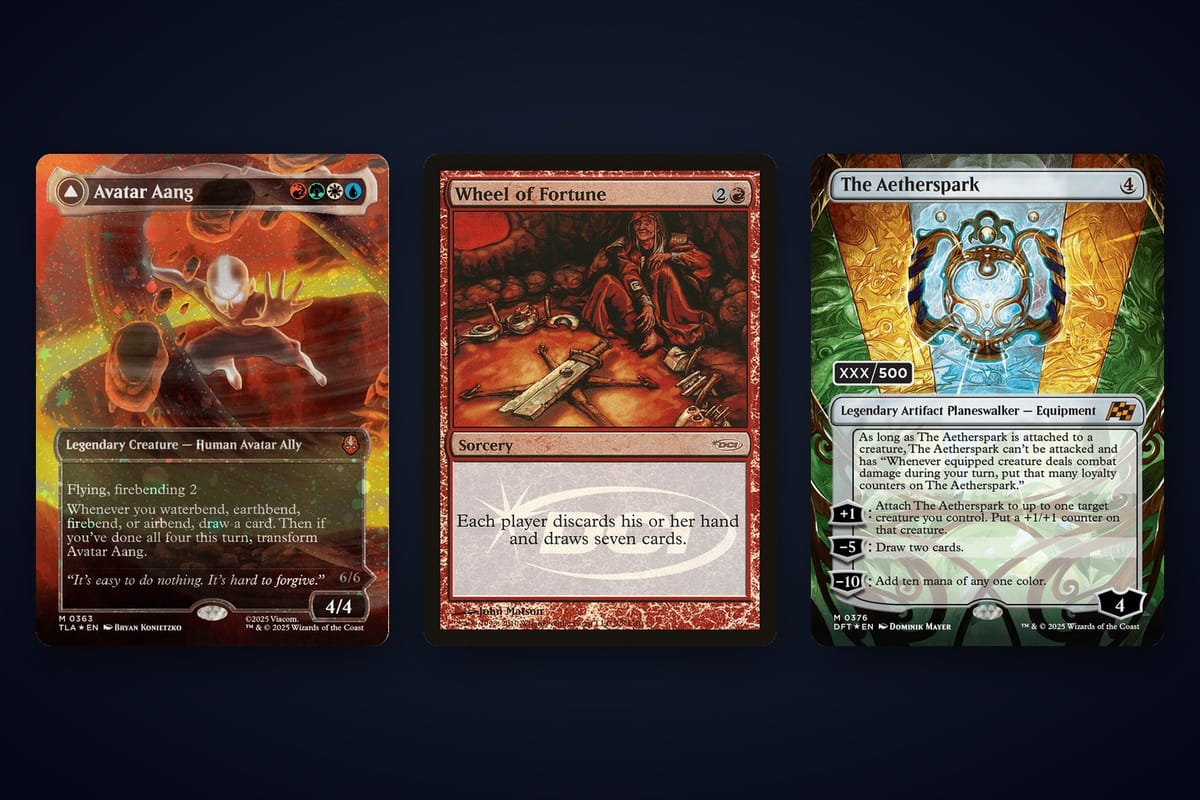
Avatar Aang // Aang, Master of Elements #363 Avatar: The Last Airbender (2025) |
$4,856 | — | +13.7% |
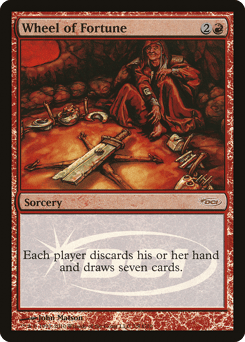 |
Wheel of Fortune #7 Judge Gift Cards 2010 (2010) |
$2,636 | — | +13.1% |
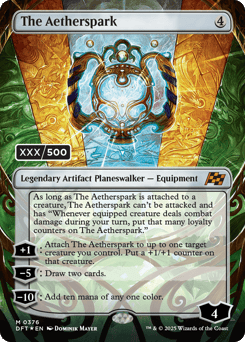 |
The Aetherspark #376 Aetherdrift (2025) |
$1,875 | — | +10.3% |
 |
Survival of the Fittest #4 Judge Gift Cards 2009 (2009) |
$1,982 | — | +5.5% |
 |
Traveling Chocobo #551a Final Fantasy (2025) |
$1,879 | — | +4.9% |
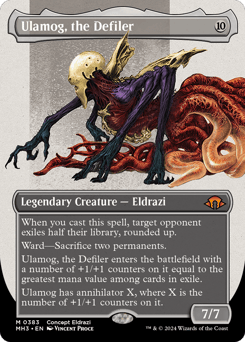 |
Ulamog, the Defiler #383 Modern Horizons 3 (2024) |
$45.30 | — | +3.1% |
 |
Traveling Chocobo #551b Final Fantasy (2025) |
$1,854 | — | +2.7% |
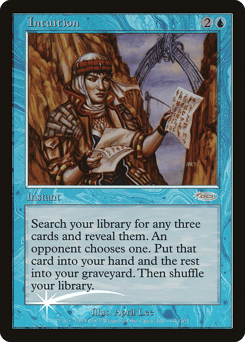 |
Intuition #1 Judge Gift Cards 2003 (2003) |
$1,787 | — | +0.9% |
 |
Traveling Chocobo #551c Final Fantasy (2025) |
$1,932 | — | +0.8% |
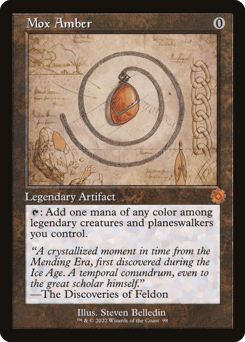 |
Mox Amber #98 The Brothers' War Retro Artifacts (2022) |
$94.08 | — | +0.7% |
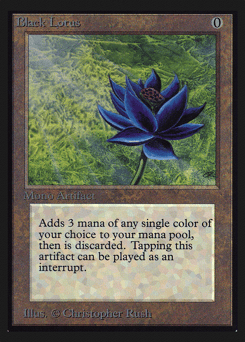 |
Black Lotus #233 Collectors' Edition (1993) |
$2,700 | — | 0% |
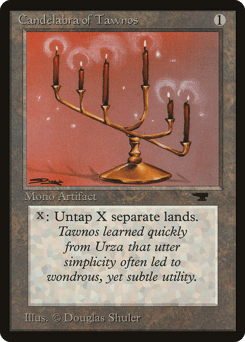 |
Candelabra of Tawnos #43 Antiquities (1994) |
$2,200 | — | 0% |
Look up any card's current raw and graded value in Midpoint — and get an estimated grade before you pay to submit.
1. Fable of the Mirror-Breaker: Commander Demand Influences Price
"Fable of the Mirror-Breaker" has seen a price increase this month, with raw copies reportedly climbing from around $5 to $15 and PSA 10 graded versions reaching approximately $40 as of 2026-09-20. This rise is likely related to its popularity in Commander decks, where its versatile effect and synergy have made it a common inclusion in multiple archetypes.
Collectors considering grading this card should note that the value difference between raw and PSA 10 copies may justify the grading fee, especially when using AI-powered tools like Midpoint to assess centering and surface condition before submission.
2. Dockside Extortionist: Format Legality and Demand Effects
"Dockside Extortionist" has reportedly increased from about $25 to $55 raw and over $130 for PSA 10 copies. This change corresponds with continued interest after banlist announcements that maintained its legality in several popular casual and competitive formats. Its strong power level sustains demand among players and collectors.
Tracking prices across sources like TCGplayer and MTGGoldfish shows some variation, but the upward trend appears consistent. Sellers should monitor supply and reprint risk, which currently seems low for this card.
3. Mox Amber (Reserve List): Demand for Old-Border Cards
Reserve List cards such as "Mox Amber" have shown price momentum not seen in recent years. Raw prices have reportedly moved from around $350 to $420, with PSA 10 grades climbing to about $1,200. Collectors often view these as long-term holds due to their scarcity and collector appeal.
This resurgence may be partly attributed to increased Commander format usage and speculation around future reprints. The Reserve List protection offers some degree of security, making high-value cards like this attractive for investment.
4. The Great Henge: Influence of New Set Releases
Following the release of a new set that synergizes with green creatures, "The Great Henge" saw a price increase from approximately $28 to $48 raw and $130+ PSA 10. This illustrates how new product announcements can impact existing cards, driving demand for staples that fit new strategies.
Collectors might consider timing purchases and grading submissions around such releases to potentially maximize value.
5. Seasoned Pyromancer: Speculation Versus Sales Data
"Seasoned Pyromancer" experienced a price increase from about $12 to $30 raw, initially fueled by hype. However, sales volume data suggests the jump may be somewhat speculative; supply remains ample, and some marketplaces show price resistance.
Using tools like Midpoint's portfolio tracking can help collectors distinguish when spikes are supported by solid sales versus temporary hype, informing more informed buy or sell decisions.
6. Felidar Guardian: Foil Variants Showing Gains
Foil versions of "Felidar Guardian" have reportedly increased in value by approximately 45%, from around $18 to $26 in raw foil prices. This reflects a niche but growing interest in premium variants, especially among players seeking visually distinctive Commander cards.
Collectors should track both raw and graded foil prices across platforms to better understand these nuanced trends.
7. Uro, Titan of Nature's Wrath: Banlist Changes and Value
With recent banlist updates keeping "Uro" legal in certain formats, the card’s price rose from about $40 to $65 raw and $180 PSA 10. This renewed legality has increased demand, particularly in casual and Commander circles, where its effect remains impactful.
Grading can add premium value, but given the card’s current momentum, timing submissions with market trends is advisable.
8. Teferi, Time Raveler: Market Trends Favoring Control Cards
Control-oriented cards like "Teferi, Time Raveler" have seen steady gains, with prices up roughly 30% in the last month. This aligns with a meta shift toward control decks in popular formats, reflecting market momentum favoring such cards.
Collectors holding these cards may benefit from monitoring meta announcements and adjusting their portfolios accordingly.
9. Cards to Watch Next: Supply and Speculation Risks
Cards with rising interest but uncertain supply, such as "Karn, the Great Creator" and "Force of Negation," merit close attention. Checking supply levels and recent sales volume via Midpoint or other trackers can help anticipate whether price gains will hold or reverse.
Being proactive in grading or selling as momentum builds may help maximize gains while managing risk.
10. How to Use Digital Grading Tools to Navigate Price Changes
With grading fees often exceeding $30, pre-grading your cards digitally can save money and time. Midpoint offers precise centering measurement and AI-estimated PSA, BGS, CGC, and TAG grades, helping collectors decide which cards to grade based on potential value increase.
Leveraging such tools can improve timing and confidence when buying, holding, or selling cards amid the fluctuating MTG card market in September 2026.

Conclusion
The MTG card market in September 2026 shows dynamic price movements influenced by format legality changes, Commander demand, new set synergies, and speculation balanced by supply considerations. Top cards like "Fable of the Mirror-Breaker," "Dockside Extortionist," and Reserve List staples are leading gains, while others require scrutiny to distinguish hype from verified momentum.
For collectors and traders, understanding these trends and employing tools like Midpoint for grading estimates and portfolio tracking can be valuable. This approach helps optimize decisions to buy, hold, sell, or grade your MTG cards thoughtfully in this evolving market.
FAQ
Q: Why are MTG card prices rising in September 2026?
A: Prices appear to be influenced by a combination of format legality updates, increased Commander demand, new set releases that boost synergy, and speculation balanced by supply factors.
Q: Which Magic cards spiked the most this week?
A: Cards such as "Fable of the Mirror-Breaker," "Dockside Extortionist," and Reserve List cards like "Mox Amber" have shown notable raw and PSA 10 value increases.
Q: What caused a specific MTG card to jump in price?
A: Causes vary but often include format legality changes, banlist updates, Commander popularity, hype from new sets, or renewed interest in vintage staples.
Q: Are these MTG price spikes temporary or likely to hold?
A: Some spikes are sustained by genuine demand and low supply, especially for Reserve List or format-legal staples; others driven by hype may be temporary. Tracking sales volume and supply is important for assessment.
Q: Which MTG cards are worth selling now because they’re rising?
A: Cards with demonstrated sustained demand and low reprint risk, like "Dockside Extortionist" and high-grade Reserve List cards, may be strong candidates. Using grading tools can help maximize sale value.
Q: How do different MTG price trackers explain the same card’s value?
A: Variations arise from differing data sources, marketplace listings, and sales volume timing. Comparing platforms like TCGplayer and MTGGoldfish alongside AI tools like Midpoint can provide a clearer picture.
Free to start
Try the Midpoint app
Grade any card from a photo, see its raw and PSA 10 value, and track what your collection is worth — free.
Get it on iPhoneGet it on Android