Rayquaza Cards Worth Money: Top Valuable Cards & Grading Tips
Discover which Rayquaza cards are worth money, their PSA 10 values, rarest versions, and the best cards to grade for maximum value.

Estimated reading time: 11 min
Key Takeaways
- Rayquaza cards that have notable market value include Gold Star and VMAX alternate arts, with PSA 10 grades often commanding higher prices.
- Gold Star Rayquaza cards are among the highest valued, with top condition examples sometimes exceeding $10,000.
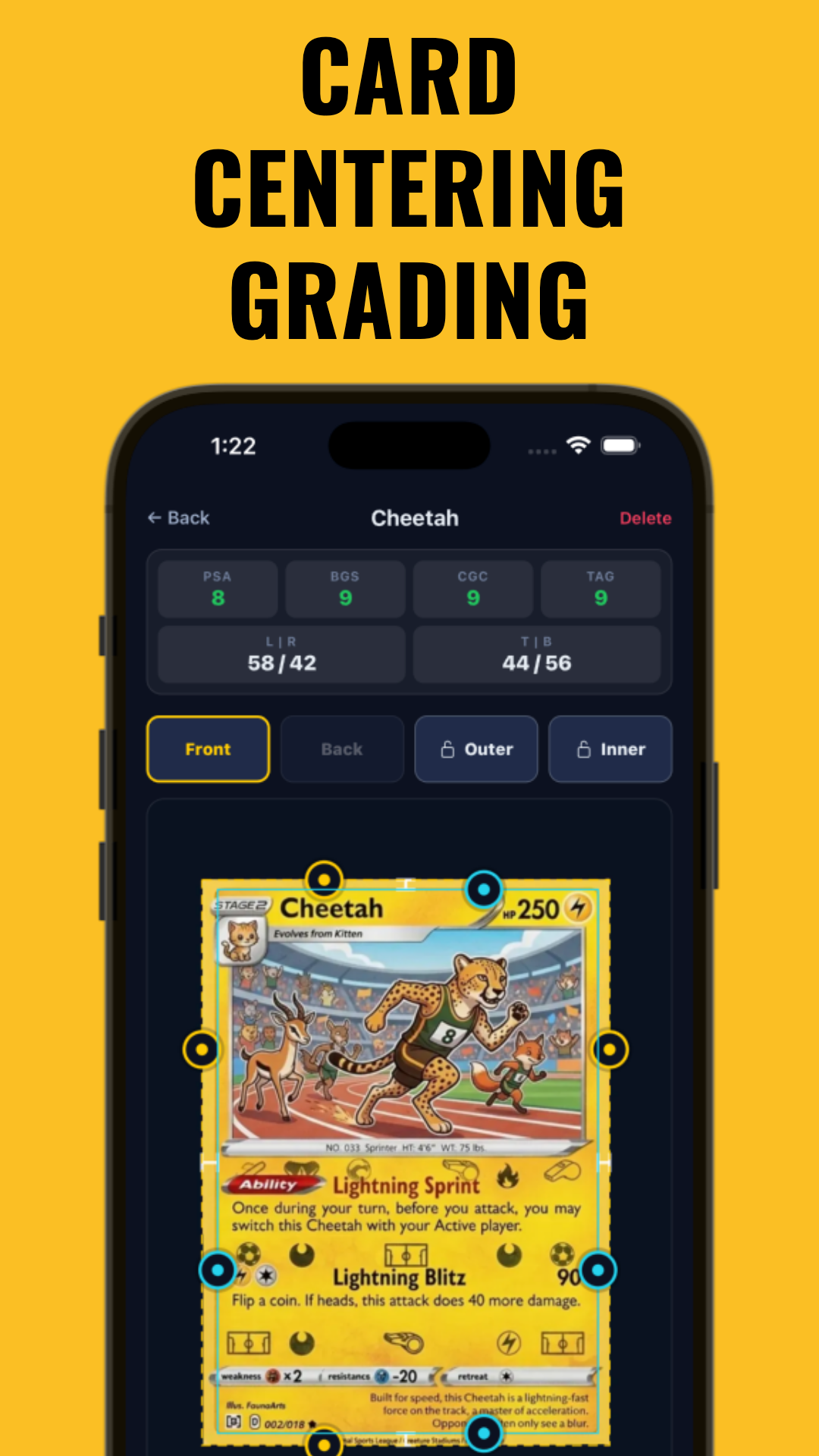
- Centering is an important factor for grading, and tools like Midpoint can help pre-assess before submission.
- English Rayquaza cards often fetch higher prices than Japanese versions, though exceptions exist.
- Modern chase cards like Rayquaza VMAX alternate art are increasing in value but generally remain more affordable than vintage rarities.
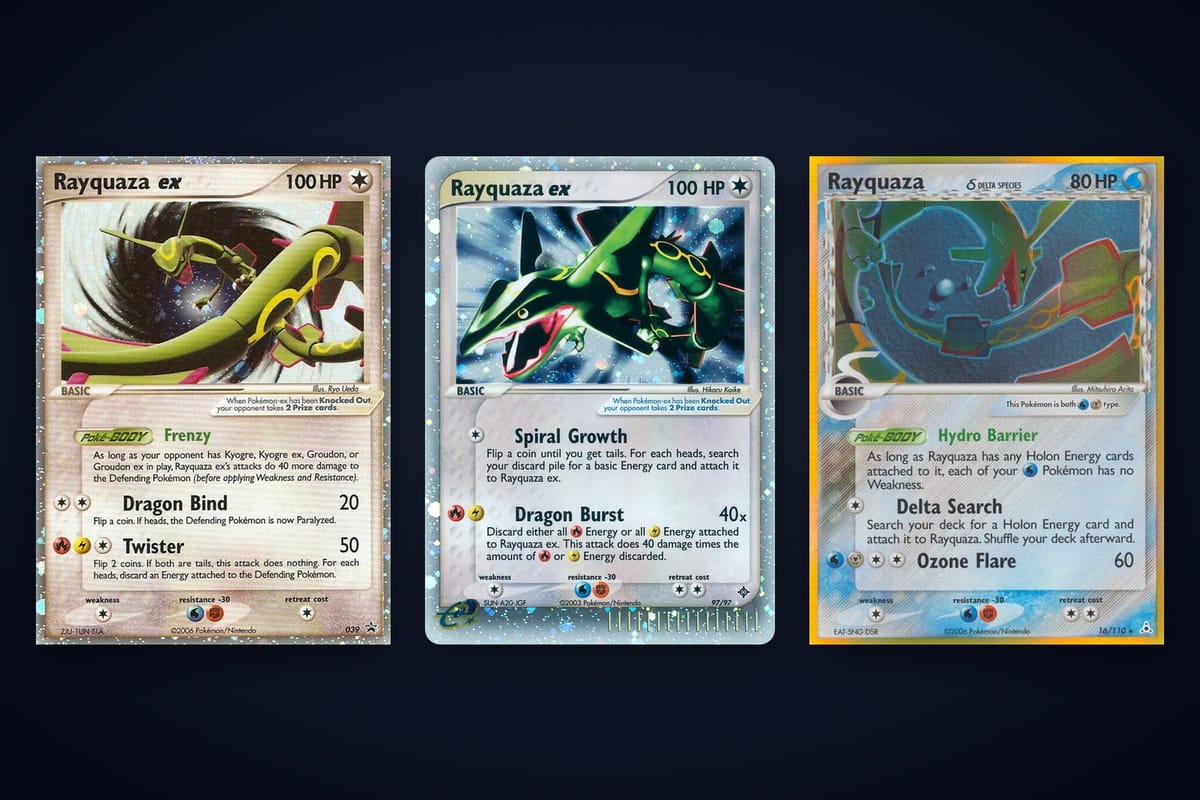
Rayquaza cards have attracted collectors for years, often commanding high prices in the Pokémon card market. This guide explores Rayquaza cards with notable value, from vintage Gold Star cards to modern VMAX alternate arts, considering their worth in raw and graded conditions. Whether you’re deciding which Rayquaza cards to grade or tracking price trends, this list covers some of the rarest and most valuable Rayquaza cards as of 2026-08-10.
Card values — live data from Midpoint's card database, as of 2026-08-10. Prices move; Midpoint refreshes these daily.
| Card | Raw | PSA 10 | Gem premium | |
|---|---|---|---|---|
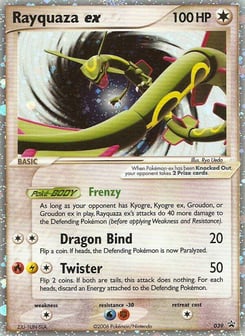 |
Rayquaza ex #039 Nintendo Black Star Promos (2003) |
$517.27 | $27,325 | 52.8× |
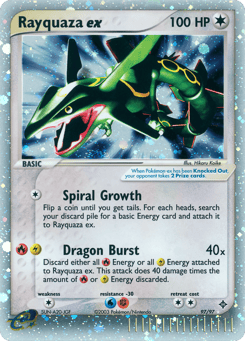 |
Rayquaza ex #97/97 Dragon (2003) |
$210.31 | $23,333 | 111× |
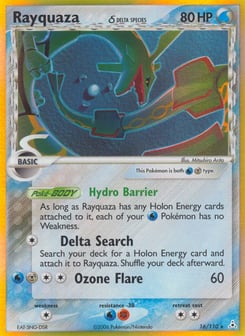 |
Rayquaza δ #16/110 Holon Phantoms (2006) |
$450.00 | $20,434 | 45.4× |
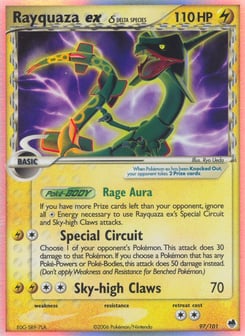 |
Rayquaza ex δ #97/101 Dragon Frontiers (2006) |
$330.00 | $20,202 | 61.2× |
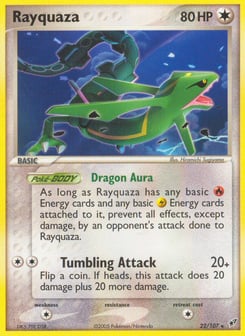 |
Rayquaza #22/107 Deoxys (2005) |
$140.42 | $15,193 | 108.2× |
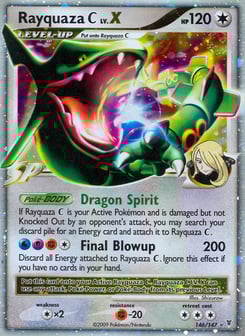 |
Rayquaza C LV.X #146/147 Supreme Victors (2009) |
$218.66 | $12,463 | 57× |
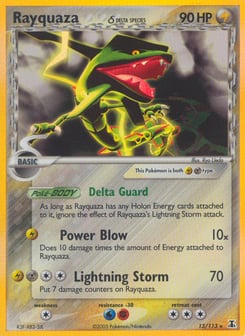 |
Rayquaza δ #13/113 Delta Species (2005) |
$220.00 | $9,039 | 41.1× |
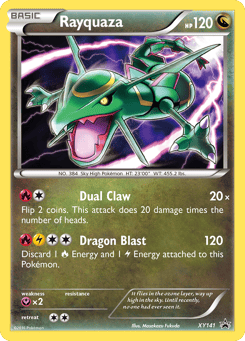 |
Rayquaza #XY141 XY Black Star Promos (2013) |
$41.56 | $8,500 | 204.5× |
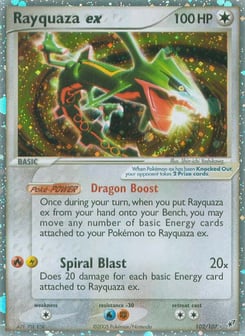 |
Rayquaza ex #102/107 Deoxys (2005) |
$999.00 | $7,437 | 7.4× |
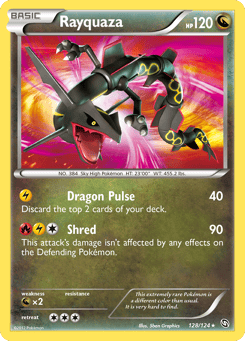 |
Rayquaza #128/124 Dragons Exalted (2012) |
$969.69 | $7,148 | 7.4× |
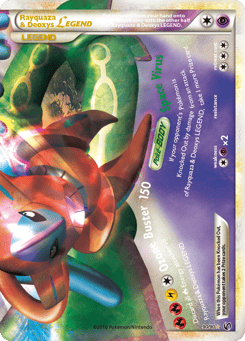 |
Rayquaza & Deoxys LEGEND #90/90 HS—Undaunted (2010) |
$264.30 | $6,000 | 22.7× |
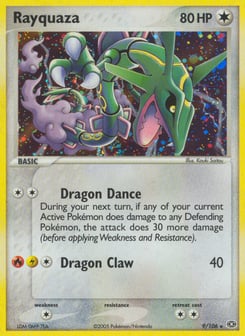 |
Rayquaza #9/106 Emerald (2005) |
$550.00 | $3,720 | 6.8× |
Look up any card's current raw and graded value in Midpoint — and get an estimated grade before you pay to submit.
1. Gold Star Rayquaza: The Pinnacle of Rayquaza Card Value
The Gold Star Rayquaza card is among the rarest and most sought-after Rayquaza cards. Released in the EX Deoxys set, PSA 10 graded copies have been known to sell for prices exceeding $10,000, making it one of the top Rayquaza cards in the market.
This card’s gold star symbol, full-art design, and limited print run contribute to its demand. Raw Gold Star Rayquaza cards in near mint condition can also command significant prices, though grading to PSA 10 or BGS 9.5 typically increases value substantially.
- PSA 10 Gold Star Rayquaza value: Approximately $13,200
- Raw near mint value: Often above $5,000
- Best sets: EX Deoxys
2. Rayquaza VMAX Alternate Art from Evolving Skies
The Rayquaza VMAX alternate art card from the Evolving Skies set is popular among modern collectors for its artwork and relative rarity. This card is considered a chase piece and can sell for several hundred dollars in raw condition.
PSA 10 graded copies have been observed selling in the range of $700 to $900, making it a sought-after card for grading among current-generation cards. Its popularity is influenced by both collector interest and competitive play.
- PSA 10 value: Around $850
- Raw value: Approximately $350–$450
- Set: Evolving Skies
3. Mega Rayquaza EX and GX Full-Art Printings
Mega Rayquaza cards, including EX and GX full-art versions, appear in sets such as Roaring Skies and Ancient Origins. These cards have consistent collector and player interest, though their values vary.
Full-art versions in mint condition generally range from $100 to $300, with PSA 10 graded copies often commanding a premium. Their artwork and gameplay relevance contribute to steady demand.
- PSA 10 range: Approximately $180–$320
- Raw near mint: Around $120–$250
- Sets: Roaring Skies, Ancient Origins
4. Condition Matters: From Raw to PSA 10 Rayquaza Card Value
The condition of Rayquaza cards significantly affects their value. Raw cards in mint or near mint condition can be more affordable, but grading to PSA 10 or higher often increases their worth.
Lightly played or damaged cards typically sell for less, while PSA 9 grades may fetch around 40-60% of PSA 10 prices. Centering is often a key factor distinguishing these grades.
- Raw near mint to lightly played: Potential 40-60% value decrease
- PSA 9 sells for roughly half to two-thirds of PSA 10
- Centering often determines 9 vs 10 grade
5. How Grading Elevates Rayquaza Card Prices
Grading companies such as PSA, BGS, and CGC add credibility and liquidity to Rayquaza cards. PSA 10 graded cards often command premiums, sometimes doubling or tripling raw prices.
Midpoint’s AI digital grading tool can help collectors estimate likely grades before submission, potentially saving money on grading fees by pre-screening centering, edges, corners, and surface condition.
- PSA 10 premiums: Often 2x to 3x raw price
- BGS and CGC also offer competitive premiums
- Centering measurement tools can reduce grading risks (Midpoint)
6. English vs Japanese Rayquaza Cards: Price Differences
English Rayquaza cards often have higher prices than Japanese versions, especially for older sets like Gold Star and EX Deoxys, influenced by the size of the US market and collector demand.
However, certain Japanese promo or rare printings can approach or exceed English values, particularly for limited edition or unique artwork variants.
- English Gold Star PSA 10: Approximately $13,200
- Japanese Gold Star PSA 10: Often 20-40% less, though varies
- Modern Japanese promos may trade near English prices
7. Set-Specific Highlights: EX Deoxys, Evolving Skies & More
Some sets contain the most sought-after Rayquaza cards. EX Deoxys is known for the Gold Star Rayquaza, while Evolving Skies includes the VMAX alternate art. Roaring Skies and Ancient Origins feature Mega Rayquaza prints.
Promo cards and limited-run editions can also hold unique value, often due to lower populations and collector interest.
- EX Deoxys: Gold Star Rayquaza
- Evolving Skies: Rayquaza VMAX alternate art
- Roaring Skies & Ancient Origins: Mega Rayquaza EX/GX
- Promos: Varied scarcity and value
8. Cheapest Rayquaza Cards for Budget Collectors
For collectors on a budget, lightly played or common printings from modern sets may be accessible. Some non-holo or reverse holo Rayquaza cards can be found for under $20 raw.
While these cards typically do not appreciate dramatically, they offer affordable entry points, especially if you plan to grade copies with excellent centering and surfaces.
- Non-holo modern Rayquaza: Often under $20 raw
- Reverse holo variants: Approximately $20–$40 range
- Budget-friendly grading targets: Near mint condition preferred
9. Recent Sales and Price Trends for Rayquaza Cards
As of 2026-08-10, Rayquaza cards generally maintain strong value with steady collector interest. Gold Star PSA 10 sales have remained stable above $13,000, while modern VMAX alternate arts show upward trends.
Market data from Midpoint indicates a tightening supply of top-grade cards, making early pre-grading with precise centering tools helpful to maximize potential resale value.
- Gold Star PSA 10 stable around $13,200+
- VMAX alternate art rising, PSA 10 near $850
- Full-art Mega Rayquaza steady around $200–$300
Conclusion
Knowing which Rayquaza cards hold notable value helps collectors focus on the best investment and grading candidates. Gold Star Rayquaza remains a highly prized card, while modern chase cards like Rayquaza VMAX alternate art also offer promising value.
Condition and centering are important factors — using tools like Midpoint’s AI digital grader can assist in assessing card condition and potential PSA 10 value before submission. Whether you’re an experienced collector or beginning your Rayquaza collection, staying informed on market trends and grading impact can help you achieve the best return on your investment.
FAQ
Q: Which Rayquaza cards are worth the most money?
A: The Gold Star Rayquaza from EX Deoxys is among the most valuable, with PSA 10 copies sometimes exceeding $13,000 as of 2026-08-10. Other valuable cards include Rayquaza VMAX alternate art and full-art Mega Rayquaza cards.
Q: How much is a Rayquaza Gold Star card worth?
A: Raw near mint Gold Star Rayquaza cards often sell for over $5,000, while PSA 10 graded copies can reach approximately $13,200 as of 2026-08-10.
Q: What is the value of Rayquaza VMAX alternate art from Evolving Skies?
A: PSA 10 graded Rayquaza VMAX alternate art cards are valued around $850, with raw copies typically selling between $350 and $450.
Q: Do graded Rayquaza cards sell for more than raw cards?
A: Yes, PSA 10 graded Rayquaza cards generally sell for 2 to 3 times the raw card value, especially for rare cards like Gold Star and VMAX alternate arts.
Q: Which Rayquaza card is the best investment right now?
A: Gold Star Rayquaza remains a top investment choice, while Rayquaza VMAX alternate art from Evolving Skies is also gaining value and is a notable modern collectible.
Q: How much are Japanese Rayquaza cards worth compared with English ones?
A: Japanese Rayquaza cards often sell for 20-40% less than their English counterparts in similar condition, particularly for vintage Gold Star cards, though values can vary.
Free to start
Try the Midpoint app
Grade any card from a photo, see its raw and PSA 10 value, and track what your collection is worth — free.
Get it on iPhoneGet it on Android