The World's Strongest Warriors One Piece Cards Value: Complete Guide
Explore The World's Strongest Warriors One Piece cards value, top chase cards, grading insights, and price differences between raw and PSA 10 grades.

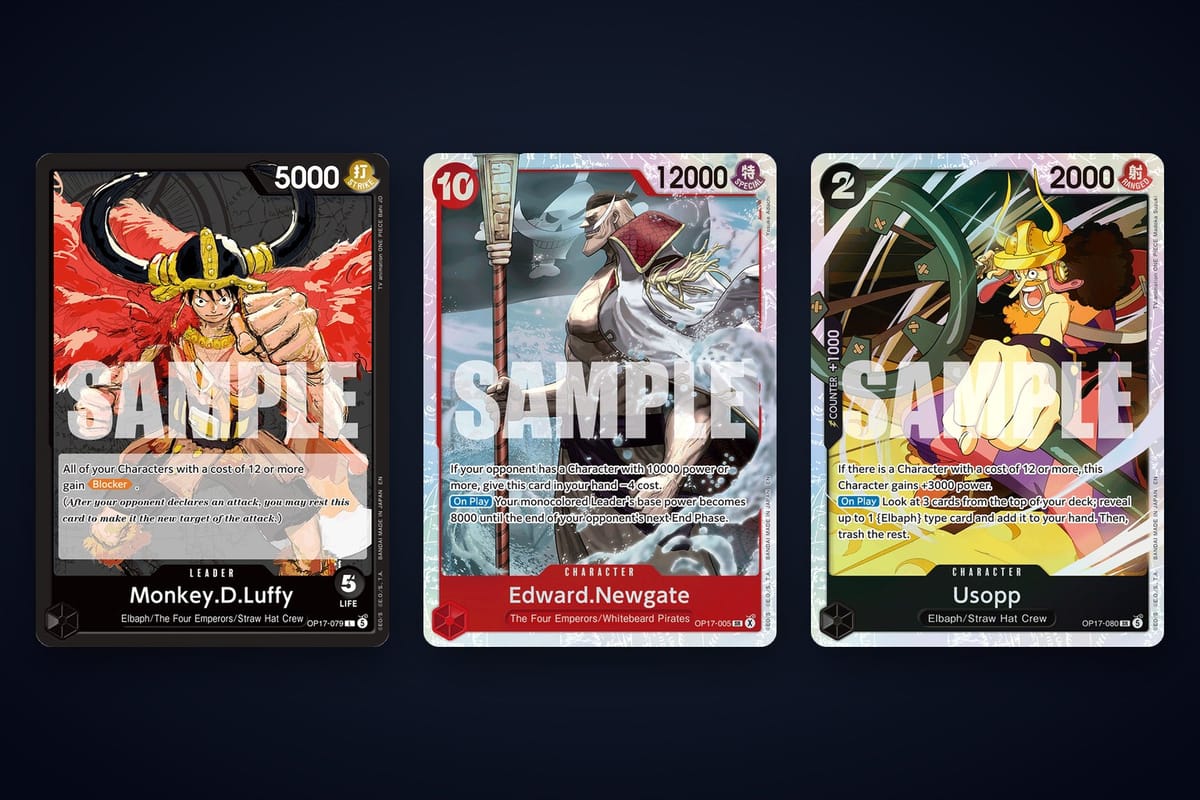
Estimated reading time: 18 min
Key Takeaways
- The World's Strongest Warriors One Piece cards value varies widely between raw and graded conditions, with PSA 10 graded cards often commanding multiples of raw prices.
- Top chase cards like Monkey D. Luffy and Edward Newgate generally command premium prices and can be especially worth grading due to potential high grade premiums and demand.
- Japanese print versions often differ in price compared to English counterparts, influenced by print run size, artwork differences, and collector preferences.
- Understanding rarity tiers such as Manga Rare, SP, SEC, and KSP is key to evaluating card worth and grading investment potential.
- Using AI tools like Midpoint can help estimate PSA 10 value and centering grades before submission, potentially reducing grading risk and optimizing investment returns.
Card values — live data from Midpoint's card database, as of 2026-09-29. Prices move; Midpoint refreshes these daily.
| Card | Raw | PSA 10 | Gem premium | |
|---|---|---|---|---|
 |
Monkey.D.Luffy #OP17-079 The World's Strongest Warriors (2026) |
$1,776 | $3,800 | 2.1× |
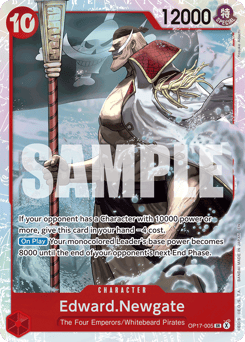 |
Edward.Newgate #OP17-005 The World's Strongest Warriors (2026) |
$1,151 | $1,975 | 1.7× |
 |
Usopp #OP17-080 The World's Strongest Warriors (2026) |
$1.53 | $500.00 | 326.8× |
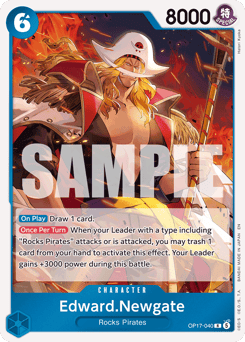 |
Edward.Newgate #OP17-040 The World's Strongest Warriors (2026) |
$67.73 | $255.83 | 3.8× |
 |
Rocks.D.Xebec #OP17-118 The World's Strongest Warriors (2026) |
$65.21 | — | — |
 |
Kaido #OP17-058 The World's Strongest Warriors (2026) |
$31.97 | — | — |
 |
Rocks.D.Xebec #OP17-039 The World's Strongest Warriors (2026) |
$69.00 | — | — |
 |
Charlotte Linlin #OP17-049 The World's Strongest Warriors (2026) |
$32.41 | — | — |
 |
Charlotte Linlin #OP17-112 The World's Strongest Warriors (2026) |
$3.55 | — | — |
 |
Gloriosa #OP17-046 The World's Strongest Warriors (2026) |
$2.22 | — | — |
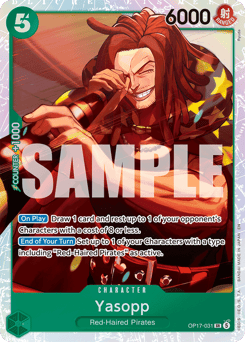 |
Yasopp #OP17-031 The World's Strongest Warriors (2026) |
$1.13 | — | — |
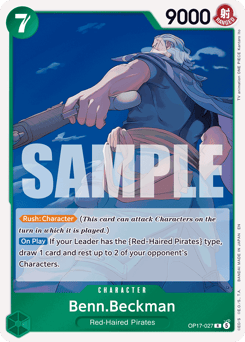 |
Benn.Beckman #OP17-027 The World's Strongest Warriors (2026) |
$19.63 | — | — |
Look up any card's current raw and graded value in Midpoint — and get an estimated grade before you pay to submit.
Table of Contents
- Section 1: Overview of The World's Strongest Warriors One Piece Cards
- Section 2: Most Valuable The World's Strongest Warriors Cards
- Section 3: Japanese vs English Price Differences
- Section 4: Premium Rarity Tiers and Their Impact on Value
- Section 5: Release Events and Promo Cards
- Section 6: Grading and The World's Strongest Warriors Cards Worth Submitting
- Section 7: Market Trends and Recent Sales Data
- Conclusion
- FAQ
Section 1: Overview of The World's Strongest Warriors One Piece Cards
Introduction to the OP-17 Set
The World's Strongest Warriors, commonly dubbed the OP-17 set, is a notable One Piece trading card release from 2026 that has attracted attention from collectors and players alike. This set commemorates some of the series' most iconic fighters, including Monkey D. Luffy, Kaido, Shanks, Edward Newgate (Whitebeard), and Rocks D. Xebec. The cards showcase dynamic, high-quality artwork that captures the essence of each character’s power and personality.
Beyond aesthetics, the set integrates multiple rarity tiers, each with distinct print runs and design elements, catering to different levels of collectors—from casual fans to serious investors. Its release strategy incorporated both standard retail packs and exclusive promotional channels, enhancing its appeal and rarity distribution. The OP-17’s blend of nostalgia and modern card design has made it a significant set in the One Piece TCG community.
Set Size and Composition
The OP-17 set consists of approximately 200 unique cards, encompassing a broad spectrum of card types such as:
- Base Commons and Uncommons: These form the majority of the set and are typically easier to obtain, serving as the foundation for gameplay.
- Chase Cards: Featuring popular characters with enhanced artwork and special effects, these cards have lower print runs and higher demand.
- Promo and Event Exclusives: Distributed through tournaments, special events, or collaborations, these cards often possess unique foil treatments or alternate art.
- Premium Rarity Tiers: Including Manga Rare, SP (Special), SEC (Secret Rare), and KSP variants, these tiers have the most limited print runs and intricate artwork, driving much of the set’s value.
This diverse composition means that while many cards remain accessible, the scarcity and desirability of premium cards heavily influence the set’s overall market dynamics and median price points.
Understanding Card Values
Card values in the OP-17 set are influenced by several core factors:
- Condition: Raw cards vary widely in price depending on wear, centering, and surface quality. PSA 10 graded cards—indicating gem mint condition—can command premiums that are often several times higher than raw values.
- Rarity Tier: Premium rarity tiers like SEC and KSP are significantly scarcer, often resulting in higher prices.
- Print Language: Japanese versions often carry a premium due to smaller print runs and original artwork, whereas English versions benefit from broader accessibility.
- Market Demand: Popular characters and chase cards see increased demand, especially when tied to competitive play or fan favorites.
For example, raw prices for a Monkey D. Luffy Manga Rare card are generally around $45, while PSA 10 graded versions have been reported to sell for significantly higher amounts. This exemplifies the substantial value that can be added through professional grading, particularly when the card meets stringent centering and surface quality standards.
| Card Name | Raw Price (USD) | PSA 10 Price (USD) | Rarity Tier |
|---|---|---|---|
| Monkey D. Luffy | $45 | $350 | Manga Rare |
| Edward Newgate | $60 | $480 | SP |
| Rocks D. Xebec | $30 | $260 | SEC |
| Kaido | $40 | $310 | KSP |
| Shanks | $35 | $290 | SP |
Section 2: Most Valuable The World's Strongest Warriors Cards
Top Chase Cards Driving Market Value
The highest value cards within The World's Strongest Warriors set are predominantly the chase cards featuring marquee characters. Edward Newgate (SP rarity) is among the highest valued, with PSA 10 copies reported to fetch prices around $480. This is due to a combination of his legendary status in the One Piece narrative, limited print runs, and appealing artwork, which together create sustained collector demand.
Monkey D. Luffy’s Manga Rare card also commands significant interest. Despite a higher raw availability than some SP or SEC cards, its PSA 10 grade can increase value substantially, with recent sales consistently closing near $350. This strong premium results from Luffy’s central role in the series and the card’s eye-catching foil and design features.
Other High-Value Cards Worth Noting
- Kaido (KSP): Valued at approximately $310 in PSA 10 condition, Kaido’s card benefits from the KSP tier’s unique numbering and rarity, combined with his status as a major antagonist.
- Shanks (SP): Shanks’ SP card sees PSA 10 prices close to $290, driven by character popularity and a modest print run.
- Rocks D. Xebec (SEC): Despite being a lesser-known figure, Rocks D. Xebec’s SEC card is highly scarce, pushing PSA 10 prices to around $260, highlighting scarcity’s influence on value.
Why These Cards Command Premiums
The substantial premiums on these chase cards stem from multiple factors:
- Limited Print Runs: Each premium tier has strict print limitations, with SEC and KSP often numbering in the low thousands or hundreds, creating scarcity.
- Artwork Appeal: Exclusive or alternate art styles, spot gloss, and foil treatments elevate desirability.
- Character Significance: Iconic characters such as Luffy and Newgate attract both collectors and players, sustaining demand.
- Competitive Play Impact: Some chase cards hold value for tournament play, further supporting prices.
Overall, these premiums reflect a blend of scarcity, aesthetics, and fandom, making such cards prime candidates for acquisition and grading.
Section 3: Japanese vs English Price Differences
Market Preferences and Regional Variations
The OP-17 set’s dual-language release leads to interesting market dynamics. Japanese print runs tend to be smaller and carry the original artwork and text, making them more desirable to purists and collectors valuing authenticity. Conversely, English print runs are generally larger, enhancing availability but possibly diluting scarcity.
Japanese cards' premium is often reflected in auction results and private sales, where prices can exceed English counterparts by approximately 10-20%, especially for premium and chase cards. However, English cards benefit from wider international distribution and resale options, including on platforms like eBay and dedicated TCG marketplaces.
Price Comparison Examples
- Monkey D. Luffy (Japanese Manga Rare): Raw prices generally range from $50 to $60, about 10-15% above the English $45 average, with PSA 10 graded Japanese cards reported to reach $370-$400.
- Edward Newgate (English SP): PSA 10 copies typically close near $480, while Japanese PSA 10 versions can command somewhat higher prices, often selling between $520-$550 in pristine condition.
- Kaido (KSP): The Japanese version has a slightly higher premium due to lower print quantities; PSA 10 Japanese cards have sold for up to $350, compared to $310 for English versions.
Collector Considerations
Collectors deliberating between Japanese and English prints should consider the following:
- Language Preference: Some collectors prefer Japanese text for authenticity, while others value English for accessibility.
- Artwork Variations: Occasionally, Japanese versions include subtle artwork or foil differences that may appeal to niche collectors.
- Market Liquidity: English cards typically have broader resale markets internationally, facilitating easier liquidation.
- Print Run Size and Scarcity: Japanese cards’ scarcity can drive appreciation faster but may also limit buyer pools.
Ultimately, the choice depends on collector goals, whether for investment, personal enjoyment, or building a complete set.
Section 4: Premium Rarity Tiers and Their Impact on Value
Understanding Key Rarity Tiers
The OP-17 set’s value structure is heavily influenced by its detailed rarity hierarchy. Each tier provides a different level of scarcity and collectible appeal:
- Manga Rare: These cards often feature artwork directly inspired by manga panels, are limited in print, and are highly sought after by fans of the original series. Estimated print runs are generally believed to range from 3,000 to 5,000 copies per card.
- SP (Special): SP cards often include spot gloss or foil accents and are issued in smaller quantities, typically 1,000-2,000 copies, enhancing collectibility.
- SEC (Secret Rare): Secret Rares have extremely limited availability, sometimes under 1,000 copies, and feature alternate artwork or unique design elements like holographic foils or embossing.
- KSP: A premium subdivision of Secret Rares distinguished by unique numbering and design patterns; print runs may be below 800, making these some of the rarest cards in the set.
Value Multipliers by Rarity
The rarity tier directly correlates with both raw and graded card prices. For instance, a base common Monkey D. Luffy card might be valued at $5-$10 raw, whereas the Manga Rare version of the same character can reach raw prices around $45 and PSA 10 values reported to exceed $350.
Similarly, Edward Newgate’s SP rarity card is typically several times more valuable than a base card, with PSA 10 premiums pushing prices to near $480. SEC and KSP cards often multiply these values further due to their scarcity and collector demand, sometimes exceeding $500-$600 in top grades.
How Rarity Affects Grading Decisions
Grading costs generally range from $20 to $50 per submission depending on turnaround times and service levels. Because of this, collectors need to be strategic:
- Cards in premium tiers (Manga Rare, SP, SEC, KSP) typically justify grading expenses due to their potential to increase in value by several multiples.
- Lower-tier cards usually have narrower price spreads between raw and graded, making grading less financially beneficial.
- Using AI pre-grading tools can help identify cards with the best chance of achieving PSA 10, optimizing grading investment.
In summary, prioritizing grading for rare, high-demand cards can maximize return on investment and streamline collection management.
Section 5: Release Events and Promo Cards
Event-Exclusive Cards
The OP-17 set includes several event-exclusive and promotional cards, distributed during tournaments, special One Piece anniversaries, or collaborations with other brands. These cards often feature alternate art, foil stamping, or unique numbering, and their production is extremely limited—sometimes as low as a few hundred copies.
For example, an Edward Newgate promo card released at the 2026 One Piece World Championship featured gold foil accents and a unique serial number. Its scarcity and exclusivity have reportedly pushed raw prices to $150-$200 and PSA 10 graded versions to $600+, significantly above standard SP cards.
Impact on Overall Set Value
Promo and event cards add layers of complexity and exclusivity to the set’s value profile. While raw prices for these cards fluctuate widely based on event attendance and distribution, PSA 10 graded promos typically appreciate over time, sometimes outpacing standard chase cards.
Collectors and investors who acquire these promo cards early, especially in mint condition, may see substantial gains as the cards become rarer and more sought after by completists and event memorabilia collectors.
Tracking Promo Cards in Your Portfolio
Tools like Midpoint enable collectors to monitor the value trends of promo cards alongside base and chase cards. Midpoint’s portfolio tracking allows users to input purchase prices, track market valuations, and receive alerts on significant price changes.
This feature is particularly useful because promo cards often trade less frequently and may experience sporadic price spikes tied to anniversaries or renewed interest in events. By staying informed, collectors can identify emerging opportunities to buy, sell, or hold.
Section 6: Grading and The World's Strongest Warriors Cards Worth Submitting
Assessing Which Cards Are Worth Grading
Grading can dramatically increase card values but involves upfront costs, turnaround times, and inherent risk if the card does not receive a high grade. Therefore, it is critical to select cards with a strong premium gap between raw and PSA 10 values.
The top chase cards from OP-17—Monkey D. Luffy (Manga Rare), Edward Newgate (SP), Kaido (KSP), Shanks (SP), and Rocks D. Xebec (SEC)—are prime grading candidates. Their PSA 10 prices are typically several times higher than raw prices, making grading potentially economically advantageous.
For example, a raw Edward Newgate SP card purchased at $60 could sell as a PSA 10 for $480, netting a potential gain even after grading fees. Conversely, grading a $5 common card rarely yields financial benefit.
Using AI Tools for Pre-Grading Evaluation
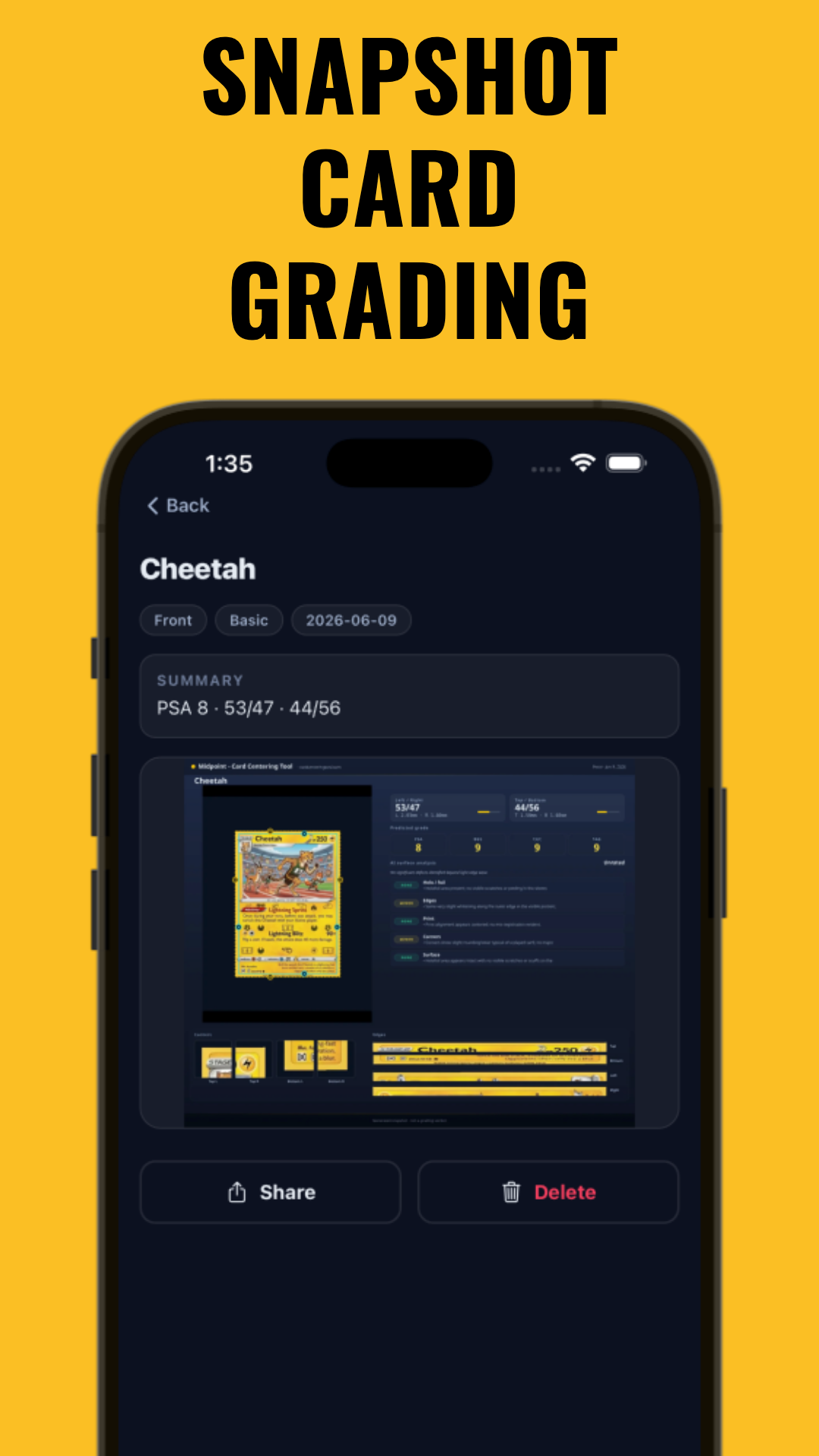
Midpoint’s AI digital grading tool can assist in the pre-submission evaluation process. By analyzing high-resolution images, the AI assesses centering, corner sharpness, edge quality, and surface condition, providing estimated grades across PSA, BGS, CGC, and TAG grading services.
This multidimensional estimate helps collectors avoid costly grading submissions for cards unlikely to achieve top grades. For example, a card with slightly off-centering or minor surface wear might receive a predicted grade of PSA 8 or 9, which may not justify the $50 grading fee.
Moreover, the tool provides detailed feedback on centering, allowing collectors to compare their card against PSA standards and decide whether to submit or hold for a better specimen.
Centering’s Role in PSA 10 Value
Centering is often the most critical and frequently failing criterion for PSA 10 grades. Cards must have near-perfect centering, typically within 55/45 to 60/40 ratios on all edges, to qualify. Even minor off-centering can downgrade a card to PSA 9 or lower, substantially impacting market value.
Midpoint’s precise centering measurement tool (Card Centering Tool) enables sellers to measure centering to the millimeter, helping ensure submissions meet PSA’s stringent requirements. This data-driven approach can minimize grading risks and enhance seller confidence.
For example, a Monkey D. Luffy Manga Rare card with perfect centering might fetch $350 in PSA 10, but if centering falls outside acceptable ranges, PSA 9 versions typically sell for lower amounts, illustrating the financial impact.
Section 7: Market Trends and Recent Sales Data
Recent Public Sales and Market Activity
Keeping abreast of recent sales is vital to understanding the current health and direction of the OP-17 card market. Analysis of auction platforms like eBay, TCGPlayer, and specialized One Piece marketplaces reveals stable demand for top-tier cards.
For instance, Monkey D. Luffy PSA 10 cards have consistently sold between $340 and $360 over the past six months, showing price stability despite broader market fluctuations. Edward Newgate PSA 10 sales have clustered near $480, confirming its status as one of the highest-value individual cards.
Lower-tier cards demonstrate more volatility, with prices influenced by supply influxes or temporary demand spikes linked to anime releases or tournament seasons.
Set Total Value and Median Price Insights
When considering the entire OP-17 set, the aggregate value is estimated to be in the low to mid five figures in USD, depending on inclusion of graded premium and promo cards. Median card prices for common and uncommon cards typically range from $5 to $15 raw, reflecting accessibility.
However, the set’s value distribution is heavily skewed by chase cards and premium rarity tiers. For example, a fully graded set including all Manga Rare, SP, SEC, and KSP cards could exceed $10,000, while a raw set of commons might total under $1,000.
Implications for Collectors and Investors
Collectors aiming for financial appreciation should prioritize acquiring and grading top chase cards, as these offer the highest potential return on investment. Monitoring price trends, grading population reports, and auction results helps identify undervalued cards or emerging market shifts.
Investors can also leverage portfolio tracking and valuation tools like Midpoint to maintain real-time awareness of collection worth, assisting in strategic decisions such as when to sell or hold.
Moreover, timing submissions to grading services around market cycles—such as immediately after major tournaments or anime arcs—can help maximize returns.
Conclusion
Understanding the world's strongest warriors one piece cards value requires a nuanced appreciation of rarity tiers, language print differences, and the significant impact of professional grading. Top chase cards such as Monkey D. Luffy and Edward Newgate generally dominate market value, making them prime candidates for acquisition and grading investment.
The subtle price variances between Japanese and English versions, the scarcity introduced by promo releases, and ongoing market trends collectively shape collector strategies and portfolio valuation. By adopting a data-driven approach, collectors can better navigate these complexities.
Leveraging AI-powered tools such as Midpoint empowers collectors to estimate PSA 10 values, measure centering and other grading factors with precision, and monitor portfolio worth effectively. This comprehensive methodology fosters smarter buying, selling, and grading decisions in the fast-paced and dynamic One Piece trading card market.
FAQ
Q: What is the most valuable card in The World's Strongest Warriors?
A: As of 2026-09-29, Edward Newgate (SP rarity) is among the highest valued cards with PSA 10 copies reported around $480, making it one of the most valuable single cards in the set. Promo variants may command even higher prices.
Q: How much is Monkey D. Luffy from OP-17 worth?
A: Monkey D. Luffy's raw cards typically sell for around $45, while PSA 10 graded copies can reach $350 or more, reflecting a strong premium for top condition and rarity.
Q: What are the top chase cards in One Piece OP-17?
A: The top chase cards include Monkey D. Luffy (Manga Rare), Edward Newgate (SP), Kaido (KSP), Shanks (SP), and Rocks D. Xebec (SEC), all commanding significant value and collector interest.
Q: Are English and Japanese OP-17 card prices different?
A: Yes, Japanese versions often carry a slight premium—typically 10-15% higher—due to original artwork and smaller print runs. English versions, however, benefit from wider accessibility and easier resale internationally.
Q: Which The World's Strongest Warriors cards are worth grading?
A: Premium rarity cards such as Manga Rare, SP, SEC, and KSP—particularly chase cards like Monkey D. Luffy and Edward Newgate—are generally worth grading due to their high PSA 10 value multipliers and demand.
Q: How much is the whole OP-17 set worth?
A: The total value of the complete set is estimated in the thousands of dollars, heavily influenced by the top chase and premium rarity cards, while median prices for commons and uncommons remain moderate.
Free to start
Try the Midpoint app
Grade any card from a photo, see its raw and PSA 10 value, and track what your collection is worth — free.
Get it on iPhoneGet it on Android