Basketball Card Prices Dropping November 2026: What to Do
Basketball card prices dropping in November 2026? See how to read the 30-day moves, raw vs PSA 10 gaps, and how to use the dip, including grading a cheap copy.

Estimated reading time: 9 min
Key Takeaways
- The basketball card market in November 2026 is cooling, and the 30-day column in the data table is the fastest way to see which cards are falling most.
- Raw and PSA 10 prices often move differently. Compare both before you decide anything.
- New 2026-27 Topps Flagship supply, fading rookie hype and early-season results all push prices around, and none of them tell you the long-term direction on their own.
- A dip is only useful if you buy scarce cards with solid recent comps, and check centering before you pay to grade.
If you've been watching basketball card prices dropping in November 2026, you're not imagining it. Many listings are softer than they were a month ago, and plenty of collectors are asking whether basketball cards are losing value for good or just taking a breather.
This guide walks through nine practical steps for making sense of falling basketball card prices. It covers what to look at in the numbers, why prices cool off, and how to turn a dip into a smarter buy. All specific prices come from Midpoint's own database, cited as of 2026-11-12. I won't quote figures beyond what's in the data table in this guide.
30-day price movers — live data from Midpoint's card database, as of 2026-11-12. Prices move; Midpoint refreshes these daily.
| Card | Raw | PSA 10 | 30-day | |
|---|---|---|---|---|
 |
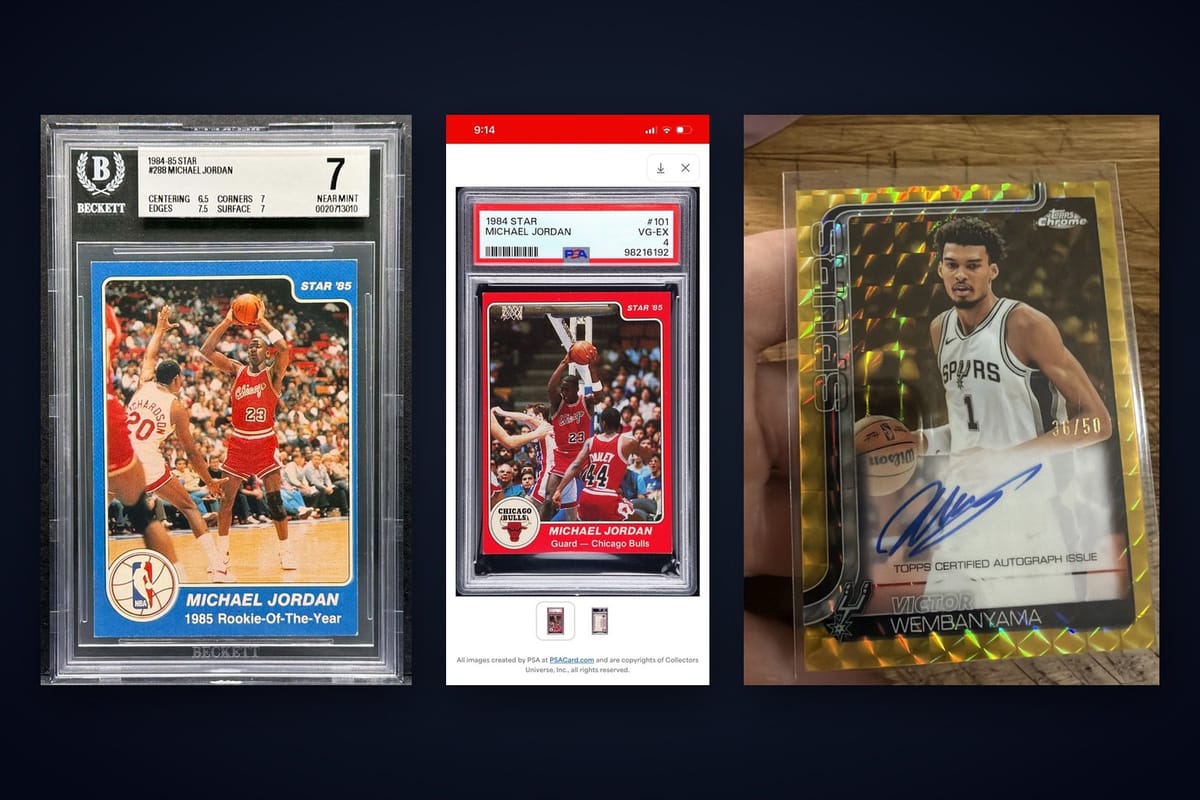
Michael Jordan #288 1984 Star |
$3,759 | $94,310 | -84.9% |
 |
Michael Jordan #101 1984 Star |
$3,500 | — | -64.8% |
 |
Victor Wembanyama [Refractor Gold] #TCA-VW 2025 Topps Chrome Autograph |
$12,100 | $49,589 | -29.8% |
 |
Michael Jordan #21 1989 Fleer |
$26.00 | $2,805 | -28.6% |
 |
Shaquille O'Neal [Trade Card] #1 1992 Upper Deck |
$12.00 | $1,846 | -26% |
 |
Stephen Curry #M-3 2025 Topps Chrome Update Minionfractor |
$8,695 | $33,375 | -24.9% |
 |
Kobe Bryant #138 1996 Topps |
$106.56 | $2,198 | -24% |
 |
Michael Jordan #26 1990 Fleer |
$11.25 | $658.50 | -15.2% |
 |
Michael Jordan #5 1990 Fleer All-Star |
$11.52 | $1,957 | -9.5% |
 |
Shaquille O'Neal #A 1992 Hoops Draft Redemption |
$100.75 | $1,224 | -8.6% |
 |
Allen Iverson #236 1996 Metal Fresh Foundation |
$13.62 | — | -5.1% |
 |
Kareem Abdul-Jabbar #1 1986 Fleer Sticker |
$50.00 | $15,641 | -4.6% |
Look up any card's current raw and graded value in Midpoint — and get an estimated grade before you pay to submit.
1. Start With the 30-Day Move, Not the Headline
The most useful number in any basketball card market November 2026 check is the 30-day change. It shows what happened recently, rather than where a card sat at its peak.
When you open the data table, read it in this order:
- Raw price: what an ungraded copy sells for.
- PSA 10 price: the premium graded benchmark.
- 30-day change: how far each has moved recently.
Sort by the biggest decliners first. Then ask whether a card dropped because of a real change in demand, or because a few unusually high sales rolled out of the window. A card that looks like it fell sharply may simply be returning to its normal range.
2. Cooper Flagg Rookies: Hype Cards Move First
Top rookies attract the most speculation, so they tend to swing hardest in both directions. Cooper Flagg rookie cards are the obvious example. Flagg was drafted in 2025 and is now in his second NBA season, but his rookie cards still carry a lot of speculative demand. Prices for a highly anticipated player often run ahead of on-court results, and when games turn out ordinary instead of producing highlight reels, that premium can compress.
If a Flagg rookie shows a decline in the table as of 2026-11-12, treat it as a question, not a verdict:
- Is the drop in the raw price, the PSA 10 price, or both?
- Is it a high-volume card with many listings, or a thin market where one sale moves the average?
- Are collectors selling because of performance, or just rotating into new releases?
A rookie falling from hype-driven highs is not the same thing as a rookie losing long-term relevance. Only one of those is a buy-the-dip story.
3. Kobe and Jordan Cards: High Volume Means Visible Swings
Kobe Bryant and Michael Jordan cards have deep markets. Large numbers of listings mean the price trend is easy to see, and a soft month shows up quickly. Legacy names also tend to pull in different buyers than rookie speculators do, including long-term collectors and investors who aren't reacting to this week's box score.
That's why it's worth separating the cards in the table by type:
- High-volume modern cards tend to track sentiment and new supply.
- Scarcer vintage cards tend to depend on a handful of sales and population counts.
Some vintage Jordan cards can hold or even climb while the broader market weakens. Check the table's 30-day column for each Jordan or Kobe entry instead of assuming they all move together.
4. Raw vs. PSA 10: Where the Gap Opens Up
One of the most common questions is whether PSA 10 cards fall more than raw cards. The honest answer is that it depends on the card, so compare them directly.
A PSA 10 price carries a premium for a perfect grade. When the market cools, that premium can narrow if buyers decide they'd rather pay less for a raw copy and take a chance on grading. It can also widen if a gem copy becomes scarce.
For each card you're considering, note:
- The raw-to-PSA 10 gap in dollars, not just percent.
- Whether PSA 9 or PSA 7 sales are holding up better than PSA 10.
- How the 30-day move compares between the raw and PSA 10 columns.
A wide gap with a falling raw price is the setup where grading a well-centered copy can start to pencil out. More on that in step 9.
5. New Supply: The 2026-27 Topps Flagship Effect
New releases add cards to the market, and more supply with the same demand tends to mean lower prices. The 2026-27 Topps Flagship Basketball release brings new product in several formats, and each has different box economics.
Here is how supply tends to pressure prices:
- Box breakers and flippers often list rookie cards fast, sometimes in the first weeks after release.
- Presale premiums can fade once product is widely available, and sealed box resale prices may drift toward or below the original release price.
- Expected value matters: if the average hits you pull are worth less than the box cost, more buyers may stop ripping, and that can change demand for singles too.
New supply mostly affects the cards that are in the product. A vintage card isn't competing with a fresh rookie pull, which is one reason older cards can behave differently from new ones.
6. Hype Fading, Injuries and Early-Season Results
Basketball cards are tied to live performance more than many other collectibles. Early in the season, a few games can swing sentiment.
Watch for these drivers when you read the table:
- Rookie hype fading: a card priced for a superstar outcome has to keep delivering.
- Injuries: a missed stretch can freeze buyers, even if the long-term outlook hasn't changed.
- Draft position and team situation: playing time and role affect how collectors value a rookie.
- Team results: a hot start can lift prices on a veteran quickly.
These factors explain short-term moves. They're a weaker guide to where a card will be in two or three years, so don't let one bad week drive a big decision.
7. Correction, Seasonal Dip or Long-Term Trend?
The question behind every search for falling basketball card prices is whether this will last. There are three possible readings, and the data can help you tell them apart.
- Temporary correction: prices ran up, then settled back. Look for stabilizing recent sales.
- Seasonal softness: collector attention often splits between sports as the calendar changes, and holiday spending can compete with card budgets.
- Longer-term trend: prices keep sliding across many players and eras, not just a few hyped names.
One 30-day snapshot can't prove which one you're in. Compare the 30-day move against a longer window, and check whether the declines are broad or concentrated in recent rookies. Broad weakness across eras is a stronger signal than a few hype cards giving back gains.
8. Basketball Cards to Buy the Dip: A Checklist
If you want to buy during the dip, filter for quality first. A lower price on a weak card is not a bargain.
Before you buy, check:
- Recent comps: look at sold prices and dates across eBay, Goldin, Fanatics Collect and Card Ladder-tracked sales, not asking prices.
- Liquidity: can you resell it within a reasonable time? High-volume cards sell faster, but low-volume cards can hold value better.
- Scarcity: check population reports. For more on how rarity changes the math, see this guide to grading low population cards.
- Your time horizon: a dip helps long-term holders more than people hoping to flip within weeks.
Avoid trying to catch a falling card that's still dropping every week. Waiting for a few stable sales is usually cheaper than guessing the bottom.
9. Grade a Cheap Copy That Centers Well
This is where a dip can pay off for collectors who grade. When raw prices fall, the cost of a raw copy drops, but grading fees don't fall with it (they commonly run $25 or more per card, depending on the company and service tier). So the best use of that fee is on a copy with a real shot at a high grade.
Centering is the easiest factor to check before you submit. PSA's published standard for a 10 is roughly 55/45 or better on the front and 75/25 or better on the back, and other companies use their own tolerances. Our breakdown of grading scale differences by company covers how they compare, and how centering impacts card value shows why it matters for price.
A simple process:
- Find a raw copy priced low enough to leave room for the grading fee.
- Ask the seller for sharp front and back photos.
- Measure the borders to check the centering ratio.
- Review corners, edges and surface, and only then decide whether to submit.
You can follow our step-by-step guide to pre-grading your card, or let Midpoint do the measuring. It estimates a PSA, BGS, CGC and TAG grade from centering, corners, edges and surface before you spend anything.
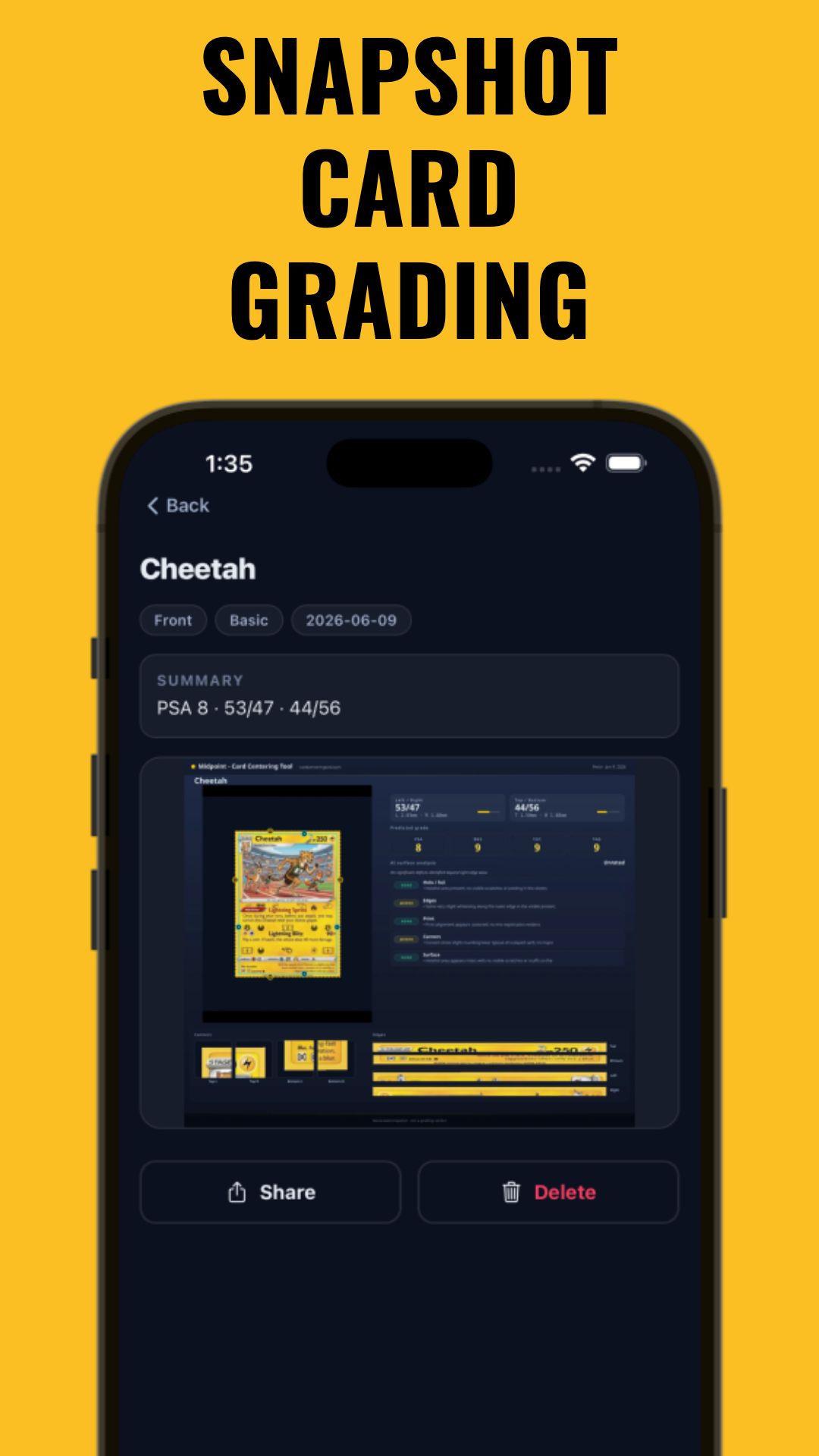
Keep expectations realistic. An estimate isn't a guarantee, and a perfectly centered card can still miss on surface or corners.
Conclusion
The November 2026 market is cooler, but one month of weakness doesn't tell you what comes next. Use the data table to find the biggest 30-day movers, compare raw and PSA 10 prices, and separate hype-driven rookies from scarcer cards with deeper support.
If you decide to buy, favor cards with solid recent comps, healthy liquidity and low supply, and don't chase anything still sliding. If you grade, check centering first so the fee goes to a copy worth submitting. You can run that check free in Midpoint on iOS and Android.
FAQ
Q: Why are basketball card prices dropping in November 2026?
A: Several factors may overlap: new supply from the 2026-27 Topps releases, fading rookie hype, early-season performance and injuries, and seasonal shifts in collector spending. No single cause explains every card, so check each card's own 30-day move.
Q: Which basketball cards are losing the most value right now?
A: The data table in this guide ranks cards by 30-day change as of 2026-11-12. High-volume and hype-driven cards, such as recent rookies, tend to show the biggest swings, while scarcer cards can behave differently.
Q: Are Cooper Flagg basketball cards still a good investment in November 2026?
A: That depends on your time horizon and the price you pay. Compare recent sold prices, the raw versus PSA 10 gap and supply, and be cautious about paying hype-level prices. This isn't financial advice.
Q: Should I buy basketball cards during the November 2026 price dip?
A: A dip can be a good entry point if you pick scarce cards with solid recent comps and good liquidity. Avoid cards that are still falling steadily, and consider waiting for a few stable sales before buying.
Q: Are PSA 10 basketball cards dropping more than raw cards?
A: It varies by card. Compare the 30-day change in the raw and PSA 10 columns for each one. Sometimes the graded premium narrows, and sometimes scarce gem copies hold up better than raw.
Q: Will basketball card prices recover after the 2026-27 Topps releases?
A: Nobody can say for sure. Prices often stabilize once new supply is absorbed, but recovery depends on demand, player performance and whether the weakness is a short correction or a broader trend.
Free to start
Try the Midpoint app
Grade any card from a photo, see its raw and PSA 10 value, and track what your collection is worth — free.
Get it on iPhoneGet it on Android