1968 O-Pee-Chee Hockey Cards Value: Which Cards Pay Off
1968 O-Pee-Chee hockey cards value guide: most valuable cards, the PSA 10 gem premium, and which are worth grading. Check raw vs graded first.

Estimated reading time: 11 min
Key Takeaways
- 1968 O-Pee-Chee hockey cards value is driven by a few things: the player, the card number, and above all the condition. Centering and cutting matter more than most collectors expect.
- Bobby Orr #2 is the headliner of the set. Hall of Famers and rookie-era goalies and forwards form the next tier of the most valuable 1968 O-Pee-Chee cards.
- The gap between a PSA 8 and a PSA 10 on vintage OPC is often far larger than the gap between raw and PSA 7. That is why only some cards are worth grading.
- Check the current raw vs graded numbers on sold listings before paying a $30+ grading fee, and pre-grade your centering first.
Card values — live data from Midpoint's card database, as of 2026-11-08. Prices move; Midpoint refreshes these daily.
| Card | Raw | PSA 10 | Gem premium | |
|---|---|---|---|---|
 |
Bobby Orr #2 1968 O-Pee-Chee |
$99.67 | $14,063 | 141.1× |
 |
Gordie Howe #203 1968 O-Pee-Chee |
$63.67 | $9,721 | 152.7× |
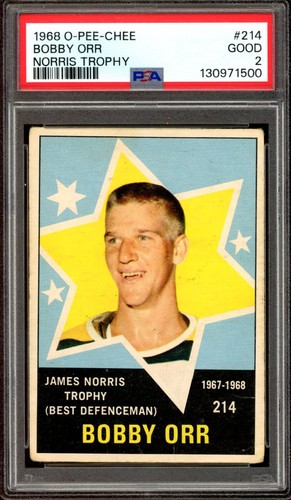 |
Bobby Orr [Norris Trophy] #214 1968 O-Pee-Chee |
$56.33 | $7,897 | 140.2× |
 |
Bernie Parent #89 1968 O-Pee-Chee |
$55.50 | $7,788 | 140.3× |
 |
Gordie Howe #29 1968 O-Pee-Chee |
$43.55 | $5,873 | 134.9× |
 |
Bobby Orr #200 1968 O-Pee-Chee |
$59.25 | $5,482 | 92.5× |
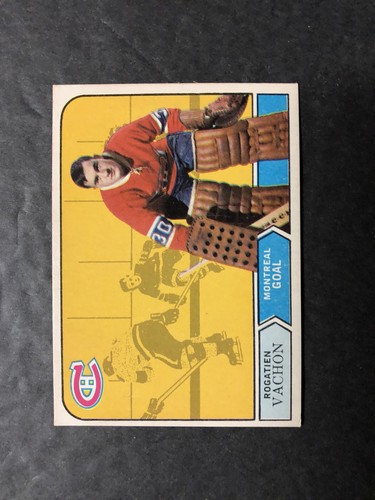 |
Rogatien Vachon #164 1968 O-Pee-Chee |
$25.77 | $3,411 | 132.4× |
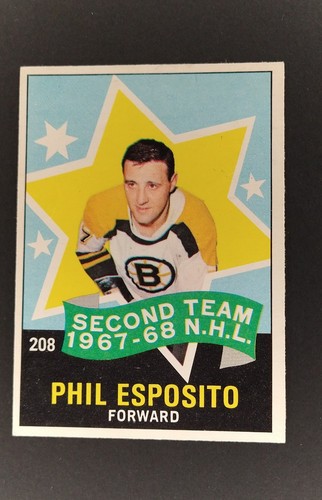 |
Phil Esposito #208 1968 O-Pee-Chee |
$23.48 | $3,309 | 140.9× |
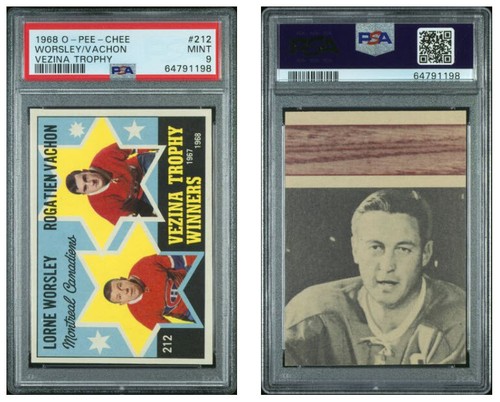 |
Vachon, Worsley [Vezina Trophy] #212 1968 O-Pee-Chee |
$29.97 | $3,228 | 107.7× |
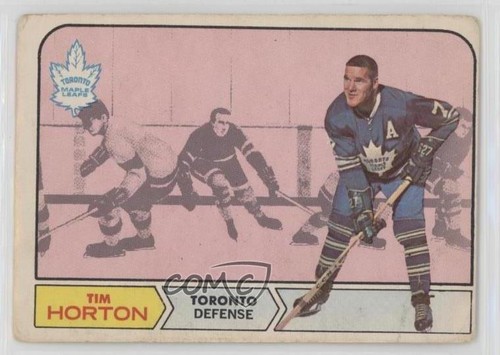 |
Tim Horton #123 1968 O-Pee-Chee |
$24.85 | $3,119 | 125.5× |
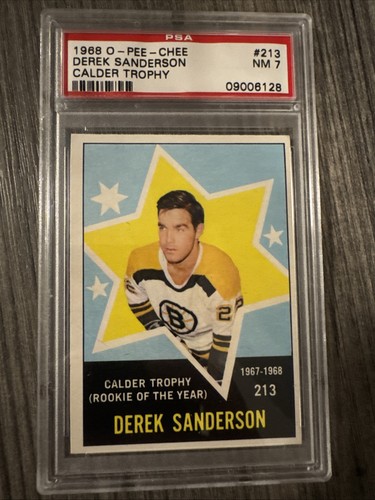 |
Derek Sanderson [Calder Trophy] #213 1968 O-Pee-Chee |
$21.72 | $3,085 | 142× |
 |
Bobby Hull #204 1968 O-Pee-Chee |
$21.82 | $3,068 | 140.6× |
Look up any card's current raw and graded value in Midpoint — and get an estimated grade before you pay to submit.
Table of Contents
- Section 1: The 1968-69 O-Pee-Chee Set at a Glance
- Section 2: Most Valuable 1968 O-Pee-Chee Cards
- Section 3: 1968 O-Pee-Chee Price Guide Basics and the Topps Comparison
- Section 4: 1968 O-Pee-Chee PSA 10 Value and the Gem Premium Gap
- Section 5: What Moves Value: Centering, Cutting, Corners and Surface
- Section 6: Are 1968 O-Pee-Chee Cards Worth Grading?
- Section 7: Set Values and Where to Sell
- Conclusion
- FAQ
Section 1: The 1968-69 O-Pee-Chee Set at a Glance
If you are researching 1968 O-Pee-Chee hockey cards value, start by understanding what the set is. O-Pee-Chee (OPC) was the Canadian producer of NHL cards, and the 1968-69 issue is one of the most collected vintage hockey sets.
Set size and production
The 1968-69 O-Pee-Chee set runs 216 cards. It is numbered 1 through 216 and covers all twelve NHL teams after the 1967 expansion. The cards were made in Canada and sold in wax packs with a stick of gum, which is why gum stain and wax residue show up so often on surviving copies.
The backs are bilingual (English and French). That is a quick way to tell an OPC card from its American cousin.
Relationship to Topps
Topps issued a 1968-69 hockey set in the United States with a much smaller checklist, about 132 cards. Many designs overlap, but the OPC set is larger and carries extra players. Because OPC had the wider distribution in Canada, it is the set most hockey collectors chase for a complete run.
- OPC: 216 cards, bilingual backs, Canadian production.
- Topps: smaller checklist, English backs, US distribution.
- Puck Stickers: a separate insert-style issue, tracked apart from the base checklist. Confirm whether a listing is a base card or a sticker before comparing prices.
Why the set stays popular
It captures the first expansion-era NHL, includes some of the biggest names in hockey history, and features a clean, simple design. Clean design also means flaws such as off-center borders and soft corners are easy to see, which affects how every card is graded and priced.
The price table that follows this section shows raw and graded values for selected cards from the Midpoint database, as of 2026-11-08. The rest of this guide explains how to read those numbers.
Section 2: Most Valuable 1968 O-Pee-Chee Cards
Value in this set follows a familiar vintage pattern: superstar first, then Hall of Famers, then rookie-era cards and goalies, then everyone else. Here is where to look first when sorting the most valuable 1968 O-Pee-Chee cards.
Bobby Orr #2: the set's anchor
Bobby Orr #2 is the card most buyers search for. Orr is arguably the most important defenseman in hockey history, and his card is the set's best-known name.
One caution: this is not Orr's rookie card. His rookie is the 1966-67 Topps issue. The 1968 OPC Orr is a high-demand early-career card, and sellers who confuse the two lose credibility with buyers.
Rookie-era names to check
Several players in the set are tied to early-career demand. These include Bernie Parent, Danny Grant, Mickey Redmond, Garry Unger, Bob Plager and Les Binkley. Always verify rookie status against a checklist, because a player's first card is not always in this set. Even so, the names above tend to draw more attention than a typical depth player.
- Goalies: Parent and Binkley attract goalie collectors and masked-goalie enthusiasts.
- Scorers: Grant, Redmond and Unger appeal to team and rookie collectors.
- Defensemen: Plager is a frequent target for St. Louis Blues collectors.
Superstars and Hall of Famers
The set also includes major stars from the Original Six era. Cards of Hall of Famers generally hold a premium over role players in every grade, though how big that premium is depends on the specific card and its sales history.
The practical rule: a mid-grade star can outsell a high-grade role player, but a gem copy of almost any card commands a surprising premium. That is the subject of Section 4.
Section 3: 1968 O-Pee-Chee Price Guide Basics and the Topps Comparison
A reliable 1968 O-Pee-Chee price guide is not a single number per card. It is a ladder of values, one per condition tier. Use this method to build one yourself.
The four rungs of the ladder
- Raw (ungraded): the widest range. A raw card can be a crisp near-mint copy or a creased, stained one. Buyers discount raw copies for uncertainty.
- PSA 7-8: the sweet spot for many collectors who want an attractive, authentic copy without paying gem prices.
- PSA 9: a true high-end vintage grade, rarer than most people assume for a 1960s wax-pack card.
- PSA 10: the gem tier, often with a thin population and few public sales.
This guide deliberately avoids quoting prices from memory. Vintage hockey values move with auctions, and a stale figure will mislead you. Use the dated figures in the table for the selected cards, and confirm with fresh sold comps before you buy or sell.
Why OPC often outsells Topps
Collectors often pay more for O-Pee-Chee than for the matching Topps card. The reasons are practical rather than mystical:
- OPC has the fuller checklist, so set builders need it.
- Canadian-market cards are the native issue for most NHL players and are often the preferred version among hockey collectors.
- High-grade copies can be hard to find because of gum, cutting issues and decades of handling.
That said, premiums vary card by card. Never assume OPC beats Topps without checking comps for the exact player.
Pricing by comparable sales
Match four things: card number, grade, grading company, and sale date. A PSA 8 from a recent eBay sold listing is a better guide than an old asking price. Midpoint's card lookup shows raw and graded values together, which makes the gap between tiers easy to see before you commit.
Section 4: 1968 O-Pee-Chee PSA 10 Value and the Gem Premium Gap
The phrase 1968 O-Pee-Chee PSA 10 value comes up constantly, and it can be misleading. For many cards in this set, a PSA 10 barely exists in the market. When it does appear, the price reflects scarcity as much as condition.
Why gems are so rare on vintage OPC
Cards from this era faced obstacles that modern cards never did:
- Loose factory cutting: borders can be wildly uneven from the start.
- Gum in the pack: staining and pressure marks on the back are common.
- Print texture: speckles, snow and roller marks appear on otherwise clean cards.
- Decades of handling: corners soften fast on simple designs.
To grade a PSA 10, a card needs strong centering, sharp corners and clean surface all at once. Few 1968 cards manage that.
Understanding the gem-premium gap
The gem premium is the price jump between a high mid-grade (PSA 8 or 9) and a PSA 10. On vintage cards, that jump can be many multiples of the PSA 9 price. One likely reason is that buyers of gem cards are often registry competitors, and the supply of gems is extremely small.
The practical takeaway:
- A PSA 7 to PSA 8 move typically adds a modest premium.
- A PSA 8 to PSA 9 move typically adds a larger premium.
- A PSA 9 to PSA 10 move can change the value dramatically, so a half-point error in your pre-grade matters.
Not every company defines top grades the same way. Read grading scale differences by company to see how PSA, BGS and CGC treat a 10 differently, because that changes what you should expect to receive and what buyers will pay.
Section 5: What Moves Value: Centering, Cutting, Corners and Surface
Two copies of the same card can sell for wildly different amounts. Here is how each flaw affects 1968 O-Pee-Chee cards.
Centering and factory cutting
Centering is a major swing factor on this set. A card with one border visibly thicker than the opposite one can be held to a lower grade, even if corners and surface look good. Because factory cutting was imprecise, well-centered copies earn a real premium.
You can measure the borders yourself. Our guide on how centering impacts card value explains the ratios in detail, and Midpoint's free centering calculator gives you a left/right and top/bottom reading in seconds.
Corners, edges and surface
- Corners: rounding or fuzzing is a common reason a good-looking card misses a high grade.
- Edges: chipping is easy to see along the borders.
- Surface: scratches, print dots, roller lines and wax stains all count against you.
- Creases: even a light crease usually limits a card to a low grade and cuts value sharply.
Gum wear and staining
Gum stains usually appear on the back and sometimes bleed through. Look at the back in angled light. A card that looks pristine from the front can still carry a stain that holds it back from a high grade.
Print defects versus damage
Some marks are production flaws and some are damage. Graders weigh them differently, and buyers do too. A minor print speck is far more forgivable than a scratch or crease.
Good storage keeps the grade you already have. Follow this guide on how to store valuable cards to protect corners and surface.
Section 6: Are 1968 O-Pee-Chee Cards Worth Grading?
Whether 1968 O-Pee-Chee cards are worth grading comes down to simple math: expected graded value minus grading cost, compared with the raw value. If a grade does not move the price by more than the fee and shipping, skip it.
A quick decision framework
- Step 1: Identify the card number and player, and confirm it is a base card, not a sticker or a reprint.
- Step 2: Look up raw and graded values, particularly the PSA 7, 8 and 9 tiers.
- Step 3: Measure centering on the front and back.
- Step 4: Inspect corners, edges and surface honestly.
- Step 5: Estimate the likely grade, then compare outcomes against your cost.
Cards that usually justify grading
Strong candidates are star cards such as Bobby Orr #2, key rookie-era names, and any card with crisp corners and good centering. Authentication also adds buyer confidence, which can help even a mid-grade slab sell faster.
Cards that usually do not
Common depth players with visible wear, bad centering or gum stains often cost more to grade than the slab adds. If the raw card is worth little and the graded premium is small, keep it raw.
Pre-grade before you pay
This is where Midpoint helps. Scan the card and it estimates a PSA, BGS, CGC or TAG grade from centering, corners, edges and surface, so you know the likely outcome before spending $30 or more per card. For a manual walkthrough, see our step-by-step pre-grading guide.
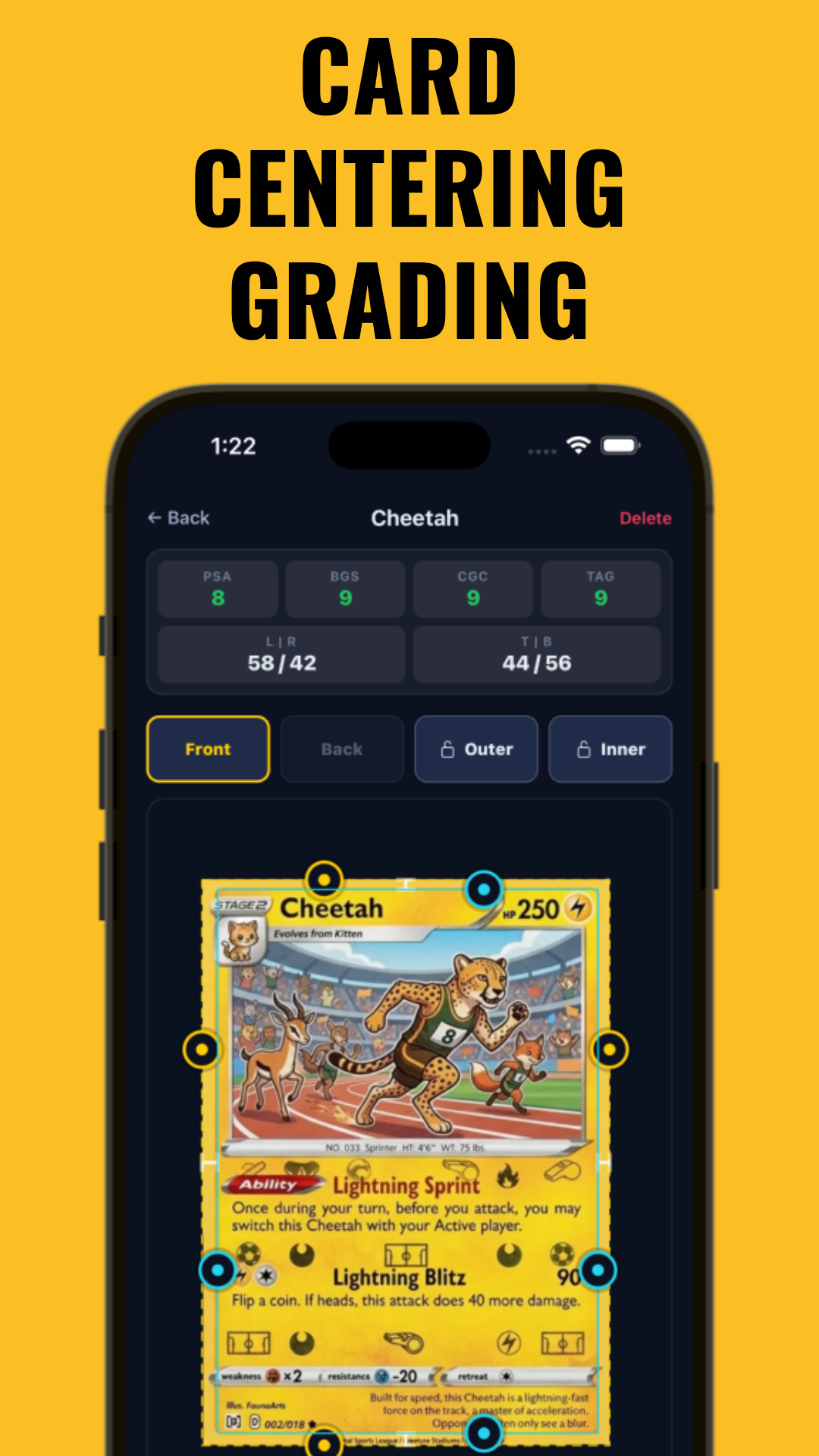
Treat any digital estimate as a screening tool, not a guarantee. It is best at ruling out cards that clearly will not grade well.
Section 7: Set Values and Where to Sell
Many people ask what a complete 1968-69 O-Pee-Chee set is worth. The honest answer is that it depends on the grade distribution inside the set.
Complete, near-complete and partial sets
- Complete sets: all 216 cards. The value is dominated by a handful of key cards, especially Orr #2 and the biggest Hall of Famers. A set where the stars are well-centered and sharp is worth far more than one with a low-grade Orr.
- Near-complete sets: missing a few cards. Buyers often discount for missing keys but not for missing commons.
- Partial sets or lots: value is usually the sum of the key cards plus a modest premium for the commons.
Graded sets and raw sets are priced differently. Raw sets are discounted for uncertainty, while registry-style graded sets are priced card by card.
Best places to sell
- eBay: the easiest source of comparable sold listings and a deep buyer pool. Filter to sold listings only.
- Auction houses: best for high-grade or high-dollar cards where bidding competition can lift prices.
- Dealers and card shows: fast and convenient, but expect a dealer margin.
- Online price guides: useful as a starting reference, but never a substitute for recent sales.
Track what you own
If you hold a mix of raw and graded hockey cards, Midpoint can track your collection's value over time, so you can see whether it is the right moment to sell or keep holding.
Conclusion
The value of 1968 O-Pee-Chee hockey cards comes from three layers: the player and card number, the condition tier, and the gem premium at the top. Bobby Orr #2 leads the set, with Hall of Famers and rookie-era names behind it. Centering, factory cutting, corners, surface and gum stains decide where each copy lands on the price ladder.
Before you submit anything, check current raw and graded values, measure centering, and compare the likely grade against the fee. Use fresh sold listings as your final check. Do that, and you will grade only the cards that deserve it and sell the rest with confidence.
FAQ
Q: How much are 1968 O-Pee-Chee hockey cards worth?
A: Most commons are modest, while stars and key cards are worth far more, and condition changes every price. Check recent sold listings and the dated values in Midpoint's card lookup for the exact card and grade.
Q: What is the most valuable 1968-69 O-Pee-Chee hockey card?
A: Bobby Orr #2 is the set's headline card. Top Hall of Famers and rookie-era players follow, and a high-grade copy of nearly any key card commands a large premium.
Q: How much is a 1968 O-Pee-Chee Bobby Orr card worth?
A: It depends heavily on grade, with raw copies, PSA 7-8, PSA 9 and PSA 10 all priced very differently. Use recent sold comps for the same grade, and remember this is not Orr's rookie card.
Q: What are the key rookie cards in the 1968-69 O-Pee-Chee set?
A: Collectors commonly look at Bernie Parent, Danny Grant, Mickey Redmond, Garry Unger, Bob Plager and Les Binkley. Not every one of these players has his first card in this set, so confirm each player's rookie status against a checklist before paying a rookie premium.
Q: How much is a complete 1968-69 O-Pee-Chee hockey set worth?
A: The 216-card set's value depends mostly on the condition of the key cards, especially Orr #2, and on whether the set is raw or graded. Price it card by card using recent comps.
Q: Are 1968-69 O-Pee-Chee cards worth more than Topps cards?
A: Often, yes. OPC has a fuller checklist and strong demand among hockey collectors, but premiums vary by player and grade, so compare sold listings for the exact card.
Free to start
Try the Midpoint app
Grade any card from a photo, see its raw and PSA 10 value, and track what your collection is worth — free.
Get it on iPhoneGet it on Android