VCP Card Prices: What They Are and How to Use Them for Trading Cards
Learn what VCP pricing is, how VCP card prices are calculated, current value trends, and how grading, rarity, and condition affect your card's market worth.


Estimated reading time: 13 min
Key Takeaways
- VCP card prices represent Verified Card Prices, a market-driven estimate of trading card values based on real sales data.
- Prices vary by card type, edition, rarity, and condition, with graded cards often commanding premiums.
- VCP pricing is calculated using sales data from auctions, marketplaces, and historical trends, making it highly responsive to market changes.
- Collectors and sellers use VCP-based price guides and lookup tools to estimate fair values and guide buying, selling, or grading decisions.
- Apps like Midpoint help maximize value by providing AI digital grading and precise centering measurements before submitting cards for professional grading.
Table of Contents
- Section 1: Understanding VCP Card Prices
- Section 2: How VCP Pricing Is Calculated
- Section 3: VCP Card Prices by Card Type and Series
- Section 4: Market Value Trends and Price Changes
- Section 5: Factors Affecting VCP Card Value
- Section 6: Using VCP Tools and Price Guides
- Section 7: Buying, Selling, and Trade-in Price Differences
- Section 8: Maximizing Your Card’s Value with Condition and Grading
- Conclusion
- FAQ
Section 1: Understanding VCP Card Prices
What Are VCP Card Prices?
VCP card prices, or Verified Card Prices, are estimates of a trading card’s current market value based on verified recent sales data. This pricing method aggregates data from reputable marketplaces like eBay, Heritage Auctions, and major card shops, ensuring that the prices reflect actual transaction values rather than speculative or outdated figures.
- Transparency: VCP prices are traceable to real sales, providing confidence in their accuracy.
- Objectivity: The pricing relies on verified data, excluding outliers and non-arm’s-length transactions.
- Relevance: Only recent sales of comparable cards are included, so prices reflect current market conditions.
Why VCP Card Prices Matter
For collectors and investors, VCP card prices reduce uncertainty when buying, selling, or trading cards. They serve as a trusted reference for:
- Evaluating the value of your collection
- Setting fair prices for sales or trades
- Determining whether to submit a card for professional grading
- Negotiating insurance values for valuable cards
How VCP Card Prices Differ from Other Price Guides
Unlike traditional price guides that can lag behind market trends or rely on estimated values, VCP card prices update frequently as new sales occur. This responsiveness makes them more accurate and timely, reflecting market hype, demand shifts, and grading trends.
Section 2: How VCP Pricing Is Calculated
Data Sources for VCP Card Prices
VCP pricing collects sales data from multiple verified sources, including:
- Completed eBay sales with verified prices
- Major auction houses like Heritage, Goldin, and PWCC
- Large online retailers and card stores
Each sale is vetted to exclude fake or shilled transactions, ensuring reliable pricing.
Calculation Methods
VCP uses statistical methods such as:
- Median or Average Sale Price: Removes extreme values to focus on typical sales.
- Weighted Averages: Gives more weight to recent or high-volume transactions.
- Grade-Specific Pricing: Values are broken down by card condition and grading company (e.g., PSA 10, BGS 9.5).
Frequency of VCP Updates
VCP card prices update regularly, sometimes daily or hourly for popular cards, ensuring data stays current with market fluctuations.
Learn more about grading scale impacts on pricing in Card Grade Comparisons: PSA vs BGS vs CGC vs SGC Explained.
Section 3: VCP Card Prices by Card Type and Series
Sports Cards: Baseball, Basketball, Football
Sports cards have robust VCP pricing due to high transaction volumes. Popular rookie cards and serial-numbered inserts frequently update in value. For example:
- A 1986 Fleer Michael Jordan rookie card (PSA 9) may have VCP prices updated multiple times daily.
- Modern prospects’ values fluctuate with their real-world performance, accurately captured by VCP data.
Trading Card Games (TCG) and Non-Sports Cards
TCG cards like Pokémon, Magic: The Gathering, and Yu-Gi-Oh! also have dedicated VCP pricing segments. Premiums often apply to first editions, holographics, and promo cards:
- Pokémon’s Base Set Charizard (1st Edition, PSA 10) can reach six-figure VCP values.
- Magic: The Gathering’s Alpha Black Lotus values fluctuate dramatically with auction results.
Vintage vs. Modern Cards
Vintage cards (pre-1980 sports cards and early TCG sets) tend to have more stable but less frequent VCP updates due to lower sales volume. Modern cards, especially those with multiple parallels or high print runs, show more frequent value changes.
See how centering affects rookie card value in Centering Requirements for Rookie Cards: The Ultimate Guide.
Section 4: Market Value Trends and Price Changes
Why VCP Card Prices Change Frequently
VCP pricing reacts in real time to market factors such as:
- Player Performance: Breakout games, injuries, or trades can shift values overnight.
- Set Releases: New product launches affect demand for older cards.
- Grading Trends: Changes in grading policies or population reports impact prices.
- Market Sentiment: News, social media, and influencer hype cause sudden spikes or drops.
Recent Price Movements
The 2020-2021 sports card boom saw many cards’ VCP prices rise sharply within months. Conversely, values can fall if hype fades or supply increases.
Tracking VCP Trends
Most VCP tools include historical price charts to help collectors identify buying opportunities and avoid overpaying during market spikes.
For more on grading’s impact on insurance values, see Card Condition: The Complete Guide to Grading, Inspection, and Value.
Section 5: Factors Affecting VCP Card Value
Condition and Grading
Card condition is a primary driver of VCP pricing. Professionally graded cards, especially at top grades like PSA 10 or BGS 9.5, can command multiples of raw cards. Even subtle differences in centering, corners, edges, or surface quality significantly affect value.
- Centering: A critical factor, particularly for modern cards.
- Surface: Scratches, print lines, or discoloration reduce value.
- Corners/Edges: Wear or damage lowers grades and prices.
Explore how centering impacts value in How Centering Impacts Card Value: A Detailed Guide.
Rarity and Edition
Limited print runs, low serial numbers, and special editions often carry VCP premiums. First editions, error cards, and low-population grades are especially valuable due to scarcity.
Market Demand and Population Reports
Cards with strong collector demand and few high-grade examples typically have higher or rising VCP prices. Conversely, a surge of graded cards entering the market can soften prices.
Section 6: Using VCP Tools and Price Guides
How to Look Up VCP Card Prices
VCP platforms provide searchable databases where you enter card details such as name, year, set, and grading info. Results include:
- Recent sales prices with dates and sources
- Historical price charts
- Grade-by-grade value breakdowns
This allows easy comparison between different grades, such as PSA 10 versus BGS 9.5. For a comprehensive understanding of card values and expert tips, see our guide on Card Values: How to Check, What Drives Value, and Pro Tips for Collectors.
Price Guide vs. Real-Time Search
Traditional price guides offer snapshots, while VCP tools update continuously with new sales, providing more accurate data for active collectors buying or selling valuable cards.
Integrating VCP Card Prices with Pre-Grading Tools
Knowing your card’s likely grade before referencing VCP prices can save money and maximize value. Tools like Midpoint use AI to measure centering precisely and estimate grades for PSA, BGS, CGC, and TAG, helping you decide if professional grading is worthwhile.
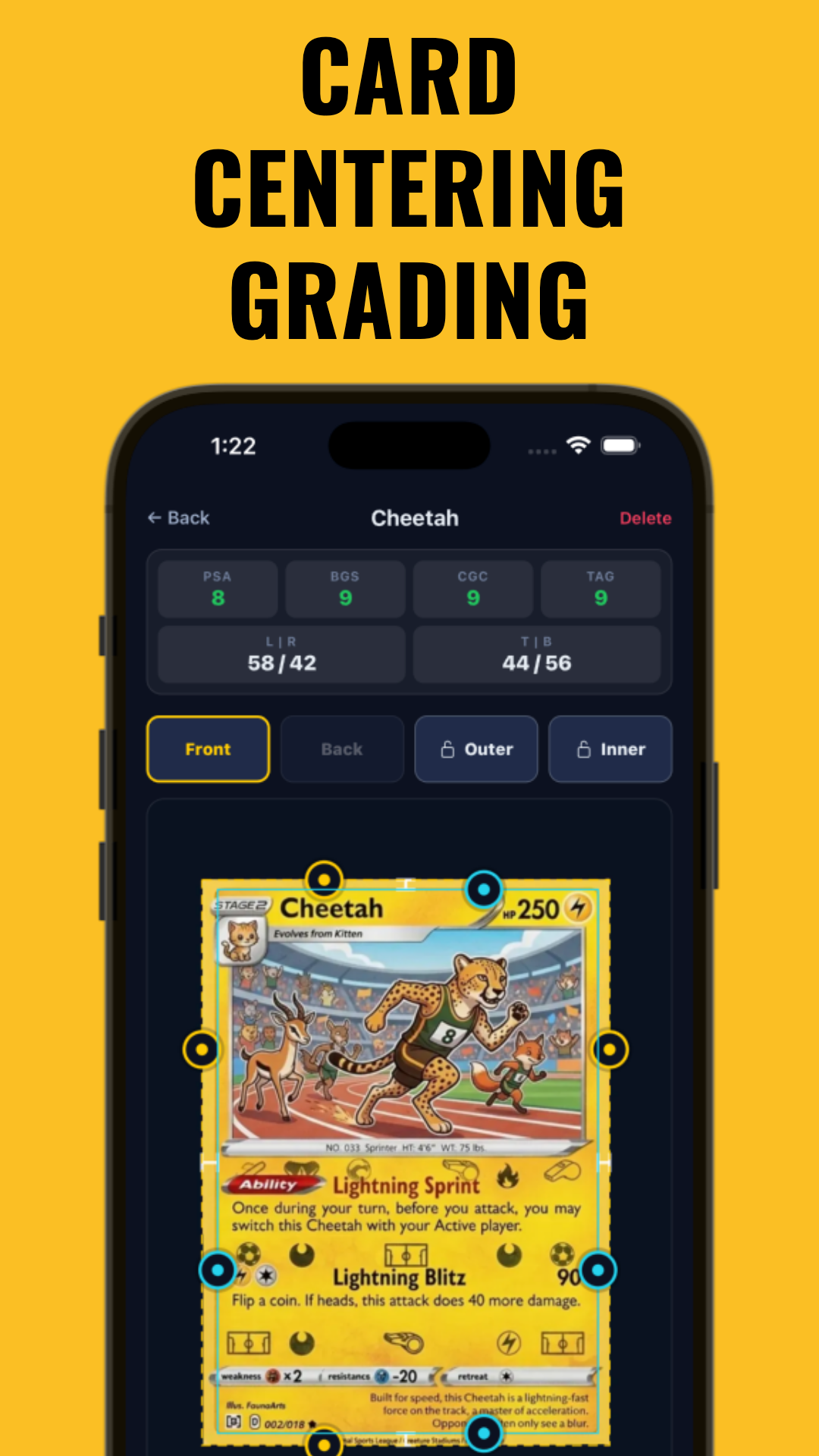
Combining pre-grading analysis with VCP lookups helps avoid costly grading mistakes and maximize your card’s market value.
Section 7: Buying, Selling, and Trade-in Price Differences
Buy vs. Sell vs. Trade-In Prices
While VCP card prices reflect actual market sales, the prices you pay or receive may differ due to:
- Buy Price: May include premiums for convenience, auction fees, or demand spikes.
- Sell Price: Often slightly below VCP due to fees, shipping, and negotiation.
- Trade-In Value: Card shops or platforms typically offer a percentage of VCP to cover resale margins.
Fees and Marketplaces
Consider eBay fees, payment processing, and shipping costs when comparing VCP prices to your net proceeds.
Timing Your Transactions
Market timing impacts realized prices on volatile cards. Using VCP’s historical charts and recent sales data helps avoid selling during dips or buying at hype-driven peaks.
Section 8: Maximizing Your Card’s Value with Condition and Grading
Maximizing your card’s VCP price involves understanding how grading and condition affect value. High grades and near-perfect centering, corners, edges, and surface quality can multiply a card’s worth.
Using tools like Midpoint’s AI digital grading before submitting cards can help you decide which cards are worth grading and how to present them to achieve the best market price. For a deeper dive into the grading process and when it’s worth it, see our comprehensive guide on grading and card value.