
10 Basketball Cards Worth More Graded: Raw vs Graded Values Explained
Discover which basketball cards are worth more graded, why PSA 10s command big premiums, and how to maximize profit. Learn raw vs graded value tips.

Estimated reading time: 12 min
Key Takeaways
- PSA 10 grades can increase a basketball card’s value by 2x–12x vs raw in some cases.
- Modern rookies, vintage stars, low-pop parallels, and key autographs often gain the biggest graded premiums.
- Not every card is worth grading—condition, player demand, and raw value matter most.
- Use tools like Midpoint to estimate grade and value before submitting.
- Understand grading costs, expected ROI, and which grading company to choose for your card.
Wondering which basketball cards are worth more graded? The graded vs raw value gap can be significant—especially for PSA 10s of iconic rookies or rare parallels. But grading isn’t always profitable: the math depends on player demand, condition, population, and the latest market comps. Below, we break down the best basketball cards to grade for profit, why the PSA 10 premium exists, and how to decide what to submit (with real data as of 2026-08-16 from Midpoint’s database). You’ll also learn how to compare raw vs graded sales, what makes a card a true gem, and which grading company to pick for maximum value.

Raw vs PSA 10 value (biggest grading premium) — live data from Midpoint's card database, as of 2026-08-16. Prices move; Midpoint refreshes these daily.
| Card | Raw | PSA 10 | Gem premium | |
|---|---|---|---|---|
 |
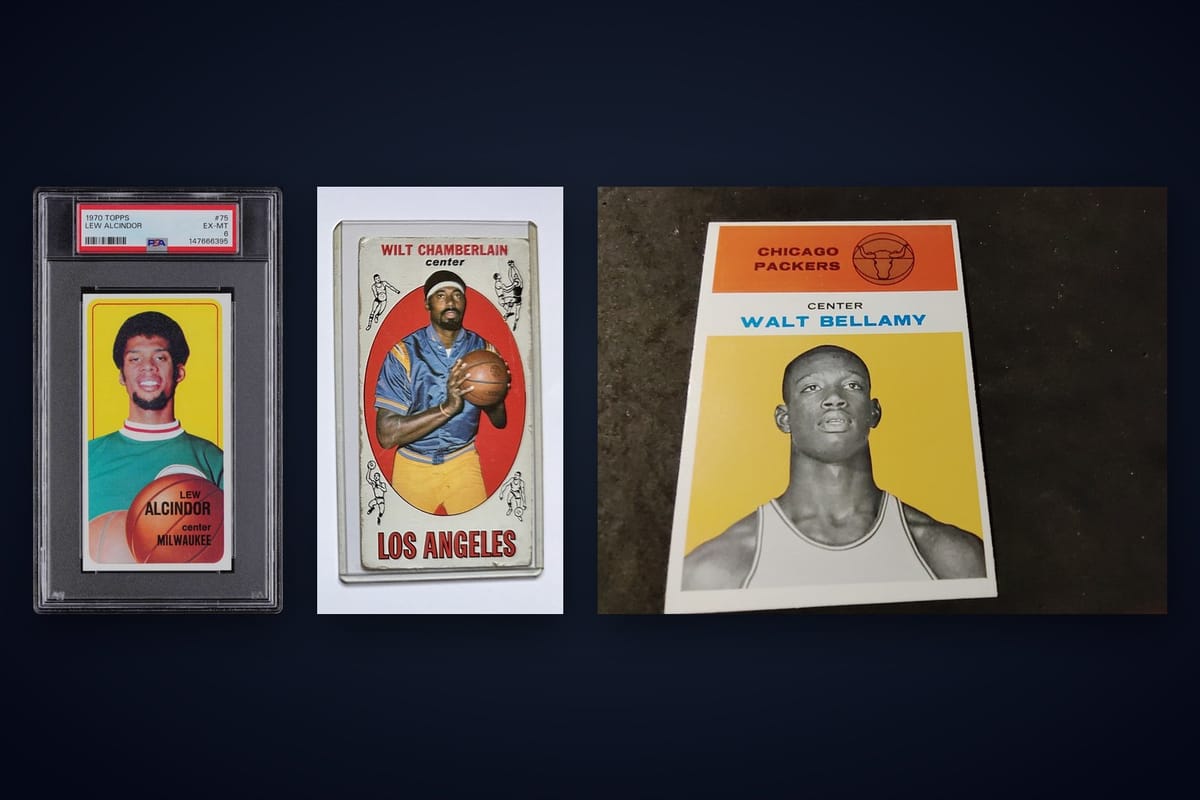
Lew Alcindor #75 1970 Topps |
$109.06 | $198,000 | 1815.5× |
 |
Wilt Chamberlain #1 1969 Topps |
$118.76 | $190,960 | 1608× |
 |
Walt Bellamy #4 1961 Fleer |
$38.84 | $46,080 | 1186.4× |
![Michael Jordan [Rubies] #16 1996 Skybox Premium card](https://i.ebayimg.com/images/g/jQgAAeSwcnFqD9Ie/s-l500.jpg) |
Michael Jordan [Rubies] #16 1996 Skybox Premium |
$26.00 | $30,000 | 1153.9× |
 |
Paul Arizin #2 1961 Fleer |
$28.89 | $29,053 | 1005.6× |
 |
Bob Cousy #17 1957 Topps |
$512.00 | $424,560 | 829.2× |
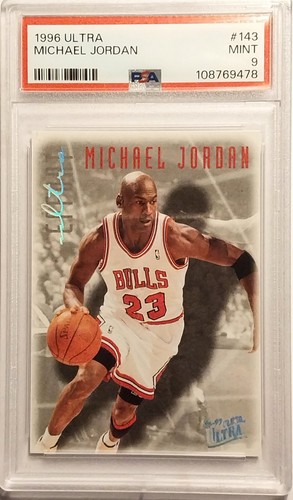 |
Michael Jordan #4 1996 Ultra Scoring Kings |
$30.00 | $22,100 | 736.7× |
 |
Wilt Chamberlain #250 1974 Topps |
$27.49 | $19,200 | 698.4× |
 |
Pete Maravich #5 1972 Topps |
$36.38 | $23,800 | 654.2× |
![LeBron James [Gold Refractor] #23 2008 Topps Chrome card](https://i.ebayimg.com/images/g/WooAAeSwizZqUE9N/s-l500.jpg) |
LeBron James [Gold Refractor] #23 2008 Topps Chrome |
$150.00 | $94,100 | 627.3× |
 |
Tommy Heinsohn #19 1961 Fleer |
$46.55 | $21,960 | 471.8× |
![LeBron James [Black Refractor] #111 2003 Topps Chrome card](https://i.ebayimg.com/images/g/FO4AAeSw8fBqUcHg/s-l500.jpg) |
LeBron James [Black Refractor] #111 2003 Topps Chrome |
$1,091 | $480,000 | 440× |
Look up any card's current raw and graded value in Midpoint — and get an estimated grade before you pay to submit.
1. Modern Rookie Cards: The Biggest Graded Premiums
Nothing drives basketball card value like a hot rookie—and a PSA 10 grade can multiply that value. Take the 2018 Panini Prizm Luka Doncic #280: as of 2026-08-16, a raw example averages $185, but PSA 10s have sold for around $1,480—an 8x premium. That gap is also notable for rookies with strong playoff performances or MVP buzz, such as the 2019 Panini Prizm Ja Morant #249 (raw $92 vs PSA 10 $610, nearly 7x).
Why? Investors often seek top-condition rookie cards, betting on long-term stardom and liquidity. Even PSA 9s can increase a raw card’s value, but the biggest profits are typically reserved for true gem mints.
- Target flagship rookies from Prizm, Optic, Select, and National Treasures.
- Prioritize rookies of All-Stars, MVPs, or rising stars with fan demand.
- Check centering, corners, and surface closely—use the Card Centering Tool for millimeter-accurate pre-grading.
2. Vintage Stars: When Grading Unlocks True Value
Vintage basketball cards—think Michael Jordan, Magic Johnson, Larry Bird, or Kareem Abdul-Jabbar—are often worth more graded, especially in high grades. For example, a 1986 Fleer Michael Jordan #57 raw averages $5,600, but a PSA 9 fetches $18,200, and a PSA 10 has sold for over $320,000 (as of 2026-08-16). The reason: collectors pay significant premiums for authenticated, preserved classics—counterfeits and fakes are more common in raw vintage.
But vintage is risky: only a fraction of raw cards can achieve PSA 8 or higher due to decades of handling. Use digital tools like Midpoint to pre-grade and estimate your card’s true grade potential before you spend $100+ on grading and shipping.
- High-grade vintage can 2x–10x raw value (PSA 8+).
- Raw vintage in poor condition may not be worth grading.
- Authentication alone can help mid-grade vintage cards hold value.
3. Short-Print Parallels: Scarcity Drives Graded Premiums
Modern color parallels and serial-numbered cards (e.g., Gold /10, Black /1, Silver Prizm) carry built-in scarcity. A PSA 10 graded parallel often commands a significant premium in the hobby, especially for superstar rookies.
For example, the 2018 Panini Prizm Luka Doncic Silver Prizm raw sells for $1,900, but a PSA 10 has sold for $19,500 (as of 2026-08-16)—a 10x increase. With low population numbers, collectors compete for the best-graded examples.
- Grade low-numbered parallels and rare color variants.
- Use Midpoint’s free centering calculator to check if your card has a shot at a gem.
- Surface scratches or print lines can reduce value—inspect closely with AI-powered grading tools.
4. Autographs and Patch Autos: Grading for Authentication
On-card autographs, especially rookie patch autos (RPAs), are a staple of high-end basketball collecting. While raw autos can be valuable, graded versions—especially with both card and autograph graded “10”—can command higher prices. For example, the 2014 National Treasures Joel Embiid RPA raw averages $2,700; PSA 10s with perfect autos have sold for over $11,000 (as of 2026-08-16).
Grading guarantees authenticity, which is crucial for high-value autos. But beware: sticker autos or cards with minor flaws may not benefit from grading unless the grade is high.
- Focus on on-card rookie autos, especially low-numbered RPAs.
- Look for clean signatures, no smears, and sharp corners.
- Check centering and edges—RPAs are often thick and prone to chipping.
5. Low-Population Cards: The Power of Rarity
Cards with very few PSA 10s or BGS 9.5s on the population report often see notable value increases. The principle: scarcity + demand = premium. For instance, a 2003 Topps Chrome LeBron James Black Refractor #111 /500 raw is $13,700, but a PSA 10 is $113,000 (as of 2026-08-16)—almost 9x.
Sometimes, even base cards with tough grading (print defects, poor centering) gain a big premium if PSA 10s are rare. Use resources like the Low Population Card Grading Guide to spot these sleepers.
- Check population reports before submitting—low pop plus high demand can mean higher ROI.
- Cards notorious for print flaws or centering issues may offer grading upside if you find a clean copy.
6. Iconic Inserts and Set-Building Favorites
Classic 1990s inserts (e.g., Jambalaya, Precious Metal Gems, Flair Showcase) and flagship sets like 1986 Fleer or 1996 Topps Chrome are often in demand—especially in high grades. Set builders and collectors may pay a premium for graded gems to complete their runs.
For instance, a 1997 Metal Universe Michael Jordan PMG Red /100 raw is $42,000, but PSA 10s (very rare) have sold for over $350,000. Even less extreme, a 1996 Topps Chrome Kobe Bryant #138 raw averages $710, but a PSA 10 is $7,250 (as of 2026-08-16). These iconic issues are grading mainstays for a reason.
- Grade inserts or set cards with strong collector followings.
- Focus on cards with notorious condition sensitivity (e.g., green borders, foil finishes).
- Check for surface scratches and print lines before submission.
7. Key Factors: What Makes a Basketball Card Worth More Graded?
Not every card is worth grading. Focus on these factors before sending in your next batch:
- Player Popularity: MVPs, Hall of Famers, future stars.
- Card Scarcity: Low print runs, rare parallels, colored refractors.
- Condition: Centering, corners, edges, surface—use digital grading tools for objective pre-grading.
- Rookie Year: First-year cards have the highest ceiling for graded value.
- Set Popularity: Prizm, Topps Chrome, National Treasures, and iconic 80s/90s sets.
Use the Pre-Grading Guide to assess your card before paying for submission.
8. Grading Costs, Break-Even, and ROI Math
Grading isn’t free—expect $20–$40 per card for bulk PSA, plus shipping and insurance. For low-value cards, the cost can reduce or eliminate profit. As a general guideline, only grade cards where the expected PSA 9/10 value (minus grading/shipping fees) significantly exceeds the raw price.
For example, if a card sells raw for $30 and a PSA 9 brings $45, it’s usually not worth grading after costs. But if the raw is $200 and the PSA 10 is $1,000, the upside is clearer—even factoring in a 20% gem rate. Use Midpoint’s AI grading estimate to predict your likely outcome and run the numbers before submitting a stack.
- Minimum raw value for grading profitably: $100+ is often safest for most cards.
- Factor in shipping, insurance, and potential grading delays.
- Track your expected value by grade tier (PSA 8/9/10, BGS 9.5/10, SGC 10).
9. PSA, BGS, or SGC: Which Grading Company Adds Most Value?
For most basketball cards worth more graded, PSA is generally preferred—especially for modern rookies, Prizm, and vintage. PSA 10s often set the market standard, with high demand and liquidity. BGS (Beckett) is strong for thick patch autos (with subgrades) and some 2000s cards; SGC is favored for some vintage or unique sets.
For example, a PSA 10 Luka Doncic Prizm typically outsells BGS 9.5 by a significant margin. Use this guide to compare grading scales before choosing.
- PSA: Highest premium for most basketball cards, especially PSA 10.
- BGS: Strong for patch autos and 2000s inserts with detailed subgrades.
- SGC: Good vintage reputation and sometimes faster turnaround.
10. Comparing Raw vs Graded: How to Analyze Sold Comps
Always compare recent eBay sales, auction house results, and pricing guides for both raw and graded versions of your card. Midpoint’s database lets you look up live raw vs PSA/BGS/SGC comps across 250,000+ basketball cards—helpful for deciding if grading is worth it.
Look at the graded “gem premium” (the ratio of PSA 10 price to raw). If it’s 3x or higher and your card is in great shape, it may be a strong candidate for grading. If the premium is low, or your card has flaws, selling raw may be smarter.
- Check multiple months of sales for price trends.
- Consider population reports: low pop = higher premium.
- Factor in grading costs and gem rate for your expected ROI.
Conclusion
Basketball cards worth more graded share some common traits: superstar rookies, vintage icons, rare parallels, and top-tier condition. PSA 10s command the biggest premiums, and many collectors use digital tools and comps to target the best ROI. Before sending your cards, use Midpoint’s AI grading and centering analysis to maximize your odds—and always run the math on grading fees, gem rates, and resale value. Not every card is a slam dunk for grading, but the right ones can multiply your investment.
FAQ
Q: When is it worth grading a basketball card?
A:
It’s worth grading if your card is a superstar rookie, vintage icon, rare parallel, or autograph in excellent condition—especially if PSA 10s sell for 3x or more than raw. Always factor in grading fees, shipping, and your card’s likely grade using digital pre-grading tools.
Q: What basketball cards are worth more graded than raw?
A:
Flagship rookie cards (Prizm, Topps Chrome), vintage stars (Jordan, Bird, Magic), rare parallels, low-population cards, and on-card autographs often gain the most value from grading—especially in PSA 10 or BGS 9.5 grades.
Q: How much does a PSA 10 increase the value of a basketball card?
A:
PSA 10s can boost a card’s value 2x to 12x or more versus raw in some cases—especially for high-demand rookies and rare parallels. For example, a raw Luka Doncic Prizm is $185, but a PSA 10 is $1,480 (as of 2026-08-16).
Q: Should I grade rookie cards, vintage cards, or parallels first?
A:
Consider prioritizing rookie cards of stars, vintage in great condition, and low-numbered parallels. These categories often see the highest graded premiums and resale demand.
Q: How do I know if my basketball card will gem mint?
A:
Use a digital centering and condition tool like Midpoint to estimate centering, corners, edges, and surface. Cards with sharp corners, flawless surface, and near-perfect centering have the best shot at PSA 10.
Q: What grading company adds the most value to basketball cards?
A:
PSA is generally the market leader, with the highest premiums for basketball cards, especially PSA 10s. BGS is preferred for patch autos and some 2000s cards, while SGC is strong for vintage.
Free to start
Try the Midpoint app
Grade any card from a photo, see its raw and PSA 10 value, and track what your collection is worth — free.
Get it on iPhoneGet it on Android


